How to Travel the World on a NZ Salary

Ever dreamed of sipping cocktails on a Thai beach or exploring the ancient ruins of Machu Picchu, all while earning a solid Kiwi wage? With New Zealand's average monthly salary hitting 5,666 NZD in 20...
The Lifetimes NZ editorial team curates, fact-checks, and updates guides on personal finance, property, health, immigration, legal, business, and lifestyle topics relevant to Lifetimes NZ readers. Articles are produced with AI assistance and reviewed by the editorial team before publication.
Ever dreamed of sipping cocktails on a Thai beach or exploring the ancient ruins of Machu Picchu, all while earning a solid Kiwi wage? With New Zealand's average monthly salary hitting 5,666 NZD in 2026, it's more achievable than you think. Many Kiwis are ditching the 9-to-5 grind for epic adventures without breaking the bank—here's your practical guide to making it happen on a typical NZ pay packet.
Understanding Your NZ Salary in 2026
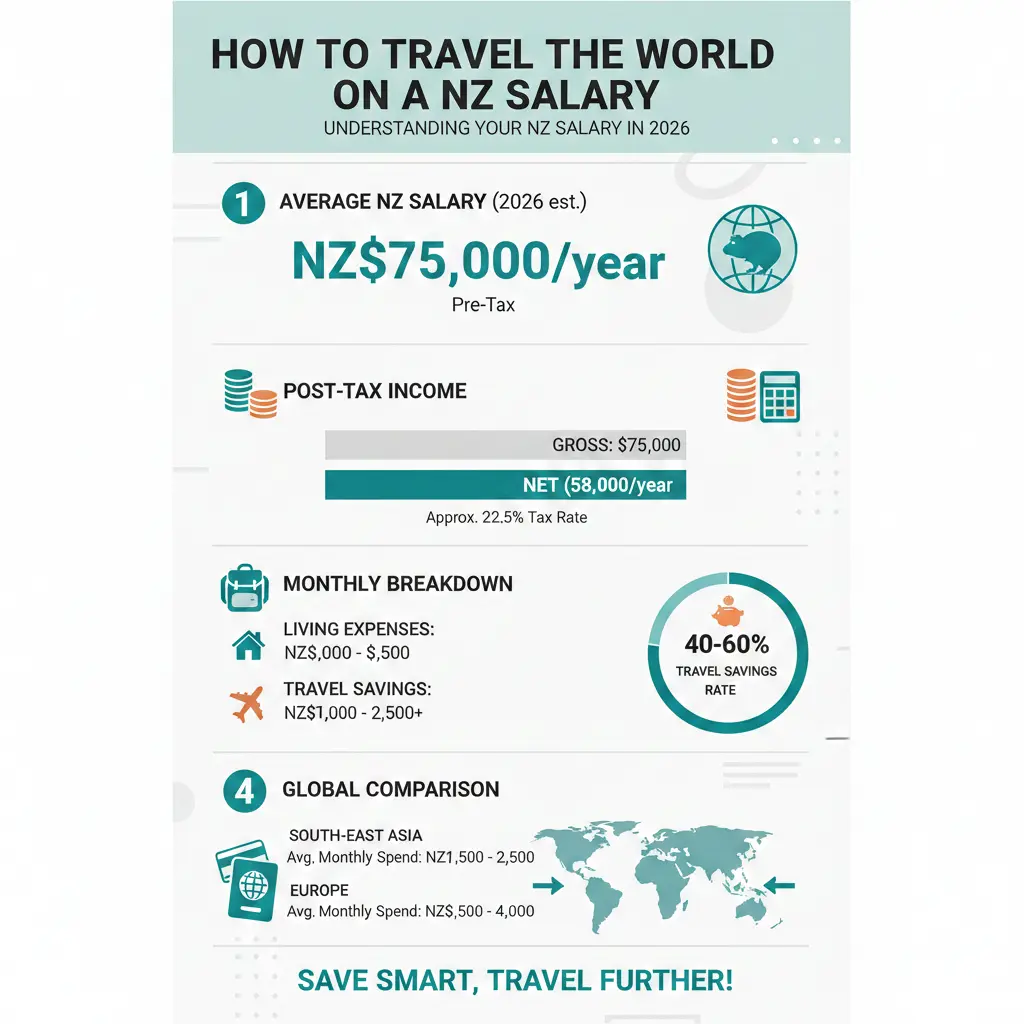
To travel the world smartly, first get a grip on what you're working with. New Zealand salaries are competitive globally, but our high cost of living means budgeting is key. The average monthly salary sits at 5,666 NZD (around USD 3,250), with the median at 5,479 NZD. Low earners pull in about 3,833 NZD monthly, while top earners reach 12,552 NZD.
Hourly rates vary by industry too. From April 1, 2026, the adult minimum wage rises to 23.95 NZD per hour, with training wages at 19.16 NZD. Popular jobs like accountants average 93,495 NZD annually, electricians around 68,250 NZD, and nurses about 79,000 NZD. Immigration median wage jumps to 35 NZD per hour from March 9, 2026, which could boost pay for skilled roles.
After-Tax Reality Check
Don't forget taxes—IRD deducts progressively. On a 70,000 NZD annual salary, expect to take home around 55,000 NZD after income tax, ACC levies, and KiwiSaver contributions (assuming 3% employee contribution). Use the IRD's tax calculator at ird.govt.nz for your exact figures. Factor in student loan repayments if applicable via StudyLink.
Building a Travel Budget That Works
Average Kiwis can save 500-1,000 NZD monthly for travel with disciplined budgeting. Start by tracking expenses using apps like PocketSmith or the BNZ budgeting tool.
Sample Monthly Budget on 5,666 NZD Salary
| Category | Amount (NZD) | Percentage |
|---|---|---|
| Rent/Mortgage (Auckland average) | 2,000 | 35% |
| Food & Groceries | 600 | 11% |
| Transport (PT or fuel) | 300 | 5% |
| Utilities & Phone | 300 | 5% |
| Entertainment & Misc | 400 | 7% |
| KiwiSaver/Savings/Travel Fund | 1,066 | 19% |
| Debt Repayments/Insurance | 1,000 | 18% |
This leaves room for a travel fund—aim to stash 20% of your income. Tools like Sharesies or Hatch for low-fee investing can grow your pot faster.
Smart Savings Strategies for Kiwi Travellers
- Slash living costs: House-share via Trade Me or Flatmates.co.nz to cut rent by 30-50%. Shop at Pak'nSave and meal-prep to keep food under 400 NZD/month.
- Boost income: Side hustles like Uber driving, Airtasker gigs, or freelancing on Upwork add 500-2,000 NZD extra. Teachers can tutor via Superprof.
- KiwiSaver hacks: Contribute extra to access First Home Grant if buying reduces rent long-term, freeing up travel cash. Check sorted.org.nz for projections.
- Cut subscriptions: Audit Netflix, Spotify—save 100 NZD/month easily.
Pro tip: Automate transfers to a high-interest savings account like Rabobank (up to 5.5% in 2026) on payday.
Affordable Destinations from NZ
Our location is a bonus—short, cheap flights to Asia and the Pacific. Focus on shoulder seasons for deals.
Budget Breakdown for Popular Spots
- Southeast Asia (Thailand, Vietnam): Flights from Auckland ~800 NZD return. Daily budget: 50-80 NZD (hostels 20 NZD, street food 10 NZD, activities 20 NZD). Total 3 weeks: 3,000 NZD.
- Pacific Islands (Fiji, Samoa): Flights 500-700 NZD. Daily: 100 NZD. Great for quick escapes using annual leave.
- Europe (via work-from-home): Multi-leg flights 1,800 NZD. Budget 120 NZD/day in Eastern Europe. Use Skiplagged for hacks.
- South America (Peru, Brazil): Flights 1,500 NZD. Daily 90 NZD backpacking.
Apps like Skyscanner and Google Flights alert for deals under 1,000 NZD to Asia.
Travel Hacks to Stretch Your Kiwi Dollar
Maximise value with these tried-and-true tips:
- Points and miles: Air New Zealand Airpoints or American Express cards earn points fast. Transfer to partners for business class upgrades.
- House-sitting: TrustedHousesitters.com—free stays worldwide, saving 1,000+ NZD/month.
- Work exchanges: Workaway.info or WWOOF for food/accommodation in exchange for 4-5 hours work daily.
- Travel insurance: Compare at southerncross.co.nz or Cover-More—essential for ACC coverage gaps abroad.
- No-fee cards: Wise or Revolut for fee-free spending (beats bank cards at 3% FX fees).
"I've travelled to 20 countries on a nurse's salary by house-sitting and using points—it's changed my life." – Kiwi backpacker testimonial.
Remote Work: The Game-Changer for Long-Term Travel
With NZ's gig economy booming, remote roles let you earn while roaming. IT pros, marketers, and writers average 80,000+ NZD. Platforms like FlexJobs or LinkedIn list NZ-friendly remote jobs.
Visa Essentials
Digital nomad visas: Bali (Indonesia) free on tourist stamp; Portugal D8 at 820 EUR/month income (easy on NZ salary). Check immigration.govt.nz for re-entry rules. Median wage at 35 NZD/hour from March 2026 aids skilled migrant returns.
Real Kiwi Success Stories
Auckland teacher Sarah saved 15,000 NZD in a year, quit for six months in Bali (total cost 12,000 NZD). Wellington developer James remote-works from Europe, banking 2,000 NZD/month extra. Track your progress with a spreadsheet—many hit 10,000 NZD travel funds annually.
Next Steps to Start Your Adventure
Grab your budget spreadsheet today, set up auto-savings, and book that first cheap flight. Join Kiwi travel Facebook groups like "Backpackers New Zealand" for tips. With discipline, your NZ salary can fund a world of memories—start small, dream big. Safe travels, Kiwis!
Frequently Asked Questions
Sources & References
-
1
Average Salary in New Zealand for 2026 - Remote People — remotepeople.com
-
2
Salary in New Zealand 2026 - Talent.com — nz.talent.com
-
3
NZ Median Wage Rises to $35 in 2026: Impact on Migrants — nzimmigration.info
Related Articles

The "No-Spend" Month: How One Kiwi Saved $2;000 in 30 Days
Imagine looking at your bank account at the end of the month and seeing an extra $2,000 staring back at you—all because you said "no" to impulse buys, takeaways, and those sneaky coffee runs. That's e...

How to Calculate Your Take-Home Pay with the NZ Salary Calculator
Ever wondered why your bank account doesn't match that shiny new job offer? You're not alone—many Kiwis scratch their heads over the gap between gross salary and actual take-home pay. With New Zealand...
Budgeting for Beginners: The "50/30/20 Rule" Adjusted for NZ Salaries
Struggling to make your Kiwi paycheck stretch further? You're not alone—many of us feel the pinch from rising rents, grocery bills, and that tempting flat white habit. But what if a simple rule could...

The Hidden Costs of Credit Cards: How to Escape the NZ Debt Trap
Ever swiped your credit card for a quick coffee or online shop, only to watch the balance creep up month after month? You're not alone—many Kiwis are caught in a subtle debt trap fuelled by credit car...