BMI vs. Reality: Using the Health Tools for a Better Lifestyle
Your Body Mass Index (BMI) is everywhere—your GP mentions it, insurance companies reference it, and if you're applying for publicly funded fertility treatment in New Zealand, it could determine whethe...
Emma writes about health, wellbeing, and ACC topics for Lifetimes NZ. She translates complex health information into clear, actionable advice for New Zealand readers.
Your Body Mass Index (BMI) is everywhere—your GP mentions it, insurance companies reference it, and if you're applying for publicly funded fertility treatment in New Zealand, it could determine whether you qualify. But here's the thing: BMI is just one tool in a much larger health toolkit, and it's far from perfect. Understanding what BMI actually measures, where it falls short, and how to use it alongside other health markers will help you make better decisions about your wellbeing.
What Is BMI and How Does It Work?
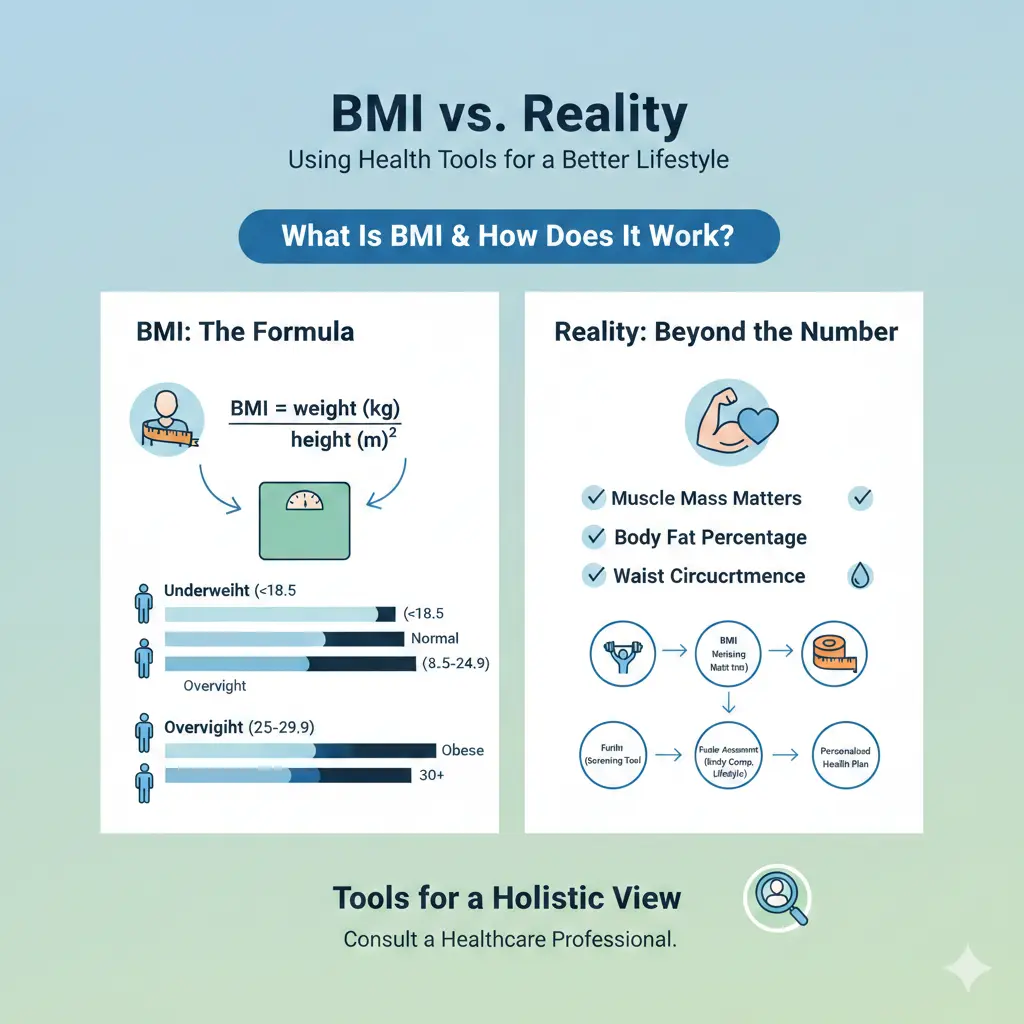
BMI is calculated using a simple formula: your weight in kilograms divided by your height in metres squared. It's been around for decades and remains one of the most commonly used health screening tools globally. The categories are straightforward:
- Underweight: less than 18.5
- Healthy weight: 18.5 to 24.9
- Overweight: 25 to 29.9
- Obese: 30 and above
The appeal of BMI is obvious—it's quick, cheap, and easy to calculate. No fancy equipment needed. For population-level health studies and identifying obesity trends across large groups, it serves a useful purpose. New Zealand has the third highest adult obesity rate in the OECD, with one in three adult New Zealanders classified as obese, so health authorities understandably use BMI as a screening tool.
Where BMI Falls Short: The Reality Check
Here's where things get complicated. BMI doesn't actually measure body fat—it's a proxy measurement that makes assumptions based on weight and height. It can't tell the difference between muscle and fat, which is a significant limitation.
The Muscle Problem
If you're a regular gym-goer, rugby player, or have developed significant muscle mass through training, BMI might incorrectly classify you as overweight or obese. An All Black rugby prop might be told they're overweight for their height when they're actually carrying lean muscle, not fat. The formula simply doesn't account for body composition.
Ethnicity and Body Fat Distribution
BMI also has limitations in its applicability across different ethnic groups. Body fat distribution differs by ethnicity and other variables, meaning BMI may not accurately reflect health risk for certain populations. This is particularly relevant in Aotearoa, where Māori and Pasifika communities have different body composition patterns. Research shows that 40% of women of Māori and Pasifika descent have a BMI over 32, yet BMI as a Western scientific construct doesn't adequately account for the diversity of New Zealand's population.
Height Variations and Age
Because BMI uses height squared in its calculation, it can incorrectly place some tall people in the overweight category and incorrectly indicate a healthy weight for some short people. Additionally, BMI categories are only suitable for people aged 18 to 70—they're not appropriate for children or the elderly, who experience different metabolic patterns.
BMI in New Zealand's Healthcare System
Publicly Funded Fertility Treatment
One of the most controversial uses of BMI in New Zealand is in determining eligibility for publicly funded fertility treatment. Women seeking public funding must have a BMI under 32 according to Clinical Priority Assessment Criteria. This threshold is significantly lower than international standards, where cutoffs are generally between 35 and 45. The United Kingdom, by comparison, doesn't include BMI as a criterion for public funding at all.
This policy has real consequences. Women are told to lose weight within a stand-down period to become eligible, sometimes racing against the age limit of 40 for access to public funding. Critics argue this approach is outdated and discriminatory, particularly affecting Māori and Pasifika women who are more likely to have a BMI above 32. As one study participant described it, the system is "completely rigged if you're a fat person".
Immigration Medical Assessments
If you're applying for a New Zealand visa, you'll undergo an immigration medical examination that includes BMI measurement. However, Immigration New Zealand has acknowledged that BMI on its own is not used as a measure of acceptable health standards. Medical assessors consider other health conditions and use a combination of tools to assess associated risks. Obesity alone doesn't disqualify you—assessors look at related health conditions like heart disease, diabetes, high blood pressure, and high cholesterol.
What BMI Actually Tells Us About Health
Despite its limitations, BMI does have some predictive value at the population level. Research shows that increasing BMI values correlate with increasing risk of death and disease, particularly cardiovascular disease and certain cancers. For example, studies have found the lowest mortality risk for men occurs at a BMI of 23.5 to 24.9, while for women it's 22.0 to 23.4, with mortality risk increasing sharply above a BMI of 30.
However, this population-level data doesn't necessarily apply to individuals. The relationship between BMI and health outcomes varies considerably based on age, ethnicity, fitness level, diet, stress, sleep, and genetics.
Better Tools for Understanding Your Health
Rather than relying solely on BMI, consider these additional health markers:
- Waist circumference: Where you carry weight matters. A large waist (over 88cm for women) combined with a higher BMI significantly increases health risks—women with obesity and a large waist were 32 times more likely to develop diabetes than women with low-normal BMI and smaller waist.
- Blood pressure: Your GP can measure this easily, and it's a direct indicator of cardiovascular health.
- Cholesterol levels: Blood tests reveal your cholesterol profile, which is more predictive of heart disease than BMI alone.
- Blood glucose levels: Fasting glucose or HbA1c tests indicate your diabetes risk.
- Fitness level: Cardiovascular fitness is a strong predictor of health outcomes, regardless of BMI.
- Overall lifestyle: Diet quality, physical activity, sleep, stress management, and smoking status all significantly impact health.
Practical Steps for Better Health
Rather than obsessing over a single number, focus on sustainable lifestyle changes:
- Consult your GP: Discuss your individual health profile rather than relying on BMI alone. Your doctor can assess your specific risk factors and recommend personalised advice.
- See a dietitian: If you're concerned about your weight, a registered dietitian can provide evidence-based guidance tailored to your circumstances. Many are funded through the public health system.
- Increase physical activity: Aim for at least 150 minutes of moderate-intensity activity weekly. This improves health markers regardless of weight change.
- Focus on nutrition quality: Rather than restrictive dieting, emphasise whole foods, vegetables, and balanced meals.
- Prioritise sleep and stress: Both significantly influence weight, metabolism, and overall health.
- Track multiple markers: Monitor blood pressure, cholesterol, and how you feel rather than fixating on the scales.
The Bottom Line
BMI is a screening tool, not a health verdict. It's useful for identifying population-level trends and can flag when someone might benefit from a health conversation, but it shouldn't determine your worth or your access to healthcare. Your actual health is far more complex—shaped by genetics, lifestyle, stress, sleep, fitness, nutrition, and numerous other factors that a two-number calculation simply can't capture.
If you're concerned about your health, start with a conversation with your GP. They can assess your individual situation, consider your family history and lifestyle, and help you set realistic, sustainable goals. And if you're frustrated by BMI-based policies affecting your healthcare access—whether that's fertility treatment or something else—your voice matters. Share your concerns with Health New Zealand and your elected representatives.
Your health is personal. Use BMI as one tool in your toolkit, but don't let it define your journey toward better wellbeing.
Frequently Asked Questions
Sources & References
-
1
BMI - NZ Body Mass Index Formula and Chart - KiwiCover — www.kiwicover.co.nz
-
2
Body Mass Index (BMI) - Health and Fitness Testing NZ — www.healthandfitnesstesting.nz
-
3
Understanding BMI | BMI Calculator - Heart Foundation NZ — www.heartfoundation.org.nz
-
4
Obesity | Ministry of Health NZ — www.health.govt.nz
- 5
-
6
Calls to change BMI requirements for publicly-funded IVF treatment — www.1news.co.nz
-
7
Acceptable Standard of Health - Immigration New Zealand — www.immigration.govt.nz
Useful Tools
Related Articles

Sun Safety NZ: Protecting Your Skin in the High-UV Kiwi Summer
Picture this: you're at the beach on a classic Kiwi summer day, waves crashing, BBQs sizzling, and the sun beating down with that intense UV punch we all know too well. But here's the reality check—Ne...

Mental Health Resources in NZ: Where to Get Free or Low-Cost Help
When you're struggling with your mental health, knowing where to turn for help can feel overwhelming. The good news is that New Zealand has a range of free and low-cost mental health resources availab...

Best Gym Memberships in NZ: A Price and Feature Comparison
Whether you're a Kiwi chasing peak fitness or just dipping your toes into gym life, picking the right membership can transform your routine without breaking the bank. With chains like CityFitness, Jet...

Managing Hayfever in NZ: The Best Local Remedies for Spring
Spring in New Zealand brings blooming landscapes and outdoor adventures, but for about 1 in 5 Kiwis, it also means battling hayfever symptoms like itchy eyes, runny noses, and endless sneezing.Managin...