Managing Hayfever in NZ: The Best Local Remedies for Spring

Spring in New Zealand brings blooming landscapes and outdoor adventures, but for about 1 in 5 Kiwis, it also means battling hayfever symptoms like itchy eyes, runny noses, and endless sneezing.Managin...
Emma writes about health, wellbeing, and ACC topics for Lifetimes NZ. She translates complex health information into clear, actionable advice for New Zealand readers.
Spring in New Zealand brings blooming landscapes and outdoor adventures, but for about 1 in 5 Kiwis, it also means battling hayfever symptoms like itchy eyes, runny noses, and endless sneezing.Managing hayfever in NZ doesn't have to ruin your season—local remedies and strategies can help you breathe easy and enjoy the sunshine.
With pollen from trees, grasses, and weeds peaking in spring and early summer, hayfever (allergic rhinitis) affects around 20% of us, disrupting work, sleep, and play. Whether you're in Auckland's urban buzz or Canterbury's open fields, these best local remedies for spring draw from New Zealand health experts and everyday Kiwi practices. Always chat to your GP or pharmacist before starting new treatments, especially if you have asthma—NZ has one of the world's highest rates, with 1 in 8 Kiwis on medication.
Understanding Hayfever in New Zealand
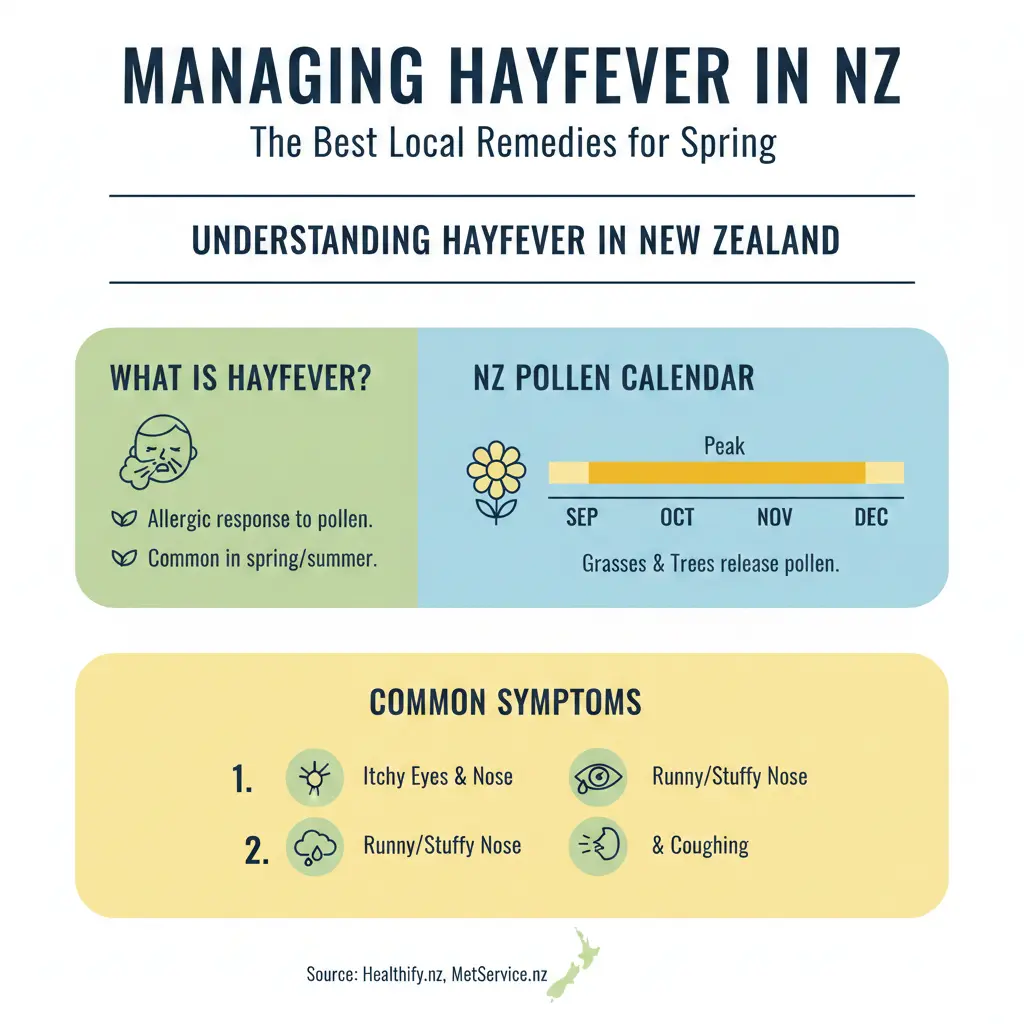
Hayfever isn't just a sniffle—it's your immune system overreacting to harmless pollen, causing inflammation in your nose, eyes, and throat. In Aotearoa, symptoms flare from September to February, driven by native plants like ryegrass and exotic trees. El Niño patterns can amp up pollen counts, making springs tougher for allergy and asthma sufferers.
Common Triggers Down Under
- Pollen: Tree pollen peaks in spring (September-November), grass in summer (December-February).
- Dust mites and mould: Year-round villains in our damp climate.
- Pet dander: Common in Kiwi homes with furry mates.
Track local pollen forecasts via apps like Pollen Count NZ or MetService to stay ahead.
Top Local Remedies for Managing Hayfever
From pharmacy staples to home hacks, here's how Kiwis tackle hayfever effectively. Start prevention early—two weeks before your usual flare-up.
Over-the-Counter Pharmacy Essentials
Head to your local Chemist Warehouse or Unichem for these proven options, available without prescription:
| Remedy Type | Best For | NZ Brands/Examples | Tips |
|---|---|---|---|
| Antihistamines (tablets) | Sneezing, itchy eyes/nose | Loratadine (Claratyne), Cetirizine (Zyrtec) | Once-daily; non-drowsy options best for work. |
| Corticosteroid nasal sprays | Blocked/runny nose | Fluticasone (Avamys), Budesonide (Rhinocort) | Start 1-2 weeks early; shake well. |
| Eye drops | Itchy/watery eyes | Sodium cromoglycate (Opticrom) | Use before exposure. |
| Saline sprays/rinses | Clearing passages | FESS, NeilMed Sinus Rinse | Drug-free; safe daily. |
| Decongestants | Short-term congestion | Pseudoephedrine (Sudafed) | Max 3-5 days; check with pharmacist if on meds. |
For kids over 2 or severe cases, virtual consults via WeCare CareNow start at $25 (free for under 14s if enrolled). Pharmacists can guide you under NZ's pharmacy initiatives.
Natural and Home Remedies Kiwis Love
Complement meds with these accessible, evidence-backed options:
- Saline nasal irrigation: Rinse with a neti pot or squeeze bottle to flush pollen—use distilled water to avoid infections.
- Petroleum jelly barrier: Dab Vaseline inside nostrils to trap pollen.
- Quercetin-rich foods: Onions, apples, and kiwifruit act as natural antihistamines; our naturopaths recommend them.
- Steam inhalation: Hot shower or bowl of steaming water with eucalyptus oil for congestion relief.
- Honey: Local Manuka honey may desensitise to pollen—1 tsp daily (not for under 1s).
Avoid unproven trends; stick to what's supported by Healthify or Allergy NZ.
Practical Tips to Avoid Triggers This Spring
Avoidance is your first line of defence. Tailor these to NZ life:
Pollen-Proof Your Day
- Stay indoors 5-10am and evenings when pollen counts peak.
- Fit pollen filters to car vents.
- Hang washing indoors; pollen sticks to wet clothes.
- Shower and change after outdoors—pollen hides in hair!
Home Hacks for Dust Mites, Mould, and Pets
- Dust mites: HEPA-filter vacuum weekly; wash bedding at 60°C. Freeze soft toys 48 hours.
- Mould: Bleach visible spots; ventilate bathrooms. Ditch mouldy indoor plants.
- Pets: Keep them outside bedrooms; weekly baths.
For asthma links, check Asthma & Respiratory Foundation NZ resources—hayfever worsens attacks.
When to Seek Professional Help
Most manage at home, but see a doc if:
- Symptoms last >2 weeks despite treatment.
- Wheezing, swelling, or hives appear.
- Over-the-counter fails—consider immunotherapy (AIT) via specialists.
Enrolled with a practice? Free consults under Te Whatu Ora. For quick relief, apps like Healthify.nz offer GP finders.
Next Steps for a Sneeze-Free Spring
Grab saline spray and antihistamines today, check pollen forecasts, and allergen-proof your home. Track symptoms in a diary to pinpoint triggers. If it's relentless, book a WeCare virtual consult or see your GP—don't let hayfever steal your Kiwi spring. Breathe easy, and get outdoors!
Disclaimer: This is general advice. Consult a healthcare professional for personalised treatment, especially with conditions like asthma or pregnancy.
Frequently Asked Questions
Sources & References
-
1
Hayfever | Medical Care - WeCare — www.wecarehealth.co.nz
-
2
Your guide to hay fever symptoms and treatment - NIB — www.nib.co.nz
-
3
Hay fever | Healthify — healthify.nz
-
4
Allergic Rhinitis (Hay Fever) - Allergy New Zealand — www.allergy.org.nz
-
5
El Niño amplifies pollen triggers for asthma sufferers — www.asthmafoundation.org.nz
-
6
New Zealand Asthma Facts 2025 - Sensitive Choice — www.sensitivechoice.com
-
7
Effective Management of Hayfever Symptoms - Naturally — www.smartgenes.co.nz
Related Articles

Sun Safety NZ: Protecting Your Skin in the High-UV Kiwi Summer
Picture this: you're at the beach on a classic Kiwi summer day, waves crashing, BBQs sizzling, and the sun beating down with that intense UV punch we all know too well. But here's the reality check—Ne...

Mental Health Resources in NZ: Where to Get Free or Low-Cost Help
When you're struggling with your mental health, knowing where to turn for help can feel overwhelming. The good news is that New Zealand has a range of free and low-cost mental health resources availab...

Best Gym Memberships in NZ: A Price and Feature Comparison
Whether you're a Kiwi chasing peak fitness or just dipping your toes into gym life, picking the right membership can transform your routine without breaking the bank. With chains like CityFitness, Jet...

BMI vs. Reality: Using the Health Tools for a Better Lifestyle
Your Body Mass Index (BMI) is everywhere—your GP mentions it, insurance companies reference it, and if you're applying for publicly funded fertility treatment in New Zealand, it could determine whethe...