Stress Management Techniques That Actually Work

Stress is a constant companion for many Kiwis, whether you're juggling work deadlines, managing family responsibilities, or navigating life's unexpected challenges. The good news? Effective stress man...
Emma writes about health, wellbeing, and ACC topics for Lifetimes NZ. She translates complex health information into clear, actionable advice for New Zealand readers.
Stress is a constant companion for many Kiwis, whether you're juggling work deadlines, managing family responsibilities, or navigating life's unexpected challenges. The good news? Effective stress management techniques are within your reach, and they don't require complicated solutions or expensive interventions. This guide walks you through evidence-based strategies that actually work, tailored for New Zealand workplaces and lifestyles.
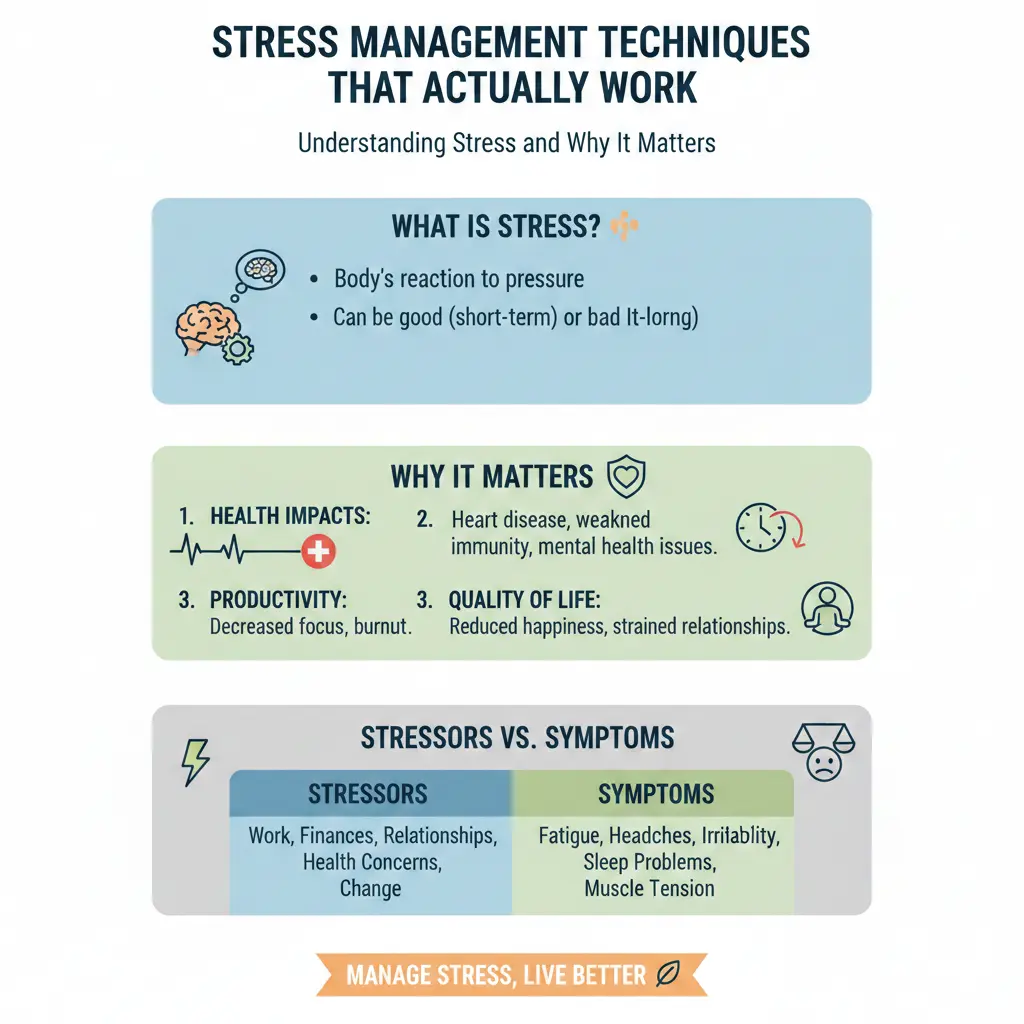
Understanding Stress and Why It Matters
Modern work has intensified significantly, with increased pace and cumulative pressure meaning more people are operating close to their stress threshold than ever before. When left unmanaged, stress leads to higher absenteeism, presenteeism (being physically present but mentally checked out), and serious long-term physical and mental health impacts.
The encouraging part? Stress management is a core capability you can develop. When handled well, you'll be better able to self-regulate under pressure, respond thoughtfully rather than react emotionally, and maintain performance during demanding periods.
Immediate Stress Relief Techniques You Can Use Right Now
1. Breathe with Intention
One of the most powerful tools you have is right under your nose—literally. Intentional breathing activates your parasympathetic nervous system, your body's natural "rest and digest" mode. This slows your heart rate, reduces cortisol (your primary stress hormone), and guides your body out of a reactive state into a balanced one.
Try these evidence-based breathing techniques:
- Box breathing: Inhale for a count of 4, hold for 4, exhale for 4, hold for 4. Repeat 5-10 times.
- 4-7-8 breathing: Inhale for 4 counts, hold for 7, exhale for 8. This longer exhale signals calm to your nervous system.
- Alternate nostril breathing: Close your right nostril, inhale through the left, then switch and exhale through the right.
Just 5–10 minutes daily can make a noticeable difference, lowering your heart rate and easing anxiety.
2. Move Your Body
Exercise is a built-in stress relief tool that helps metabolise stress hormones and restore nervous system equilibrium. Physical activity reduces stress hormones while boosting mood-enhancing chemicals like endorphins and dopamine.
You don't need a gym membership or intense workouts. Options include:
- A brisk walk around your neighbourhood
- Dancing in your kitchen
- Mind-body practices like yoga, pilates, or tai chi, which activate your parasympathetic nervous system
The key is consistency. Regular movement strengthens mental resilience and provides a stress relief tool you can turn to every day.
3. Master Grounding and Reset Strategies
When stress hits in the moment, practical grounding techniques help you regain control. These include managing negative self-talk and unhelpful thinking patterns, plus simple mindset shifts that reduce emotional intensity. The focus is on quick, accessible tools that work in real work situations.
Building Long-Term Resilience and Recovery
Understanding the Recovery Paradox
Here's something many Kiwis don't realise: recovery is hardest when we need it most. When you're busiest or most stressed, taking time to recover feels impossible—yet that's precisely when it's most critical. Stress management isn't just about coping in the moment; it's about genuine recovery.
Micro-Recovery Strategies During Your Workday
You don't need a week's holiday to recover. Micro-recovery strategies during your workday can significantly reduce cumulative stress. These might include:
- A 5-minute breathing break between meetings
- A short walk outside
- A few minutes of mindfulness or meditation
- Stepping away from your screen
Meditation and Mindfulness
Meditation shifts your body out of fight-or-flight mode by activating your parasympathetic nervous system. With consistent practice, meditation has been shown to lower cortisol levels, meaning less physical tension, improved mood regulation, stronger immunity, and better sleep.
Explore these meditation approaches:
- Mindfulness meditation: Enhances present-moment awareness and reduces emotional reactivity.
- Progressive Muscle Relaxation (PMR): Systematically relaxes your body, releasing stored tension.
- Sound healing: Listening to singing bowls or gongs can deeply calm your nervous system.
The DRAMMA Model for Lifestyle-Level Recovery
Stress management training in New Zealand often incorporates the DRAMMA model, covering key lifestyle elements:
- Diet: Nourish with purpose to support your body's stress response
- Rest: Prioritise quality sleep and recovery time
- Activity: Regular movement and exercise
- Mental wellbeing: Meditation, mindfulness, and relaxation techniques
- Movement: Physical activity and mind-body practices
- Attitude: Mindset shifts and managing self-talk
Recognising and Preventing Burnout
Early warning signs of burnout include chronic exhaustion, cynicism, reduced effectiveness, and withdrawal from work and relationships. The earlier you catch these signs, the easier they are to address.
Stress management training can significantly reduce the risk of burnout by helping you recognise early warning signs, improve recovery, and manage ongoing pressure more sustainably. It's most effective when delivered proactively rather than after burnout has already occurred.
Building Stronger Relationships and Communication
Lower stress improves listening, patience, and empathy, which has positive flow-on effects in teams and working relationships. Additionally, social connection boosts oxytocin release, a hormone that reduces cortisol, lowers blood pressure, and promotes calm. Spending time with friends and family helps lighten emotional burdens and offers valuable support that acts as a buffer against stress.
Practical Stress Management for New Zealand Workplaces
If you're managing stress in a New Zealand workplace, several options are available to you and your employer:
Workplace Stress Management Training
Stress management training is specifically designed for New Zealand workplaces, reflecting local work environments, expectations, and pressures. Training focuses on practical strategies that employees and leaders can apply immediately.
Delivery options include:
- In-person workshops: Available in-house across Auckland, Hamilton, Tauranga, Wellington, Christchurch, and Dunedin
- Virtual workshops: Online options for flexibility
- Blended learning: Combining workshops with coaching and follow-up support
In-house workshops are often the most effective for improving "collective wellbeing" and make a great addition to any workplace wellbeing programme.
Leadership Support During High-Stress Periods
Leaders play a crucial role in workplace stress management. Training for managers covers how to lead with empathy during high-stress periods, use evidence-based models to support staff, and create team action plans for wellbeing.
The Three "A's" Approach to Stressful Situations
A practical framework used in stress management training involves mastering the three "A's":
- Alter: Change the situation where possible
- Avoid: Remove yourself from stressful situations when feasible
- Accept: Develop coping strategies for situations you can't change
This framework helps you respond strategically rather than reactively to stress.
Additional Practical Strategies
Sleep and Nutrition
Quality sleep and good nutrition are foundational to stress resilience. When you're well-rested and properly nourished, you're better equipped to handle pressure and recover from stress.
Digital Boundaries
Reducing digital overload helps manage stress levels. Setting boundaries around work emails and social media—especially outside work hours—supports better recovery and work-life balance.
Create Daily Rituals
Simple daily rituals provide structure and predictability, which can reduce stress. These might include morning meditation, an evening walk, or a wind-down routine before bed.
Moving Forward
Stress management isn't a luxury—it's a core capability that enables you to perform better, maintain your wellbeing, and build resilience for the long term. Whether you're managing everyday workplace pressure or navigating a particularly demanding period, the techniques covered here provide practical, evidence-based tools you can use immediately.
Start small. Choose one or two techniques that resonate with you—perhaps intentional breathing and a daily walk—and practise consistently. As you experience the benefits, you'll naturally build a personalised stress management system that works for your life and circumstances.
Remember: better recovery and work-life balance is possible. You don't need to operate constantly close to your stress threshold. With the right tools and strategies, you can thrive, not just survive.
Frequently Asked Questions
Sources & References
-
1
Stress Management Training NZ | Practical Strategies - Epic People — epicpeople.co.nz
-
2
Finding Calm in Chaos: Practical Stress Management Strategies — www.salvacare.co.nz
-
3
Managing Stress, Burnout and Fatigue - EMA — learn.ema.co.nz
-
4
Stress Management Training - PD Training — pdtraining.co.nz
-
5
What is stress and how to manage it | Anxiety NZ — anxiety.org.nz
-
6
Best Practical Tips for Managing Stress in Christchurch 2026 — counsellingchristchurch.nz
Related Articles
Work-Life Balance for Kiwis: Practical Tips
Imagine finishing your workday at 5pm sharp, grabbing your board for a surf at Piha Beach, or hiking the Tongariro Crossing without checking emails. That's the Kiwi dream, right? Yet despite New Zeala...

Building Healthy Habits: A Kiwi's Guide
Ever feel like you're juggling too much, with work, family, and that endless Kiwi to-do list leaving little room for yourself? You're not alone—many of us struggle to fit healthy habits into our busy...