Side Hustles That Actually Work in NZ: From E-commerce to Local Services

Ever feel like your paycheck just isn't stretching far enough in today's New Zealand? With living costs climbing and Kiwis hunting for smarter ways to boost income, side hustles are more popular than...
Priya writes about immigration pathways, job searching, and building a career in New Zealand. She covers visa options, CV writing, interview preparation, and workplace culture for newcomers and locals alike.
Ever feel like your paycheck just isn't stretching far enough in today's New Zealand? With living costs climbing and Kiwis hunting for smarter ways to boost income, side hustles are more popular than ever. From launching an online store on Trade Me to offering local services like dog walking, these proven ideas can fit around your full-time job and deliver real cash flow—without the burnout.
We've rounded up the **side hustles that actually work in NZ**, drawing from local trends, platforms, and success stories. Whether you're crafty, tech-savvy, or love helping people, there's something here to get you started. Expect practical tips, earnings estimates, and Kiwi-specific advice on taxes and regs for 2026.
Why Side Hustles Are Booming in Aotearoa
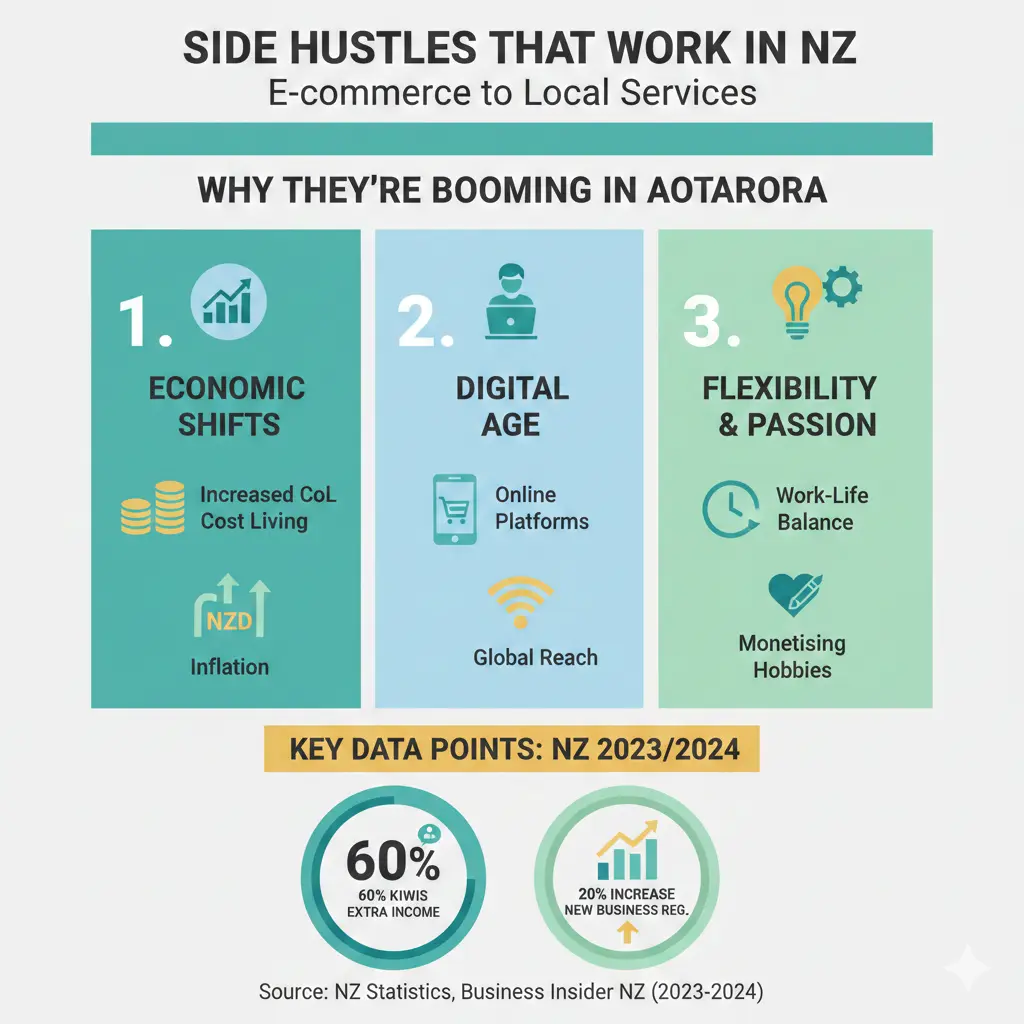
Side hustles aren't just trendy—they're a lifeline. With inflation biting and KiwiSaver contributions feeling the pinch, extra income helps cover everything from rising power bills to family holidays. In 2026, popular options like gig work and e-commerce are thriving thanks to platforms tailored to our market.
Best part? Many require zero upfront cash and can scale into full-time gigs. But success comes down to picking what matches your skills, time, and location—city dwellers might lean into delivery apps, while rural Kiwis shine with local crafts or Airbnb.
E-commerce Side Hustles: Sell Online Without the Hassle
E-commerce is a no-brainer for Kiwis wanting passive-ish income. No need for a warehouse—start small with reselling or dropshipping.
Reselling on Trade Me and Facebook Marketplace
Flip op shop finds, garage sale gems, or your own unused gear. Kiwis love bargains, so list clothes, furniture, or electronics on Trade Me or Facebook Marketplace. Hot tip: Source from Designer Wardrobe or local sales, then mark up 50-100%.
- Setup: Free listings on both platforms; snap clear photos with your phone.
- Earnings: $200–$1,000+/month part-time.
- Pro move: Build a Facebook Business page (free) and get Google Business listing for local visibility—no website needed.
Dropshipping and Shopify Stores
Sell without stock: Partner with suppliers who ship direct. Use Shopify or Trade Me's Soapbox for your store—perfect for eco-products or personalised gifts trending now.
- Costs: $29/month for basic Shopify; free trial available.
- Earnings potential: $500–$5,000+/month once rolling.
- NZ tip: Target local demand like sustainable homewares; comply with Consumer Guarantees Act for refunds.
Handmade Goods on Etsy or Local Markets
Turn hobbies into cash: Sell candles, jewellery, or pottery on Etsy for global reach or at farmers' markets. Demand for Kiwi-made, unique items is huge.
"Many local artisans have turned their side hustle into a full-time gig by catering to the growing demand for authentic, homegrown products."
- Income: $100–$2,000+/month.
- Get started: Instagram shops or pop-ups; label for Food Act compliance if baking.
Freelancing and Digital Services: Leverage Your Skills from Home
If you've got admin, writing, or design chops, freelancing pays well remotely. Platforms like Upwork or local jobs via LinkedIn connect you to clients worldwide.
Virtual Assistant (VA) and Freelance Writing
Handle emails, scheduling, or content for busy Kiwis. VAs earn steady from home; writers craft blogs or newsletters.
- Rates: $30–$60/hour; $500–$2,000/month part-time.
- Learn free: LinkedIn Learning via your library card or Udemy courses.
- Tax note: Track income over $200/year; register for GST if over $60k.
Content Creation and UGC
No huge following needed for User-Generated Content (UGC)—brands pay for authentic videos of their products. Or monetise YouTube/TikTok with affiliates.
- Earnings: $100–$1,000+ per gig; scalable with expertise.
- Tip: Share Kiwi wisdom—like lawyers or psychologists on Insta—to build fast.
Local Services: Hands-On Hustles That Build Community
Prefer face-to-face? Local gigs tap into NZ's tight-knit neighbourhoods.
Gig Economy: Delivery, Rideshare, and Pet Care
Drive for Uber Eats or offer dog walking/childcare via Neighbourly. Easy entry if you've got a car or love animals.
- Earnings: $20–$40/hour evenings/weekends.
- 2026 update: Check ACC levies for self-employed; use apps for instant payouts.
Home Services and Tutoring
Garden, tutor NCEA students, or bake for markets. Online fitness coaching or photography for events also rocks.
- Tutoring rates: $40–$80/hour.
- Promo hack: Letterbox flyers and Facebook groups for locals.
Rental Income: Monetise What You Already Own
Passive gold: List spare rooms on Airbnb or Book-a-Bach. Auckland averages $50–$60/night for a bedroom; baches near Queenstown soar higher.
- Earnings: $50–$1,000+/night.
- Rules: Resource consent if short-term rentals exceed 90 days in some councils; declare to IRD.
- Bonus: Banks love proven Airbnb income for mortgages.
Tax, Legal, and Kiwi-Specific Tips for Side Hustlers
Don't get caught out—IRD requires reporting side income. If over $200/year, it's taxable; GST kicks in at $60k turnover.
- Track everything: Use free apps like Solo for expenses.
- IR3 form: File by 7 July; claim deductions like home office.IRD.govt.nz
- Insurance: ACC for self-employed covers injuries.
Start small, build a track record—it could even help your next mortgage app.
Ready to Hustle? Your Next Steps
Pick one idea that fires you up—reselling if you're thrifty, freelancing if desk-bound. Spend 30 minutes today: Sign up for Trade Me, list a skill on LinkedIn, or snap Airbnb pics. Track earnings weekly, chat with IRD early, and scale what works. You've got this, Kiwi—turn spare time into real freedom.
Frequently Asked Questions
Sources & References
-
1
30+ Best Side Hustle Ideas for New Zealand - Solo NZ — www.soloapp.nz
-
2
How to Find a Side Hustle: 3 Surprising Options - Capsule NZ — capsulenz.com
-
3
Boost Your Income With Side Hustles - Rhino Solutions NZ — rhinosolutions.co.nz
-
4
Top 10 Side Hustles NZ: Your 2025 Guide to Earning More — www.getcourse.co.nz
-
5
The most popular side hustles that actually work in 2026 (NZ) — www.opespartners.co.nz
-
6
Profitable Side Hustles Specific to New Zealand - MoneyHub NZ — www.moneyhub.co.nz
Related Articles

Why Every Kiwi Should Have a "Side Hustle" in 2026
Imagine topping up your KiwiSaver, covering those rising power bills, or even saving for a deposit on your first home—all while keeping your day job. In 2026, with New Zealand's cost of living still b...

AI Tools for Small Business: How Kiwis are Automating Their Work
Imagine wrapping up your day in Auckland or Christchurch, knowing your small business emails are drafted, social posts scheduled, and customer queries handled—all without lifting a finger. That's the...

Working for Yourself: How to Register as a Sole Trader in NZ
Ever dreamed of ditching the 9-to-5 and calling the shots on your own terms? For many Kiwis, becoming a sole trader is the perfect way to turn that dream into reality—it's simple, low-cost, and lets y...
How to Register a Business in NZ: Step-by-Step
Starting a business in New Zealand is surprisingly straightforward compared to many other countries. Whether you're planning to operate as a sole trader, partnership, or limited company, the registrat...