How to Register a Business in NZ: Step-by-Step
Starting a business in New Zealand is surprisingly straightforward compared to many other countries. Whether you're planning to operate as a sole trader, partnership, or limited company, the registrat...
The Lifetimes NZ editorial team curates, fact-checks, and updates guides on personal finance, property, health, immigration, legal, business, and lifestyle topics relevant to Lifetimes NZ readers. Articles are produced with AI assistance and reviewed by the editorial team before publication.
Starting a business in New Zealand is surprisingly straightforward compared to many other countries. Whether you're planning to operate as a sole trader, partnership, or limited company, the registration process can be completed in just a few days—and in some cases, within 24 hours. This guide walks you through exactly what you need to do, the costs involved, and the timelines you can expect.
Understanding Your Business Structure Options
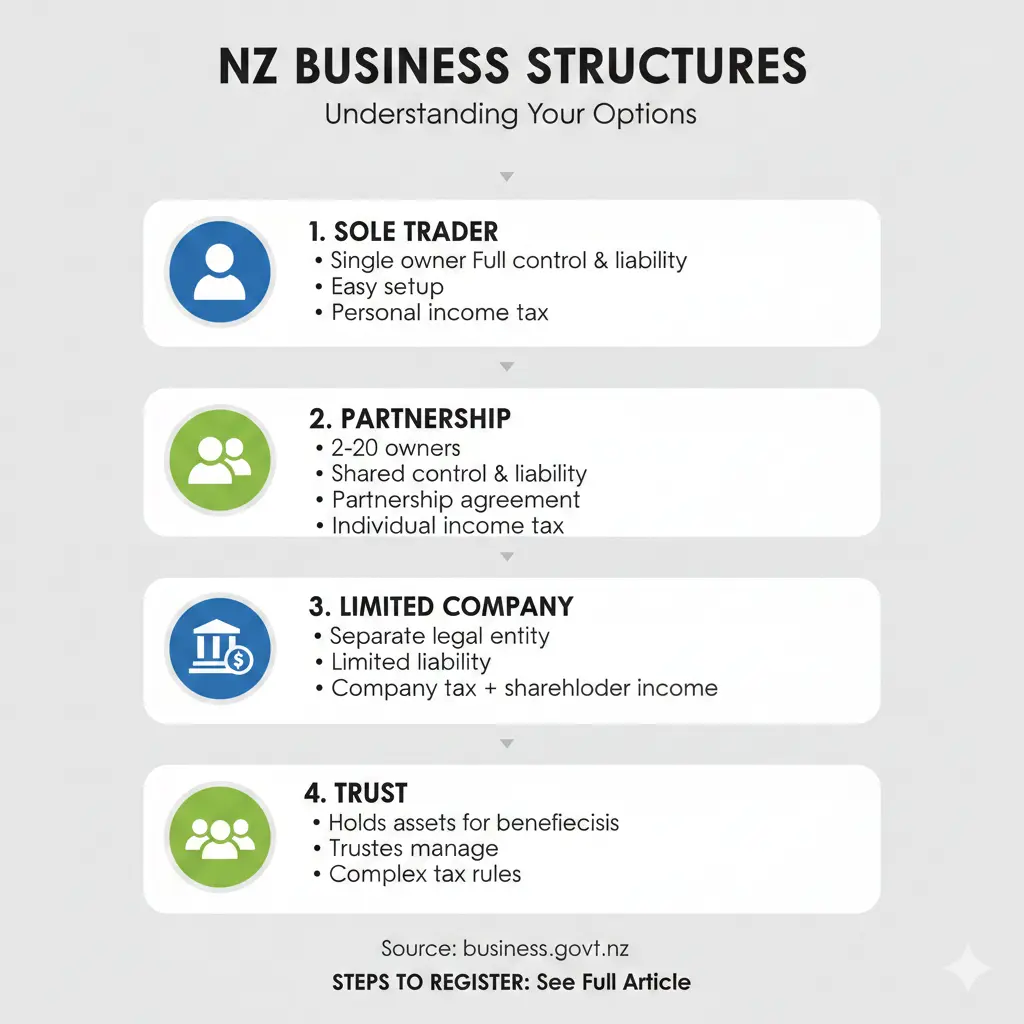
Before you register, you'll need to decide which business structure suits you best. Your choice affects your tax obligations, legal liability, and administrative requirements.
Sole Trader
A sole trader is the simplest structure and ideal if you're working alone. You'll need an IRD number and a business bank account, which you can set up on day one. The entire process takes just 1-3 days from start to trading. You're personally liable for any business debts, but there's minimal paperwork and lower setup costs.
Partnership
If you're starting with one or more partners, you can operate as a partnership. You'll need to register with the Companies Office and provide details of all partners along with a physical New Zealand address. Partnerships require annual returns and, depending on size, may need audited financial statements.
Limited Company (Ltd)
A limited company offers the most protection because your personal assets are separate from the business. You'll need at least one director (who must be a New Zealand or Australian resident) and one shareholder. There are no minimum capital requirements, and registration takes just 30 minutes online with instant approval in most cases.
Step-by-Step Registration Process
Step 1: Choose and Reserve Your Business Name
Your first task is to check that your chosen business name is available and reserve it. You can do this through the Companies Office website using your RealMe login. If you don't have a RealMe account, you'll need to create one first.
Name reservation costs $10.22 and keeps your name protected for 20 working days, usually processed the same day. This gives you time to get your other details sorted before formal registration.
Step 2: Register Your Company Online
Once you've reserved your name, you're ready to register. The online registration takes just 10-30 minutes and costs $115.92 (or $135.92 if filing on paper). You'll need to provide:
- Director details and addresses
- Shareholder information
- Your registered company address (a physical address in New Zealand)
- Details of your company's shares structure
Registration is processed instantly in most cases. You'll immediately receive your company number (also called your NZBN—New Zealand Business Number) and a certificate of incorporation.
Step 3: Register for Tax
Your company automatically gets an IRD number when registered with the Companies Office. You'll receive it within 1-2 business days in your RealMe or myIR account.
You'll also need to register for GST if your turnover exceeds or is expected to exceed $60,000 per year. GST registration takes just 10-15 minutes online and is processed within 1-2 business days. You can backdate your GST registration up to 6 months if needed.
Step 4: Open a Business Bank Account
Once you have your company number and IRD number, you can apply for a business bank account. Most banks process applications within 1-5 business days. You'll need to provide:
- Your certificate of incorporation
- Company number (NZBN)
- Director ID (driver's license or passport)
- Proof of address for directors
Having a separate business bank account keeps your finances organised and is essential for GST purposes.
Step 5: Set Up Essential Business Operations
Once your bank account is active, you're getting close to trading. However, there are a few more things to sort out:
Business Insurance
Depending on your industry, you may need public liability insurance, professional indemnity insurance, or contents insurance. You can get quotes online the same day and activate coverage immediately or the next day.
Shareholder Agreement (If You Have Multiple Owners)
If your company has more than one shareholder, a shareholder agreement protects everyone's interests. You can use a DIY template (1-2 days) or have a lawyer draft one (1-2 weeks, costing $500-3,000).
Employment Agreements (If You're Hiring)
If you're planning to hire employees, you must provide them with a written employment agreement before they start work. Template-based agreements take 1-2 days, while custom-drafted agreements take 3-5 days.
Industry-Specific Licensing Requirements
Some industries require additional licenses or registrations before you can legally operate. These can add significant time to your setup:
| Industry | License Required | Typical Timeline |
|---|---|---|
| Real Estate | REA License | 2-4 weeks |
| Electrical Work | EWRB Registration | 2-6 weeks |
| Building/Construction | LBP License | 4-8 weeks |
| Financial Services | FMA License | 3-6 months |
| Alcohol Sales | Alcohol License | 2-4 months |
| Food Business | Food Control Plan | 2-4 weeks |
Check with your industry regulator early in the process to avoid delays.
Real-World Timeline Examples
Example 1: Online Freelancer (Sole Trader)
Day 1: Get IRD number, open bank account
Day 2: Register for GST (if applicable)
Day 3: Start trading
Total time: 1-3 days
Example 2: Standard Limited Company
Day 1: Register company online (instant)
Days 2-3: Register for GST, apply for bank account
Days 5-7: Bank account active
Week 2: Insurance and agreements in place
Total time: 1-2 weeks
Key Costs to Budget For
Here's what you can expect to pay when registering your business:
- Company name reservation: $10.22
- Company registration: $115.92 online
- GST registration: Free
- IRD number: Free
- Business bank account: Free (though some banks may have monthly fees)
- Shareholder agreement (lawyer-drafted): $500-3,000
- Business insurance: Varies by industry and coverage
For a basic sole trader or simple limited company, you're looking at minimal upfront costs—often under $200 before insurance.
Important Compliance Requirements
Once you're registered, you'll have ongoing legal obligations:
- Annual returns: All companies must file annual returns with the Companies Office
- Tax returns: You must file income tax returns with the IRD annually
- GST returns: If registered for GST, you'll file returns every two months or annually depending on your turnover
- Financial reporting: All New Zealand firms must prepare financial reports within five months of the balance sheet date, though small companies may be exempt from audit requirements
- PAYE: If you're employing staff, you must register for PAYE and pay employer tax (3-6%)
The IRD website has comprehensive information about your responsibilities as a business owner.
Next Steps: Getting Started Today
You're now ready to register your business. Here's what to do right now:
- Decide on your business structure (sole trader, partnership, or limited company)
- Check if your industry requires special licensing
- Go to the Companies Office website and create or log into your RealMe account
- Reserve your business name ($10.22)
- Complete your company registration (30 minutes, $115.92)
- Register for tax with the IRD
- Apply for a business bank account
- Set up insurance and any necessary agreements
The process is designed to be straightforward, and you can complete most of it online. If you need help, the IRD has comprehensive guidance for new business owners, and the Companies Office provides support throughout the registration process. Within days, you'll be ready to start trading and building your business.
Frequently Asked Questions
Sources & References
-
1
How Long to Set Up a Business in NZ 2026 | Complete Timeline — www.lawyerfinder.co.nz
-
2
Starting a business in New Zealand — www.hawksford.com
-
3
Registering your company to do business in New Zealand — companies-register.companiesoffice.govt.nz
-
4
Starting a company — www.business.govt.nz
-
5
Registering a company in New Zealand - YB Case 2026 — ybcase.com
-
6
Doing Business in New Zealand in 2026 [Expert Guide] — remotepeople.com
-
7
New Zealand Business Number - Applying for an NZBN — www.nzbn.govt.nz
-
8
Starting a company — companies-register.companiesoffice.govt.nz
-
9
I am starting a new business — www.ird.govt.nz
Related Articles

Why Every Kiwi Should Have a "Side Hustle" in 2026
Imagine topping up your KiwiSaver, covering those rising power bills, or even saving for a deposit on your first home—all while keeping your day job. In 2026, with New Zealand's cost of living still b...

AI Tools for Small Business: How Kiwis are Automating Their Work
Imagine wrapping up your day in Auckland or Christchurch, knowing your small business emails are drafted, social posts scheduled, and customer queries handled—all without lifting a finger. That's the...

Working for Yourself: How to Register as a Sole Trader in NZ
Ever dreamed of ditching the 9-to-5 and calling the shots on your own terms? For many Kiwis, becoming a sole trader is the perfect way to turn that dream into reality—it's simple, low-cost, and lets y...

Side Hustles That Actually Work in NZ: From E-commerce to Local Services
Ever feel like your paycheck just isn't stretching far enough in today's New Zealand? With living costs climbing and Kiwis hunting for smarter ways to boost income, side hustles are more popular than...