Why Every Kiwi Should Have a "Side Hustle" in 2026

Imagine topping up your KiwiSaver, covering those rising power bills, or even saving for a deposit on your first home—all while keeping your day job. In 2026, with New Zealand's cost of living still b...
Priya writes about immigration pathways, job searching, and building a career in New Zealand. She covers visa options, CV writing, interview preparation, and workplace culture for newcomers and locals alike.
Imagine topping up your KiwiSaver, covering those rising power bills, or even saving for a deposit on your first home—all while keeping your day job. In 2026, with New Zealand's cost of living still biting and the job market shifting, a side hustle isn't just nice to have; it's a smart move every Kiwi should consider to build financial resilience and seize new opportunities.
We're seeing job ads tick up for the eighth straight month, signalling a stronger start to 2026, yet applications per role remain high due to cost-of-living pressures. At the same time, only 41% of NZ businesses grew in 2025, pushing many owners to delay recovery hopes until mid-2026 or later. This backdrop makes a side hustle essential—not as a risky gamble, but as a flexible way to earn extra income from home or on your schedule.
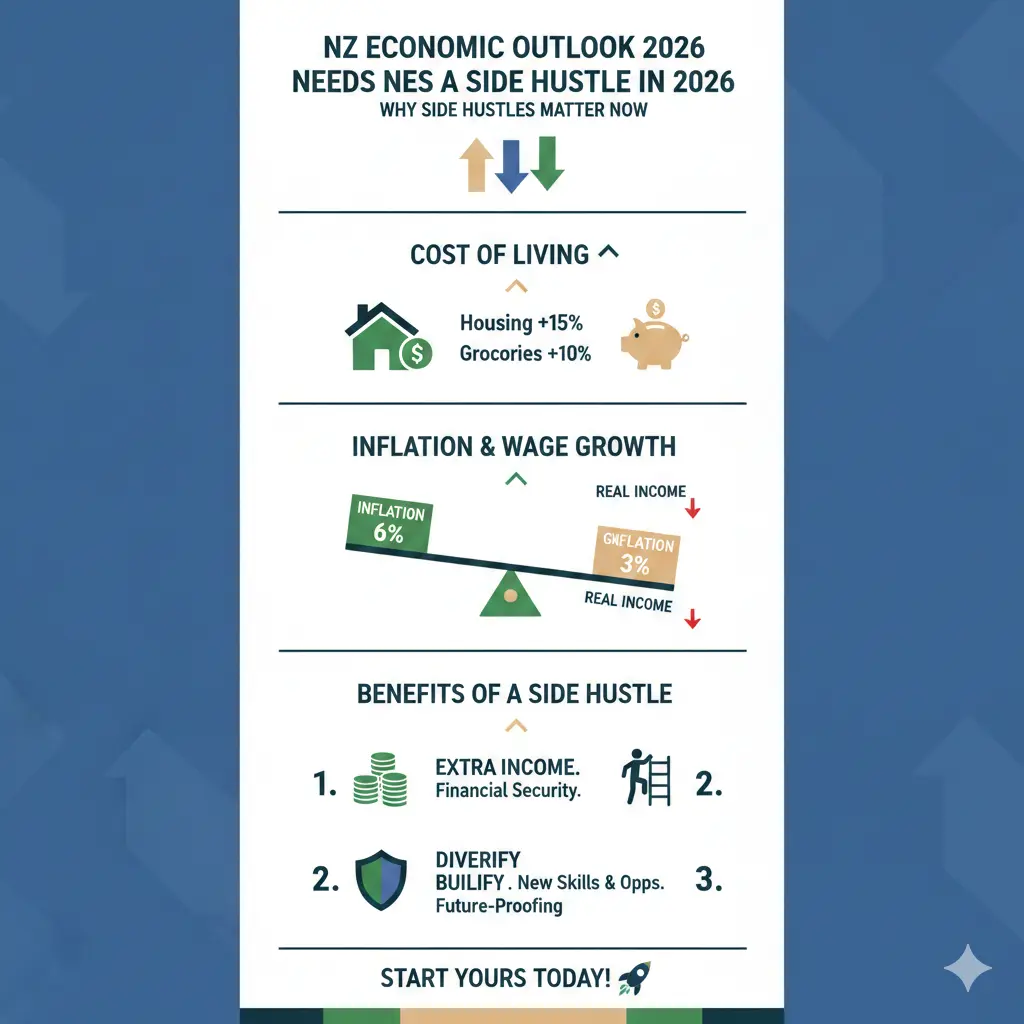
The New Zealand Economic Picture in 2026: Why Side Hustles Matter Now
New Zealand's workforce outlook for 2026 shows a market in transition. Candidate activity is surging as Kiwis hunt for better wages amid ongoing economic softness, particularly in Auckland where unemployment has risen sharply. Job ads are below pre-COVID levels nationally, but sectors like construction, trades, and ICT are leading a gradual recovery, with South Island regions like Otago and Southland posting over 23% annual growth.
Business sentiment is improving too. Recent surveys show a net 50% of businesses budgeting for higher profitability in 2026, up from 30% previously, with demand strengthening across more sectors and regions. Yet, with flat or negative GDP lingering into early 2026 and mortgage pressures easing slowly, many households need buffer income. A side hustle steps in here: it's low-commitment, scalable, and can fund everything from KiwiSaver top-ups to property investments.
Cost-of-Living Pressures Hitting Kiwis Hard
Fuel, groceries, and rent continue to climb, making it tougher to save. Side hustles offer a direct counter—earn $18–$25/hour driving for rideshares without quitting your job. Or list a spare room on Airbnb for $50–$60/night in Auckland alone. These aren't get-rich-quick schemes but practical ways to offset expenses.
Top Side Hustles That Work for Kiwis in 2026
From urban Auckland to rural Otago, these proven options fit NZ lifestyles. Focus on low startup costs and flexibility around ACC-covered main jobs or WINZ benefits (check rules first).
Ridesharing and Delivery Driving
- Earnings: $18–$25/hour, varying by city and peak times.
- Pros: Instant start with apps like Uber or Zoomy; use your existing car.
- Cons: Fuel and vehicle depreciation eat into profits—track via IRD for tax deductions.
- NZ Tip: Auckland and Wellington demand is rebounding with job ad growth.
Airbnb Hosting or Spare Room Rentals
- Earnings: $50–$1,000+/night; Auckland averages $50–$60 for a bedroom.
- Pros: Passive once set up; great for property owners or flatmates.
- Cons: Setup costs and local council rules—check resource consent if needed.
- NZ Tip: Ideal in tourist hotspots like Queenstown or Rotorua, where construction booms drive visitors.
Online Selling and E-Commerce
Sell niche items on Trade Me or Facebook Marketplace. One first home buyer imported racing seats for $800 and flipped them at $1,500 to petrolheads. Platforms like Shopify make it easy.
- Earnings: Scalable—build to steady income with 12–14 months' history for bank loans.
- Action Step: Register as a sole trader with IRD if earnings exceed $60,000/year (GST threshold).
Content Creation and Influencing
- Earnings: Full-time influencers average $46k/year per IRD, but side gigs start smaller.
- Pros: Leverage TikTok or Instagram from home; NZ brands love local creators.
- Cons: Takes time to grow audience—aim for consistent posting.
Freelancing in High-Demand Sectors
With ICT and trades ads rising, offer skills via Upwork or local sites. Regional strength in Manawatū or Gisborne means opportunities everywhere.
Legal and Tax Essentials for Kiwi Side Hustlers
Don't get caught out—NZ rules are straightforward but firm. Report all income to IRD, even if under $200/week. Use the IRD's myIR portal for easy tracking.
Income Tax and GST
- Side hustle income is taxable—deduct expenses like fuel or home office costs.
- Hit $60,000 total turnover? Register for GST via ird.govt.nz.
- Tip: Keep records for 7 years; apps like Xero simplify this.
Using Side Hustle Income for Big Goals
Banks recognise 12–14 months of steady earnings for mortgages or loans. It's helped many top up investment properties or buy first homes.
ACC and WINZ Considerations
- Side work doesn't affect main job ACC cover, but declare if on benefits—WINZ allows up to $160/week without abatement (2026 rates).
- Check studylink.govt.nz if balancing with study.
Practical Tips to Launch Your Side Hustle Successfully
- Start Small: Pick one hustle matching your skills—test for 3 months.
- Track Everything: Use free tools like Google Sheets for income/expenses.
- Scale Smart: Reinvest 20% into growth, like better equipment.
- Network Locally: Join NZ Facebook groups for rideshare drivers or Trade Me sellers.
- Protect Yourself: Get public liability insurance for hosting or driving.
In regional areas outperforming cities, like Otago's 23% job ad surge, combine side hustles with local demand for trades freelancing.
Next Steps: Get Your Side Hustle Started Today
Pick one idea, set up your IRD records, and launch this weekend. Download apps, list that room, or post your first product. Track progress monthly and watch your financial security grow. In 2026's recovering NZ economy, your side hustle could be the edge that turns pressures into opportunities—kiwisaver contributions, debt paydown, or that dream investment property await.
Frequently Asked Questions
Sources & References
-
1
The most popular side hustles that actually work in 2026 (NZ) — www.opespartners.co.nz
-
2
New Zealand hiring market: Workforce outlook for 2026 — www.talentinternational.com
- 3
-
4
Why Only 41% of NZ Businesses Grew in 2025 (and what ...) - YouTube — www.youtube.com
- 5
Related Articles

AI Tools for Small Business: How Kiwis are Automating Their Work
Imagine wrapping up your day in Auckland or Christchurch, knowing your small business emails are drafted, social posts scheduled, and customer queries handled—all without lifting a finger. That's the...

Working for Yourself: How to Register as a Sole Trader in NZ
Ever dreamed of ditching the 9-to-5 and calling the shots on your own terms? For many Kiwis, becoming a sole trader is the perfect way to turn that dream into reality—it's simple, low-cost, and lets y...

Side Hustles That Actually Work in NZ: From E-commerce to Local Services
Ever feel like your paycheck just isn't stretching far enough in today's New Zealand? With living costs climbing and Kiwis hunting for smarter ways to boost income, side hustles are more popular than...
How to Register a Business in NZ: Step-by-Step
Starting a business in New Zealand is surprisingly straightforward compared to many other countries. Whether you're planning to operate as a sole trader, partnership, or limited company, the registrat...