Working for Yourself: How to Register as a Sole Trader in NZ

Ever dreamed of ditching the 9-to-5 and calling the shots on your own terms? For many Kiwis, becoming a sole trader is the perfect way to turn that dream into reality—it's simple, low-cost, and lets y...
Priya writes about immigration pathways, job searching, and building a career in New Zealand. She covers visa options, CV writing, interview preparation, and workplace culture for newcomers and locals alike.
Ever dreamed of ditching the 9-to-5 and calling the shots on your own terms? For many Kiwis, becoming a sole trader is the perfect way to turn that dream into reality—it's simple, low-cost, and lets you keep full control of your business. Whether you're a tradie fixing homes in Auckland, a graphic designer freelancing from Wellington, or starting a side hustle in Christchurch, registering as a sole trader in New Zealand means no fancy company setup or big fees—just a few straightforward steps with Inland Revenue (IR).
In this guide, we'll walk you through everything you need to know about working for yourself: how to register as a sole trader in NZ. From getting your IRD number to handling GST and ACC, you'll find practical tips, real Kiwi examples, and 2026 updates to get you trading legally and confidently. Let's dive in and get your business off the ground.
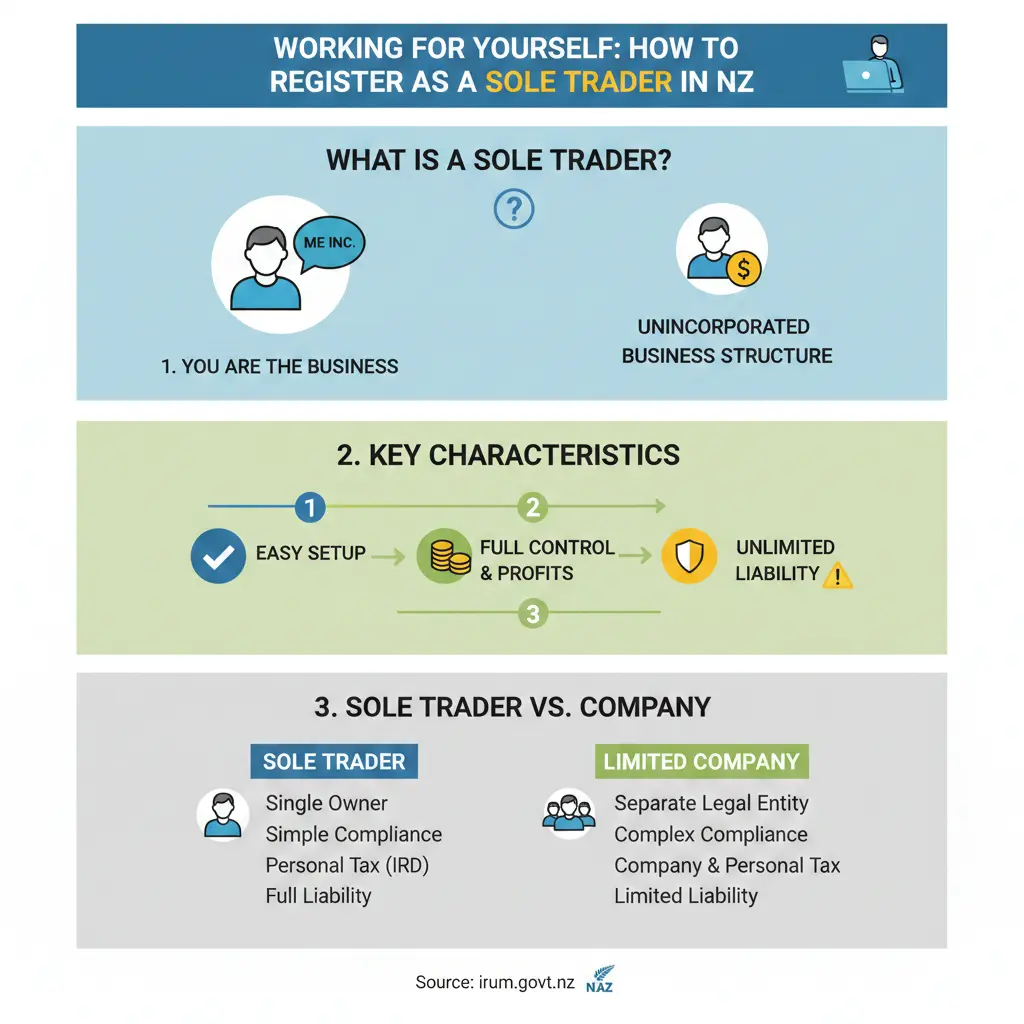
What is a Sole Trader?
A sole trader is the simplest business structure in New Zealand—you're the boss, owner, and operator all in one. There's no separate legal entity like a company; your business and personal finances are linked, which means you pocket all the profits but also bear personal liability for any debts.
Think of it like this: if you're a plumber in Hamilton taking on jobs independently, you're a sole trader. No shareholders, no board meetings—just you, your tools, and your clients. It's ideal for solopreneurs, contractors, or anyone testing the waters before scaling up.
Pros and Cons of Being a Sole Trader
- Pros: Quick and free to start, full control, simple tax filing through your personal return, easy to wind down.
- Cons: Unlimited personal liability (your home or savings could be at risk), harder to raise capital, and all admin falls on you.
Over 300,000 Kiwis operate as sole traders, making it the most common business type for those working for themselves.
Eligibility: Who Can Register as a Sole Trader in NZ?
Pretty much any Kiwi adult ready to trade can become a sole trader. You need to be a natural person (not a company), over 18 or with legal capacity, and legally able to work in New Zealand—whether you're a citizen, resident, or hold the right visa.
No minimum capital is required; you could start with just your skills and a laptop. Examples include consultants, artists, or market stall owners. Just ensure your industry doesn't need special quals, like a building licence for builders.
Step-by-Step Guide: How to Register as a Sole Trader in NZ
Good news: there's no formal "registration" like with companies—no Companies Office, no fees. The key is notifying Inland Revenue you're now self-employed. Here's your actionable checklist for 2026.
Step 1: Get or Confirm Your IRD Number
Your IRD (Inland Revenue Department) number is your golden ticket—most Kiwis already have one from jobs, KiwiSaver, or banking. If not, apply free online via the IR website; it'll take minutes.
Action: Log into myIR (or create an account) and confirm your details. IR uses this to track your income, tax, GST, and ACC.
Step 2: Notify IR You're Working for Yourself
Once you have your IRD, log into myIR and select "Tell us you're self-employed" or similar—it's a quick online form with no fee. Provide a clear description of your business activity, like "freelance web developer" or "mobile car detailer".
IR will automatically share your details with ACC for coverage. You're good to start trading!
Step 3: Choose and Protect Your Business Name (Optional)
You can trade under your own name (e.g., "John Smith's Plumbing") for free, or pick a trading name like "KiwiFix Repairs". Check availability on the Companies Office register to avoid conflicts, and consider a "Trading as" (T/A) name via IR if needed—no formal registration required unless it's a sensitive industry.
Step 4: Register for GST if Required
GST (Goods and Services Tax) at 15% kicks in if your annual turnover hits or exceeds NZ$60,000 in any 12-month period. Register via myIR—it's mandatory then, but optional below that threshold if it suits your clients (e.g., GST-registered businesses prefer it).
Tip: Many sole traders register early to claim GST on expenses like tools or software. Failure to register on time can mean penalties.
Step 5: Sort ACC and Other Registrations
Self-employed Kiwis get automatic ACC cover for work injuries—IR passes your details on, and you'll pay levies based on earnings and industry (e.g., higher for construction). Expect an annual invoice after year one.
Check for local council permits (e.g., food handling for market vendors) or professional licences (e.g., real estate).
Step 6: Get an NZBN (Recommended, Not Mandatory)
A New Zealand Business Number (NZBN) is like a free business passport—apply online using your IRD and ID (driver licence works best for instant approval). It's handy for tenders, banking, and proving legitimacy.
Ongoing Obligations for Sole Traders
Registration is just the start—stay compliant to avoid fines.
- Income Tax: File via your personal return by 7 July; pay provisional tax in instalments if earning over $5,000.
- GST Returns: Monthly, bi-monthly, or six-monthly based on turnover—file and pay via myIR.
- Records: Keep invoices, receipts, and bank statements for 7 years. Tools like Xero make this easy.
- ACC Levies: Pay annually based on previous earnings.
Pro Tip: Use cloud accounting software from day one to track everything and simplify tax time.
Common Mistakes to Avoid
Don't skip IR notification—trading without it risks back taxes. Mixing personal and business bank accounts complicates audits, so open a separate business one. And if GST-bound, charge it from the start to avoid shortfalls.
Next Steps to Start Working for Yourself
Ready to launch? Grab your IRD, log into myIR today, and notify IR you're self-employed—that's your business live in under an hour. Set up a business bank account, get quoting, and track every dollar. For tailored advice, visit ird.govt.nz or consult a Kiwi accountant. You've got this—kiwi ingenuity thrives when we work for ourselves!
Frequently Asked Questions
Sources & References
- 1
-
2
How to Register as a Sole Trader in New Zealand - FirmNL — www.firm-nl.com
- 3
- 4
-
5
How Do You Become a Sole Trader in NZ - LegalVision New Zealand — legalvision.co.nz
- 6
-
7
Applying for an NZBN if you're self-employed - NZBN — www.nzbn.govt.nz
- 8
-
9
I am starting a new business - Inland Revenue — www.ird.govt.nz
Related Articles

Why Every Kiwi Should Have a "Side Hustle" in 2026
Imagine topping up your KiwiSaver, covering those rising power bills, or even saving for a deposit on your first home—all while keeping your day job. In 2026, with New Zealand's cost of living still b...

AI Tools for Small Business: How Kiwis are Automating Their Work
Imagine wrapping up your day in Auckland or Christchurch, knowing your small business emails are drafted, social posts scheduled, and customer queries handled—all without lifting a finger. That's the...

Side Hustles That Actually Work in NZ: From E-commerce to Local Services
Ever feel like your paycheck just isn't stretching far enough in today's New Zealand? With living costs climbing and Kiwis hunting for smarter ways to boost income, side hustles are more popular than...
How to Register a Business in NZ: Step-by-Step
Starting a business in New Zealand is surprisingly straightforward compared to many other countries. Whether you're planning to operate as a sole trader, partnership, or limited company, the registrat...