Sole Trader vs Company: Choosing Your Business Structure

Deciding between operating as a sole trader or incorporating a company can make or break your business journey in New Zealand. With unlimited personal liability on one side and limited liability prote...
Sarah covers personal finance, tax, and KiwiSaver topics for Lifetimes NZ. She focuses on making money management straightforward and practical for everyday Kiwis.
Deciding between operating as a sole trader or incorporating a company can make or break your business journey in New Zealand. With unlimited personal liability on one side and limited liability protection on the other, the choice shapes everything from your tax bill to your growth potential—let's break it down so you can pick the structure that fits your Kiwi hustle.
What is a Sole Trader?
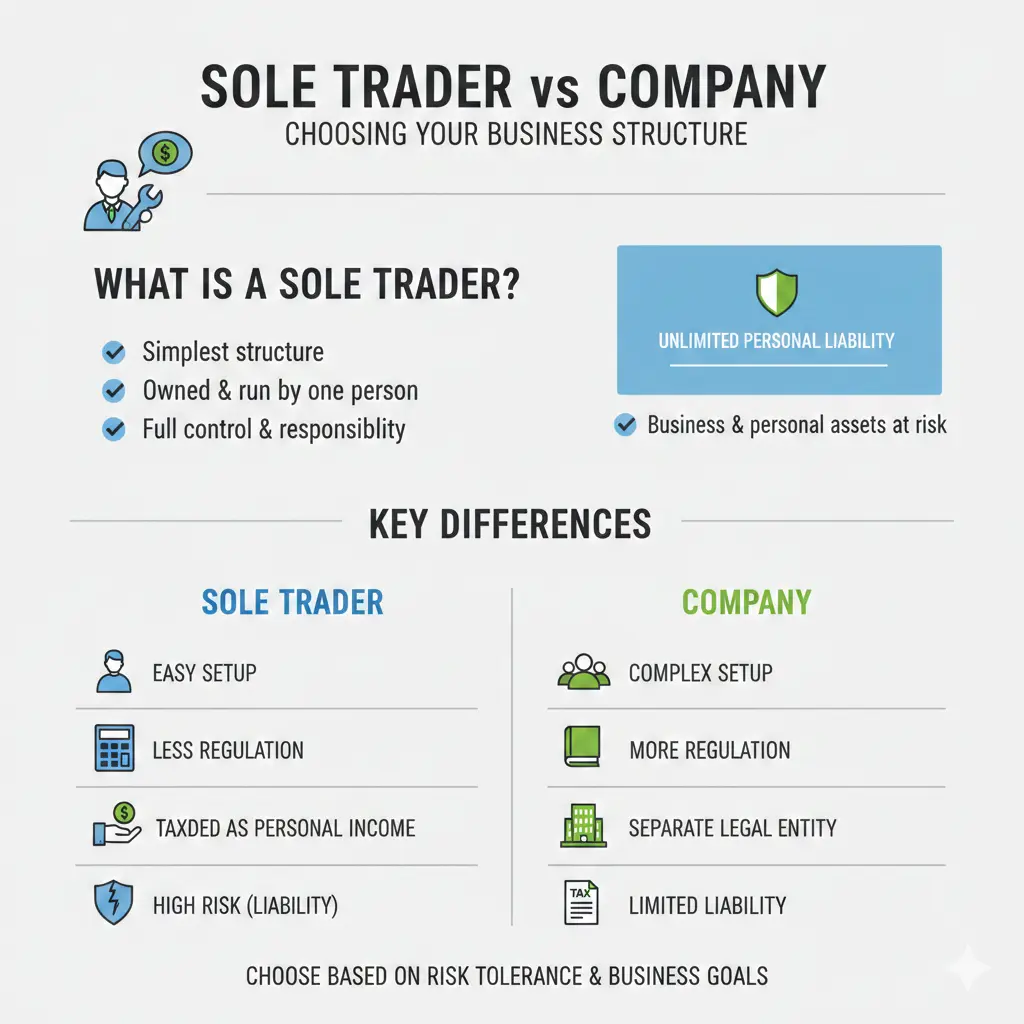
A sole trader is the go-to for many Kiwis starting small, like a tradie fixing homes or a freelancer offering graphic design. You're the boss, owner, and business all in one—there's no legal wall between you and your operation.
Key Features of a Sole Trader
- Simple setup: Jump in using your own name and IRD number—no paperwork headaches or fees.
- Full profits yours: Keep every dollar after expenses, taxed at your personal rates.
- Unlimited liability: Your home, car, or savings could be at risk if debts pile up.
- Minimal compliance: Basic record-keeping for IRD, no annual returns needed.
- Control everything: Make all calls without shareholders or directors meddling.
For low-risk ventures under $70,000 profit, this keeps things straightforward. First-time provisional taxpayers might snag a 6.7% tax discount too.
What is a Company?
A company is a separate legal entity, like those behind growing Kiwi brands seeking investors. Shareholders own it, directors run it, and it's bound by the Companies Act 1993.
Key Features of a Company
- Limited liability: Shareholders risk only their investment—personal assets stay safe from business debts.
- Professional vibe: Looks more credible to clients, banks, and investors.
- Tax at 28%: Flat corporate rate on profits, lower than top personal rates (39%).
- Flexibility: Retain earnings or pay dividends; split income smartly with family.
- Multiple owners: Bring in shareholders for growth or funding.
Setup costs around $150 via the Companies Office website, but expect ongoing annual returns and financial statements.
Sole Trader vs Company: Key Differences
Here's where the rubber hits the road for sole trader vs company in New Zealand. We've compared them head-to-head in the table below for quick scanning.
| Aspect | Sole Trader | Company |
|---|---|---|
| Liability | Unlimited—personal assets at risk | Limited to shares (directors have duties) |
| Setup Cost | Free or minimal | $150+ via Companies Office |
| Tax Rate | Personal rates (up to 39%) | 28% corporate + dividends |
| Compliance | Simple IRD reporting | Annual returns, statements, Companies Act |
| Ownership | One person only | Multiple shareholders/directors |
| Growth Suitability | Small-scale | Scaling, investors |
Liability stands out: as a sole trader, one bad contract could cost your family home. Companies shield you, but directors face personal suits for breaching duties under the Companies Act.
Tax Implications: Sole Trader vs Company
Taxes are a biggie in the sole trader vs company debate. Sole traders report business income on their personal IRD return—progressive rates kick in: 10.5% up to $15,600, 17.5% to $53,500, 30% to $78,100, 33% to $180,000, and 39% above. Over $78,100, you're hit with 33% or more—no splitting profits.
Companies pay a flat 28% on profits. Distribute as dividends? Shareholders pay personal rates, but imputation credits offset some tax. Retain earnings for growth at 28%—smart if you're reinvesting.
Real Kiwi Tax Example
Say your business turns $100,000 profit in 2026. As a sole trader: $22,878 tax (at personal rates).
Switch to company, pay yourself $78,000 salary (taxed personally), allocate $22,000 to partner (1% shareholder) for admin work. They earn $30,000 elsewhere. Total family tax: $19,471—saving $3,407. But get IRD approval for family payments and ensure it's legit work, or risk audits.
"If your income is below $70,000, a sole trader structure might work well... If higher, the flat 28% company tax rate could be advantageous."
Track everything via Xero or MYOB for IRD compliance. Provisional tax applies if over $5,000 GST or income.
Pros and Cons: Which is Right for You?
Sole Trader Pros and Cons
- Pros: Cheap start, full control, all profits yours, employ others (not family without approval).
- Cons: Unlimited liability, high tax brackets, can't easily split income, less credible for big contracts.
Company Pros and Cons
- Pros: Liability protection, tax savings at scale, investor-friendly, income splitting options.
- Cons: Setup/admin costs, director duties, separate tax returns.
Low-risk, solo gig like dog walking? Sole trader. High-risk trade business or eyeing expansion? Company.
Can You Switch from Sole Trader to Company?
Yes, absolutely—you can incorporate later. Transfer assets via sale to the company, but watch for tax hits like bright-line rules or GST. IRD scrutinises switches purely for tax perks (e.g., dodging 39% to 28%) as potential evasion. Have solid reasons like growth or liability needs.
Steps: Register company on companies-register.govt.nz, transfer assets, update IRD, notify clients/banks. Get accounting help to avoid pitfalls.
When to Choose Sole Trader vs Company
Pick sole trader if:
- Starting small, low risk, profits under $70,000.
- You want zero admin fuss.
- Solo operator, no partners.
Pick company if:
- High liability risks (construction, consulting).
- Profits over $78,100 for tax perks.
- Planning staff, investors, or exports.
Assess your risk: use ACC for injury cover either way, but companies suit KiwiSaver contributions via PAYE too.
Practical Tips for Kiwi Business Owners
- Get IRD sorted: Apply for number if needed; register for GST over $60,000 turnover (2026 threshold).
- Budget setup: Sole trader—free. Company—$150 + lawyer ($500+).
- Use free tools: Business.govt.nz for guides, Companies Office for incorporation.
- Protect yourself: Public liability insurance essential for sole traders.
- Track finances: Apps like Xero integrate with IRD for provisional tax.
- Seek advice: Chat WINZ for startups, accountant for tax sims.
Next Steps: Secure Your Business Structure Today
Crunch your numbers: project profits, risks, and goals. Use business.govt.nz's structure tool, then consult an accountant or lawyer for tailored advice—this isn't financial advice, so get pros involved. Register via companies-register.govt.nz or just start trading as a sole trader with your IRD. Build smart, Kiwi—your business legacy starts now.
Disclaimer: This guide uses 2026 rates; tax laws evolve. Always seek professional financial advice from an accountant or IRD for your situation.
Frequently Asked Questions
Sources & References
-
1
Company vs Sole Trader in New Zealand — openthecompany.co.nz — openthecompany.co.nz
- 2
- 3
-
4
Business Structure Decision – Sole Trader vs Company — afirmo.com — www.afirmo.com
-
5
Tax Implications of Sole Trader vs. Company Structure — blackarrow.co.nz — blackarrow.co.nz
-
6
Choosing the right business structure — business.govt.nz — www.business.govt.nz
Related Articles

Industry Bodies and Professional Associations NZ
Whether you're launching a business, advancing your career, or navigating financial regulations, industry bodies and professional associations in New Zealand offer invaluable support. These organisati...

Emergency Benefit NZ: When You Have No Other Options
When you're struggling financially and don't qualify for other benefits, the Emergency Benefit might be your lifeline. It's a discretionary payment designed for Kiwis in genuine hardship who've exhaus...

Unpaid Internships NZ: Are They Legal?
Unpaid internships are a common pathway for students and graduates to gain work experience in New Zealand, but there's often confusion about whether they're actually legal. The short answer is: unpaid...

Estate Administration NZ: Managing Someone's Affairs After Death
Losing a loved one is one of life's toughest challenges, and stepping in to manage their estate can feel overwhelming. In New Zealand, estate administration—the process of handling someone's affairs a...