Business Insurance NZ: What Coverage You Actually Need
Running a business in New Zealand comes with risks you can't ignore. From fires and theft to legal disputes and cyber attacks, the unexpected can derail your operations and finances in seconds. The ri...
Sarah covers personal finance, tax, and KiwiSaver topics for Lifetimes NZ. She focuses on making money management straightforward and practical for everyday Kiwis.
Running a business in New Zealand comes with risks you can't ignore. From fires and theft to legal disputes and cyber attacks, the unexpected can derail your operations and finances in seconds. The right business insurance isn't just a safety net—it's essential protection that keeps your business resilient when things go wrong. But with so many coverage options available, knowing what you actually need can feel overwhelming. This guide breaks down the insurance landscape for Kiwi businesses, helping you identify the coverage that matters most for your situation.
Why Business Insurance Matters in New Zealand
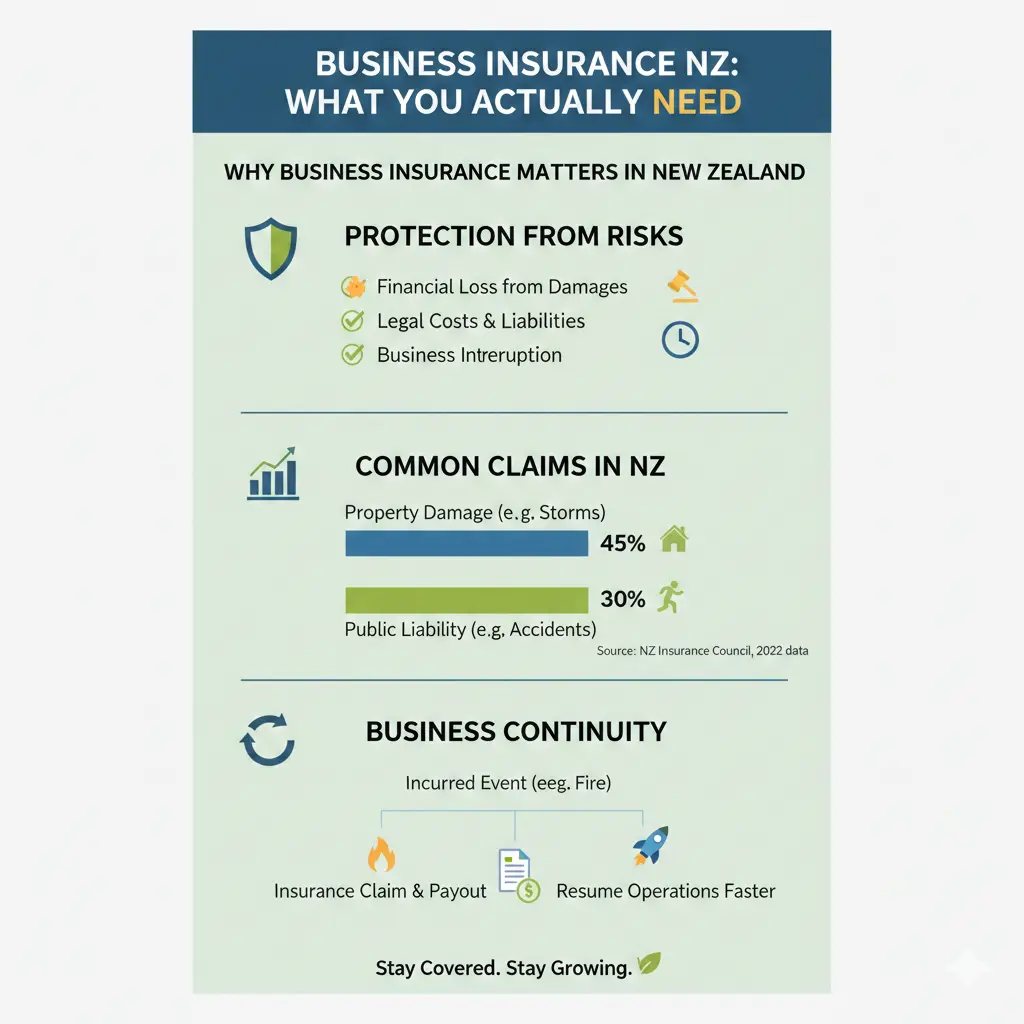
Business insurance protects you against financial losses from events beyond your control. Without it, a single incident—a fire destroying your premises, a customer suing you, or a cyber attack compromising your data—could force you to close your doors permanently.
In New Zealand, insurance isn't always legally mandatory, but your industry, lenders, or landlord might require it. More importantly, the risks of operating without adequate coverage far outweigh the cost of premiums. Whether you're a sole trader, small business, or growing company, understanding your exposure and addressing it with the right policies is critical to long-term success.
The Core Insurance Types Every Business Should Consider
General Liability Cover
General liability insurance is the foundation of business protection. It covers you if a customer, supplier, or member of the public is injured or their property is damaged because of your business activities or products. This includes legal costs if you're sued.
We recommend that all businesses and self-employed people have at least basic general liability cover. It's one of the most affordable policies available, yet it protects you from potentially catastrophic legal expenses.
Commercial Property Insurance
If you own or lease business premises, commercial property insurance covers material loss or damage to your building and contents. This includes protection against:
- Fire and natural disasters (floods, earthquakes)
- Theft and burglary
- Glass breakage
- Machinery breakdown
- Portable contents and electronic equipment
Important note for home-based businesses: Your household insurance doesn't automatically cover your workspace or business assets. If you run your business from home, you'll need to discuss this with your insurer or consider a separate policy.
Earthquake cover requires special attention. After the 2011 Canterbury earthquakes, insurers now ask more detailed questions before agreeing to earthquake cover, including when the property was built, what strengthening work has been done, what ground it's built on, and the property's seismic rating. If you're unsure about your building's seismic resilience, talk to an engineer.
Business Interruption Insurance
Business interruption insurance covers you when your operations are disrupted by natural disasters, fire, or burglary—events typically covered under commercial property policies. It pays for your wages, rent, utilities, and profit during the downtime, allowing your business to survive the interruption.
This is particularly valuable if your business has tight margins or limited cash reserves. You can take out this policy even if you lease your premises.
Commercial Vehicle Insurance
If you use a vehicle for work, your standard private motor insurance won't cover you. You need commercial vehicle insurance instead. At minimum, you should have third-party cover. Consider fully comprehensive coverage if you use your vehicle frequently or operate a fleet.
Legal Expenses Insurance
Legal expenses insurance covers the costs if your organisation is sued or one of your employees faces legal action. This can include employment disputes, regulatory breaches, and contract disputes—all situations that can drain your finances quickly.
Key Person Insurance
If your small business relies heavily on one person (like the owner or chief executive), key person insurance covers the financial costs of suddenly losing them. This might include recruitment costs, temporary staff, or lost revenue while you transition leadership.
Cyber Insurance
Cyber security threats are growing rapidly. Cyber insurance covers data breaches, website hacking, and IT scams. Make sure your policy covers your specific areas of risk—your broker should help you understand what's included and what's excluded.
Special Considerations for Different Business Types
Construction Industry
New Zealand's construction sector has mandatory insurance requirements. The Government has introduced rules requiring:
- Mandatory home warranties for all new residential buildings 3 storeys and under and renovations $100,000 and above, covering a 1-year defect period and a 10-year structural warranty
- Professional indemnity insurance for design professionals such as architects and engineers
If you're involved in design or construction, ensure you're compliant with these requirements.
Small and Medium Enterprises (SMEs)
For SMEs, insurance needs depend on your specific circumstances. Key factors include:
- The nature of your business and services provided
- The assets you own
- The risks associated with your industry
- Regulatory requirements in your sector
Common risk insurance options for SMEs include material loss or damage to property, machinery breakdown, business interruption, electronic equipment, tax audit cover, and money cover.
Identifying Your Business Risks
Before choosing insurance, answer these two critical questions:
- What could go wrong at work or with my business?
- Have I got it covered?
Common business risks include:
- Fire or natural disaster (floods, earthquakes)
- Theft
- Stock damage
- Loss in transit
- IT crime or hacking
- Injury or property damage caused by your products or services
- Product recall
- Employment disputes
- Health and safety breaches
- Losing a key staff member
- Sudden drop in revenue
- Being sued
Work through this list with your broker to ensure you're not leaving gaps in your coverage.
Common Insurance Mistakes to Avoid
Many business owners inadvertently leave themselves exposed by making these mistakes:
- Not reviewing sums insured: Review how much you need covered at least annually, or after any major change to your business.
- Not disclosing important changes: Tell your insurer about important changes to your business model. You can't claim for something not covered in your policies.
- Assuming household insurance covers home-based work: It doesn't—you need separate coverage.
- Using private car insurance for business: Your standard policy becomes void if you use your vehicle for work without declaring it.
Finding the Right Insurance for Your Business
The insurance you need depends on your specific circumstances. Here's how to get started:
- Identify your risks: Walk through the risk checklist above and note what applies to your business.
- Talk to a broker: Insurance brokers understand New Zealand's requirements and can recommend tailored coverage for your industry.
- Review annually: Your insurance needs change as your business grows. Review coverage at least once a year.
- Read the fine print: Understand what your policies cover and what they exclude.
- Check regulatory requirements: Some industries have mandatory insurance requirements. Make sure you're compliant.
Next Steps: Protect Your Business Today
Business insurance isn't an expense—it's an investment in your business's future. The cost of a premium is far less than the financial devastation of an uninsured incident.
Start by identifying your key risks, then reach out to an insurance broker who understands New Zealand business requirements. They can help you build a tailored insurance package that protects what matters most. Remember to review your coverage annually and keep your insurer informed of any changes to your business.
Your business works hard. Make sure it's properly protected.
Frequently Asked Questions
Sources & References
-
1
Types of insurance — business.govt.nz — www.business.govt.nz
-
2
Small and medium business insurance — Marsh New Zealand — www.nz.marsh.com
-
3
Insurance & Reinsurance 2026 - New Zealand — Chambers Practice Guides — practiceguides.chambers.com
- 4
Related Articles

Industry Bodies and Professional Associations NZ
Whether you're launching a business, advancing your career, or navigating financial regulations, industry bodies and professional associations in New Zealand offer invaluable support. These organisati...

Emergency Benefit NZ: When You Have No Other Options
When you're struggling financially and don't qualify for other benefits, the Emergency Benefit might be your lifeline. It's a discretionary payment designed for Kiwis in genuine hardship who've exhaus...

Unpaid Internships NZ: Are They Legal?
Unpaid internships are a common pathway for students and graduates to gain work experience in New Zealand, but there's often confusion about whether they're actually legal. The short answer is: unpaid...

Estate Administration NZ: Managing Someone's Affairs After Death
Losing a loved one is one of life's toughest challenges, and stepping in to manage their estate can feel overwhelming. In New Zealand, estate administration—the process of handling someone's affairs a...