Building Healthy Habits: A Kiwi's Guide
Ever feel like you're juggling too much, with work, family, and that endless Kiwi to-do list leaving little room for yourself? You're not alone—many of us struggle to fit healthy habits into our busy...
Emma writes about health, wellbeing, and ACC topics for Lifetimes NZ. She translates complex health information into clear, actionable advice for New Zealand readers.
Ever feel like you're juggling too much, with work, family, and that endless Kiwi to-do list leaving little room for yourself? You're not alone—many of us struggle to fit healthy habits into our busy lives. But here's the good news: building healthy habits doesn't have to be overwhelming. This guide is tailored for Kiwis, packed with practical tips, local resources, and realistic steps to boost your wellbeing in 2026.
Why Healthy Habits Matter for Kiwis
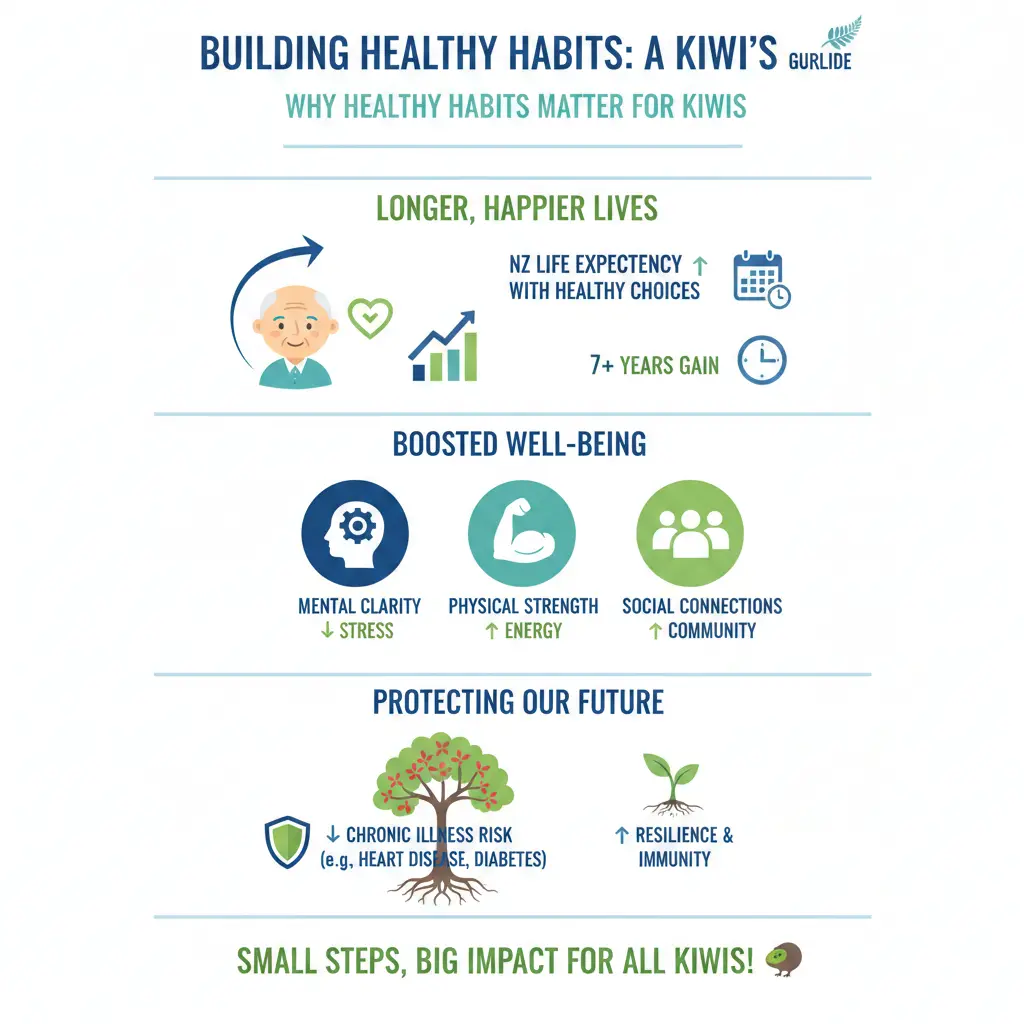
In New Zealand, our unique lifestyle—from beach barbecues to rugby season—comes with health challenges we can tackle head-on. Obesity affects 34.5% of adult women and 33.4% of adult men, higher than regional averages, while diabetes impacts 6.3% of women and 8.4% of men. The New Zealand Health Survey shows these trends persist, highlighting the need for sustainable changes. Yet, with tools like the upcoming Health Star Rating system potentially mandatory in 2026, we're better equipped than ever to make informed choices.
Healthy habits improve physical health, mental wellbeing, and even sleep quality. A study of young Kiwis linked better sleep, fruit and veggie intake, and activity to stronger mental health. Stats NZ's wellbeing data reinforces this, showing self-reported life satisfaction rises with positive routines.
Addressing Kiwi-Specific Challenges
- Seasonal eating: Winter blues hit hard; combat them with local seasonal produce like kūmara and silverbeet.
- Urban vs rural divide: City dwellers in Auckland face fast-food temptations, while rural folk might lack gym access—focus on home-based habits.
- Māori and Pacific health disparities: Tailor habits to whānau-centred approaches, drawing from Ministry of Health resources.
Nutrition: Fuel Your Body the Kiwi Way
Good nutrition is the foundation of healthy habits. In 2026, ditch extremes for balanced, gut-friendly eating that's realistic for busy Kiwis.
Five Realistic Nutrition Habits for 2026
Shift from "all or nothing" diets to sustainable practices:
- Embrace balance over perfection: Enjoy your flat white and fish 'n' chips occasionally, but prioritise variety. This supports long-term gut health without restriction.
- Boost gut health daily: Eat fibre-rich foods like kiwifruit, broccoli, oats, and beans. Aim for 25-30g fibre daily—hydration helps too.
- Protein with purpose: Spread intake across meals using eggs, hoki, tofu, or yoghurt. This keeps you full and supports muscles, especially post-rugby or tramping.
- Tune into your body: Ditch diet noise; eat mindfully to recognise hunger cues. Perfect for our multicultural kai scene.
- Progress over perfection: Add extra veg to every meal or cook at home thrice weekly. Small wins add up.
New Zealand Superfoods and Shopping Tips
Stock up on local gems: Manuka honey for immunity, avocados from Gisborne, and greens from your community garden. Check the Health Star Rating on labels—expected to expand in 2026 for clearer choices. Shop at New World or Pak'nSave sales, and use apps like Eatsmart for recipe ideas from the Ministry of Health.
Weekly Meal Plan Example:
| Day | Breakfast | Lunch | Dinner |
|---|---|---|---|
| Monday | Oats with kiwifruit | Kai moana salad | Stir-fried veg with chicken |
| Tuesday | Yoghurt and nuts | Quinoa wrap | Baked kūmara and fish |
| Wednesday | Smoothie bowl | Lentil soup | Veg stir-fry with tofu |
| Thursday | Eggs on toast | Chickpea salad | Grilled lamb and salad |
| Friday | Fruit and muesli | Tuna sandwich | Home pizza with veg toppings |
| Weekend | Pohutukawa pancakes | Leftovers | BBQ with extra salads |
Physical Activity: Get Moving Like a True Kiwi
Kiwis love the outdoors—channel that into habits. Aim for 150 minutes moderate activity weekly, per Ministry of Health guidelines. Tramping in Fiordland or a jog around Mission Bay counts.
Fun, Accessible Exercise Ideas
- Free options: Walk the dog on local trails via DOC.govt.nz.
- Home workouts: Follow free Active NZ videos—no gym needed.
- Team sports: Join netball or touch rugby through Sport NZ clubs.
- Family focus: Bike rides on shared paths or beach cricket.
Track progress with apps like Strava, tailored for NZ routes. For mental boosts, combine with nature—studies show it enhances wellbeing.
Sleep and Recovery: Recharge for the Long Haul
Quality sleep underpins everything. Young Kiwis with better sleep report improved mental health alongside healthy eating and exercise. Aim for 7-9 hours nightly.
Practical Sleep Tips
- Wind-down routine: No screens an hour before bed; try herbal tea or reading.
- Environment hacks: Blackout curtains for summer long days, white noise for city sounds.
- Consistency: Same bedtime, even weekends.
- Seek help if needed: Talk to your GP or use Sleep Health Foundation NZ resources.
Mental Wellbeing: Nurture Your Mind
Building habits includes mental health. Stats NZ data shows Kiwis with routines report higher life satisfaction. Practice gratitude journaling or mindfulness via Headspace app's Kiwi voices.
Daily Mental Health Boosters
- Meditate 5 minutes morning—use free apps.
- Connect whānau-style: Weekly calls or park meets.
- Limit social media to 30 minutes daily.
- Access free services: Mental Health Foundation or 1737 helpline.
Overcoming Common Barriers to Healthy Habits
Time-poor? Budget tight? Start small: Prep veg on Sunday, use WINZ budgeting tools for healthy food. Track with a habit app like Habitica. Partner with mates for accountability—Kiwi style.
Tracking Progress and Staying Motivated
Use the NZ Health Survey Data Explorer to benchmark yourself. Set SMART goals: Specific, Measurable, Achievable, Relevant, Time-bound. Celebrate with non-food rewards like a movie night.
Your Next Steps to Building Healthy Habits
Pick one habit today: Add a veggie serving or a 10-minute walk. In a week, add another. Revisit this guide monthly, track via journal or app, and connect with local groups. You've got this—healthy Kiwis start with one step. For personalised advice, chat to your GP or a nutritionist through Health NZ.
Frequently Asked Questions
Sources & References
-
1
New Zealand - Global Nutrition Report — globalnutritionreport.org
-
2
New Zealand Health Survey | Ministry of Health NZ — www.health.govt.nz
-
3
5 Healthy (& Realistic) Nutrition Habits for 2026 - Intus — www.intus.co.nz
-
4
Better sleep quality and healthy habits linked to improved mental wellbeing — www.news-medical.net
-
5
Five Key Health and Nutrition Trends for 2026 — khni.kerry.com
-
6
Wellbeing - Stats NZ — www.stats.govt.nz
Related Articles
Work-Life Balance for Kiwis: Practical Tips
Imagine finishing your workday at 5pm sharp, grabbing your board for a surf at Piha Beach, or hiking the Tongariro Crossing without checking emails. That's the Kiwi dream, right? Yet despite New Zeala...

Stress Management Techniques That Actually Work
Stress is a constant companion for many Kiwis, whether you're juggling work deadlines, managing family responsibilities, or navigating life's unexpected challenges. The good news? Effective stress man...