Common Health Conditions in NZ: Guides and Resources
Whether you're dealing with a nagging cough, managing stress, or supporting a whānau member through a health challenge, knowing the most common health conditions in NZ can make all the difference. In...
Emma writes about health, wellbeing, and ACC topics for Lifetimes NZ. She translates complex health information into clear, actionable advice for New Zealand readers.
Whether you're dealing with a nagging cough, managing stress, or supporting a whānau member through a health challenge, knowing the most common health conditions in NZ can make all the difference. In Aotearoa, our unique lifestyle, environment, and access to care shape what affects us most—from heart disease to mental health struggles—and we've got the guides and resources to help you navigate it all.
With life expectancy at 82 years, slightly above the OECD average, Kiwis are living longer, but issues like suicides (13 per 100,000) and access barriers persist. Drawing from the latest 2023/24 New Zealand Health Survey and 2025 OECD data, this guide breaks down prevalent conditions, offers practical tips, and points to local resources like Te Whatu Ora and Health NZ targets for 2025/26. Always chat to your GP or kaiwhakahaere hauora for personalised advice—this isn't medical advice, just a starting point.
Top Health Conditions Affecting Kiwis
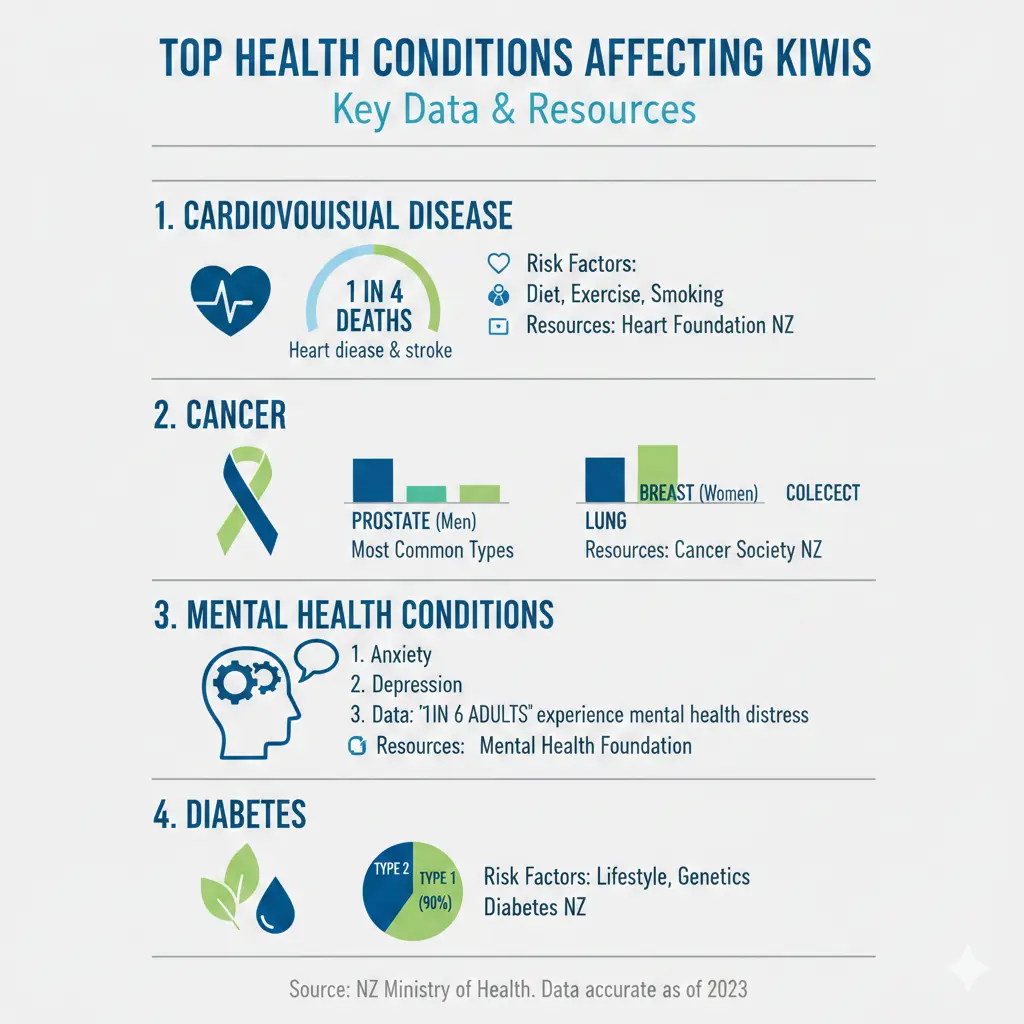
From the WHO's latest estimates, ischaemic heart disease tops the list at 119.4 deaths per 100,000, followed by Alzheimer disease and dementias (57.7), lung cancers (41.6), and stroke (40.3). The New Zealand Health Survey paints a fuller picture of daily struggles, including obesity, mental distress, and chronic illnesses. Here's a closer look at the big ones.
Cardiovascular Diseases: Heart Disease and Stroke
Heart attacks and strokes remain leading killers in New Zealand, with 30-day mortality after acute myocardial infarction (AMI) at 4.6% and stroke at 6.7%—better than OECD averages of 6.5% and 7.7%. Risk factors like high blood pressure, smoking (down to 6.9% daily prevalence), and inactivity (21% of adults) fuel these.
- Practical tips: Aim for 150 minutes of moderate exercise weekly—think brisk walks in your local park or cycling the Hauraki Rail Trail. Monitor cholesterol via free checks at pharmacies.
- NZ resources: Heart Foundation NZ offers free heart health checks and the Tick programme for healthier kai. Call Healthline (0800 611 116) for symptoms like chest pain.
Te Whatu Ora's 2025/26 targets focus on shorter waits for specialist assessments, helping more Kiwis get timely care.
Cancer: Lung, Breast, and Beyond
Lung cancer claims 41.6 per 100,000, often linked to past smoking, while breast cancer screening reaches 68% of eligible women—above the OECD's 55%. Māori and Pasifika communities face higher rates due to inequities.
- Actionable advice: Quit smoking with free Quitline (0800 778 778) or vape cessation support. Women 45-69: book mammograms via BreastScreen Aotearoa (0800 269 360).
- Guides: Cancer Society NZ provides whānau support, transport to appointments, and the My Cancer app for tracking treatments.
Mental Health and Suicide
Mental distress affects many, with youth vaping and smoking trends shifting per the 2023/24 survey. Suicide rates sit at 13 per 100,000, above the OECD's 11. One in eight Kiwis rate their health as bad or very bad (vs. OECD 8%).
- Tips for daily wellbeing: Practice mindfulness with apps like Smiling Mind. Connect via community groups or marae-led programmes.
- Resources: 1737 helpline for 24/7 crisis support. Ministry of Health's mental health portal offers self-assessments and referrals to free counselling via your GP.
Respiratory Conditions: Asthma and COPD
Cold winters and air pollution (PM2.5 at 6.3 µg/m³, below OECD 11.2) exacerbate asthma, common in kids and adults. The Health Survey tracks secondhand smoke exposure.
- Management: Use peak flow meters (subsidised) and avoid triggers. Get flu vaccines free if high-risk.
- Support: Asthma and Respiratory Foundation NZ's Breathe app and inhaler technique clinics.
Diabetes and Obesity
No direct obesity data from OECD, but the NZ Health Survey shows rising trends, driving type 2 diabetes. Alcohol intake mirrors OECD at 8.2 litres per capita.
- Steps to control: Swap sugary drinks for water; join Green Prescription for GP-referred exercise programmes.
- Resources: Diabetes NZ's free educator sessions and HbA1c testing via labs.
Musculoskeletal Issues: Arthritis and Back Pain
Common in ageing Kiwis (life expectancy 82), these limit mobility. ACC covers injuries, but chronic pain needs GP management.
- Home remedies: Gentle tai chi or swimming at local pools. Physiotherapy via ACC if work-related.
- Guides: Health Quality & Safety Commission's resources on pain management.
Accessing Care: Overcoming Barriers in NZ
Despite 100% core coverage, 15% face GP costs as a barrier, 25% cite wait times. Dental care is privatised post-18, leaving half unmet needs. Prescription fees deter 3-4%, costing more in hospitalisations.
Te Whatu Ora Health Targets 2025/26
Aim for quicker ED stays, specialist waits, and immunisations (89% DTP coverage, below OECD).
| Target | 2025/26 Goal | Progress Tip |
|---|---|---|
| Immunisation (8 months) | Improve to 95% | Book via your Plunket nurse or iimmunise app. |
| ED Stays <6 hours | 80% of patients | Use Healthline to avoid unnecessary visits. |
| Specialist Assessment | Within 4 weeks | Fast-track referrals for urgent cases. |
| Elective Treatment | 70% within 4 months | Check Te Whatu Ora dashboard for your DHB. |
Cost-Saving Tips
- Community Services Card for subsidies.
- Free under-13 GP visits; $20 cap for 14-17 via SeeKidsHearKids.
- Prescription prepay for multiples.
Lifestyle Factors and Prevention
Low smoking (6.9%) and activity gaps (21%) are wins, but build on them. Health spending at $6,097 per capita supports prevention.
Key Prevention Strategies
- Move more: Join Sport NZ's Active NZ survey-inspired programmes.
- Eat well: Follow Ministry guidelines—vege-first plates.
- Sleep and stress: 7-9 hours; use Sleep Health Foundation tools.
- Screenings: Cervical via NCSP, bowel from 60.
Next Steps for Better Health
Start with your annual check-up—book via ManageMyHealth or your practice. Track progress with apps like My Health NZ. For whānau, explore iwi-led health initiatives. If it's urgent, Healthline is 24/7. Together, we're tackling these common health conditions in NZ—stay informed, act early, and thrive.
Frequently Asked Questions
Sources & References
-
1
Health at a Glance 2025: New Zealand - OECD — www.oecd.org
-
2
New Zealand Health Survey | Ministry of Health NZ — www.health.govt.nz
-
3
Making sense of the new health statistics | The Spinoff — thespinoff.co.nz
-
4
Health targets performance resources - 2025/26 - Te Whatu Ora — www.tewhatuora.govt.nz
-
5
New Zealand - WHO Data — data.who.int
Related Articles

Sun Safety NZ: Protecting Your Skin in the High-UV Kiwi Summer
Picture this: you're at the beach on a classic Kiwi summer day, waves crashing, BBQs sizzling, and the sun beating down with that intense UV punch we all know too well. But here's the reality check—Ne...

Mental Health Resources in NZ: Where to Get Free or Low-Cost Help
When you're struggling with your mental health, knowing where to turn for help can feel overwhelming. The good news is that New Zealand has a range of free and low-cost mental health resources availab...

Best Gym Memberships in NZ: A Price and Feature Comparison
Whether you're a Kiwi chasing peak fitness or just dipping your toes into gym life, picking the right membership can transform your routine without breaking the bank. With chains like CityFitness, Jet...

Managing Hayfever in NZ: The Best Local Remedies for Spring
Spring in New Zealand brings blooming landscapes and outdoor adventures, but for about 1 in 5 Kiwis, it also means battling hayfever symptoms like itchy eyes, runny noses, and endless sneezing.Managin...