How NZ's Healthcare System Works (A Beginner's Guide)
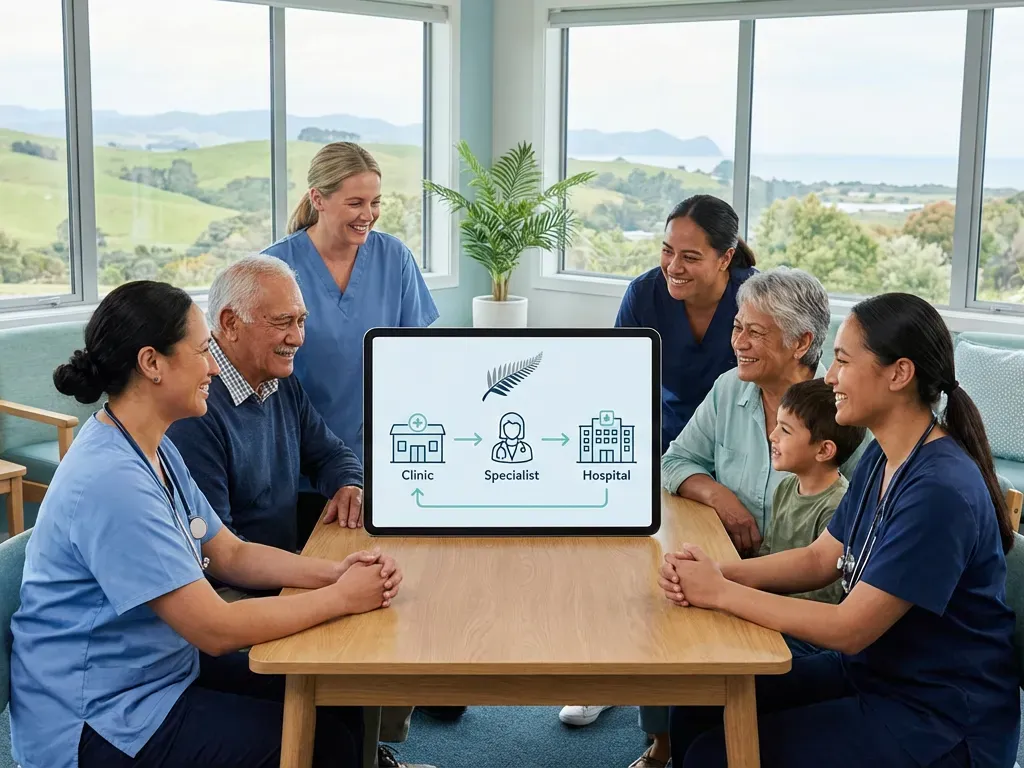
Ever wondered why your GP visit feels free but that specialist scan comes with a bill? Or how our hospitals stay afloat amid endless headlines about wait times? New Zealand's healthcare system is a li...
The Lifetimes NZ editorial team curates, fact-checks, and updates guides on personal finance, property, health, immigration, legal, business, and lifestyle topics relevant to Lifetimes NZ readers. Articles are produced with AI assistance and reviewed by the editorial team before publication.
Ever wondered why your GP visit feels free but that specialist scan comes with a bill? Or how our hospitals stay afloat amid endless headlines about wait times? New Zealand's healthcare system is a lifeline for over 5 million Kiwis, blending universal coverage with a mix of public funding and personal contributions. This beginner's guide breaks it down simply, so you know exactly how it works in 2026—and what it means for you.
Universal Coverage: Healthcare for All Kiwis
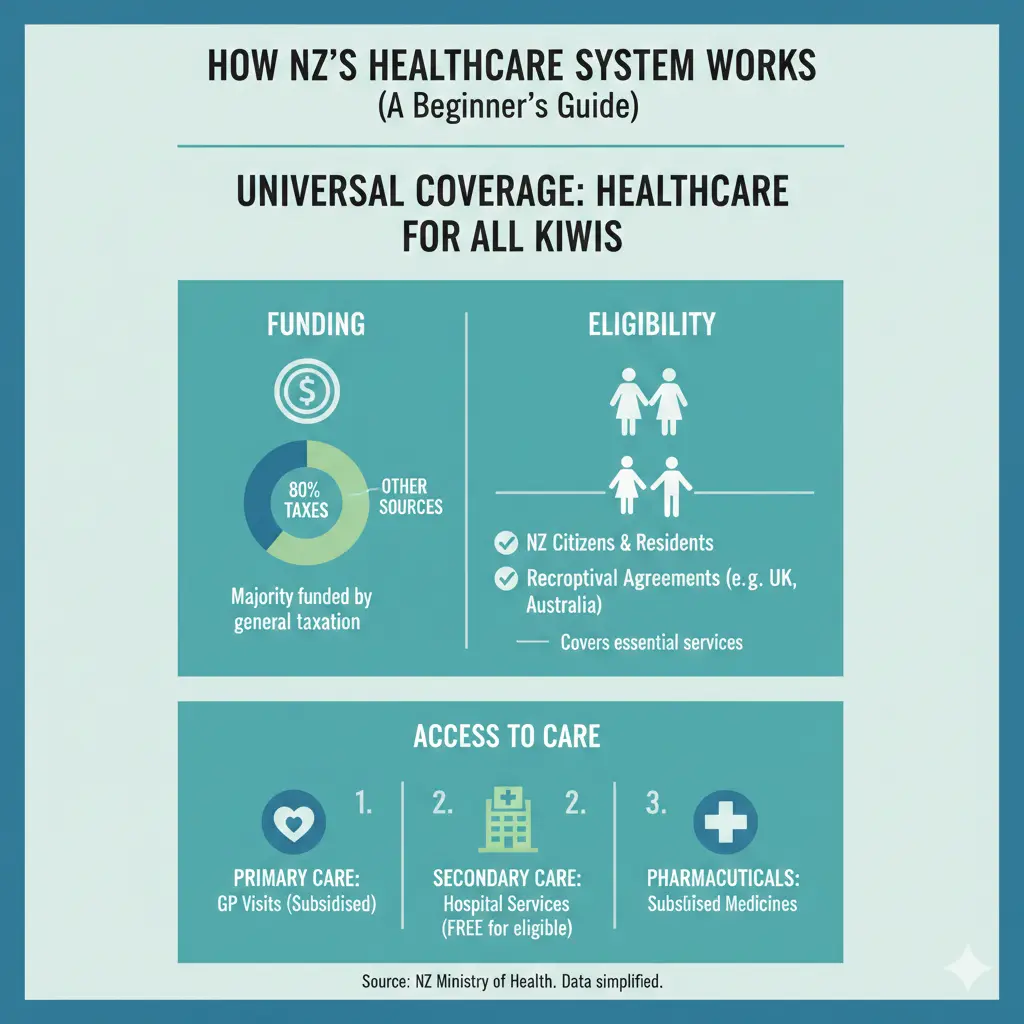
New Zealand boasts universal health coverage, meaning every resident gets access to essential services without facing catastrophic costs. It's mostly publicly funded through general taxes, with the government setting an annual budget and benefit package each year. This covers everything from GP visits to hospital stays, mental health support, and even some prescriptions—though you'll pay copays for certain items like specialist visits or non-urgent meds.
Unlike systems with deductibles, ours keeps out-of-pocket costs low. About one-third of us have private health insurance to skip queues or cover extras like private hospital rooms. But the core safety net? That's public, ensuring no one goes without.
Who Pays and How Much?
- Taxes fund the bulk: Around 80% comes from general taxation, allocated via Health New Zealand (Te Whatu Ora).
- Copays apply selectively: Free for under-14s and over-65s at GPs; others pay $20–$50 per visit, capped for high users.
- Prescriptions: $5 per item if subsidised, free for kids and seniors.
- Hospital care: Free for accidents via ACC; public treatment otherwise free, but elective surgeries might wait.
These subsidies make care affordable, but rising demand from our ageing population—projected to strain services further in 2026—means smarter funding is key.
The Structure: From Local Clinics to National HQ
Our system shifted dramatically in 2022, ditching 20 district health boards (DHBs) for a streamlined setup under Health New Zealand – Te Whatu Ora, a single national entity. By mid-2026, it's fully transitioned to locally led services, supported regionally and enabled nationally. Think of it as a three-tier pyramid: districts deliver, regions connect, and national functions steer.
District Level: Where Care Happens Daily
Most action occurs locally in districts, home to hospitals, GPs via Primary Health Organisations (PHOs), community services, and specialists. Public hospitals handle emergencies and complex care; private ones fill gaps for electives. Primary care—your first stop for flu or check-ups—is mostly third-party delivered but Health NZ-funded. In 2026, districts gain more funding discretion for tailored services, backed by tighter national financial controls.
Example: In Auckland's Waitematā district, your local PHO coordinates GP access, blood tests, and mental health support—all integrated for smoother patient flow.
Regional Support: Four Hubs for Efficiency
Four regions—Northern, Midland (Te Manawa Taki), Central (Te Ikaroa), and Southern (Te Waipounamu)—link districts. They handle cross-district integration, like shared radiology or rural transport, ensuring rural Kiwis in Southland get the same specialist links as urban folk in Christchurch. Each has iwi Māori partnership boards, embedding te Tiriti o Waitangi principles.
National Office: Big-Picture Leadership
Based in Wellington, the slimmed-down national team runs shared services (IT, procurement, data), national programmes (public health, Māori hauora), and quality assurance. It's laser-focused on 2025–2026 priorities: shorter ED waits, elective surgery backlogs, faster primary care, and infrastructure upgrades.
A new Māori Health Authority complements this, commissioning services with Treaty-based governance for equitable outcomes.
Key Services: What's Covered and How to Access Them
The public package is comprehensive:
- Preventive care: Free immunisations, screenings (e.g., cervical via Health NZ).
- Primary care: GP visits, some physio; "healthcare home" model in many districts for team-based chronic care.
- Hospital services: Inpatient/outpatient, emergency (all public), maternity.
- Mental health: Community and specialist support, with addiction services.
- Prescriptions and dental: Subsidised drugs on the national formulary; free dental for kids.
- Long-term and disability: Home help, hospice, aged care support.
ACC covers accidents separately—free physio, surgery, rehab nationwide.
Navigating Wait Times and Referrals
See your GP first; they refer for specialists. Public waits for electives can hit months, prioritised by need. Private insurance speeds this up. New 2026 primary care targets aim for same-day access for urgents. Pro tip: Use Healthline (0800 611 116) for free nurse advice 24/7—avoids unnecessary ED trips.
2026 Reforms and Challenges: What's Changing?
Three years post-reform, results are mixed: better central planning but ongoing strains from workforce shortages, ED overload, and inequities. The Health NZ Delivery Plan targets basics like ED flow and backlogs, with full regional integration by mid-2026.
Māori outcomes lag due to historical inequities; 2026 priorities include targeted hauora Māori programmes. Cancer services face fragmentation, pushing for centralised expertise. Primary care gets a boost with multidisciplinary teams and digital tools to ease hospital pressure.
Practical Tips for Kiwis
- Enrol with a PHO: Free or low-cost GP access; find via healthcare.govt.nz.
- Get free services: Kids under 14, pregnancy care, ACC claims.
- Manage chronic conditions: Ask for "healthcare home" enrolment.
- Rural access: Telehealth expanding; check regional services.
- Private top-up: Compare insurers for electives.
Next Steps: Take Control of Your Health
Understanding our system empowers you—enrol with a PHO today, know your entitlements, and use digital tools like My Health Record for seamless care. For personalised advice, chat to your GP or Healthline. Remember, this isn't medical advice; always consult professionals. Stay healthy, Aotearoa—our system's stronger when we're informed.
Frequently Asked Questions
Sources & References
-
1
Health New Zealand Delivery Plan Summary FY 25-26 — www.tewhatuora.govt.nz
-
2
New Zealand International Health Care System Profile — www.commonwealthfund.org
-
3
Rebuilding Confidence in New Zealand's Health System — nzmj.org.nz
-
4
Did NZ's Sweeping Health Reforms Deliver? Three Years On — www.rnz.co.nz
- 5
-
6
Health Targets — www.health.govt.nz