Chronic Condition Management NZ: Accessing Ongoing Care

Living with a chronic condition in New Zealand doesn't have to mean constant disruption to your daily life or finances. With the right access to ongoing care, Kiwis can manage diabetes, heart disease,...
Sarah covers personal finance, tax, and KiwiSaver topics for Lifetimes NZ. She focuses on making money management straightforward and practical for everyday Kiwis.
Living with a chronic condition in New Zealand doesn't have to mean constant disruption to your daily life or finances. With the right access to ongoing care, Kiwis can manage diabetes, heart disease, COPD, and other long-term health issues effectively while keeping costs under control—especially now with 2026's game-changing prescription reforms.
Whether you're dealing with ongoing medications, specialist referrals, or coordinating care through your GP, understanding New Zealand's system empowers you to take charge. This guide breaks down how to access chronic condition management NZ, from subsidies and ACC support to the latest Health NZ updates, helping you save time, money, and stress.
Understanding Chronic Conditions in New Zealand
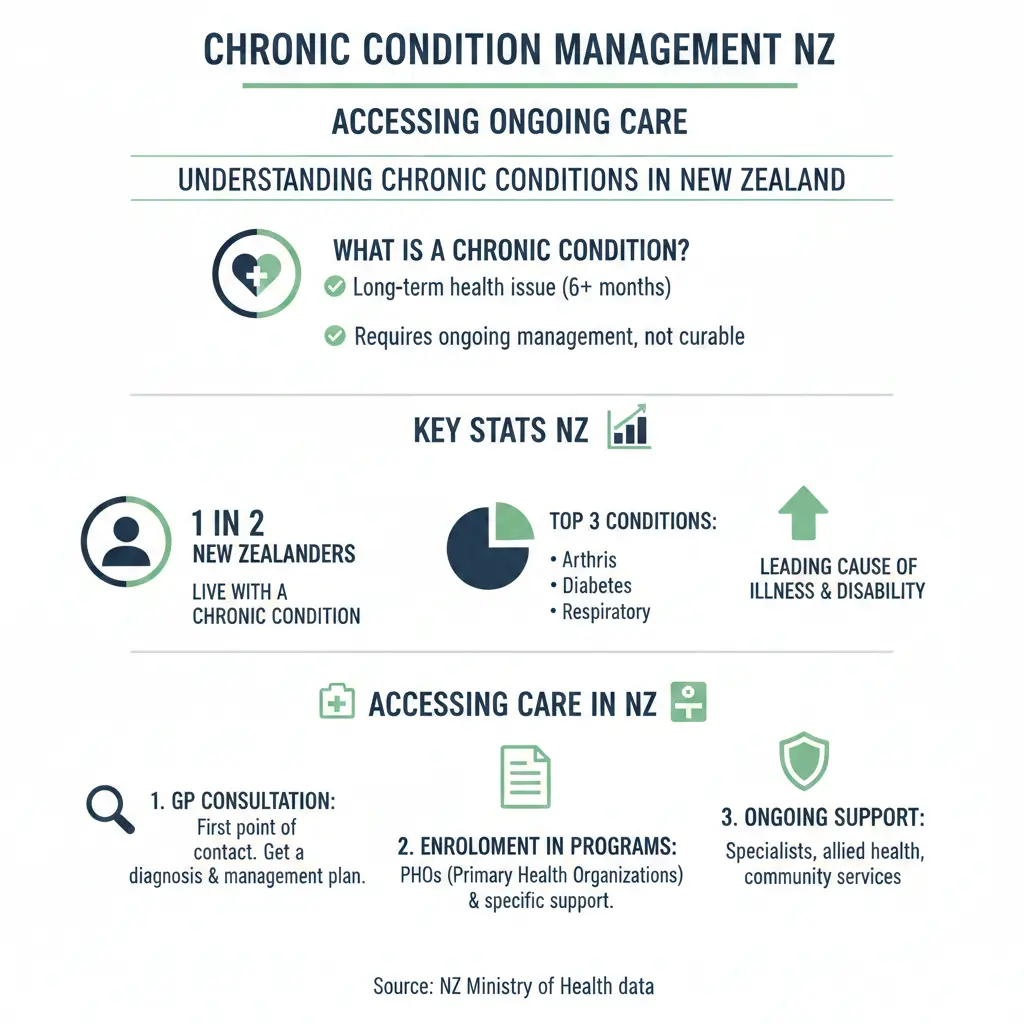
Chronic conditions affect one in four Kiwis, driving up healthcare costs and impacting quality of life. Common examples include diabetes, cardiovascular disease (especially heart failure), and chronic obstructive pulmonary disease (COPD)—conditions that require consistent monitoring and treatment to prevent complications.
In Aotearoa, these aren't just health issues; they're financial ones too. Long-term medications, GP visits, and specialist appointments can strain household budgets, particularly without public health support. But tools like the Pharmaceutical Subsidy Card, ACC cover for injury-related chronic pain, and now 12-month prescriptions make management more affordable.
Key Stats on Chronic Disease Burden
- Over 300,000 Kiwis live with diabetes, costing the health system $2.4 billion annually.
- Heart disease remains New Zealand's leading cause of death, with rural areas facing higher rates due to access barriers.
- COPD affects 150,000 adults, often linked to smoking and air quality in regions like the West Coast.
These numbers highlight why proactive chronic condition management NZ is crucial—not just for health, but for financial stability through reduced hospitalisations and work absences.
Recent Changes: 2026 Prescription Reforms
From 1 February 2026, two major updates revolutionise care for chronic conditions. First, GPs and Nurse Practitioners can now issue prescriptions for up to 12 months for stable, long-term medications—previously capped at three months (or six for contraceptives). This means fewer GP visits, cutting your time and out-of-pocket costs.
Here's how it works: You'll pay the standard $5 prescription fee only once per medication over 12 months, with pharmacies dispensing up to three months at a time. Exclusions apply to high-risk drugs, but for conditions like hypertension or diabetes, it's a win. Confirm with your pharmacist, as local implementation varies.
Second, GPs and Nurse Practitioners can diagnose and initiate treatment for adult ADHD—a chronic neurodevelopmental condition previously requiring psychiatrists. This expands access, especially in rural areas, though not all practices offer it yet due to training needs.
"The purpose is to reduce the burden on patients who require long-term, stable medication," explains the Ministry of Health.
Financial Impact of These Changes
For a Kiwi on multiple chronic meds, this could save $100+ yearly in GP fees alone. Pair it with Pharmac subsidies, and your net cost drops further. Always check eligibility via your GP—clinically appropriate cases only.
Accessing GP-Led Chronic Care Plans
Your GP is the gateway to chronic condition management NZ. Enrolled practices create personalised Chronic Care Plans, covering assessments, goal-setting, and allied health referrals like dietitians or podiatrists.
Steps to get started:
- Book a long consultation: Discuss symptoms, meds, and lifestyle. From 2026, expect streamlined ADHD or stable chronic reviews.
- Get your plan: GPs review it every 12-18 months for subsidised services.
- Access allied health: Up to 10 sessions/year for priority conditions, fully or partially subsidised via High User Health Card if eligible.
Rural Kiwis benefit from expanded specialist GP training—over 220 doctors started in 2026, focusing on chronic care in hard-to-reach areas.
Costs and Subsidies Breakdown
| Service | Standard Cost (2026) | Subsidised/Community Services Card |
|---|---|---|
| GP Consultation (15 min) | $50-80 | $20-40 |
| 12-Month Prescription | $5 once | $5 once (Pharmac eligible) |
| Allied Health (e.g., Diabetes Educator) | $100-150/session | Free-50% subsidised |
| Specialist Referral | $200+ | Public waitlist or $0 via DHB |
Low-income households qualify for Community Services Cards via WINZ, slashing fees. High users get further discounts after 12 GP visits/year.
Role of Allied Health and Multidisciplinary Teams
Effective chronic management goes beyond GPs. Teams including nurses, dietitians, podiatrists, and exercise physiologists deliver evidence-based care. For diabetes, expect foot checks and education; for heart failure, cardiopulmonary rehab.
In NZ, services like WeCare Health offer team-based plans with timelines, integrating with your GP. Rural preference ensures underserviced areas get priority.
Practical Tips for Coordinating Care
- Use the My Health Record (similar to MyMedicare concepts) for shared summaries, reducing repeat tests.
- Request group programs for cardio rehab—6-8 weeks, cost-effective.
- Integrate KiwiSaver health boosts or ACC for chronic pain from injuries.
Financial Support: Subsidies, ACC, and More
Managing chronic conditions hits the wallet, but NZ's system provides buffers. Pharmac covers 80-100% of essential meds; from 2026, longer scripts amplify savings.
Key Financial Aids:
- High User Health Card: Free scripts after thresholds.
- ACC: Covers chronic pain from accidents—claim via app for weekly compensation.
- WINZ Supports: Disability Allowance ($300+/fortnight) for extra costs; apply online.
- KiwiSaver Withdrawals: Serious illness category for treatments.
Tax relief via IRD for medical expenses over thresholds—track receipts. Always seek professional financial advice, as individual circumstances vary.
Regional and Rural Access Challenges
Rural Kiwis face longer waits, but 2026 initiatives help. New specialist GPs target whānau needs, from prevention to chronic management. Telehealth via Health NZ expands options—no travel for reviews.
Conferences like ICGCDM in Auckland (April 2026) highlight innovations, but practical access starts locally.
Self-Management Strategies
Empower yourself:
- Track vitals with apps like MyNDHII.
- Join Diabetes NZ or Heart Foundation programmes—subsidised memberships.
- Adopt Mediterranean diets tailored for Kiwi produce.
Behaviour change plans from GPs boost adherence, cutting hospital risks by 30%.
Next Steps for Better Management
Book that GP appointment today—discuss a chronic care plan and 12-month scripts. Gather WINZ/ACC paperwork, join a support group, and track expenses for tax time. You're not alone; NZ's system, updated for 2026, is built to support you.
Consult a financial adviser or GP for personalised advice. Stay well, Kia kaha.
Disclaimer: This is general information. Seek professional medical and financial advice for your situation.
Frequently Asked Questions
Sources & References
-
1
Program Guidelines - Chronic Disease Management Services 2025-2026 — murrayphn.org.au
- 2
-
3
Chronic Disease Management Changes for GPs — bestpracticesoftware.com
-
4
Increasing prescribing lengths | Ministry of Health NZ — www.health.govt.nz
-
5
International Conference on Gerontology and Chronic Disease Management — internationalconferencealerts.com
-
6
International Conference on Alternative Health and Chronic Disease Management — conferencealerts.co.in
-
7
International Conference on Obesity and Chronic Disease Management — conferencealerts.co.in
-
8
Chronic Care Management | WeCare — www.wecarehealth.co.nz
- 9
Related Articles

Industry Bodies and Professional Associations NZ
Whether you're launching a business, advancing your career, or navigating financial regulations, industry bodies and professional associations in New Zealand offer invaluable support. These organisati...

Emergency Benefit NZ: When You Have No Other Options
When you're struggling financially and don't qualify for other benefits, the Emergency Benefit might be your lifeline. It's a discretionary payment designed for Kiwis in genuine hardship who've exhaus...

Unpaid Internships NZ: Are They Legal?
Unpaid internships are a common pathway for students and graduates to gain work experience in New Zealand, but there's often confusion about whether they're actually legal. The short answer is: unpaid...

Estate Administration NZ: Managing Someone's Affairs After Death
Losing a loved one is one of life's toughest challenges, and stepping in to manage their estate can feel overwhelming. In New Zealand, estate administration—the process of handling someone's affairs a...