How to Find a Rental in NZ: A Complete Guide

Finding a rental in New Zealand can feel like a marathon, especially in bustling spots like Auckland or Wellington where demand often outstrips supply. But with the right strategy, preparation, and kn...
James writes about the New Zealand property market, renting, home ownership, and housing costs. He breaks down complex property topics into practical advice for renters and buyers.
Finding a rental in New Zealand can feel like a marathon, especially in bustling spots like Auckland or Wellington where demand often outstrips supply. But with the right strategy, preparation, and knowledge of our local market, you'll land a great place that suits your lifestyle and budget—whether you're flatting in the city, hunting for a family home in the suburbs, or settling into regional life.
Understanding the NZ Rental Market in 2026
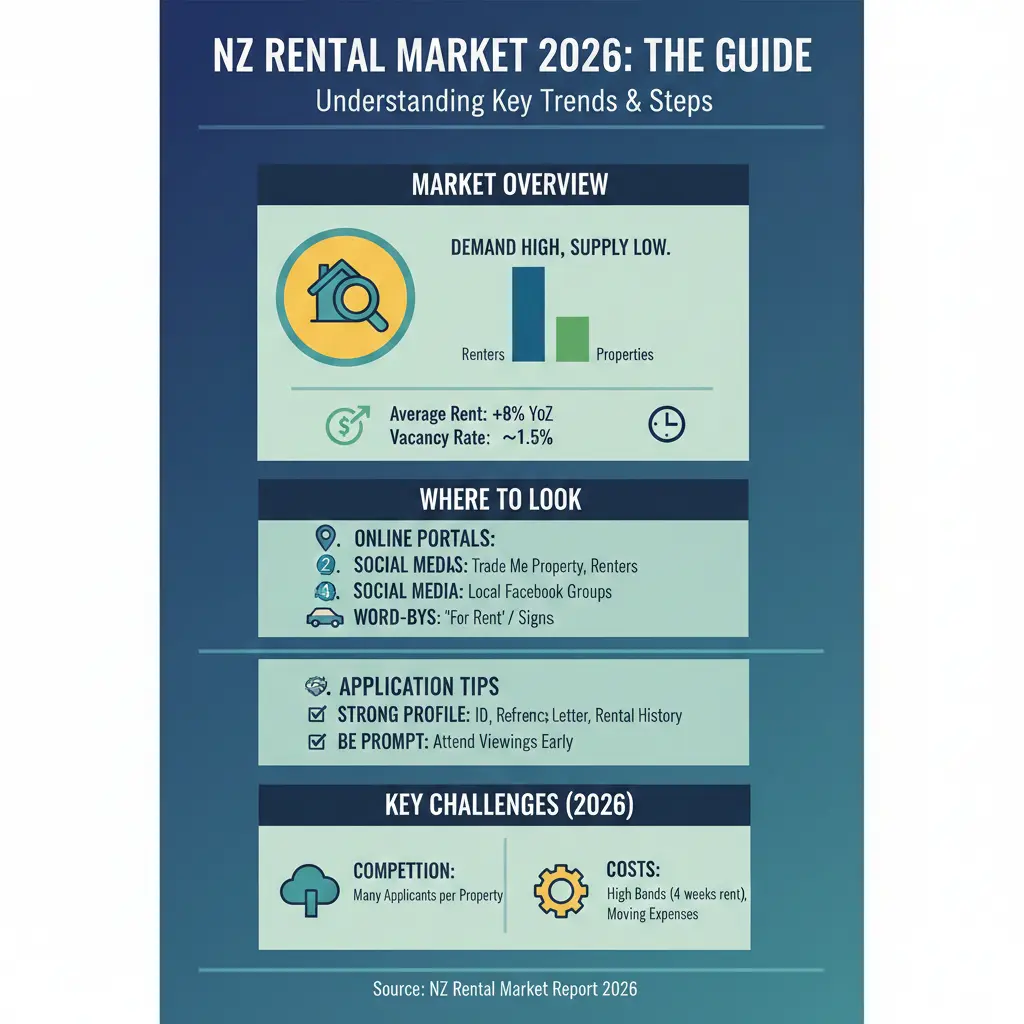
Our rental scene is competitive, particularly in main centres, but prices and availability vary widely by location. In Auckland, expect weekly rents for a two-bedroom flat around $600-$800, while Christchurch or regional areas might offer similar properties for $450-$600. Use tools like Trade Me's monthly rental price index to gauge averages for your target city or suburb—this helps you budget realistically from the start.
High demand means properties can attract dozens of applicants, so speed and readiness are key. Always check market rent data on the Tenancy Services site to ensure you're not overpaying. Factors like proximity to schools, public transport, and jobs drive prices up in popular areas.
Key Trends Shaping Rentals in 2026
- Pet-friendly options: More landlords are open to pets, but confirm policies upfront.
- Sustainable features: Energy-efficient homes with insulation are increasingly common due to Healthy Homes Standards.
- Flatting surge: Shared houses remain popular for singles and young professionals, especially in uni towns like Dunedin.
Where to Find Rentals in NZ
Start your search online—most listings hit digital platforms first. Set up alerts to get notified of new properties matching your criteria, like location, bedrooms, and price.
Top Platforms and Resources
- Trade Me Property: Kiwi's go-to site with thousands of listings. Filter by suburb, rent, bedrooms, bathrooms, and keywords like "near schools." Use the Watchlist to track favourites.
- Real Estate Agencies: Sites from Ray White, Harcourts, or Barfoot & Thompson often feature managed properties with reliable maintenance. Ideal for families.
- Facebook Groups: Join "Auckland Rentals," "Wellington Flats," or local pages for flatmates and quick deals—but watch for scams and verify details.
- TenantsNZ and Others: Dedicated finders like tenantsNZ streamline applications, skipping endless agent chases.
- Community Boards: In smaller towns, check supermarkets, libraries, or community centres for local gems.
Real estate agents can assist for premium or specific needs, giving access to off-market listings. For government-backed info, visit govt.nz renting page.
Setting Your Budget and Must-Haves
Work out your budget early: aim for rent at no more than 30-40% of your income. Factor in upfront costs like a bond (up to 4 weeks' rent), 1-2 weeks' rent in advance, and moving expenses—typically 5-6 weeks' total. No letting fees for tenants here; landlords cover those.
List your non-negotiables: number of bedrooms, parking, garden, pet allowance, or insulation. Visit Tenancy Services for Healthy Homes rules—all rentals must meet minimum standards for heating, ventilation, and draught-stopping.
Preparing a Standout Rental Application
In our competitive market, have your application ready before viewings. Landlords use pre-tenancy forms to assess reliability.
Essential Documents to Gather
- Photo ID: Passport, driver's licence, or RealMe login.
- Proof of Income: Payslips, employment contract, or bank statements showing steady deposits.
- References: Past landlords (international OK), employer, or character refs.
- Visa/Right to Rent: For newcomers, include immigration docs.
- Credit Check Permission: Landlords often run these.
- Bank Statements: Prove funds for bond and rent.
Digital apps via Trade Me or agency portals speed things up. Highlight strengths like stable job or willingness for a 12-month lease.
Viewing Properties and Making the Move
Book viewings promptly via the listing's contact—avoid ghosting, as it harms your rep. Attend open homes or private viewings; take notes and photos.
Inspect thoroughly: test lights, taps, heaters; check for damp, mould, or wear. Ask about bills, maintenance, and repairs. If approved, review the tenancy agreement carefully—it's a legal contract outlining rights and duties. Lodge your bond with Tenancy Services for protection.
"Always visit a property before you commit to renting it." — Immigration New Zealand
Practical Tips for Kiwis and Newcomers
- Start Early: Browse before arriving; book temporary spots like Airbnb for 2-4 weeks to explore neighbourhoods.
- Build Local History: Short-term rentals help if lacking NZ refs; offer extra rent in advance.
- Expand Search: Look beyond hot spots—neighbours or regions have less competition.
- Flatting Smart: Join established flats to bypass some checks.
- Employer Help: Some offer relocation support in high-demand sectors.
If struggling, contact Tenancy Services helpline for advice.
Your Rights as a Tenant
Know the Residential Tenancies Act: 21-90 days' notice for periodic tenancies, no unfair bond deductions, and quiet enjoyment rights. For disputes, use free mediation via Tenancy Services. Visit tenancy.govt.nz for full guides.
Next Steps to Secure Your Rental
Get your docs organised today, set Trade Me alerts, and hit the viewings. With preparation, you'll navigate our market confidently and find a home that feels right. Once settled, explore local Tenancy Services resources to stay informed. Happy house hunting—your new chapter awaits!
Frequently Asked Questions
Sources & References
-
1
Finding Rental Accommodation in New Zealand: Complete Guide — themigratehub.com
-
2
A Guide to Renting a House in NZ — www.trademe.co.nz
- 3
-
4
Renting a Place to Live in New Zealand — www.immigration.govt.nz
-
5
6 Ways to Get a Tenant Faster in 2026 — www.opespartners.co.nz
-
6
New to Renting - Tenancy Services — www.tenancy.govt.nz
-
7
tenantsNZ Property Finder — www.tenantsnz.com
-
8
Renting - New Zealand Government — www.govt.nz