Many Māori Words Have Been Adopted into NZ English

Introduction to Te Reo in NZ English As a New Zealander, you're likely familiar with the unique flavour that Māori words bring to our everyday language. F
Sarah covers personal finance, tax, and KiwiSaver topics for Lifetimes NZ. She focuses on making money management straightforward and practical for everyday Kiwis.
Introduction to Te Reo in NZ English
As a New Zealander, you're likely familiar with the unique flavour that Māori words bring to our everyday language. From kai (food) to whānau (family), many Māori words have become an integral part of New Zealand English. This blending of languages is a reflection of our country's rich cultural heritage and the importance of te reo Māori in our national identity. In this article, we'll delve into the world of Māori words in NZ English, exploring their history, significance, and practical uses.
The adoption of Māori words into NZ English is a natural result of the country's history and cultural exchange. As European settlers arrived in New Zealand, they encountered the indigenous Māori people and their language. Over time, Māori words and phrases were incorporated into the English language, creating a distinct dialect that is uniquely Kiwi. Today, you'll hear Māori words used in everyday conversation, from casual chats with friends to formal speeches by government officials.
As you learn more about Māori words in NZ English, you'll realise the importance of te reo Māori (the Māori language) in our culture. By embracing and using these words, you'll not only be showing respect for New Zealand's indigenous people but also contributing to the preservation of our linguistic heritage. So, let's dive in and explore the fascinating world of Māori words in NZ English.
The History of Māori Words in NZ English
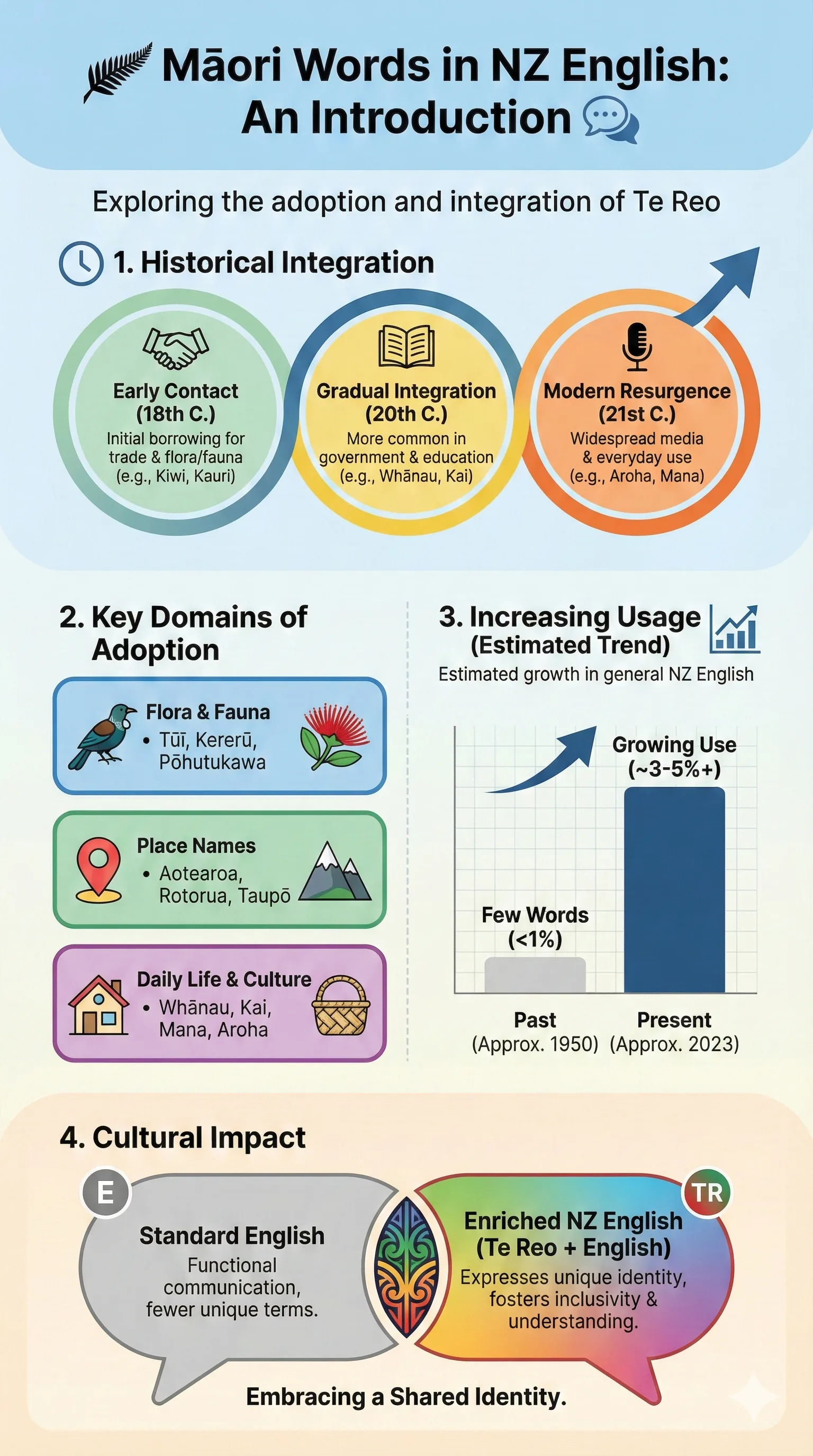
The history of Māori words in NZ English is a long and complex one, spanning centuries. When European settlers first arrived in New Zealand, they had limited knowledge of the Māori language. However, as they began to interact with Māori people, they adopted many of their words and phrases. This process of linguistic exchange was driven by practical needs, such as trade, communication, and navigation. Māori words like rongoā (medicine) and kauri (a type of tree) became essential for Europeans to learn and use in their daily lives.
As New Zealand developed as a nation, the use of Māori words in NZ English continued to evolve. In the early 20th century, the New Zealand government launched initiatives to promote the use of Māori language in education and public life. This led to the establishment of Māori language schools, cultural centres, and language revitalisation programmes. Today, you'll find Māori words and phrases used in various contexts, from street names and place names to business names and marketing slogans.
Key Factors in the Adoption of Māori Words
Several factors have contributed to the widespread adoption of Māori words in NZ English. These include:
- Geographical features: Many New Zealand place names, such as Aoraki (Mount Cook) and Waikato, are derived from Māori words.
- Cultural exchange: The interaction between Māori and European cultures has led to the sharing of language, customs, and traditions.
- Language revitalisation: Efforts to promote and preserve te reo Māori have helped to increase the use of Māori words in everyday language.
Using Māori Words in Everyday Life
Using Māori words in your everyday life is easier than you think. You can start by incorporating common Māori words and phrases into your conversation, such as:
- Kia ora (hello)
- Haere mai (welcome)
- Tēnā koe (hello to one person)
- Ngā mihi (thank you)
You can also use Māori words to describe New Zealand's unique environment and culture, such as:
- Tūī (a type of bird)
- Kapa haka (a traditional Māori performance)
- Whakapapa (genealogy or family history)
Tips for Pronouncing Māori Words
Pronouncing Māori words correctly can be challenging, but with practice, you'll get the hang of it. Here are some tips to help you improve your pronunciation:
- Listen to native speakers: Pay attention to how Māori people pronounce words and try to mimic their pronunciation.
- Break down words: Divide words into smaller parts and practice pronouncing each part separately.
- Practice regularly: Make an effort to use Māori words in your daily conversation, even if it's just with friends or family members.
Māori Words in New Zealand Place Names
Many New Zealand place names have Māori origins, reflecting the country's rich cultural heritage. From Auckland (Tāmaki-makau-rau) to Wellington (Te Whanganui-a-Tara), Māori words are used to describe our cities, towns, and geographical features. Understanding the meaning behind these place names can help you appreciate the history and significance of each location.
Some notable examples of Māori place names include:
- Rotorua (rotorua means "second lake" or "lake on the second day of travel")
- Taranaki (taranaki means "shelter" or "refuge")
- Kaikoura (kaikoura means "meal of crayfish")
The Significance of Māori Words in NZ English
The use of Māori words in NZ English is more than just a linguistic quirk – it's a reflection of our country's cultural identity. By embracing Māori language and culture, we're acknowledging the importance of te reo Māori and the role it plays in our national heritage. Using Māori words in your everyday life is a great way to show respect for New Zealand's indigenous people and contribute to the preservation of our linguistic heritage.
Benefits of Using Māori Words
Using Māori words in your everyday life can have numerous benefits, including:
- Cultural awareness: You'll gain a deeper understanding of New Zealand's cultural history and significance.
- Language skills: You'll improve your language skills and become more confident in using Māori words and phrases.
- Community engagement: You'll be able to connect with Māori people and communities, fostering greater understanding and respect.
Conclusion and Key Takeaways
In conclusion, the adoption of Māori words into NZ English is a unique and important aspect of our country's language and culture. By learning and using Māori words, you'll be contributing to the preservation of our linguistic heritage and showing respect for New Zealand's indigenous people. Here are the key takeaways from this article:
- Start with common Māori words: Incorporate everyday words and phrases, such as kia ora and haere mai, into your conversation.
- Practice pronunciation: Listen to native speakers, break down words, and practice regularly to improve your pronunciation.
- Learn about Māori culture: Understand the history and significance of Māori words and place names to appreciate New Zealand's cultural heritage.
- Use Māori words in context: Incorporate Māori words into your everyday life, whether it's in conversation, writing, or navigation.
By following these tips and embracing Māori language and culture, you'll become a more confident and culturally aware New Zealander. So, go ahead and give it a try – kia ora and happy learning!
Useful Tools
Related Articles

The Longest Place Name in the World Is in New Zealand (85 Letters)
Introduction to the Longest Place Name New Zealand is renowned for its stunning landscapes, diverse culture, and unique features that set it apart from the

New Zealand English Has Unique Vowel Sounds
Introduction to New Zealand English New Zealand English, also known as NZE or Kiwi English, is a unique and fascinating dialect that has evolved over time.