English Language Requirements for NZ Visas

Planning to sponsor a family member, hire international talent, or guide friends through New Zealand's visa process? Understanding English language requirements for NZ visas is crucial for Kiwis navig...
The Lifetimes NZ editorial team curates, fact-checks, and updates guides on personal finance, property, health, immigration, legal, business, and lifestyle topics relevant to Lifetimes NZ readers. Articles are produced with AI assistance and reviewed by the editorial team before publication.
Planning to sponsor a family member, hire international talent, or guide friends through New Zealand's visa process? Understanding English language requirements for NZ visas is crucial for Kiwis navigating immigration as employers, family, or advisors. Whether you're helping a skilled worker join your team or ensuring your partner's visa sails through, knowing the rules from Immigration New Zealand (INZ) can prevent costly delays and rejections.
In 2026, these requirements vary widely by visa type, with stricter standards for skilled residence and work visas like the Accredited Employer Work Visa (AEWV), while investor categories offer more flexibility. This guide breaks down the essentials, approved tests, exemptions, and practical steps tailored for New Zealanders.
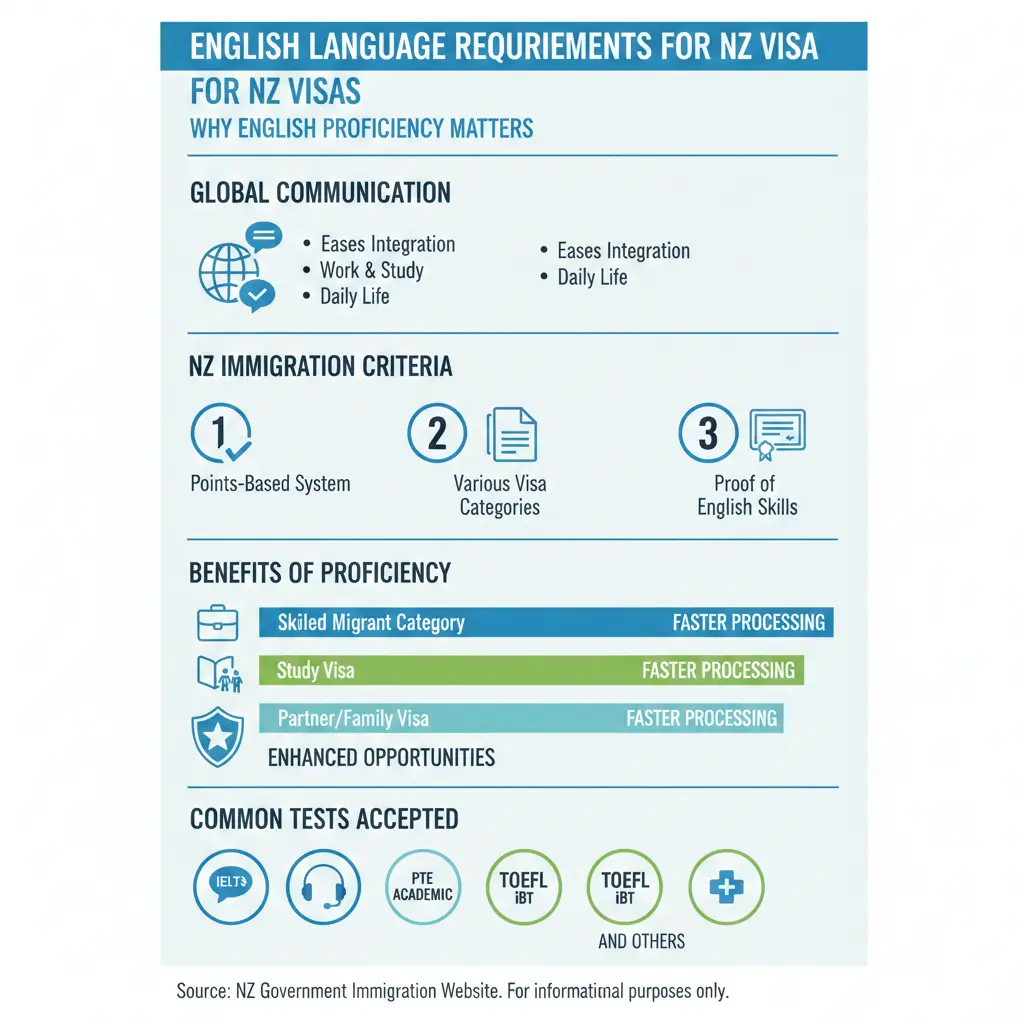
Why English Proficiency Matters for NZ Visas
New Zealand's immigration system prioritises integration, workplace safety, and economic contribution. Strong English skills ensure migrants can communicate effectively, reducing risks in high-stakes roles like nursing or teaching. For Kiwis, this means sponsoring only those who meet INZ standards, avoiding visa refusals that could impact your business or family plans.
Requirements aren't uniform—principal applicants, partners, and dependent children aged 16+ often need to prove competency separately. Failure to meet them can lead to upfront ESOL (English for Speakers of Other Languages) tuition payments or outright declines. Recent 2026 updates, including new Skilled Migrant Category (SMC) rules effective August, maintain skilled employment and English mandates.
English Requirements by Visa Type
INZ tailors language standards to visa goals. Here's a breakdown for common categories relevant to Kiwis sponsoring or advising applicants.
Skilled Residence Visas (e.g., Skilled Migrant Category)
These demand the highest proficiency to attract top talent. Principal applicants cannot use the ESOL option and must prove IELTS 6.5 overall (no band below 6.0) or equivalent via approved tests like OET (grade B in all skills).
- Partners and dependent children 16+: IELTS 5.0 overall or ESOL tuition prepayment.
- No English-speaking background exemption for principals—tests required.
- 2026 SMC updates reinforce skilled job offers and English alongside points for experience.
Tip for Kiwis: If employing under SMC, verify your candidate's test results early to align with IRD payroll setup and ACC coverage.
Accredited Employer Work Visa (AEWV)
For jobs at ANZSCO levels 4 or 5, applicants must show they can speak and understand English sufficiently for the role. No blanket requirement, but INZ assesses based on job needs.
- Minimum: IELTS 4.0 overall, PTE 30 average, or OET grade B per skill.
- Previous INZ assessments reusable if not third-party.
- Higher roles (e.g., healthcare) may need professional registration English standards.
As an employer, your job description influences INZ's decision—include communication duties clearly.
Investor and Business Visas
More lenient to attract capital. Active Investor Plus (post-April 2025 apps) waives requirements entirely for principals and families.
- Investor 2: IELTS 3.0 overall or English background for principals; same or ESOL for family.
- Talent (Arts, Sports) or Long Term Skill Shortage: No requirements for residence stage.
Student Visas
INZ sets no fixed requirements, but education providers do under NZQA Rule 22 for levels 3-10. Providers declare applicant suitability, often needing IELTS 5.5-6.5 or equivalents like NCEA Level 3.
Kiwis note: If hosting international students via homestay or work rights, check provider approvals on nzqa.govt.nz.
Work and Other Visas
General work visas expect functional English per job, assessed by officers—no test mandated unless requested. Working holiday visas have unique rules, excluding English background evidence.
Approved English Tests and Scores (2026 Standards)
INZ accepts these tests, valid for 2 years. IELTS One Skill Retake (OSR) allowed within 60 days of original.
| Test | Skilled Residence (Principal) | AEWV/Partners |
|---|---|---|
| IELTS (Academic/General) | 6.5 overall (min 6.0/band) | 4.0-5.0 overall |
| PTE Academic | 58 overall (min 50/subtest) | 30-36 average |
| OET | B in all skills | B per skill |
| TOEFL iBT | 79-95 (varies) | Check INZ site |
| C1 Advanced (CAE) | 176 overall (169/sub) | Lower thresholds apply |
Always verify latest on immigration.govt.nz, as scores align with CEFR levels.
Ways to Meet Requirements Without Tests
For non-skilled visas, alternatives include:
- English-speaking background: Citizenship/5+ years schooling in UK, USA, Canada, NZ, Ireland, or majority English countries. Excludes AEWV/skilled residence.
- Evidence: Passports, birth certs, school transcripts, employer letters.
- Studies: NZ University Entrance (NCEA Level 3) or equivalent.
- CELTA/CertTESOL certificates.
INZ may request tests if evidence insufficient.
Family Members and ESOL Tuition
Partners/children 16+ matching principal's level ideal, but ESOL prepayment works for many visas (not skilled principals). Pay via INZ before approval; lessons via approved providers.
Practical for Kiwis: Budget NZ$2,000-5,000 per person—factor into sponsorship costs alongside WINZ-independent living proofs.
Occupation-Specific Requirements
Professions like doctors, nurses, teachers need registration boards' higher English (often IELTS 7.0+). Check Nursing Council or Teaching Council sites for 2026 standards.
Common Pitfalls and How to Avoid Them
- Expired tests: Must be <2 years old.
- Wrong test type: Use General for immigration, Academic for study.
- Incomplete family proof: All 16+ need coverage.
- Overlooking updates: 2026 investor relaxations and SMC changes.
Practical Tips for Kiwis Sponsoring Visas
- Pre-assess: Use INZ's online tools to check requirements.
- Collect docs early: Tests, qualifications, job offers.
- Budget extras: ESOL, medicals, police certs—link to KiwiSaver planning for relos.
- Seek advice: Licensed advisers via iaa.govt.nz; not financial, but immigration pros.
- Monitor changes: Subscribe to immigration.govt.nz alerts.
Disclaimer: This isn't personalised financial or immigration advice. Consult INZ, licensed advisers, or professionals for your situation, especially tax implications via ird.govt.nz.
Next Steps to Navigate English Requirements
Start by visiting immigration.govt.nz to select your visa and review checklists. Book tests via official sites (ielts.org, pearsonpte.com), gather evidence, and apply online. For businesses, align with accredited employer status. Track apps via RealMe—successful integration starts with solid English foundations, boosting NZ's economy and communities.
Stay informed on 2026 changes like SMC rules from August, ensuring smooth transitions for your international team or whānau.
Frequently Asked Questions
6. What if my test is over 2 years old?
Sources & References
-
1
English Language Requirements for NZ Visas — www.new-zealand-immigration.com
-
2
Meeting English language requirements — www.immigration.govt.nz
-
3
Changes To New Zealand Language Test Requirements — ptemagic.com
-
4
Language requirements - New Zealand Government — www.govt.nz
-
5
English language requirements for skilled residence visas — www.immigration.govt.nz
-
6
English language requirements for an Accredited Employer Work Visa — www.immigration.govt.nz
-
7
English language entry requirements for international students — www2.nzqa.govt.nz
-
8
English language requirements — www.immigration.govt.nz
-
9
New Skilled Migrant Rules Take Effect August 2026 — www.nzimmigrationpartners.com
-
10
NZ Immigration Policy Updates: 2025 Review & 2026 Outlook — www.pathwaysnz.com
Related Articles

Working Multiple Jobs NZ: Tax and Legal Considerations
Juggling multiple jobs can boost your income, but it's crucial to understand the tax implications and legal requirements that come with working more than one role in Aotearoa. Whether you're a contrac...

Name Changes NZ: Legal Process and Costs
Considering a fresh start with a new name? Whether it's after marriage, divorce, or simply embracing a personal transformation, changing your name in New Zealand is straightforward but requires follow...

Holiday Home Tax Rules NZ: Private Use and Rental
Own a bach in Coromandel or a holiday home in Queenstown? You're not alone—many Kiwis cherish these escapes, but renting them out while enjoying personal use can trip you up on tax rules. Getting the...

Industry Bodies and Professional Associations NZ
Whether you're launching a business, advancing your career, or navigating financial regulations, industry bodies and professional associations in New Zealand offer invaluable support. These organisati...