Residence Visas Explained: Pathways to NZ Residency

Ever dreamed of bringing skilled whānau or talented professionals to our beautiful Aotearoa? Navigating New Zealand's residence visas can feel like tackling a tricky rugby play, but understanding the...
The Lifetimes NZ editorial team curates, fact-checks, and updates guides on personal finance, property, health, immigration, legal, business, and lifestyle topics relevant to Lifetimes NZ readers. Articles are produced with AI assistance and reviewed by the editorial team before publication.
Ever dreamed of bringing skilled whānau or talented professionals to our beautiful Aotearoa? Navigating New Zealand's residence visas can feel like tackling a tricky rugby play, but understanding the pathways makes it straightforward. Whether you're a Kiwi employer seeking top talent or helping friends and family settle here permanently, these options from Immigration New Zealand open doors to a brighter future down under.
Understanding Residence Visas in New Zealand
Residence visas let you live, work, and study in New Zealand indefinitely, with the option to apply for permanent residence after two years. They're designed to attract skilled workers, reunite families, and boost our economy through investment. In 2026, exciting changes make it easier for in-demand professionals to gain residency, especially via the Green List and updated Skilled Migrant Category.
Key benefits include access to our world-class healthcare via ACC, KiwiSaver for retirement savings, and public services like free education for kids. But you'll need to meet health, character, and English language requirements for most pathways.
What’s the Difference Between Resident and Permanent Resident Visas?
A Resident Visa gives indefinite stay but with travel conditions for the first two years. After that, apply for a Permanent Resident Visa to travel freely without limits. Principal applicants can include partners and dependent children up to age 24.
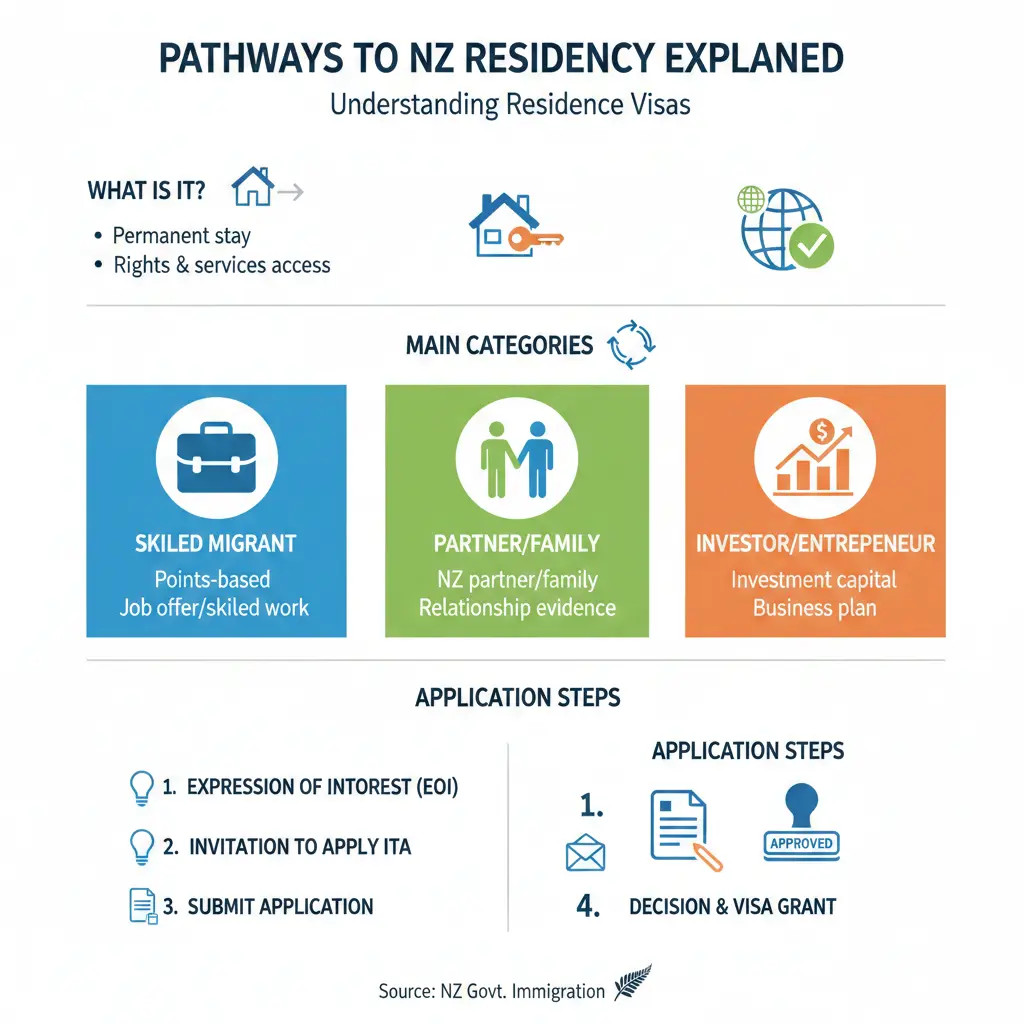
Skilled Migration Pathways: Your Ticket to Residency
Skilled routes are the most popular for professionals, targeting roles on the Green List or via points-based systems. These prioritise sectors like healthcare, engineering, and ICT where we need talent.
Green List Visas: Straight to Residence or Work to Residence
The 2026 Green List is a game-changer for high-demand jobs. Tier 1 occupations qualify for the Straight to Residence Visa right away—no prior work experience needed if you meet qualifications, registration, salary thresholds (often 1.5x median wage), and English requirements. Examples include specialist physicians, surgeons, telecommunications engineers, and ICT security specialists.
Tier 2 roles lead to the Work to Residence Visa: work for two years at the required wage, then apply for residency. Think roles like certain nursing or engineering positions. You can include your partner and kids, who get open work or study rights.
- Check your job: Use Immigration New Zealand's Green List tool.
- Salary tip: Median wage in 2026 is around NZ$33.56/hour—aim higher for eligibility.
- Action step: Get occupational registration if needed (e.g., via Nursing Council or Engineering NZ).
Skilled Migrant Category (SMC) Resident Visa: 2026 Updates
From August 2026, the SMC introduces two new pathways, replacing older points systems for a fairer process. No more 180-point grind—focus on skills, experience, and NZ work.
Skilled Work Experience Pathway
For ANZSCO skill levels 1-3 jobs (managers, professionals): Need five years' relevant experience, including two in NZ, earning at least 1.1x median wage. Ideal for experienced migrants already contributing here.
Trades and Technician Pathway
Targeted at trades with Level 4+ qualifications: Four years' post-qual experience, including 18 months in NZ, at median wage or above. Covers plumbers, electricians, and technicians in high demand.
Current SMC (pre-2026) requires six points from qualifications, registration, income, plus skilled job with an Accredited Employer. Priority processing for SMC, Straight to Residence, and Work to Residence applications.
Other Skilled Routes: Care Workforce and Transport
Care Workforce Work to Residence suits aged care workers with two years' experience at median wage. Transport Sector offers similar for truck drivers in logistics. These keep essential services staffed.
Family Reunification: Bringing Whānau to NZ
Family pathways ensure no one gets left behind. If you're a Kiwi or resident, sponsor your partner, parents, or kids.
Partner of a New Zealander Visa
For spouses or de facto partners of NZ citizens/residents: Prove genuine relationship (living together 12+ months), meet English/character checks. Leads to residence after two years.
Dependent Child Resident Visa
Parents in NZ can sponsor kids under 24, even if studying here on StudyLink support.
Parent and Sibling Categories
Parents need to meet income thresholds (e.g., NZ$60,000+ sponsor income) via Parent Resident Visa ballot. Siblings have limited spots for those with no other family ties.
Pro tip: Gather evidence like joint bank accounts, photos, and tenancy agreements for applications.
Investor and Business Pathways to Residency
Entrepreneurs and high-net-worth individuals can invest in our economy for residency. 2026 sees the new Business Investor Work Visa as a precursor.
Investor Visa Categories
- Investor 1: Invest NZ$15 million over four years in acceptable investments (bonds, property development). Age 65 or under.
- Investor 2: NZ$5 million over four years, plus three years' business experience. Leads to residence.
Pathways include active involvement in growing NZ businesses. Check Immigration NZ for 2026 investment options.
Entrepreneur Work Visa to Residence
Start or buy a business (minimum NZ$100,000 investment), run it successfully for two years, then apply for residence. Points-based on export sales, jobs created (e.g., 3+ Kiwis employed).
Other Pathways: Pacific Access, Study, and More
Pacific Island Ballots
Special quotas for Samoa, Kiribati, Tuvalu via monthly ballots—quick path for eligible nationals.
Study to Residence
Post-Study Work Visa graduates in Green List roles can transition via SMC or Work to Residence.
Refugee and Humanitarian
For those fleeing persecution; apply via UNHCR or directly if in NZ.
Remember: All pathways require police certificates, medicals, and no debt to IRD or WINZ.
Practical Tips for a Successful Application
- Start early: Processing takes 6-9 months; use licensed advisers via iaa.govt.nz.
- Documents checklist: Passport, job offer from Accredited Employer, qualifications assessed by NZQA.
- Costs (2026): SMC ~NZ$4,000+; Green List similar. Budget for English tests (IELTS 6.5).
- Avoid pitfalls: Don't job-hop on work visas; stick to Accredited Employers.
- Track changes: Follow immigration.govt.nz for 2026 updates like reduced experience requirements.
Next Steps to Secure Your NZ Residency
Ready to make the move? Head to immigration.govt.nz, use the Visa Finder tool, and consult a licensed adviser. For employers, accredit your business to hire globally. Track 2026 changes like SMC reforms to stay ahead. With the right pathway, you'll soon be enjoying our clean air, stunning landscapes, and vibrant communities. Kia ora, and welcome home!
Frequently Asked Questions
Sources & References
- 1
- 2
-
3
New Zealand Major Visa Changes 2026 - YouTube — Your Knowledge Buddy — www.youtube.com
-
4
New Zealand | Changes to Skilled Migrant Category Resident Visa — vialtopartners.com — vialtopartners.com
-
5
Resident visas to live in New Zealand — immigration.govt.nz — www.immigration.govt.nz
- 6
-
7
Skilled Migrant Category Resident Visa - Immigration New Zealand — immigration.govt.nz — immigration.govt.nz
-
8
Immigration New Zealand Outlines Major 2026 Policy Shifts — newlandchase.com — newlandchase.com
-
9
Work to Residence Visas Guide - New Zealand Immigration Partners — nzimmigrationpartners.com — www.nzimmigrationpartners.com
Related Articles

Points Calculator for Skilled Migration to NZ
Ever wondered if your skills could earn you a spot in Aotearoa? The Points Calculator for Skilled Migration to NZ is your first step towards turning that dream into reality, helping skilled workers li...

Culture Shock: 10 Things Nobody Tells You About Moving to NZ
Imagine stepping off the plane at Auckland Airport, buzzing with excitement about your new life in Aotearoa—only to be blindsided by a gale-force wind that nearly sweeps you off your feet. Or discover...

The Skilled Migrant Category: How to Score Enough Points in 2026
Imagine landing a job in New Zealand that not only matches your skills but fast-tracks you to residency. That's the promise of the Skilled Migrant Category (SMC) Resident Visa in 2026, where scoring a...

Moving to NZ in 2026: The Complete Relocation Guide
Planning your move to New Zealand in 2026? Whether you're chasing career opportunities, a lifestyle upgrade, or simply the chance to call Aotearoa home, this guide covers everything you need to know f...