Changes to open work visas from April 2026

Imagine landing in New Zealand on an open work visa, ready to chase opportunities across our beautiful motu, only to wonder what jobs you can actually take—or if you can even start your own business....
The Lifetimes NZ editorial team curates, fact-checks, and updates guides on personal finance, property, health, immigration, legal, business, and lifestyle topics relevant to Lifetimes NZ readers. Articles are produced with AI assistance and reviewed by the editorial team before publication.
Imagine landing in New Zealand on an open work visa, ready to chase opportunities across our beautiful motu, only to wonder what jobs you can actually take—or if you can even start your own business. From 20 April 2026, Immigration New Zealand (INZ) is rolling out clear new rules to cut through that confusion, making it easier for you to work legally and confidently.
These changes split open work visas into two straightforward categories, helping migrants grasp their rights while ensuring employers play by the rules. Whether you're a partner's visa holder supporting your whānau or on a post-study visa building your career, understanding these updates is key to thriving in Aotearoa.
What Are Open Work Visas?
Open work visas give you the freedom to work for almost any employer, in any role or location in New Zealand, without needing a job offer upfront. Unlike employer-specific visas like the Accredited Employer Work Visa (AEWV), which tie you to one boss and job, open work visas offer flexibility—perfect for exploring Kiwi industries from hospitality in Queenstown to tech in Auckland.
But with great flexibility comes responsibility. You must still follow New Zealand's employment laws, like the Employment Relations Act 2000, and get the minimum wage—currently $23.50 per hour in 2026. These visas don't cover student visas, which have their own work limits via StudyLink guidelines.
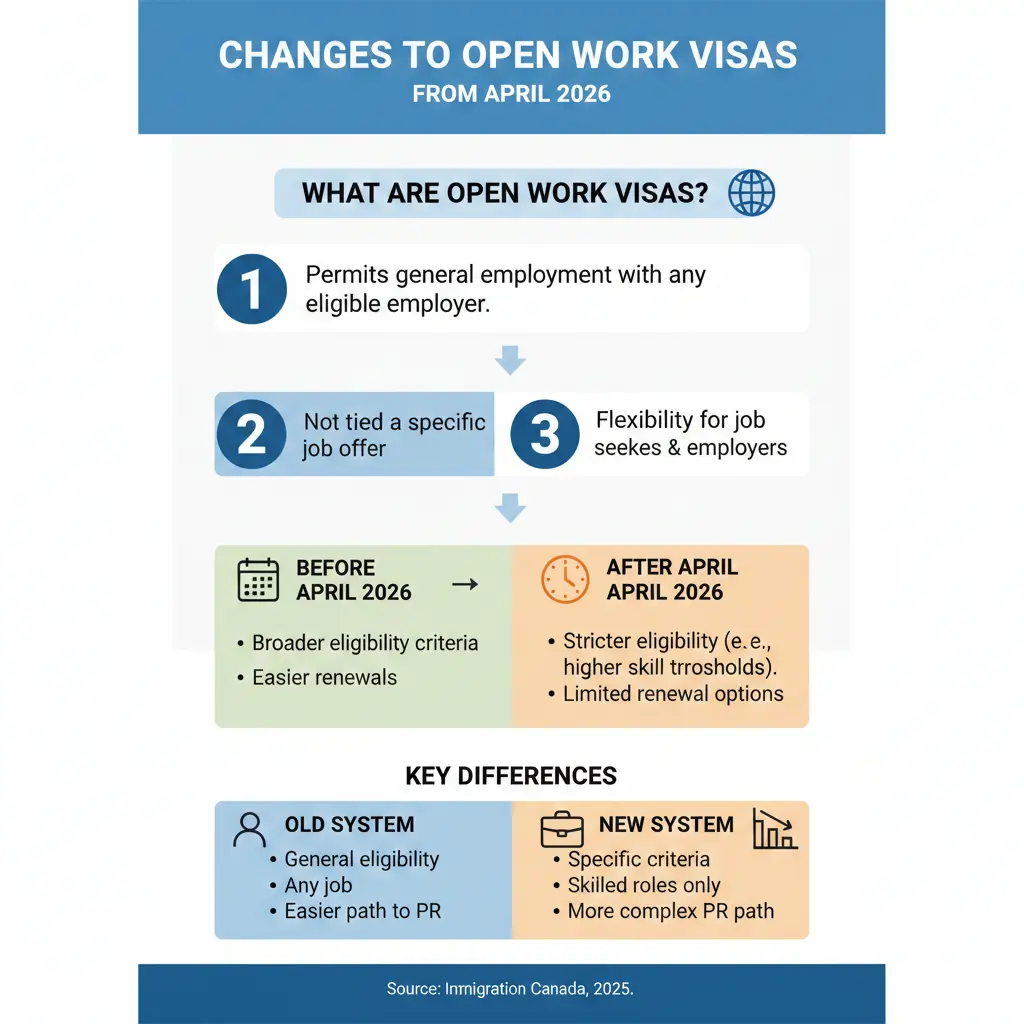
The Big Changes: Two New Employment Conditions from 20 April 2026
Starting Monday, 20 April 2026, every open work visa will carry one of two employment conditions. This isn't about restricting opportunities—it's about clarity, reducing exploitation risks, and aligning with our fair labour laws. INZ aims to create safer, more transparent workplaces for everyone involved.
Condition 1: Open Work Visas Allowing Any Work
If your visa falls here, you're free to do any lawful work in New Zealand. That means:
- Working for an employer under a standard employment agreement.
- Sole trading as a contractor.
- Owning and running your own business—think launching a café in Wellington or freelancing as a graphic designer.
This applies to these common visas:
- Partner of a Worker Work Visa
- Partner of a Student Work Visa
- Partner of a Student Work Visa (supported by a New Zealand Scholarship)
- Post Study Work Visa
- Partner of a New Zealander Work Visa
- Partner of a Military Work Visa
Practical tip: If you're on a Post Study Work Visa after finishing your degree at the University of Auckland, use this freedom to gain skilled experience. Register with IRD for GST if your business turnover hits $60,000, and consider KiwiSaver for long-term security.
Condition 2: Open Work Visas Requiring Work for an Employer
These visas limit you to working for an employer only—either as an employee with an employment agreement or via a contract for services (which INZ treats as employment). No starting your own business here.
Affected visas include:
- Victims of Domestic Violence Work Visa
- Victims of People Trafficking Work Visa
- Migrant Exploitation Protection Work Visa
- Asylum Seeker Work Visa
- All Working Holiday Visas
Key note for Working Holiday makers: Your work must be temporary to support your holiday—no business ownership allowed. Aim for seasonal gigs like fruit picking in Hawke's Bay, but always check your visa label via the INZ app.
General Rules Applying to All Open Work Visa Holders
No matter your category, stick to New Zealand's laws:
- Comply with the Employment Relations Act, Holidays Act, and Minimum Wage Act.
- Get at least the adult minimum wage ($23.50/hour in 2026) and holiday pay.
- Register with ACC for work-related injuries.
- For business owners: Follow the Companies Act 1993, pay taxes via IRD, and meet health and safety standards under WorkSafe.
Breaches can lead to visa cancellation or deportation—don't risk it. Use the Employment NZ website for free advice on contracts and rights.
Transitional Arrangements for Existing Visa Holders
If you already hold an open work visa granted before 20 April 2026, you're unaffected until it expires. This grace period lets you adjust—maybe wind down a side hustle if needed—before renewing. New applications from that date must meet the new conditions tied to your visa type.
Actionable advice: Log into your INZ account now to check your visa label and conditions. If unsure, contact INZ via their website or call 0508 558 855. Employers, update your records to avoid compliance issues with MBIE audits.
How These Changes Benefit Kiwis and Migrants
For migrants, clearer rules mean less stress—know exactly what's allowed without guessing. Employers get a fairer system, reducing dodgy arrangements that undercut locals. Overall, it strengthens our labour market, protecting vulnerable workers while filling skill gaps in sectors like healthcare and construction.
In 2026, with unemployment steady at 4.2% per Stats NZ, these tweaks support sustainable migration without flooding the job market.
Next Steps to Stay Compliant
Don't wait—review your visa today, chat with your employer, and bookmark immigration.govt.nz for updates. If self-employed, consult a chartered accountant for IRD compliance. These changes make Aotearoa's job market fairer for all, so embrace the clarity and keep building your Kiwi dream.
Frequently Asked Questions
Sources & References
-
1
New Zealand to change open work visa rules from April 2026: What Indians should know — www.businesstoday.in
-
2
New Zealand to introduce changes to open work visa conditions from April 20 — economictimes.com
- 3
-
4
New changes to employment conditions for Open Work Visas — www.indianweekender.co.nz
-
5
Upcoming changes to employment conditions for open work visa holders — www.immigration.govt.nz
-
6
Employment conditions clarified for Open Work Visas — www.workingin-newzealand.com
Related Articles

Job Search Strategy for 2026: How to Navigate New Zealand's Competitive Market
Navigating New Zealand's job market in 2026 feels like a rugby match in the final quarter—intense competition, but with smart plays, you can score that winning try. Job ads are ticking up after eight...

AI Skills in Demand: How to Future-Proof Your Career in New Zealand
Imagine landing a job in 2026 where your salary jumps by 30% just because you've got the right AI skills. That's the reality for Kiwis tuning into the tech wave right now, as demand surges across IT,...

Minimum Wage Increase April 2026: What It Means for NZ Job Seekers & Employers
Imagine finishing a long shift at your local café or warehouse, knowing that from April 1, 2026, every hour you work will be worth a bit more. New Zealand's adult minimum wage is rising from $23.50 to...

Beating the Aussie Exodus: How to Negotiate Better Salaries & Benefits in New Zealand
Thinking about packing your bags for Australia? You're not alone—thousands of Kiwis cross the ditch each year chasing higher pay and sunnier skies. But with New Zealand's job market heating up in 2026...