Domestic Violence Leave NZ: Support at Work

If you or a child in your care has experienced family violence, you have legal rights to paid leave and workplace support in New Zealand. Since 1 April 2019, the law has guaranteed eligible employees...
Sarah covers personal finance, tax, and KiwiSaver topics for Lifetimes NZ. She focuses on making money management straightforward and practical for everyday Kiwis.
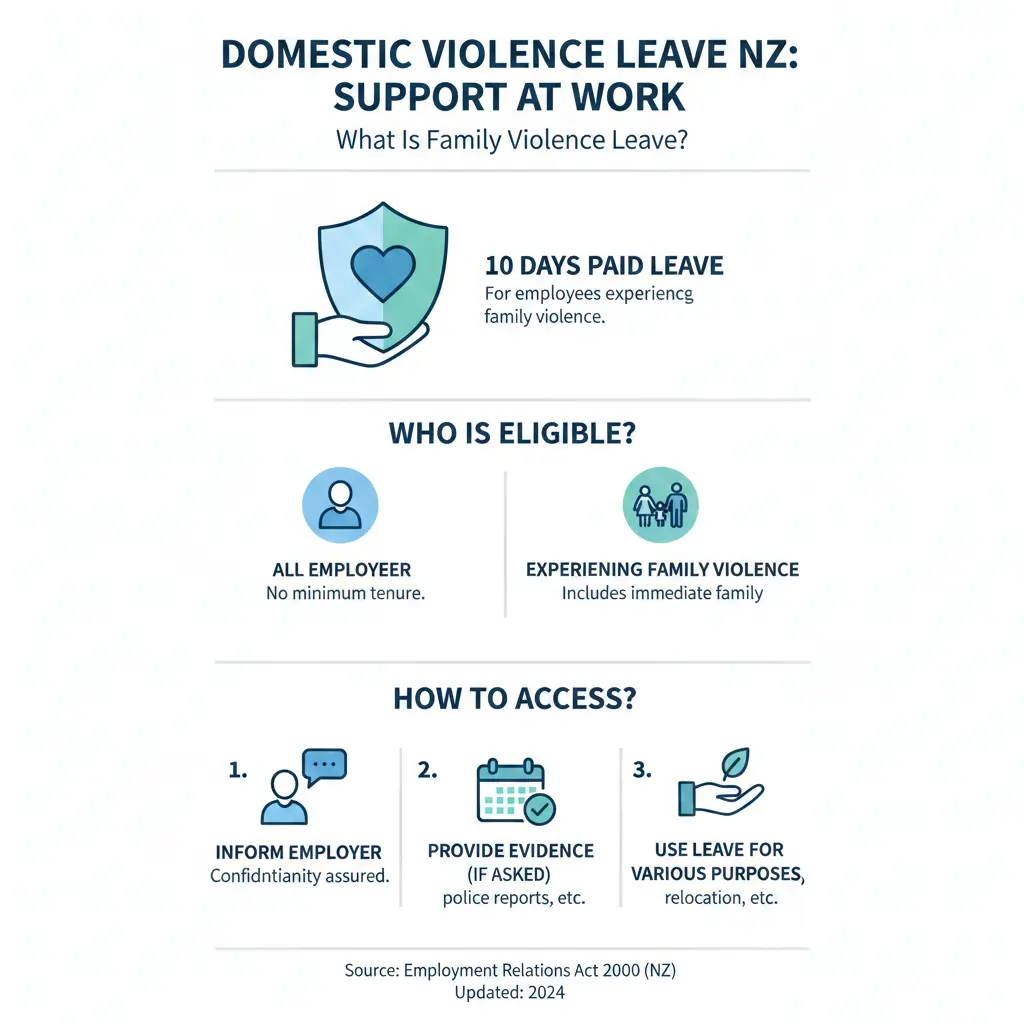
If you or a child in your care has experienced family violence, you have legal rights to paid leave and workplace support in New Zealand. Since 1 April 2019, the law has guaranteed eligible employees up to 10 days of paid family violence leave each year, along with the right to request flexible working arrangements. Understanding these entitlements can help you access the support you need while managing the effects of domestic violence.
What Is Family Violence Leave?
Family violence leave is paid leave specifically designed for employees affected by domestic and family violence. It's separate from your annual holidays, sick leave, and bereavement leave, meaning you get these days on top of your existing leave entitlements.
Family violence encompasses all forms of violence in family and intimate relationships, including physical, sexual, and psychological abuse. You're protected under the Domestic Violence — Victims' Protection Act 2018, regardless of your gender or the type of relationship you're in.
You can take family violence leave to:
- Get support from counsellors or support services
- Move house or arrange safe accommodation
- Attend court proceedings or police interviews
- Care for children affected by family violence
- Arrange childcare or make other safety arrangements
Who's Eligible for Family Violence Leave?
You're eligible for paid family violence leave if you're an employee and meet one of these employment requirements:
- You've worked continuously for 6 months with the same employer, or
- You've worked for your employer for 6 months total (not necessarily continuous) for an average of 10 hours per week, with at least 1 hour in every week or 40 hours in every month
You can take family violence leave if:
- You've experienced family violence yourself, or
- A child living with you (even part-time) has experienced family violence
Importantly, it doesn't matter when the family violence occurred. You retain these rights even if you experienced violence before starting your current job or before the law changed in April 2019.
How Much Leave Are You Entitled To?
You're entitled to up to 10 days of paid family violence leave each year. This is the minimum entitlement your employer must provide. Some employers may offer more generous provisions, so it's worth checking your employment agreement or asking your HR department.
If you need more than 10 days, you can request additional support by asking your employer for:
- More than the minimum 10 days of paid leave
- Unpaid leave or annual leave in advance
- Flexible working arrangements for longer than 2 months
- Other specific support relevant to your situation
How to Request Family Violence Leave
Notifying Your Employer
Tell your employer on or before the day you're meant to work, or as early as you can, that you want to take family violence leave. You don't need to provide details about the violence when you first request the leave—just let them know you need the time off.
Providing Proof
Your employer can ask for proof that you've been affected by family violence. However, they must still pay you if you have a "reasonable excuse" for not providing proof immediately—for example, if you had to move home quickly and didn't have time to gather documentation.
Acceptable proof includes:
- A letter or email from a support person, support organisation, doctor, nurse, or school explaining the situation and how it affects you
- A declaration—a letter of evidence witnessed by an authorised person like a justice of the peace
- Court or police documents related to the family violence
Your personal information and the reason for your leave must be kept confidential by your employer, unless the Privacy Act 2020 permits sharing.
Flexible Working Arrangements
Beyond paid leave, you have the right to request short-term flexible working arrangements for up to 2 months to help you manage the effects of family violence. These changes might include:
- Changes to your work duties
- Changes to your work location
- Changes to your start and finish times
- Working from a different location if you usually work from home but can no longer do so safely
Making a Flexible Working Request
Your request must be made in writing (unless your employer has a policy allowing verbal requests) and should include:
- Your name and the date of the request
- A statement that you're asking for short-term flexible working under Part 6AB of the Employment Relations Act 2000
- What you want to change about your normal working arrangements
- How long you want these changes to last (up to 2 months)
- When you want the changes to start and finish
- How these changes will help you
- What changes your employer may need to make to their business if they agree
Your employer should consider your request and respond. They can offer to keep flexible arrangements in place for longer than 2 months if that helps you manage the effects of family violence.
What Employers Must Do
If you're taking family violence leave, your employer has legal responsibilities to support you:
- Allow you to take up to 10 days of paid family violence leave each year
- Consider and respond to flexible working requests
- Protect your personal information
- Take steps to ensure you're safe at work
- Provide information about suitable support services
Employers cannot treat you unfairly at work because you may have experienced family violence.
Recent Changes to Family Violence Leave (2026)
New employment law reforms are coming to New Zealand in 2026. Under the proposed changes, family violence leave will become available from your first day of employment, rather than after 6 months. This means you won't need to wait to qualify for this crucial support.
These reforms aim to make it easier for employees affected by family violence to access the help they need immediately.
Getting Support Beyond Work
While family violence leave provides time away from work, there are other resources available to help you:
- Women's Refuge – Provides shelter, counselling, and support for people affected by domestic violence
- 1800RESPECT – A national counselling service for people affected by sexual assault, family and domestic violence
- Your GP or healthcare provider – Can provide medical support and refer you to counselling services
- Support organisations – Many communities have local services offering practical and emotional support
- Legal services – Free legal advice is available to help with protection orders, custody arrangements, and other legal matters
Next Steps
If you're affected by family violence, remember that you have legal rights and workplace protections. Here's what you can do:
- Reach out for support – Contact Women's Refuge, 1800RESPECT, or a local support service. You don't have to face this alone.
- Know your rights – Familiarise yourself with your entitlements to family violence leave and flexible working arrangements.
- Talk to your employer – When you're ready, let your employer know you need family violence leave. You don't need to provide details immediately.
- Gather proof – If your employer asks, collect documentation such as letters from support services, your GP, or police documents.
- Request support at work – If you need flexible arrangements to stay safe, put your request in writing and explain how it will help you.
- Seek professional advice – If you need legal support, contact a community law centre or legal aid service for guidance on protection orders or other matters.
Family violence leave exists to give you the time and space to get help and rebuild your life safely. Your employer must support you, and there are many organisations across New Zealand ready to help when you're ready to reach out.
Frequently Asked Questions
Sources & References
-
1
Managing family violence leave — Employment New Zealand — www.employment.govt.nz
-
2
Taking family violence leave — Employment New Zealand — www.employment.govt.nz
-
3
Family violence leave — New Zealand Government — www.govt.nz
-
4
Employment law changes: looking ahead to 2026 — Chapman Tripp — chapmantripp.com
-
5
Employment Leave Act: A new era for workplace leave — DLA Piper — knowledge.dlapiper.com
-
6
Holidays Act reform — Ministry of Business, Innovation & Employment — www.mbie.govt.nz
Related Articles

Industry Bodies and Professional Associations NZ
Whether you're launching a business, advancing your career, or navigating financial regulations, industry bodies and professional associations in New Zealand offer invaluable support. These organisati...

Emergency Benefit NZ: When You Have No Other Options
When you're struggling financially and don't qualify for other benefits, the Emergency Benefit might be your lifeline. It's a discretionary payment designed for Kiwis in genuine hardship who've exhaus...

Unpaid Internships NZ: Are They Legal?
Unpaid internships are a common pathway for students and graduates to gain work experience in New Zealand, but there's often confusion about whether they're actually legal. The short answer is: unpaid...

Estate Administration NZ: Managing Someone's Affairs After Death
Losing a loved one is one of life's toughest challenges, and stepping in to manage their estate can feel overwhelming. In New Zealand, estate administration—the process of handling someone's affairs a...