Study Leave NZ: Your Rights to Time Off for Learning

Ever juggled a full-time job with night classes or weekend workshops, only to hit a wall when asking for time off to study? You're not alone—many Kiwis dream of upskilling but worry about lost wages o...
The Lifetimes NZ editorial team curates, fact-checks, and updates guides on personal finance, property, health, immigration, legal, business, and lifestyle topics relevant to Lifetimes NZ readers. Articles are produced with AI assistance and reviewed by the editorial team before publication.
Ever juggled a full-time job with night classes or weekend workshops, only to hit a wall when asking for time off to study? You're not alone—many Kiwis dream of upskilling but worry about lost wages or employer pushback. In New Zealand, your rights to study leave NZ depend on your employment agreement, union status, and upcoming law changes, offering more flexibility than you might think.
This guide breaks down everything you need to know about taking time off for learning in 2026, from statutory entitlements to negotiation tips. Whether you're eyeing a qualification through StudyLink or KiwiSaver-boosted career growth, understanding these rules helps you plan without financial stress. We'll cover practical steps tailored for New Zealand workers, backed by official sources.
What is Study Leave in New Zealand?
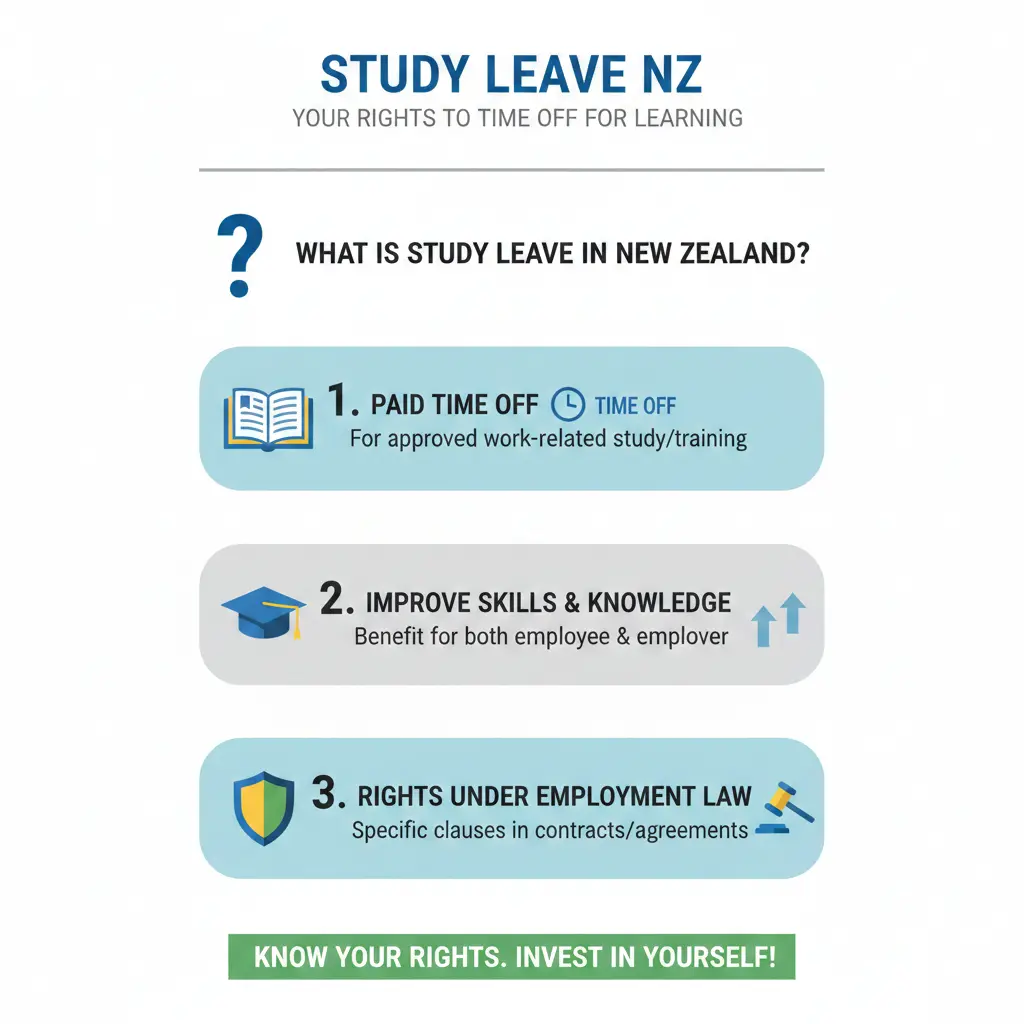
Study leave refers to paid or unpaid time off work specifically for education or training. Unlike annual leave (four weeks paid under the Holidays Act 2003, soon to be replaced), it's not a universal right but often embedded in collective agreements, individual contracts, or specific schemes. For most Kiwis, it starts with your employment agreement—check yours via the Employment Agreement Builder on business.govt.nz.
In 2026, the landscape shifts with the new Employment Leave Act replacing the Holidays Act. This introduces day-one accrual for annual and sick leave based on hours worked, plus options to cash up to 25% of annual leave annually—potentially freeing funds for study costs. While not directly mandating study leave, these changes make balancing work and learning easier by simplifying leave calculations at a single hourly rate.
Types of Study Leave Available
- Employment Relations Education (ERE) Leave: Paid leave for union members attending approved employment relations courses. Entitlements are calculated by unions based on full-time equivalents (FTEs) in your workplace—for example, employers with 1-5 FTEs get 3 days total per year.
- Study Awards and Scholarships: Government or employer-supported awards (e.g., via education.govt.nz) allow full- or part-time work with pro-rated study leave contributions. You must submit an employer support form.
- Contractual Study Support: Many agreements offer paid study leave, fee reimbursements, or exam time off. Larger firms in sectors like tech or healthcare often include these to retain talent.
- Unpaid Leave: Under the Employment Relations Act 2000, you can request unpaid leave for study if it doesn't unduly disrupt business—employers must consider it reasonably.
For international students or visa holders, updated 2025 rules allow up to 25 hours weekly work during term time (from 20 hours), plus full-time during breaks. This supports self-funded study without full study leave needs, but Kiwis on working holiday visas or similar should check immigration.govt.nz.
Your Legal Rights to Study Leave NZ
New Zealand employment law doesn't guarantee paid study leave for all, but protections exist. The Employment Relations Act requires 'good faith' negotiations—your boss can't unreasonably deny requests if supported by evidence like course enrolment. Key 2026 updates via the Employment Leave Act include immediate access to bereavement and family violence leave, which could indirectly aid study by reducing personal disruptions.
Holidays Act 2003 vs New Employment Leave Act 2026
| Aspect | Holidays Act 2003 (Current) | Employment Leave Act 2026 |
|---|---|---|
| Accrual Start | After 3 months | Day one, hours-based |
| Leave Calculation | Days/weeks | Hours at single rate |
| Casual Workers | 8% holiday pay | 12.5% leave compensation |
| Annual Leave Cash-out | Limited | Up to 25% per year |
This table highlights how the new Act simplifies things, making it easier to carve out study time without complex pro-rating. Fixed allowances continue during leave, protecting your income.
ERE Leave Entitlements Explained
If you're in a union-covered role, ERE leave is a gem. Unions notify employers 14 days before courses (excluding Christmas/New Year), covering topics like health and safety or bargaining. For a mid-sized firm (51-280 FTEs), that's at least one day per eight FTEs—shared among members. Non-union? Negotiate similar via your contract using the EAB tool.
Pro tip: Track your FTE status—over 30 hours weekly counts as 1 FTE, under as 0.5.
Who Qualifies for Study Leave?
Eligibility varies:
- Permanent Employees: Strongest case via contracts or awards.
- Casual/Part-Time: New 12.5% compensation covers leave needs; negotiate study support.
- Union Members: Automatic ERE access.
- Study Award Holders: Must maintain employer support across job changes.
- International Students: 25-hour work rights from Nov 2025; apply for visa variations via Immigration Online (NZ$325 fee). Over 40,000 affected, with 30,000 visas expiring by March 2026.
Teachers and schools note 2026 outlook includes these reforms, impacting education sector contracts.
How to Request Study Leave: Step-by-Step Guide
- Review Your Agreement: Search for 'study leave', 'professional development', or ERE clauses.
- Gather Evidence: Enrolment confirmation, course dates, StudyLink approval if funded.
- Submit in Writing: Give 4+ weeks' notice; propose coverage plans (e.g., shift swaps).
- Negotiate Flexibly: Offer unpaid if needed, or use annual leave hybrid.
- For ERE: Contact your union for allocation—must be approved courses.
- Appeal Denials: Use MBIE mediation if bad faith; free via employment.govt.nz.
- Track Funding: Pair with StudyLink fees-free or KiwiSaver withdrawals for over-40s study.
For visa students: Log into Immigration Online post-Aug 2025 or use INZ 1020 form (pre-Aug). Changing providers? New visa likely needed.
Financial Support Alongside Study Leave
Study leave pairs with NZ-specific aid:
- StudyLink: Loans/grants for approved courses; no leave required if part-time.
- Fees-Free: First-year tertiary free for eligibles—2026 expansions likely.
- KiwiSaver: Withdraw for first home or hardship study (over 18 months membership).
- Employer Reimbursements: Common in contracts; tax-deductible via IRD.
Cashing annual leave (up to 25% in 2026) covers gaps. Disclaimer: This isn't financial advice—consult IRD, StudyLink, or a adviser for your situation.
Common Challenges and How to Overcome Them
Small businesses cite disruption; counter with data showing upskilled staff boost productivity (Stats NZ reports 10-15% wage gains post-qualification). Peak seasons? Time requests around them. Denials? Document for mediation—90% resolve pre-tribunal.
For parents: Family violence leave now immediate, aiding study focus.
Next Steps: Plan Your Study Leave Today
Grab your employment agreement, chat with your union or HR, and explore StudyLink. With 2026 reforms simplifying leave, now's prime time to upskill—boost your career, earnings, and KiwiSaver balance. Need personalised advice? Contact Employment NZ or a financial adviser. Start small: one course could change everything.
Disclaimer: Always verify with official sources and seek professional advice for your circumstances. Rates and rules current as of 2026.
Frequently Asked Questions
Sources & References
-
1
Employment Law Update: 2025 Review and 2026 Outlook for Schools — www.isnz.org.nz
-
2
International students in New Zealand can now work for longer hours — economictimes.com
-
3
Upcoming changes to student visa work rights — www.immigration.govt.nz
-
4
Employment Relations Education leave — www.employment.govt.nz
-
5
New Zealand Expands Work Rights for International Students — www.youtube.com
-
6
Working and taking leave during your study award — www.education.govt.nz
-
7
What's on the horizon - time for change? — www.ammlaw.co.nz
-
8
Study entitlement - Employment Agreement Builder — eab.business.govt.nz
Related Articles

Working Multiple Jobs NZ: Tax and Legal Considerations
Juggling multiple jobs can boost your income, but it's crucial to understand the tax implications and legal requirements that come with working more than one role in Aotearoa. Whether you're a contrac...

Name Changes NZ: Legal Process and Costs
Considering a fresh start with a new name? Whether it's after marriage, divorce, or simply embracing a personal transformation, changing your name in New Zealand is straightforward but requires follow...

Holiday Home Tax Rules NZ: Private Use and Rental
Own a bach in Coromandel or a holiday home in Queenstown? You're not alone—many Kiwis cherish these escapes, but renting them out while enjoying personal use can trip you up on tax rules. Getting the...

Industry Bodies and Professional Associations NZ
Whether you're launching a business, advancing your career, or navigating financial regulations, industry bodies and professional associations in New Zealand offer invaluable support. These organisati...