Bereavement Leave NZ: Your Entitlements Explained

Losing someone close hits hard, especially when you're juggling work and whānau responsibilities. In New Zealand, bereavement leave gives Kiwis the time they need to grieve, attend tangi, or sort esta...
The Lifetimes NZ editorial team curates, fact-checks, and updates guides on personal finance, property, health, immigration, legal, business, and lifestyle topics relevant to Lifetimes NZ readers. Articles are produced with AI assistance and reviewed by the editorial team before publication.
Losing someone close hits hard, especially when you're juggling work and whānau responsibilities. In New Zealand, bereavement leave gives Kiwis the time they need to grieve, attend tangi, or sort estate matters without financial stress.Bereavement Leave NZ entitlements under the Holidays Act provide up to three days' paid leave for immediate family deaths, including miscarriages and stillbirths, helping you focus on what matters most.
This guide breaks down your rights, eligibility, how pay works, and practical steps to take leave. Whether you're an employee navigating loss or an employer supporting your team, you'll find clear, actionable advice tailored for Kiwi workplaces in 2026.
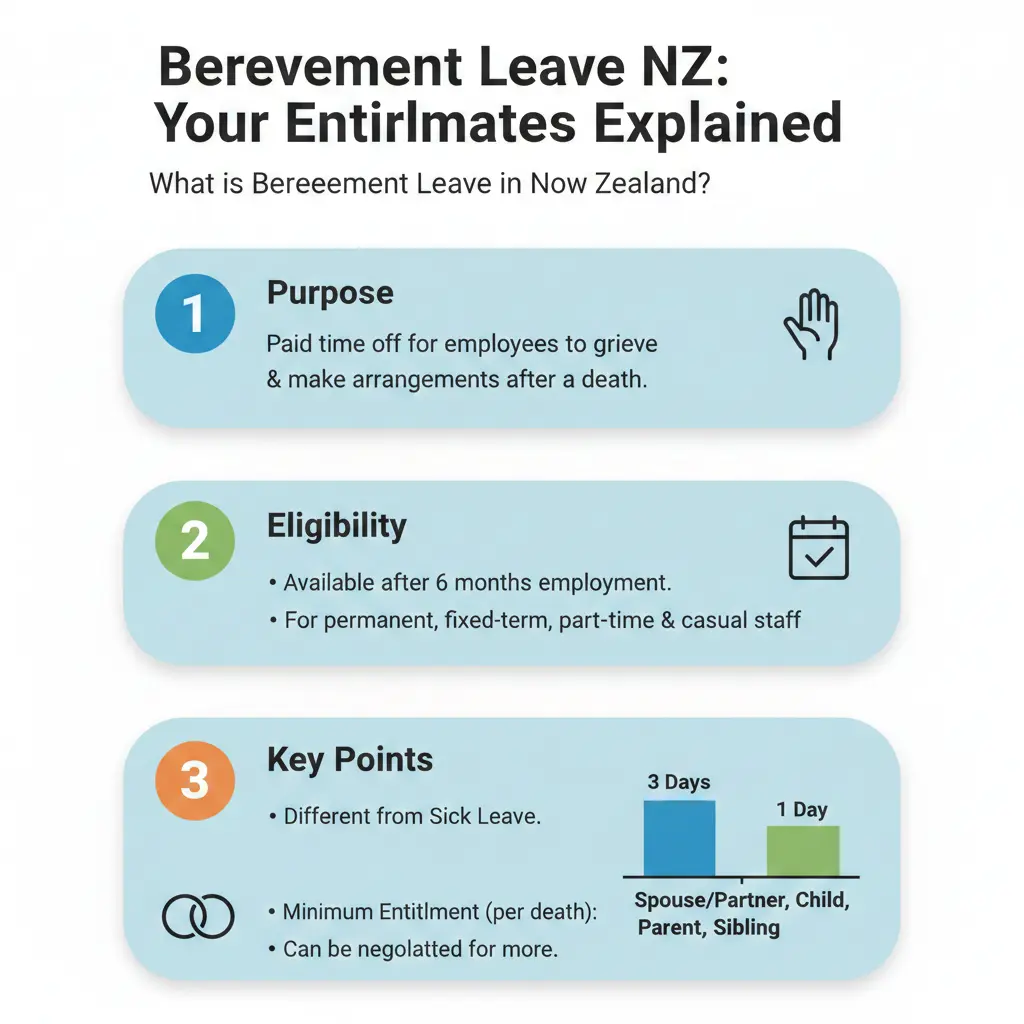
What is Bereavement Leave in New Zealand?
Bereavement leave, also known as tangihanga leave, is paid time off work for eligible employees to grieve or handle matters related to a death. It covers funerals, cultural obligations like tangi, organising estates, or simply taking time to process loss. Unlike annual leave, it's specifically for bereavement and can be taken flexibly – not necessarily on consecutive days or immediately after the death.
The Holidays Act 2003 outlines these entitlements, with updates since 2021 expanding coverage for miscarriages and stillbirths. In 2026, the rules remain focused on supporting work-life balance during tough times, recognising that grief doesn't follow a schedule.
Why Bereavement Leave Matters for Kiwis
For many New Zealanders, especially in Māori and Pasifika communities, bereavement involves extended whānau gatherings. Employers who offer this leave build stronger teams – staff return more focused and loyal. It's not just compliance; it's about empathy in our close-knit society.
Who Qualifies for Bereavement Leave NZ?
To access bereavement leave, you must meet these criteria:
- Employed by your current employer for at least 6 months, working an average of at least 10 hours per week, and at least 1 hour every week or 40 hours every month.
- It's per bereavement event, and entitlements renew every 12 months if you remain eligible.
- Casual or part-time workers qualify if they hit the hours threshold.
If you don't meet the 6-month rule – say, you're new to the job – your employer can still approve unpaid leave, annual holidays, or leave in advance. Many Kiwi bosses do this out of fairness.
Changes on the Horizon?
Recent discussions around Holidays Act reforms suggest bereavement leave might accrue from day one of employment, like family violence leave. As of 2026, the 6-month rule still applies, but keep an eye on employment.govt.nz for updates.
Your Bereavement Leave Entitlements Explained
Entitlements depend on your relationship to the deceased. Here's the breakdown:
3 Days' Paid Leave for Close Family
You get a minimum of 3 days' paid bereavement leave per bereavement for:
- Child or grandchild
- Parent or grandparent
- Sibling
- Spouse, partner, or civil union partner
- Partner's parent
These days don't need to be consecutive and can be taken anytime for bereavement-related purposes.
1 Day's Paid Leave for Other Bereavements
For extended family (like aunties, uncles, cousins) or close friends, you qualify for 1 day if your employer accepts you've suffered a bereavement. Prove the connection if needed – a simple explanation often suffices.
Miscarriage and Stillbirth Bereavement Leave
Since April 2021, 3 days' paid leave applies to miscarriages or stillbirths (after 20 weeks' pregnancy). This covers:
- The mother (or would-be mother)
- Her partner or former partner (biological parent)
- Someone agreed as primary carer (e.g., formal adoption or whāngai)
- Partner of the primary carer
This recognises the profound grief involved, even without a live birth.
How is Bereavement Leave Paid?
Payment matches your relevant daily pay or average daily pay – what you'd earn if working that day. It's based on gross earnings over the past 52 weeks, excluding overtime unless regular.
Example: If your average daily pay is $250, 3 days' leave = $750 before tax. Public holidays during leave don't deduct from your entitlement; you're paid for the holiday separately.
| Leave Type | Days | Pay Rate |
|---|---|---|
| Close family death | 3 | Relevant daily pay |
| Extended family/close connection | 1 | Relevant daily pay |
| Miscarriage/stillbirth | 3 | Relevant daily pay |
IRD taxes this as income, reported via your PAYE. No KiwiSaver contributions apply directly to bereavement pay.
How to Take Bereavement Leave: Step-by-Step
- Notify your employer ASAP – phone, email, or in person. Explain the relationship and when you need the leave.
- Discuss timing – it can be non-consecutive, e.g., one day for tangi, two later for estate paperwork.
- Provide evidence if requested – a death notice or family note usually works; no formal proof required by law.
- Track your pay – check your payslip matches relevant daily pay. Query discrepancies with HR.
- If denied – confirm eligibility. If ineligible, request annual leave or unpaid time. Escalate to Employment NZ if unfair.
Pro tip: Update your employment agreement or company policy to define 'close family' clearly – avoids disputes.
Employer Responsibilities and Best Practices
Kiwi employers cannot deny bereavement leave if you're eligible. Pay must be prompt, and you can offer more days (paid or unpaid) to support staff.
Practical tips for bosses:
- Create a bereavement policy covering definitions, processes, and cultural needs (e.g., extra time for tangi).
- Be flexible – Auckland employers report better retention when allowing extra unpaid days for whānau.
- Support mental health – link to EAP services or ACC grief counselling if relevant.
If you're self-employed or a contractor, no statutory entitlement exists – negotiate with clients or check your contract.
Special Circumstances and Cultural Considerations
Tangi and Cultural Responsibilities
Bereavement leave explicitly covers tangi, unveiling, or whānau support. Employers respecting tikanga build trust – many extend beyond the minimum.
Multiple Bereavements
Each death qualifies separately, but within the 12-month cycle. Track to avoid overlap issues.
If You Need More Time
Top up with annual leave, sick leave (if grief affects health), or unpaid leave. Some use KiwiSaver hardship withdrawals for extended absences – check ird.govt.nz.
Next Steps: Get the Support You Need
Know your rights under the Holidays Act – print this guide or bookmark employment.govt.nz. If facing loss, talk to your employer early, and consider free resources like Lifeline (0800 543 354) for grief support. Employers, review your policy today to foster a caring workplace.
Disclaimer: This is general guidance for 2026. Tax, leave, and employment rules can change – consult Employment NZ, IRD, or a professional adviser for your situation. We're not providing personalised financial advice.
Frequently Asked Questions
Sources & References
-
1
Bereavement Leave New Zealand - Employers Assistance — www.employers.co.nz
-
2
Bereavement Leave Guide for Employers | People & Culture — www.peopleandculture.co.nz
-
3
Taking bereavement leave | Employment New Zealand — www.employment.govt.nz
-
4
Understanding Bereavement Leave in NZ - Employment Hero — employmenthero.com
-
5
Bereavement leave | New Zealand Government — www.govt.nz
-
6
Bereavement leave - Employment New Zealand — www.employment.govt.nz
-
7
New holiday leave legislation: what you need to know - Lane Neave — www.laneneave.co.nz
-
8
Your rights to Bereavement Leave - Mahi Law — mahilaw.nz
-
9
Bereavement (tangihanga) leave - Workplace Policy Builder — wpb.business.govt.nz
Related Articles

Working Multiple Jobs NZ: Tax and Legal Considerations
Juggling multiple jobs can boost your income, but it's crucial to understand the tax implications and legal requirements that come with working more than one role in Aotearoa. Whether you're a contrac...

Name Changes NZ: Legal Process and Costs
Considering a fresh start with a new name? Whether it's after marriage, divorce, or simply embracing a personal transformation, changing your name in New Zealand is straightforward but requires follow...

Holiday Home Tax Rules NZ: Private Use and Rental
Own a bach in Coromandel or a holiday home in Queenstown? You're not alone—many Kiwis cherish these escapes, but renting them out while enjoying personal use can trip you up on tax rules. Getting the...

Industry Bodies and Professional Associations NZ
Whether you're launching a business, advancing your career, or navigating financial regulations, industry bodies and professional associations in New Zealand offer invaluable support. These organisati...