School Zones NZ: How They Work and Why They Matter

Choosing the right school for your tamariki can feel like navigating a map of coloured zones—literally. In Aotearoa, **school zones NZ** dictate where your child is guaranteed a spot, helping prevent...
The Lifetimes NZ editorial team curates, fact-checks, and updates guides on personal finance, property, health, immigration, legal, business, and lifestyle topics relevant to Lifetimes NZ readers. Articles are produced with AI assistance and reviewed by the editorial team before publication.
Choosing the right school for your tamariki can feel like navigating a map of coloured zones—literally. In Aotearoa, **school zones NZ** dictate where your child is guaranteed a spot, helping prevent overcrowding while ensuring local whānau have priority access. Whether you're house-hunting in Auckland's booming suburbs or planning a move to the regions, understanding how these zones work is key to securing the best fit for your family's needs.
This guide breaks down **school zones NZ: how they work and why they matter**, with practical tips, real Kiwi examples, and the latest 2026 updates. You'll learn how to check boundaries, handle out-of-zone applications, and stay ahead of changes—empowering you to make informed choices for your kids' education.
What Are School Zones in New Zealand?
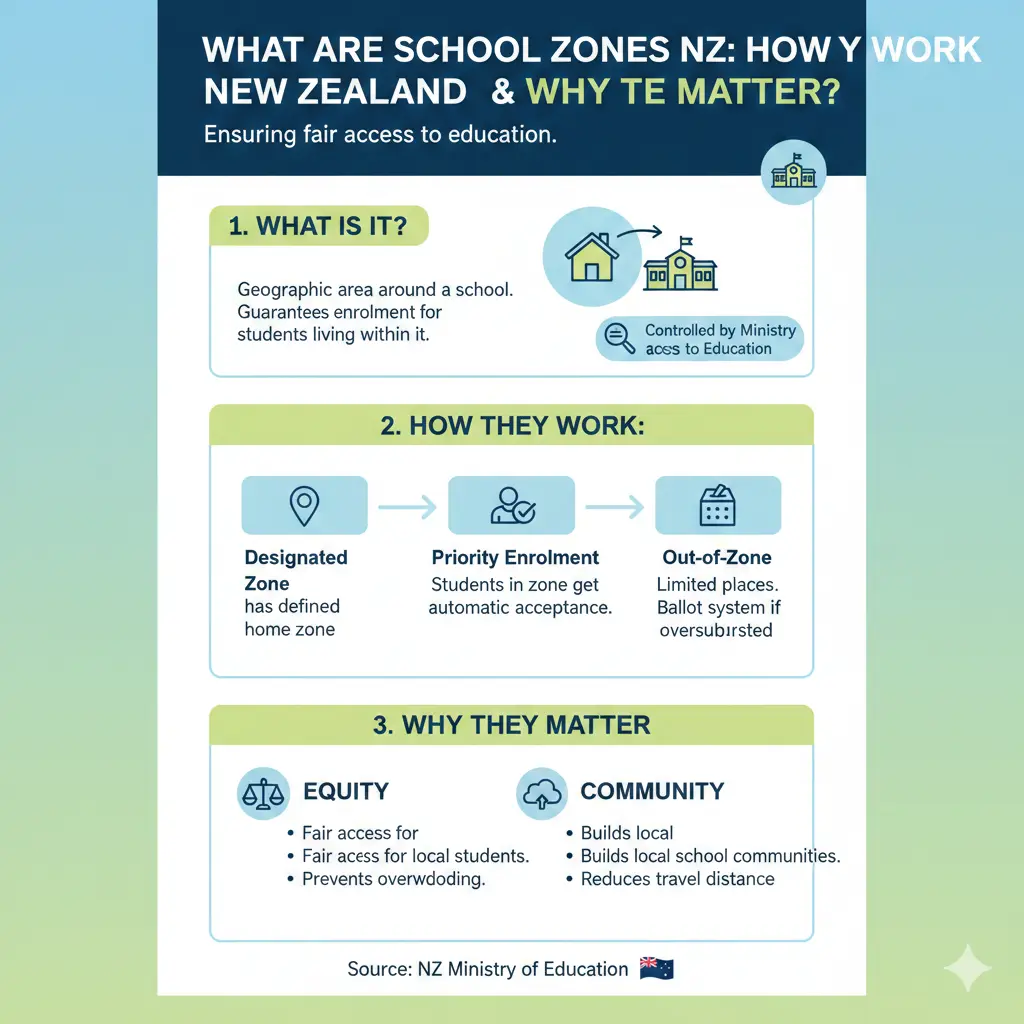
School zones, or home zones, are geographical areas defined around state schools and kura with enrolment schemes. If your home address falls inside the zone, your child gets an automatic place (once they meet age requirements). These schemes, set by the Ministry of Education in consultation with schools and communities, keep class sizes manageable and give local families first dibs.
Not every school has a zone—some are open to all comers, regardless of address. Zones apply mainly to state and state-integrated schools, while private schools set their own rules. The system supports our national curriculum, now evolving with new subjects like civics and AI rolling out from 2028.
Types of School Zones by Colour and School Level
Interactive maps make spotting zones easy, with colours indicating school types:
- Blue: Primary schools (contributing Year 1-6 or full primary Year 1-8).
- Purple: Secondary schools (Year 9-13 or Year 7-13).
- Green: Composite schools (multiple levels, common in rural spots).
- Orange: Intermediate schools (Year 7-8).
Other types include special schools for complex needs, activity centres for alternative learning, Te Aho o Te Kura Pounamu (correspondence school), and teen parent units. Zones also factor in gender policies: most are co-educational, but some are boys-only, girls-only, or mixed by year level.
How School Zones Work: The Enrolment Process
It's straightforward if you're in-zone: provide proof like a utility bill, rental agreement, or rates notice, and you're set. Schools prioritise in-zone enrolments to fill capacity first.
In-Zone Guarantee and Proof Requirements
Your residential address must be legitimate—no temporary stays or shared houses to game the system. Schools verify via multiple documents, and boards can investigate suspicious cases. For cohort entry (group starts), 2026 dates are fixed: Term 1 (26 Jan-9 Feb or 9 March), Term 2 (20 Apr or 2 Jun), and so on.
Out-of-Zone Enrolments: Ballots and Priority
Spaces left after in-zone fills go to out-of-zone applicants via a strict process. Schools advertise vacancies (often September), with ballots for oversubscription:
- Auckland 2025 secondary/intermediate: Apps close 27 Aug, ballot 3 Sep.
- Primary: Apps close 8 Oct, ballot 15 Oct.
(Note: 2026 dates follow similar timelines—check school sites.) Priority might go to siblings or staff kids. In high-demand areas like Flat Bush or Rolleston, new schools opened in 2026 to ease pressure from population booms.
Why School Zones Matter for Kiwi Families
Zones stabilise communities by linking kids to local schools, fostering whānau connections and reducing travel times. They matter hugely in growing areas where rolls hit records—856,412 last year. Yet, they spark house price wars: properties in top zones command premiums, especially in Auckland and Christchurch.
Equity Funding: Replacing Deciles
Gone are deciles (1-10 ratings). Now, the Equity Index funds schools based on student needs—like socioeconomic challenges or learning support. Higher scores mean more resources, levelling the playing field. Check a school's index and performance via official tools.
Zone Changes: What Triggers Them?
Boundaries shift for population growth, housing developments, or balancing rolls. The Ministry approves changes after community consultation. Example: Rapid sprawl in Rolleston led to a new state school in 2026. Always ask schools about proposed reviews before buying—your dream zone could redraw.
Practical Tools and Tips for Finding Your School Zone
Don't guess—use these Kiwi-specific resources:
- Education Counts Finder: Enter your address for zoned schools, equity scores, and performance data.
- Interactive Maps: Zoom into coloured boundaries for primaries (blue), secondaries (purple), etc.
- School Websites: Download enrolment schemes and check for specials like Māori immersion (kura).
Actionable Advice for Parents
- House Hunting? Overlay property listings with zone maps. Prioritise full primaries (Year 1-8) to avoid mid-primary moves.
- Moving Mid-Year? Confirm your new address's zone and apply early—some schools have termly intakes.
- Rural Families? Look for composite schools covering Years 1-13.
- Special Needs? Zones still apply, but contact the Ministry for support options.
- Track Changes: Subscribe to regional education updates (Te Tai Raro, Te Tai Whenua, Te Tai Runga).
In fast-growing spots like Flat Bush, zones help manage rolls peaking before a projected primary decline. Pro tip: Visit open days to gauge culture—zones secure the spot, but fit seals the deal.
Regional Differences Across Aotearoa
Zones vary by education region: Te Tai Raro (North Island upper), Te Tai Whenua (central), Te Tai Runga (lower North and South Islands). Auckland's tight zones contrast rural flexibility, where composites dominate. New 2026 charter schools (e.g., online or sports-focused) bypass traditional zoning.
FAQ: Common School Zone Questions
Q: Can I enrol my child out-of-zone without a ballot?
A: Rarely—only if spaces remain post-ballot or via priority (e.g., siblings). Schools must advertise.
Q: What if zones change after I buy a house?
A: Existing students stay, but new enrolments follow updates. Check consultations first.
Q: Do kura Māori have zones?
A: Yes, many do, alongside state schools. They follow Te Marautanga o Aotearoa.
Q: How does cohort entry affect zones?
A: Zones guarantee places on fixed 2026 start dates per term—no changes by schools.
Q: Are there zones for new 2026 schools?
A: Yes, like those in Rolleston and Flat Bush, designed for local growth.
Q: What's the Equity Index?
A: Replaces deciles; funds schools by student need levels.
Next Steps: Secure Your Child's School Spot Today
Start by plugging your address into the Education Counts tool—it's free and official. Chat with local boards, attend enrolments (often Term 4 prior), and factor zones into family plans. With rolls stabilising and new options emerging, 2026 is a great time to get ahead. Your tamariki's education journey starts with knowing your zone—ka pai!
Related Articles

Screen Time Guidelines for Kiwi Kids
Ever caught your little one glued to a tablet, eyes wide and fingers flying? In Aotearoa, where Kiwi kids spend more screen time than most—up to 42 hours a week for teens—it's time to hit pause and re...

Best Playgrounds in Christchurch: Family Guide
Christchurch has some of the best family playgrounds in Aotearoa, offering everything from award-winning attractions to hidden gems perfect for a weekend adventure. Whether you're looking for thrillin...

Kids Sports NZ: Costs and Options by Age
Getting your kids active in sports is one of the best gifts you can give them as a Kiwi parent—building fitness, teamwork, and lifelong habits. But with rising costs biting into household budgets, und...
Primary School Guide NZ: Choosing the Right School
Choosing the right primary school in New Zealand can feel overwhelming, but it's one of the most important decisions you'll make for your child's future. With thousands of options across the country,...