Screen Time Guidelines for Kiwi Kids

Ever caught your little one glued to a tablet, eyes wide and fingers flying? In Aotearoa, where Kiwi kids spend more screen time than most—up to 42 hours a week for teens—it's time to hit pause and re...
The Lifetimes NZ editorial team curates, fact-checks, and updates guides on personal finance, property, health, immigration, legal, business, and lifestyle topics relevant to Lifetimes NZ readers. Articles are produced with AI assistance and reviewed by the editorial team before publication.
Ever caught your little one glued to a tablet, eyes wide and fingers flying? In Aotearoa, where Kiwi kids spend more screen time than most—up to 42 hours a week for teens—it's time to hit pause and rethink our digital habits.Screen time guidelines for Kiwi kids from experts like the Paediatric Society of New Zealand offer a roadmap to balance tech's perks with play, sleep, and real-world adventures. Whether you're juggling whānau life in Auckland or the South Island, these practical tips will help you set boundaries that stick.
Why Screen Time Matters for Kiwi Tamariki
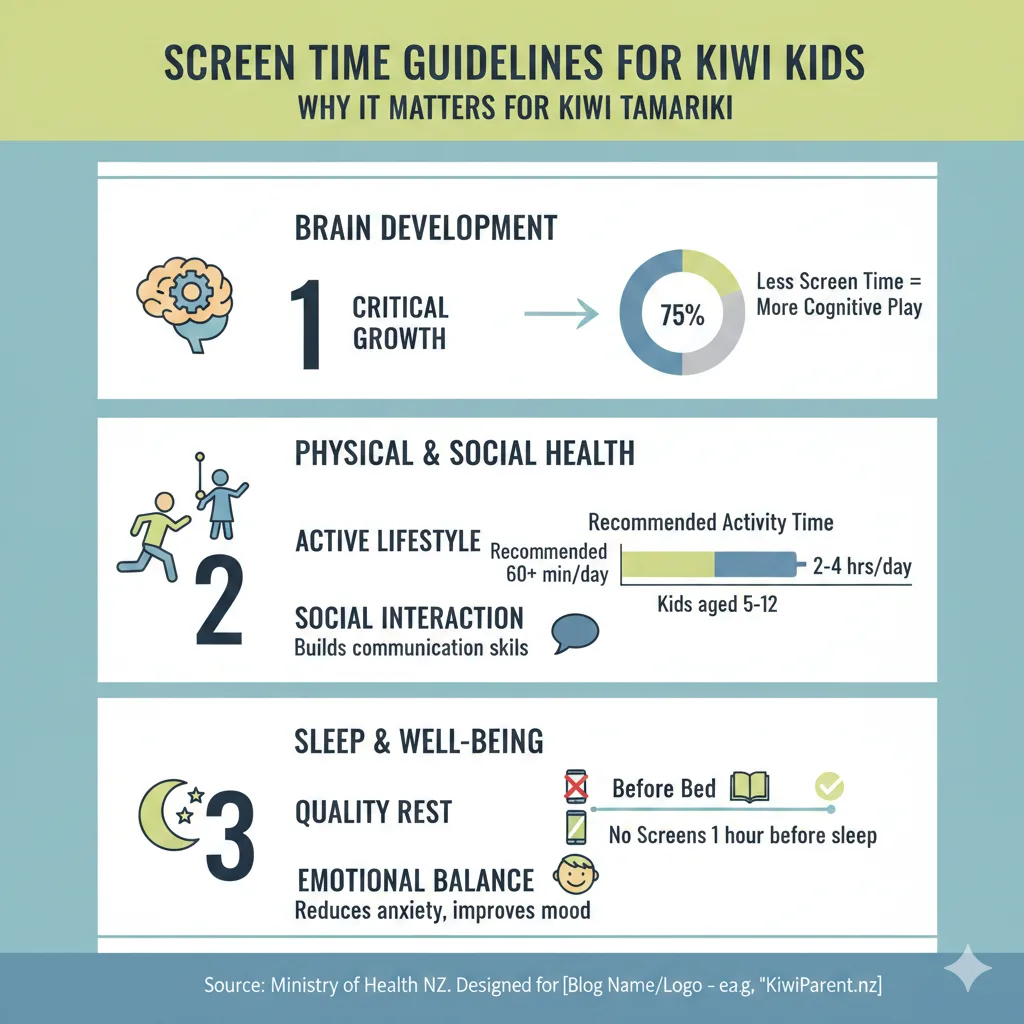
Our kids' brains are wired for exploration, not endless scrolling. Excessive screen use links to sleep woes, eye strain, and even developmental delays, with Kiwi children clocking higher averages than global peers—1-1.5 hours daily for under-twos and over two hours for many 5-9-year-olds. The Health and Safety at Work Act 2015 mandates schools to manage these risks, including ergonomic setups and screen limits.
Yet, screens aren't the enemy. When used right, they boost learning—like video chats building bonds for tamariki under two. The key? Quality over quantity, especially amid rising concerns from paediatric experts.
Health Impacts Backed by Research
- Sleep disruption: Blue light from devices tricks the brain into staying awake, cutting deep sleep crucial for growth.
- Physical health: Less outdoor play means weaker muscles and eyes; sessions over 20 minutes hike strain risks.
- Mental wellbeing: Over two hours daily for 5+ year-olds correlates with behaviour issues and poorer vocab.
- Kiwi context: A 2018 study showed our teens at 42 weekly hours versus 35 internationally, urging urgent action.
Official Screen Time Guidelines for Kiwi Kids
New Zealand's Paediatric Society leads with age-specific advice, echoed by Healthify and the Ministry of Education. These aren't strict laws but evidence-based benchmarks tailored for schools, kura, and homes.
By Age Group: Daily Limits at Home
| Age Group | Recommended Screen Time | Key Tips |
|---|---|---|
| 0-2 years | No screen time (video chats OK) | Focus on tummy time, reading, and whānau interaction. |
| 2-5 years | Less than 1 hour/day | High-quality, co-viewed content only; prioritise play. |
| 5-12 years | Less than 2 hours/day (recreational) | Homework excluded; balance with exercise. |
| 12+ years (teens) | Consistent limits, eye breaks every 20 mins | Intentional use, no screens 1 hour pre-bed. |
School-Specific Guidelines
In classrooms, boards must policy-manage devices under health and safety laws. Paediatric Society recs:
- Up to 6 years: Minimal, 10-15 min sessions.
- 6-12 years: No more than 1/3 school day (~2 hours).
- Over 12: 20-min eye breaks; teacher-approved only.
- Extras: Outdoor balance, adjustable chairs, headphone limits.
Early childhood education (ECE) stresses no encouragement of screens—opt for active, supervised use if essential.
Practical Tips to Implement Screen Time Rules
Setting boundaries feels daunting, but Kiwi whānau thrive on routines. Start simple: quality (what), quantity (how much), timing (when).
Create Family Screen Plans
- Set house rules: No devices at meals or bedtime. Use timers—apps like Apple's Screen Time track usage.
- Co-view and chat: For 2-5s, watch together and discuss, turning passive time active.
- Tech-free zones: Bedrooms and dinner table off-limits for better sleep.
- Model behaviour: If you're scrolling, they'll follow—lead by example.
Fun Alternatives to Screens
- Outdoor adventures: Backyard cricket or park visits—vital for Kiwi kids' vitamin D and fitness.
- Creative play: Lego, drawing, or reading from local libraries like Wellington City Libraries.
- Whānau activities: Board games or beach walks; tie into school holidays.
- Educational swaps: Apps like Duolingo for te reo Māori, but limit to 20 mins.
Handling School Screen Time
Chat with kaiako about device policies. If your tamariki's at a decile 1 school with shared laptops, advocate for breaks. Resources like the Ministry's digital safety guide help.
New Zealand Resources and Support
We've got local backing:
- Paediatric Society guidelines: Free downloads for schools and homes.
- Healthify.nz: Routines and limits tailored for tamariki.
- Ministry of Education: Health and safety policies for kura.
- WorkSafe NZ: Ergonomics for family desks.
- Upcoming: From April 2026, government guidance for under-fives.
For neurodiverse kids or those with special needs, consult Plunket or your GP—custom plans make a difference.
FAQ: Common Questions on Screen Time for Kiwi Kids
Q: What if my child needs screens for homework?
A: Count only recreational time against limits. School use follows Paediatric Society caps (~2 hours max for 6-12s).
Q: Is educational content OK for under-2s?
A: No, except video calls. Real interaction trumps apps for brain growth.
Q: How do I enforce rules with older kids?
A: Involve them in rule-making. Use device parental controls and link privileges to compliance.
Q: What's the link between screens and sleep?
A: Blue light delays melatonin. Ban screens 1 hour before bed for better rest.
Q: Are there apps to help track screen time?
A: Yes—iOS Screen Time, Google Family Link. Set daily caps aligned with guidelines.
Q: What about during school holidays?
A: Stick to home limits, ramp up outdoor fun. Holiday programmes via councils cut screen reliance.
Next Steps for Your Whānau
Grab a family meeting tonight: Audit current screen habits, pick one rule to start (like no bedtime devices), and download Paediatric Society recs. Track progress weekly—your tamariki's health is worth it. For personalised advice, chat with Plunketline (0800 933 922) or your local hauora centre. Small changes today build healthier Kiwis tomorrow.
Related Articles

School Zones NZ: How They Work and Why They Matter
Choosing the right school for your tamariki can feel like navigating a map of coloured zones—literally. In Aotearoa, **school zones NZ** dictate where your child is guaranteed a spot, helping prevent...

Best Playgrounds in Christchurch: Family Guide
Christchurch has some of the best family playgrounds in Aotearoa, offering everything from award-winning attractions to hidden gems perfect for a weekend adventure. Whether you're looking for thrillin...

Kids Sports NZ: Costs and Options by Age
Getting your kids active in sports is one of the best gifts you can give them as a Kiwi parent—building fitness, teamwork, and lifelong habits. But with rising costs biting into household budgets, und...
Primary School Guide NZ: Choosing the Right School
Choosing the right primary school in New Zealand can feel overwhelming, but it's one of the most important decisions you'll make for your child's future. With thousands of options across the country,...