Microchipping Pets NZ: Requirements and Costs

Imagine this: your beloved dog bolts out the gate during a neighbourhood walk and vanishes into the evening. Hours turn into days of frantic searching, posters everywhere, and that sinking feeling in...
Emma writes about health, wellbeing, and ACC topics for Lifetimes NZ. She translates complex health information into clear, actionable advice for New Zealand readers.
Imagine this: your beloved dog bolts out the gate during a neighbourhood walk and vanishes into the evening. Hours turn into days of frantic searching, posters everywhere, and that sinking feeling in your stomach. But then, a kind stranger finds your pup, scans the tiny microchip under their skin, and you're reunited in minutes. That's the power of microchipping—it's not just a legal must for Kiwi pet owners; it's your best defence against heartbreak. In New Zealand, where our pets are family, understanding microchipping pets NZ requirements and costs keeps everyone safe and compliant.
Whether you're a new puppy parent in Auckland or a cat lover in Canterbury, this guide breaks down everything you need to know. From mandatory dog rules to emerging cat bylaws, we'll cover the laws, processes, costs, and practical tips tailored for Kiwis. Let's dive in so you can protect your furry mates today.
Why Microchip Your Pet? The Kiwi Perspective
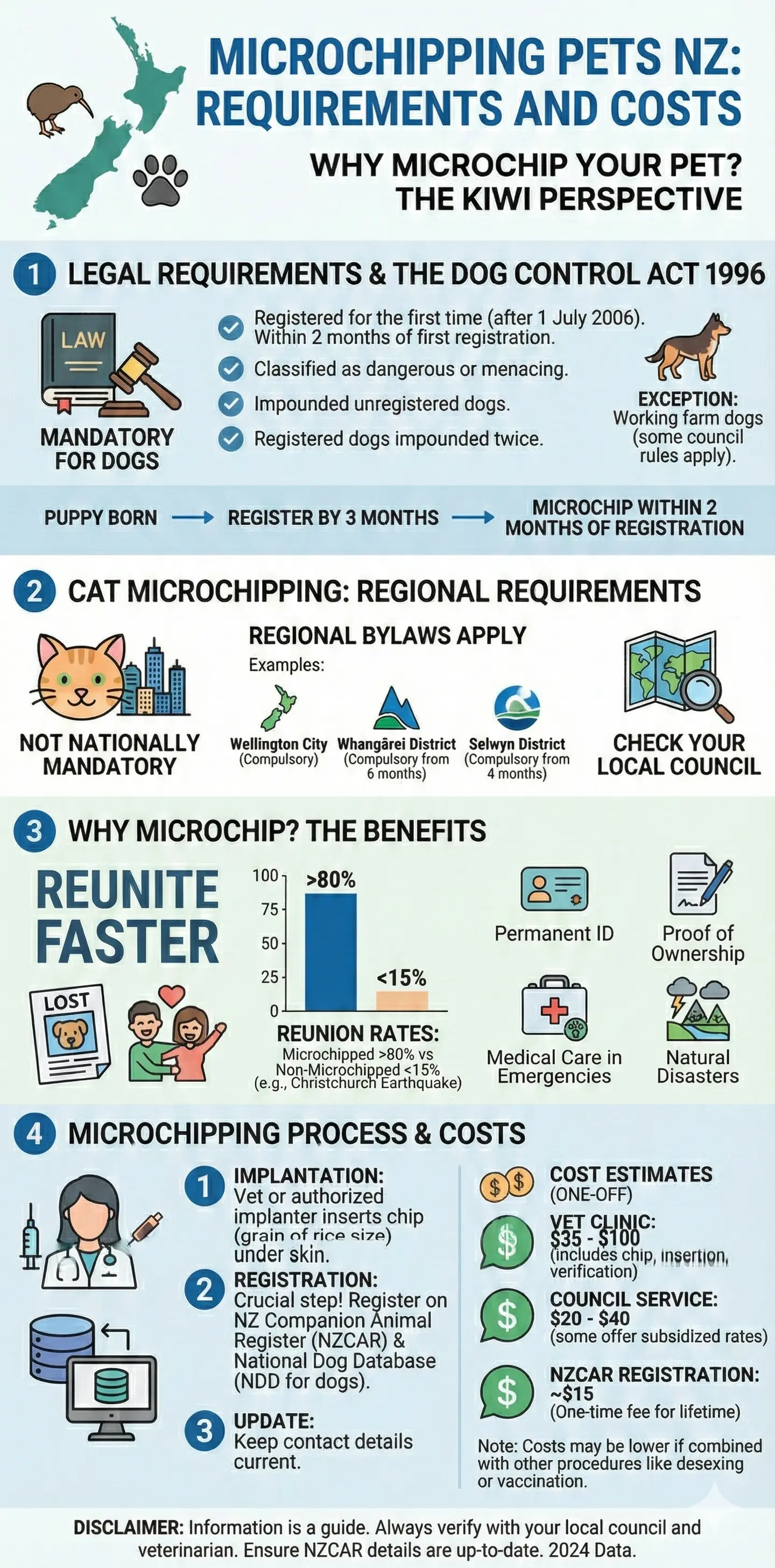
Microchipping involves implanting a tiny rice-grain-sized chip under your pet's skin, usually between the shoulder blades. It holds a unique 15-digit ID number that, when scanned, links back to your contact details on a national database. No personal info is stored on the chip itself—it's all securely held in registries like the New Zealand Companion Animal Register (NZCAR).
For us Kiwis, microchipping isn't optional for dogs—it's the law. It helps councils reunite lost or impounded dogs with owners, reducing strays and supporting our communities. Cats are catching up with regional rules, driven by efforts to protect native wildlife like kiwi birds and tuatara. Plus, it's a one-time procedure that lasts your pet's lifetime.
Benefits Beyond Compliance
- Quick reunions: Over 900 approved scanners nationwide can check the NZCAR instantly.
- Travel ready: Essential for exporting pets under MPI rules.
- Proof of ownership: Vital for transfers or disputes.
- Wildlife protection: Helps track cats impacting biodiversity.
Legal Requirements for Microchipping Dogs in NZ
Dogs top the list for mandatory microchipping in New Zealand. Under the Dog Control Act 1996, all dogs must be microchipped before first registration with your local council, by three months of age—or upon arrival in the country.
Who Needs It and When?
- New puppies: Microchip by three months, then register.
- Imported dogs: Immediately upon entry.
- Dangerous or menacing dogs: Mandatory, regardless.
- Impounded dogs: Required if unregistered or repeat offenders.
- Exemptions: Only working farm dogs herding stock—until impounded.
Auckland Council gives two months from first registration for new pups, but most councils demand it upfront. Fail to comply? Fines start at $300.
Registration Steps for Dogs
- Get your dog microchipped at a vet or council pound (e.g., Waikato offers this service).
- Take the certificate or dog (for scanning) to your local council.
- Register on the National Dog Database (NDD)—vets can't do this for you.
- Renew annually; microchip is once-only.
Pro tip: Register with NZCAR too for double protection—it's free to update details later.
Microchipping Cats and Other Pets in New Zealand
Cats aren't nationally mandated yet, but bylaws are spreading fast. Selwyn District (Canterbury) led the South Island, requiring microchips from four months since July 2022. Tasman District followed from January 2025, mandating microchipping, desexing, and registration by six months.
Regional Cat Bylaws
Check your council—many now require desexed, microchipped cats registered on NZCAR. A 2024 bill proposes national companion cat microchipping, backed by SPCA, with Environment Select Committee support from 2023. Until then:
- Urban areas: Often tied to desexing for wildlife protection.
- Rabbits, horses, birds: Voluntary but recommended via NZCAR.
For all pets, vets implant chips safely; breeders often handle puppies/kittens.
How Much Does Microchipping Cost in NZ (2026 Rates)?
Costs vary by provider, but here's the 2026 breakdown for Kiwis:
| Service | Average Cost | Notes |
|---|---|---|
| Vet microchipping | $50–$100 (dogs/cats) | Includes implant and initial scan; NZCAR fee extra (~$20 one-off). |
| Council pounds (e.g., Waikato) | $20–$50 | Pay at office, then visit pound. |
| NZCAR registration | $15–$25 one-off | Lifetime storage; free updates. |
| Dog NDD registration | $100–$300/year | Council-dependent; first year higher. |
Total for a new puppy: Around $150–$250 first year, then annual dog rego. Shop around—some vets bundle with vaccinations. Older pets? Same costs, any time.
Hidden Costs to Watch
- Scan checks: Free at vets.
- Transfers: Update NZCAR free; council fees apply.
- Non-compliance fines: $300+ for unregistered dogs.
Step-by-Step Guide: How to Microchip Your Pet
Ready to act? Here's your Kiwi roadmap:
1. Choose a Provider
Vet clinics like Vetlife offer expert implantation—quick, with pain relief. Councils cheaper for dogs.
2. The Procedure
Takes 2 minutes: Needle injects chip subcutaneously. Minimal discomfort, like a vaccination. Pups tolerate best young.
3. Register Immediately
Dogs: Council NDD mandatory. All pets: NZCAR for reunions. Keep details current—moves, phone changes.
4. Verify and Maintain
Scan yearly at vet (free). Update on move (e.g., IRD-style, but for pets!).
"Registering with both NDD and NZCAR gives the best chance of reuniting lost pets."
Common Pitfalls and How to Avoid Them
- Unregistered chips: Chip alone useless—always register.
- Outdated details: Update on NZCAR free.
- Regional cat rules: Google "[your council] cat bylaws".
- Farm dogs: Exempt until impounded—microchip proactively.
FAQ: Microchipping Pets NZ
Is microchipping painful for my pet?
No, it's like a quick jab—safer than tattoos. Pups barely notice.
Can I microchip my cat if it's not required?
Absolutely, recommended for all. Costs same as dogs, registers on NZCAR.
What if my pet loses the microchip?
Rare (migrates, not lost). Dual registries help; collars as backup.
How do I check if my pet is already chipped?
Free vet scan—takes minutes.
Is it required for exporting pets?
Yes, MPI mandates for most animals leaving NZ.
What's the fine for non-compliant dogs?
$300+, plus impound fees.
Next Steps for Kiwi Pet Owners
Don't wait—book that vet visit today. Check your council site for dog rego, scan existing pets, and double-register on NZCAR. Your microchipped mate is safer, and you're law-abiding. Questions? Chat to your local vet or SPCA. Together, we're building a safer Aotearoa for our animals.