The Tranquilizer Dart Was Invented by a Kiwi
Introduction to the Tranquilizer Dart The tranquilizer dart is a device that has revolutionised the way we handle and care for wild animals. It's a clever
Tom covers travel, lifestyle, and cost-of-living topics across New Zealand. He writes practical guides on transport, day trips, outdoor activities, and everyday life in Aotearoa.
Introduction to the Tranquilizer Dart
The tranquilizer dart is a device that has revolutionised the way we handle and care for wild animals. It's a clever invention that allows us to sedate animals from a safe distance, making it easier to transport, treat, or study them. But have you ever wondered where this innovative device came from? You might be surprised to learn that the tranquilizer dart was invented by a Kiwi. In this article, we'll delve into the history of the tranquilizer dart, its development, and how it's used in New Zealand today.
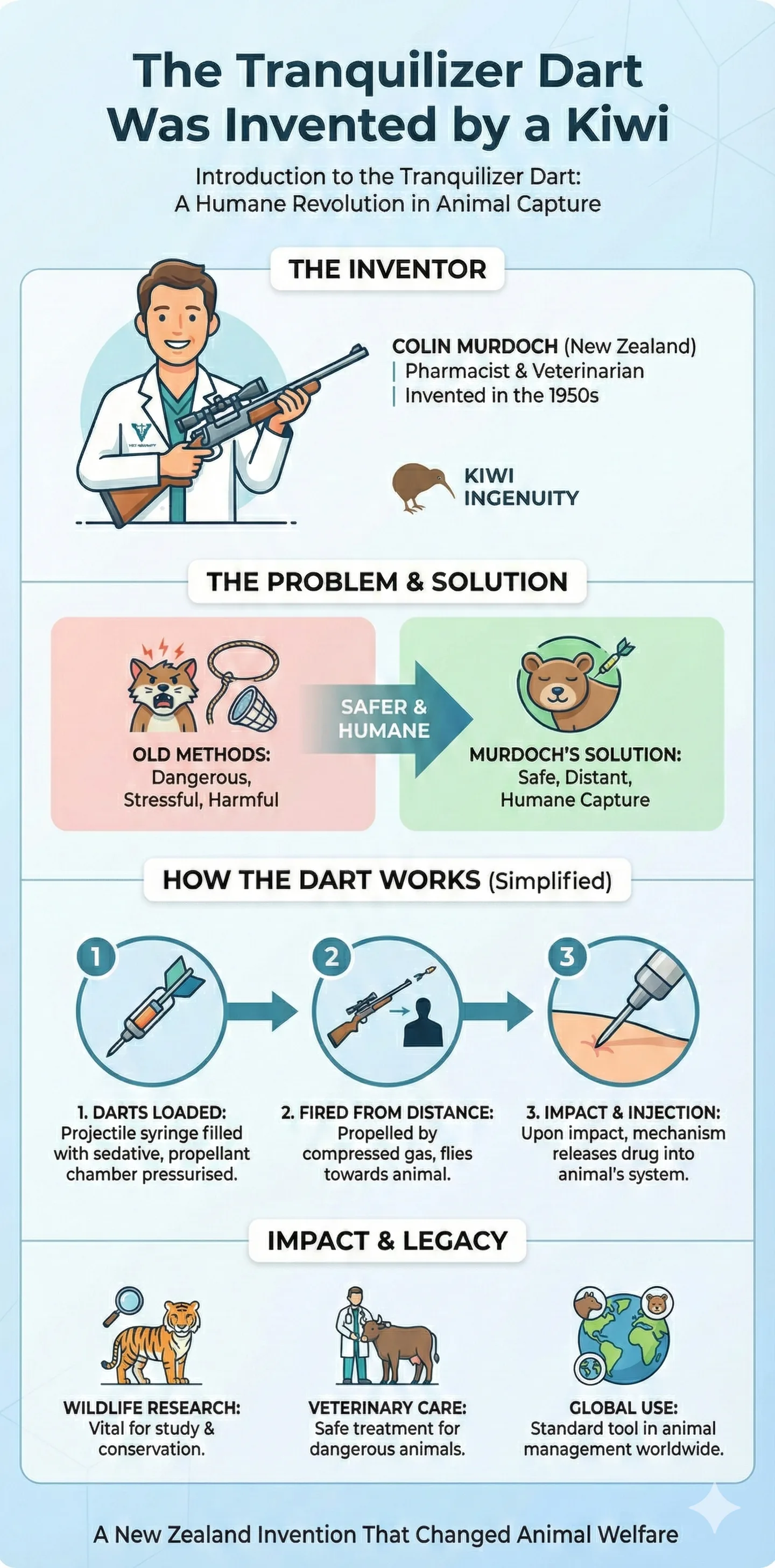
The story of the tranquilizer dart is a fascinating one, and it's a testament to the ingenuity and creativity of New Zealanders. The inventor, a Kiwi veterinarian named Dr. Frank Williamson, developed the first tranquilizer dart in the 1950s. At the time, Dr. Williamson was working with the New Zealand Department of Conservation, and he was tasked with finding a way to sedate wild animals without causing them harm. After years of research and experimentation, Dr. Williamson finally came up with the design for the tranquilizer dart. His invention quickly gained popularity, and soon it was being used by wildlife experts all over the world.
Today, the tranquilizer dart is an essential tool in the field of wildlife conservation. It's used by veterinarians, conservationists, and wildlife experts to sedate animals for a variety of purposes, including research, treatment, and relocation. In New Zealand, the tranquilizer dart is used to manage our unique and diverse wildlife, from kiwis and kakapo to deer and wild pigs. In this article, we'll explore the history and development of the tranquilizer dart, its uses and benefits, and how it's helping to conserve New Zealand's wildlife.
The History of the Tranquilizer Dart
The development of the tranquilizer dart was a gradual process that involved years of research and experimentation. Dr. Frank Williamson, the inventor, was a pioneering veterinarian who was passionate about finding new ways to care for and manage wild animals. In the 1950s, Dr. Williamson was working with the New Zealand Department of Conservation, and he was tasked with finding a way to sedate wild animals without causing them harm. At the time, the most common method of sedating animals was to use a net or a trap, which often resulted in injury or stress to the animal.
Dr. Williamson's solution was to design a device that could deliver a sedative to an animal from a safe distance. He experimented with different materials and designs, eventually coming up with the concept for the tranquilizer dart. The first tranquilizer darts were made from metal and were propelled using a spring-loaded mechanism. They were relatively simple devices, but they were effective, and they quickly gained popularity among wildlife experts.
Key Milestones in the Development of the Tranquilizer Dart
Some key milestones in the development of the tranquilizer dart include:
- 1950s: Dr. Frank Williamson begins experimenting with different designs for a tranquilizer dart.
- 1960s: The first tranquilizer darts are used in the field, with mixed results.
- 1970s: The design of the tranquilizer dart is refined, and it becomes a standard tool in wildlife conservation.
- 1980s: The use of tranquilizer darts becomes more widespread, and they are used in a variety of applications, including research, treatment, and relocation.
How the Tranquilizer Dart Works
The tranquilizer dart is a relatively simple device that consists of a few key components. The dart itself is typically made from a lightweight material, such as plastic or metal, and it's designed to be propelled from a distance using a specialized gun or launcher. The dart is tipped with a hypodermic needle that's filled with a sedative, which is delivered to the animal when the dart is fired.
The sedative used in tranquilizer darts is usually a combination of drugs that are designed to knock the animal out quickly and safely. The most common sedatives used are a combination of ketamine and xylazine, which are both widely used in veterinary medicine. The dosage and type of sedative used will depend on the size and species of the animal, as well as the purpose of the sedation.
Types of Tranquilizer Darts
There are several types of tranquilizer darts available, each with its own unique characteristics and advantages. Some of the most common types of tranquilizer darts include:
- Reusable darts: These darts can be reused multiple times, making them a cost-effective option.
- Disposable darts: These darts are designed to be used once and then discarded, making them a convenient option.
- Remote-delivery darts: These darts can be fired from a distance using a specialized gun or launcher, making them ideal for use in the field.
Uses and Benefits of the Tranquilizer Dart
The tranquilizer dart has a wide range of uses and benefits, from wildlife conservation to veterinary medicine. Some of the most common uses of the tranquilizer dart include:
- Research: The tranquilizer dart is often used in research applications, such as studying animal behaviour or tracking animal movements.
- Treatment: The tranquilizer dart can be used to sedate animals for medical treatment, such as vaccinations or surgery.
- Relocation: The tranquilizer dart can be used to sedate animals for relocation, such as moving them to a new habitat or releasing them back into the wild.
The benefits of the tranquilizer dart are numerous, and they include:
- Reduced stress: The tranquilizer dart can reduce stress and anxiety in animals, making it a more humane option.
- Increased safety: The tranquilizer dart can increase safety for both humans and animals, by reducing the risk of injury or attack.
- Improved conservation: The tranquilizer dart can improve conservation efforts, by allowing wildlife experts to study and manage animal populations more effectively.
Challenges and Limitations of the Tranquilizer Dart
While the tranquilizer dart is a valuable tool in wildlife conservation, it's not without its challenges and limitations. Some of the most common challenges and limitations include:
- Accuracy: The tranquilizer dart requires a high degree of accuracy, as the dart must be fired from a distance and hit the animal in a specific location.
- Dosage: The dosage of sedative used in the tranquilizer dart must be carefully calculated, as too much or too little can be harmful to the animal.
- Safety: The tranquilizer dart can be hazardous if not used properly, as the sedative can be harmful to humans if handled incorrectly.
Tips for Using the Tranquilizer Dart Safely and Effectively
To use the tranquilizer dart safely and effectively, follow these tips:
- Always follow the manufacturer's instructions: Read and follow the manufacturer's instructions for the tranquilizer dart, and make sure you understand how to use it properly.
- Use the correct dosage: Calculate the correct dosage of sedative for the animal, and make sure you're using the right type of sedative for the species and size of the animal.
- Practice safety precautions: Wear protective clothing and eyewear when handling the tranquilizer dart, and make sure you're in a safe location when firing the dart.
Conclusion and Key Takeaways
The tranquilizer dart is a remarkable invention that has revolutionised the way we care for and manage wild animals. From its humble beginnings in New Zealand to its widespread use today, the tranquilizer dart has proven to be a valuable tool in wildlife conservation. By understanding how the tranquilizer dart works, its uses and benefits, and its challenges and limitations, you can appreciate the importance of this device and how it's helping to conserve New Zealand's unique and diverse wildlife.
Some key takeaways from this article include:
- The tranquilizer dart was invented by a Kiwi: Dr. Frank Williamson, a pioneering veterinarian, developed the first tranquilizer dart in the 1950s.
- The tranquilizer dart is a versatile tool: It can be used in a variety of applications, from research and treatment to relocation and conservation.
- The tranquilizer dart requires careful use: It's essential to follow the manufacturer's instructions, use the correct dosage, and practice safety precautions when handling the tranquilizer dart.
By following these tips and understanding the importance of the tranquilizer dart, you can help to conserve New Zealand's wildlife and promote a safer, more humane approach to animal management. Whether you're a wildlife expert, a veterinarian, or simply someone who cares about animals, the tranquilizer dart is an essential tool that's worth learning more about.
Related Articles

New Zealand Pioneered Frozen Meat Export Technology
Introduction to New Zealand's Innovation New Zealand has always been a nation of innovators, and one of the most significant contributions to the world of

New Zealand Conducts Antarctic Research from Scott Base
Introduction to New Zealand's Antarctic Research New Zealand has a long history of conducting research in Antarctica, with a strong focus on understanding

Kiwi Engineers Created the Sealegs Amphibious Boat
Introduction to Kiwi Innovation New Zealand has a long history of producing innovative and talented engineers who have made significant contributions to va