New Zealand for First-Time Solo Travellers: Safety, Hostels and Meeting People

Solo travel in New Zealand is booming, and it's easier than ever for first-timers to make it happen. Whether you're a Kiwi heading overseas or considering exploring your own backyard, New Zealand cons...
The Lifetimes NZ editorial team curates, fact-checks, and updates guides on personal finance, property, health, immigration, legal, business, and lifestyle topics relevant to Lifetimes NZ readers. Articles are produced with AI assistance and reviewed by the editorial team before publication.
Solo travel in New Zealand is booming, and it's easier than ever for first-timers to make it happen. Whether you're a Kiwi heading overseas or considering exploring your own backyard, New Zealand consistently ranks among the safest countries for independent travel, with a thriving backpacker community that makes meeting fellow travellers straightforward. This guide covers everything you need to know to travel solo in Aotearoa with confidence.
Why New Zealand is Ideal for First-Time Solo Travellers
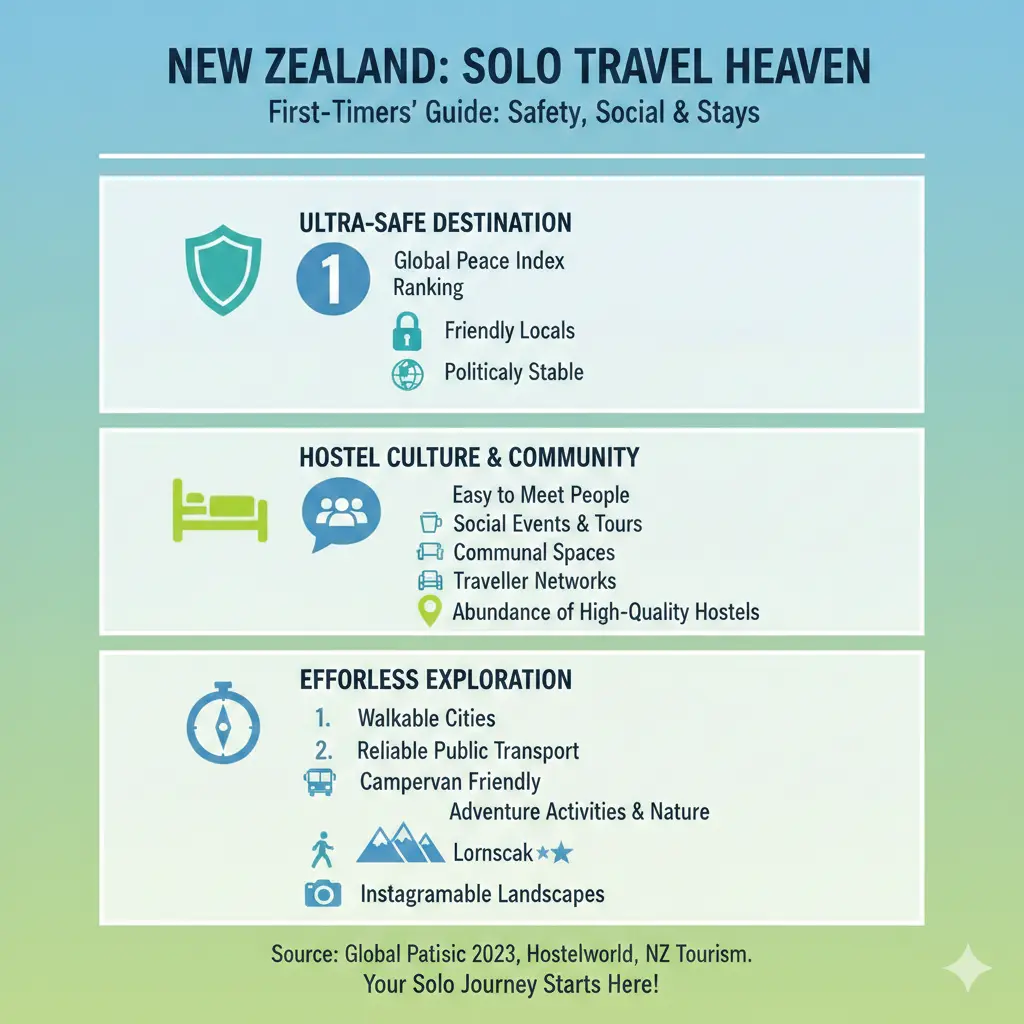
New Zealand has earned its reputation as a premier solo travel destination for good reason. The country ranks number 3 globally for solo female travellers and number 2 on the Global Peace Index, combining excellent safety with well-developed infrastructure that makes independent travel genuinely comfortable.
What sets New Zealand apart isn't just the safety statistics. The country offers a rare combination of low crime rates, English-language convenience, and strong systems for outdoor safety. Our well-maintained roads, incredible landscapes, and friendly locals create an environment where solo travellers can focus on the experience rather than worrying about their security. Plus, with inbound travel increasing by an average of 5% per year, there's never been a better time to explore.
For first-timers, New Zealand's established backpacker culture is invaluable. Over one-third of visitors to New Zealand Trails travel solo, and the infrastructure to support independent travellers is world-class. Whether you're hiking the Tongariro Alpine Crossing, cruising Milford Sound, or exploring adventure activities in Queenstown, you'll find reliable services and friendly faces at every turn.
Safety Considerations for Solo Travellers
Understanding New Zealand's Safety Profile
New Zealand's safety ranking reflects several key factors: low crime across urban and rural areas, well-developed public transportation, strong outcomes on women's safety indices, political stability, and excellent travel infrastructure including hospitals and emergency services.
That said, no destination is risk-free. The most common issues solo travellers encounter in New Zealand are petty theft and scams rather than serious crime. Motorcyclist behaviour can be chaotic, so stay alert on roads. By exercising standard urban precautions—watching for pickpockets in tourist areas, avoiding unlicensed services, and sticking to well-lit streets at night—you'll significantly reduce your risk.
Essential Solo Travel Safety Precautions
Before you depart, follow these practical safety steps:
- Share your itinerary with trusted contacts back home, including accommodation details and planned activities
- Stay in secure accommodation with 24/7 staff and secure entry—hostels are ideal for this
- Avoid isolated areas at night and use official ride apps or licensed taxis
- Keep valuables hidden and minimal—don't carry flashy jewellery or large amounts of cash
- Stay sober enough to make good decisions when out socialising
- Trust your instincts when something feels off, and remove yourself from uncomfortable situations
- Have backup plans for transportation and accommodation in case your original arrangements fall through
- Know where your nearest embassy or consulate is located (though New Zealand's safety record means this is rarely needed)
Consider purchasing travel insurance that covers medical evacuation and any adventure activities you're planning. It's not just sensible—it's essential peace of mind.
Choosing the Right Hostels and Accommodation
Why Hostels Are Perfect for First-Time Solo Travellers
Hostels aren't just budget-friendly; they're social hubs designed for solo travellers. New Zealand's backpacker network is robust and well-established, making it easy to meet others, join group excursions, or stay independent depending on your comfort level.
When selecting a hostel, look for:
- 24/7 front desk staff and secure key card access
- Good reviews specifically mentioning solo travellers and safety
- Social spaces like kitchens, lounges, or organised events
- Location in walkable, well-lit neighbourhoods
- Clear policies on valuables storage (secure lockers are essential)
Major cities like Auckland, Wellington, and Christchurch have excellent hostel options catering specifically to solo travellers. Many offer group dinners, organised day trips, and evening activities that make meeting fellow travellers effortless.
Alternative Accommodation Options
If hostels aren't your style, consider:
- Airbnb shared rooms—similar social benefits to hostels with slightly more privacy
- Boutique hotels with good reviews—slightly pricier but offer security and service
- Holiday parks and DOC campgrounds—great for outdoor-focused travellers, though less social
- Farmstays and home-stays—authentic Kiwi experiences with built-in connections
Whatever you choose, book accommodation with secure entry and staff availability. Your safety and peace of mind are worth the investment.
Meeting People and Building Your Solo Travel Community
The Hostel Advantage
The beauty of New Zealand's backpacker culture is that you'll rarely feel alone unless you choose to. Hostels naturally create connection through shared spaces, communal meals, and organised activities. Most hostels run nightly events—pub crawls, movie nights, group dinners—where solo travellers naturally congregate.
Don't be shy about joining in. Everyone in a hostel is there for similar reasons: to meet people, explore, and share experiences. Some of the strongest travel friendships begin over breakfast in a hostel kitchen.
Group Tours and Activity-Based Connections
New Zealand's adventure tourism industry is world-class, and guided tours and solo-friendly activity tours make it easy to meet others for multi-day trips. Consider booking:
- Hiking trips (Tongariro Alpine Crossing, Milford Track)
- Adventure activities in Queenstown (bungy jumping, jet boating, skydiving)
- Wine region tours in Marlborough or Central Otago
- Glowworm cave explorations
- Multi-day camping or van trips
These experiences naturally bring solo travellers together, and you'll often find yourself with a new group of friends by day two.
Building Confidence as a Solo Traveller
If you're feeling anxious about travelling alone, start small. Try a long weekend in a city you feel comfortable with—perhaps Wellington or Auckland—use group day tours, and build confidence slowly. You'll quickly discover that solo travel often makes you more alert and confident than when travelling in groups.
Remember: everyday risks like traffic accidents and petty theft are far more common than stranger violence. By planning thoughtfully and staying situationally aware, you're already ahead of the game.
Practical Tips for First-Time Solo Travellers in New Zealand
- Pack layers—New Zealand's weather changes rapidly, especially in mountainous regions
- Allow extra time for scenic stops—road trips are one of New Zealand's greatest pleasures
- Get an international driving permit if you plan to hire a vehicle; our roads are excellent but winding
- Use official ride apps at night like Uber or local taxi services; avoid unlicensed operators
- Keep belongings zipped and secure, especially in busy tourist areas
- Stay hydrated and sun-protected—our UV is intense, and dehydration sneaks up on you
- Check weather and track conditions before any hiking; New Zealand's wilderness demands respect
- Carry a basic first aid kit and know where the nearest medical facilities are
Frequently Asked Questions
Is it actually safe for women to travel solo in New Zealand in 2026?
Yes. New Zealand ranks number 3 globally for solo female travellers and combines excellent safety with an established backpacker community. Many solo female travellers report feeling safe everywhere they go, with people often checking in and services proving reliable. That said, safety is relative—pick destinations with strong infrastructure, check current travel advisories, and use common sense.
What's the best time to visit New Zealand as a solo traveller?
Summer (December to February) offers the warmest weather and busiest backpacker scene, making it ideal for meeting people. Autumn (March to May) and spring (September to November) provide excellent weather with fewer crowds. Winter (June to August) is quieter but colder, particularly in the South Island. Choose based on your preference for social activity versus solitude.
Should I buy travel insurance?
Yes, always. Choose a policy that covers medical evacuation and adventure activities if applicable. New Zealand's healthcare is excellent, but evacuation from remote areas can be expensive. Travel insurance is a non-negotiable investment in your peace of mind.
How do I stay connected while travelling solo?
New Zealand has excellent mobile coverage in urban areas and most tourist destinations. Consider purchasing a local SIM card from providers like Spark, Vodafone, or 2degrees for affordable data and calls. Hostels and cafés offer free WiFi, and many accommodation options provide internet access. Staying connected helps you share your itinerary and stay in touch with home.
What if I feel anxious about travelling alone?
Start small with a long weekend in a familiar city, use group day tours to build confidence, and connect with other solo travellers through hostels and organised activities. You'll quickly discover that solo travel is empowering, not isolating. The structure of New Zealand's backpacker infrastructure means you'll have support and community whenever you need it.
Can I do adventure activities solo?
Absolutely. New Zealand's adventure tourism industry is designed for solo participation. Whether it's bungy jumping in Queenstown, hiking the Tongariro Alpine Crossing, or cruising Milford Sound, you'll find professional operators, clear safety protocols, and often other solo travellers doing the same activity. These experiences are some of the best ways to meet people and create lasting memories.
Your Solo Travel Adventure Starts Here
New Zealand is genuinely one of the best destinations for first-time solo travellers. With world-class safety infrastructure, an established backpacker culture, incredible natural beauty, and friendly locals, you'll have everything you need to travel with confidence and create unforgettable memories.
The key to successful solo travel isn't eliminating risk—it's making informed choices so you can focus less on fear and more on the experience of being somewhere new, on your own terms. Start planning your trip, book that first hostel, and get ready for an adventure that'll change how you see yourself and the world.
Ready to explore? Begin by researching hostels in your chosen destination, checking current travel advisories on SafeTravel.govt.nz, and connecting with other solo travellers online. Your solo travel story starts now.
Useful Tools
Related Articles
Campervan & Motorhome Travel in New Zealand: Hire, Costs and Freedom Camping Rules
Picture this: cruising the winding roads of the Coromandel Peninsula with the ocean on one side and lush bush on the other, pulling over whenever the view demands a photo stop. That's the magic of cam...

New Zealand for Digital Nomads: Best Bases, Co‑Working Spaces and Internet Reliability
Imagine trading your daily grind for pristine beaches, rugged mountains, and lightning-fast internet—all while keeping your remote job humming along seamlessly. New Zealand's stunning landscapes and r...
Backpacking New Zealand: Budget, Hostels, Work Options and Sample Routes
Whether you're a Kiwi eyeing a jaunt around your own backyard or planning to rediscover Aotearoa's hidden gems, backpacking New Zealand offers epic adventures without breaking the bank. From geotherma...
New Zealand Honeymoon Itinerary: Romantic Stays, Hot Pools and Scenic Flights
Imagine kicking off your marriage with bubbling hot pools under the stars, cosy vineyard cottages whispering romance, and breathtaking scenic flights over glaciers that take your breath away. New Zeal...