Travelling New Zealand Without a Car: City Bases, Day Trips and Multi‑Day Tours

Imagine exploring New Zealand's stunning landscapes and vibrant cities without the hassle of driving, parking fees, or fuel costs. Whether you're a Kiwi on a budget holiday or simply prefer leaving th...
The Lifetimes NZ editorial team curates, fact-checks, and updates guides on personal finance, property, health, immigration, legal, business, and lifestyle topics relevant to Lifetimes NZ readers. Articles are produced with AI assistance and reviewed by the editorial team before publication.
Imagine exploring New Zealand's stunning landscapes and vibrant cities without the hassle of driving, parking fees, or fuel costs. Whether you're a Kiwi on a budget holiday or simply prefer leaving the car at home, basing yourself in key cities and using public transport for day trips and multi-day tours makes it entirely possible—and often more relaxing—in 2026.
With major upgrades rolling out this year, including electric buses, the City Rail Link in Auckland, and a national ticketing solution, getting around car-free is easier than ever. From Auckland's expanded rapid transit to Wellington's efficient network, here's your practical guide to travelling New Zealand without a car.
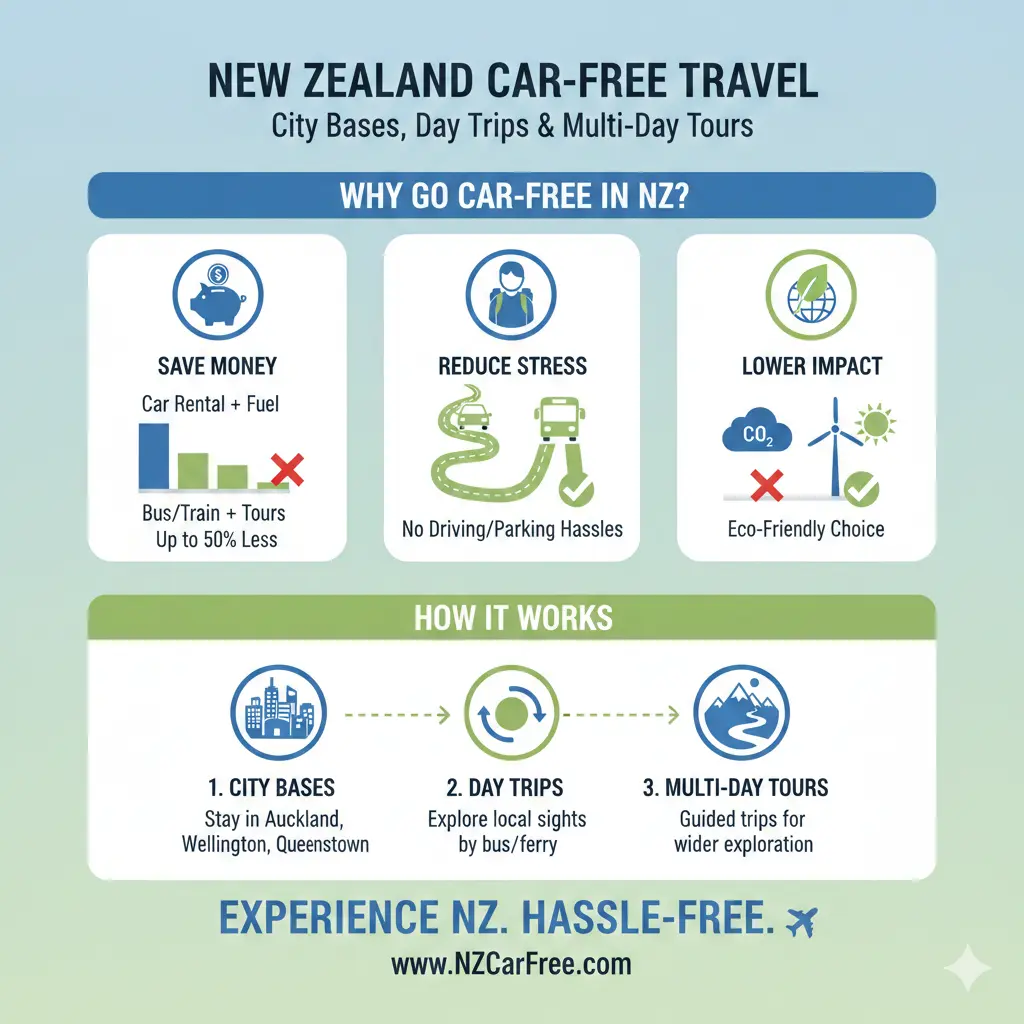
Why Go Car-Free in New Zealand?
Public transport in Aotearoa is evolving fast. Buses remain the backbone, with heavy rail in Auckland and Wellington, ferries for islands and harbours, and light rail proposals on the horizon. The City Rail Link (CRL) opens in 2026, adding two new central Auckland stations—Karanga-a-Hape and Te Waihorotiu—boosting connectivity to suburbs and beyond.
Auckland leads with the largest electric bus fleet in Australasia—over 450 by August 2026, one-third of its 1,350-bus fleet—serving high-demand routes in West and South Auckland. Wellington preps for electric articulated 'bendy' buses on its busiest route 2, doubling capacity for 10,000 daily passengers. By late 2026, the National Ticketing Solution (Motu Move) unifies payments nationwide—no more juggling AT HOP, Snapper, or Bee cards.
Costs are Kiwi-friendly too: Auckland bus/train fares $2.50–$7.00, monthly passes $200–$250; Wellington $2.50–$6.00 bus, $180–$220 monthly. It's sustainable, stress-free, and lets you soak in the views.
Top City Bases for Car-Free Travel
Pick a central hub with strong public transport, walkable vibes, and easy onward connections. Here's where to base yourself.
Auckland: The Super City Hub
Auckland's network is NZ's best—buses, trains, ferries via Auckland Transport (AT). Stay in the CBD or Ponsonby for SkyBus to the airport ($20 one-way), Inner Link buses looping the centre, and ferries to Devonport ($7.50) or Waiheke Island.
New 2026 frequent routes like 15 (Henderson to New Lynn) run every 15 minutes 7am–7pm daily. CRL transforms travel: catch Parnell-bound Inner Link from Waitematā or Maungawhau stations. Grab an AT HOP card for seamless hops (transitioning to Motu Move).
Wellington: Compact and Connected
Windy Welly's Metlink system shines: buses, trains to Kapiti, and the iconic cable car ($2.50–$6.00). Base in Te Aro or Courtenay Place. Route 2's new bendy buses from Karori hit the CBD packed with high-capacity stops. Snapper card for now, soon national ticketing.
Other Strong Bases: Christchurch, Dunedin, Hamilton
- Christchurch: Motu Move live since 2025; on-demand MyWay vans in Timaru-style loops cover suburbs reliably.
- Dunedin: Buses to Otago Peninsula; walkable centre.
- Hamilton: Frequent urban routes expanding; easy to Rotorua.
Day Trips from City Bases
Public transport unlocks epic day trips—pack snacks, check apps like AT Mobile or Metlink for real-time updates.
From Auckland
- Waiheke Island: 40-min ferry ($45 return), hike vineyards or beaches.
- Piha or Muriwai: Bus 129/130 via InterCity or local shuttles (~$30).
- Rangitoto Island: Ferry + DOC track (ferry $45).
New 2026 routes like 37/39 (April) and 40 to Paerata enhance southern access.
From Wellington
- Zealandia Ecosanctuary: Bus 81 from CBD ($5, 20 mins).
- Kapiti Coast: Train to Paraparaumu ($12, 1hr), then beach walks.
- Wairarapa: Metlink train to Masterton (1.5hrs).
Regional Gems
Hawke's Bay: New direct routes from Hastings (free travel 25–31 Jan 2026), 400m walk for 100,000 residents. Taranaki: Electric buses, new Hāwera–New Plymouth weekends.
Multi-Day Tours Without Driving
For longer adventures, hop intercity buses like InterCity, Naked Bus, or Manabus—book via apps for $20–$100 legs. Kiwi Coaches offers tours, but DIY with tours works too.
North Island Loop (7–10 days): Auckland → Rotorua (bus 3hrs, $40, geysers via shuttles) → Taupō → Napier (train/bus) → Wellington (ferry views).
South Island Explorer (10–14 days): Christchurch → Akaroa (bus) → Queenstown (InterCity 6hrs, $80) → Milford Sound (coach tours $150/day).
Tips: Use GreatSights or AwesomeNZ for guided day tours from bases ($100–$200). Hitchhiking's legal but variable; stick to buses for reliability.
Practical Tips for Car-Free Kiwis
- Apps & Cards: Download AT Mobile, Metlink, Moovit. Get regional cards now; Motu Move by end-2026.
- Costs & Passes: Explorer passes save 20% on multi-legs. Budget $50–$100/day including tours.
- Accessibility: Electric fleets add low-floor buses; check NZTA for updates.
- Seasonal Advice: Summer peaks mean book ahead; winter trains scenic but check disruptions.
- Sustainability: Support zero-emission goals—11 new Taranaki electrics in 2026.
FAQ
Is public transport reliable for tourists in 2026?
Yes, with CRL, electric buses, and Motu Move, frequencies improve—every 15 mins on Auckland key routes.
What's the cheapest way between cities?
Intercity buses: Auckland–Wellington $50–$80 overnight.
Can I take bikes on public transport?
Most buses/trains yes (fees apply); ferries free. Timaru MyWay vans have racks.
Best for families?
City bases like Auckland—ferries thrill kids; tours handle logistics.
What about rural areas?
On-demand expanding (e.g., Hastings Route 8); tours fill gaps.
Airport transfers?
SkyBus ($20) or AT Airporter nationwide.
Ready to Roll Car-Free?
From Auckland's buzzing ferries to Wellington's scenic trains, New Zealand's 2026 upgrades make car-free travel a breeze. Start by picking your base, grabbing a HOP/Snapper (or waiting for Motu Move), and booking that first bus or tour. Download apps, pack light, and discover why Kiwis are ditching the keys for greener adventures. Your epic trip awaits—safe travels!
Related Articles
Campervan & Motorhome Travel in New Zealand: Hire, Costs and Freedom Camping Rules
Picture this: cruising the winding roads of the Coromandel Peninsula with the ocean on one side and lush bush on the other, pulling over whenever the view demands a photo stop. That's the magic of cam...

New Zealand for Digital Nomads: Best Bases, Co‑Working Spaces and Internet Reliability
Imagine trading your daily grind for pristine beaches, rugged mountains, and lightning-fast internet—all while keeping your remote job humming along seamlessly. New Zealand's stunning landscapes and r...
Backpacking New Zealand: Budget, Hostels, Work Options and Sample Routes
Whether you're a Kiwi eyeing a jaunt around your own backyard or planning to rediscover Aotearoa's hidden gems, backpacking New Zealand offers epic adventures without breaking the bank. From geotherma...

New Zealand Honeymoon Itinerary: Romantic Stays, Hot Pools and Scenic Flights
Imagine kicking off your marriage with bubbling hot pools under the stars, cosy vineyard cottages whispering romance, and breathtaking scenic flights over glaciers that take your breath away. New Zeal...