Fuel Costs and Fuel-Efficient Driving in NZ
With fuel prices hovering around NZD 2.68 per litre for regular petrol in early 2026, Kiwis are feeling the pinch at the pump more than ever.[2] Whether you're commuting from Auckland to Hamilton or j...
The Lifetimes NZ editorial team curates, fact-checks, and updates guides on personal finance, property, health, immigration, legal, business, and lifestyle topics relevant to Lifetimes NZ readers. Articles are produced with AI assistance and reviewed by the editorial team before publication.
With fuel prices hovering around NZD 2.68 per litre for regular petrol in early 2026, Kiwis are feeling the pinch at the pump more than ever. Whether you're commuting from Auckland to Hamilton or just nipping to the dairy in Christchurch, smart driving habits and a bit of planning can slash your fuel bill without ditching your trusty Toyota or Mazda.
This guide dives into the latest on fuel costs and fuel-efficient driving in NZ, packed with practical tips tailored for our roads, from SH1 traffic jams to rural gravel runs. You'll learn how to track prices, drive smarter, and explore alternatives to keep more cash in your pocket.
Current Fuel Prices in New Zealand (2026 Snapshot)
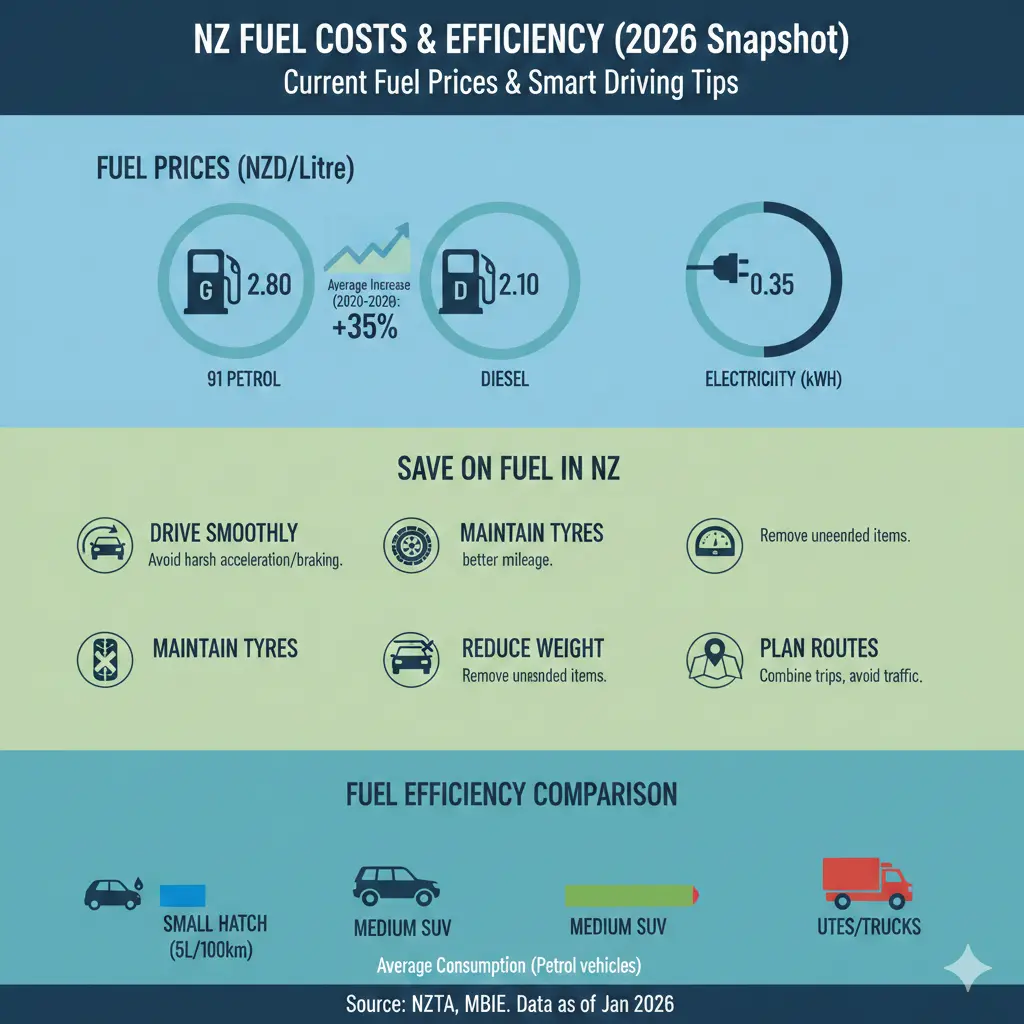
Fuel prices in NZ fluctuate weekly due to global oil markets, the NZ dollar, and local taxes. As of late January 2026, the national average for Octane-95 petrol sits at NZD 2.68 per litre (about USD 1.62), down 2.9% from a month earlier but still 9.2% below last year's peak. Diesel averages around NZD 1.90-1.93 per litre, while premium 95R petrol is roughly NZD 2.81.
Here's the breakdown of what makes up that pump price:
- Importer cost: Around 40-50% – covers buying fuel in Singapore, shipping to NZ, and refining.
- Taxes and levies: About 60 cents per litre, including GST (15%), petrol excise tax (around 80 cents), and road user charges for diesel. Emissions Trading Scheme (ETS) costs add pressure too, with carbon prices at NZD 39.25 per tonne in late 2025.
- Retail margin: Importer margins have been steady, but stations add a small markup for convenience.
Weekly and Regional Variations
MBIE tracks national averages weekly, with data up to 23 January 2026 showing regular petrol at an adjusted retail price of about NZD 2.65. Prices dip mid-week – often cheapest on Tuesdays or Wednesdays – and spike on weekends in high-demand spots like Queenstown or Rotorua.
Regional diffs are stark: Auckland might pay NZD 2.72, while Invercargill could be NZD 2.60. The fuel retailing industry hit $9.4 billion in revenue for 2026, growing slowly at 0.2% annually amid EV shifts and oil volatility.
| Fuel Type | Avg Price (NZD/L, Jan 2026) | 1-Year Change |
|---|---|---|
| Regular Petrol (91) | 2.68 | -9.2% |
| Premium 95 | 2.81 | -1.1% (3-mo avg) |
| Diesel | 1.90 | Stable |
[Data adapted from weekly MBIE reports]
Fuel-Efficient Driving Tips for Kiwi Roads
Good news: you can boost your fuel economy by 10-30% with simple changes, no fancy hybrid needed. NZ's mix of motorways, hills, and wind makes these tips gold.
Master the Basics
- Smooth acceleration and braking: Jackrabbit starts guzzle fuel. Aim for gentle throttle – save up to 15% on urban drives like Wellington's bumpy streets.
- Maintain steady speeds: Cruise control on SH1 helps. Over 100km/h, economy drops 15% per 10km/h increase due to drag.
- Right gears, right time: In manuals, shift up early (around 2,500rpm). Autos? Let them do the work.
Tune Your Car for Efficiency
Under-inflated tyres cost you 5-10% more fuel. Check pressures monthly (cold) using the sticker on your driver's door – standard for NZ cars. Regular services keep engines purring; a clogged air filter alone hikes usage by 10%.
- Lighten the load: Ditch roof racks (add 20% drag) and boot clutter.
- Avoid idling: Switch off in drive-thrus or school pick-ups – after 10 seconds, it's cheaper than restarting.
- Use A/C wisely: It saps 10% at low speeds; open windows instead on country roads.
NZ-Specific Hacks
On windy SH73 to the West Coast, draft safely (2-second gap) to cut drag. In stop-go Auckland traffic, anticipate lights using Waka Kotahi apps. Fuel apps like Gaspy or AA Fuel Watch show real-time economy trackers.
How to Compare Petrol Stations and Save
Don't fill up blind – prices vary 20-30 cents per litre within 5km. Use these tools:
- Apps and sites: GlobalPetrolPrices.com for trends; MBIE's weekly CSV for averages.
- Supermarket fuel: Countdown or New World often undercut Z or BP by 10-20c, especially with Onecard discounts.
- Best days: Tuesdays for lowest prices; avoid Fridays. In 2026, jumps hit 22% year-on-year early on.
- Loyalty perks: Z App rewards, BPme savings – stack with supermarket deals for 30c/L off.
Pro tip: Track your local stations via Google Maps or Waze for live prices. In rural areas like Southland, independents sometimes beat majors.
Alternative Options to Cut Fuel Costs
Beyond driving tweaks, Kiwis have smart swaps:
Switch Fuels or Vehicles
- Diesel: Often 70-80c cheaper per litre, better for utes on farm runs (143% of petrol price).
- EV or hybrids: With Clean Car Discount rebates gone, KiwiSaver for a used Tesla? EVs dodge petrol taxes, charging at home via Meridian or Contact apps costs pennies per km. EV adoption tempers fuel demand.
- LPG/CNG: Rare now, but viable for taxis.
Public and Shared Transport
AT HOP cards in Auckland, Metlink in Wellington – monthly passes beat solo drives. Carpool via Popcar or UberX Share. Bike e-scooters in cities via Lime for short hops.
Govt pushes efficiency: NZ's second Emissions Reduction Plan eyes net zero by 2044, boosting EV infra.
Long-Term Savings
Right-size your car: Ditch the V8 for a Corolla (8L/100km vs 15L). Use NZTA's vehicle checker for fuel stars – aim for 5+ stars.
Next Steps to Slash Your Fuel Bill
Start today: Pump tyres, download a fuel app, and plan mid-week fills. Track a week's driving to baseline your economy, then tweak with these tips – aim for 10% savings fast. For bigger wins, test drive a hybrid at your local dealer or check govt.nz for EV grants. Your wallet (and the planet) will thank you.
Frequently Asked Questions
Sources & References
-
1
New Zealand Gasoline Prices - Trading Economics — tradingeconomics.com
-
2
New Zealand gasoline prices, 26-Jan-2026 - GlobalPetrolPrices.com — www.globalpetrolprices.com
-
3
Fuel Retailing in New Zealand Industry Analysis, 2026 - IBISWorld — www.ibisworld.com
-
4
Weekly fuel price monitoring - MBIE — www.mbie.govt.nz
-
5
COMMODITIES 2026: New Zealand carbon market - S&P Global — www.spglobal.com
-
6
NZ Petrol Prices Jump Again in 2026 - Artbeat — www.artbeat.org.nz
- 7
-
8
New Zealand Emissions Trading Scheme - ICAP — icapcarbonaction.com
-
9
New Zealand Average Fuel Price: Petrol: Regular - CEIC — www.ceicdata.com
-
10
New Zealand's second emissions reduction plan 2026–30 - Environment.govt.nz — environment.govt.nz
Useful Tools
Related Articles

What is My Car Worth? How to Price Your Vehicle for a Fast Sale
Ever wondered what is my car worth? Whether you're eyeing up a trade-in, planning a private sale, or just curious about your pride and joy's value in today's market, getting the price right is key to...

Buying a Used Car in NZ: The Ultimate Pre-Purchase Checklist
Thinking about snagging a bargain on the second-hand market? In New Zealand, where Kiwi roads are full of trusty used cars, getting it right can save you thousands and keep you safe on the motorways f...

Electric Vehicles in NZ: Is 2026 Finally the Year to Switch?
Picture this: you're cruising down State Highway 1 from Auckland to Wellington, no fuel stops needed, just the hum of electric motors and stunning Kiwi scenery whizzing by. With battery tech leaping f...

The Best Used Cars for New NZ Drivers
Starting out on New Zealand's roads as a new driver is exciting, but picking the right used car can make all the difference between smooth journeys and unexpected headaches. With rising fuel costs, st...