Puppy Training NZ: First 8 Weeks Guide

Bringing home a fluffy bundle of joy? Those first eight weeks with your new puppy are make-or-break for turning them into a well-mannered Kiwi companion. Whether you're in Auckland's bustling suburbs...
The Lifetimes NZ editorial team curates, fact-checks, and updates guides on personal finance, property, health, immigration, legal, business, and lifestyle topics relevant to Lifetimes NZ readers. Articles are produced with AI assistance and reviewed by the editorial team before publication.
Bringing home a fluffy bundle of joy? Those first eight weeks with your new puppy are make-or-break for turning them into a well-mannered Kiwi companion. Whether you're in Auckland's bustling suburbs or a quiet Southland farm, getting puppy training NZ right from day one sets you up for a lifetime of tail-wags and no chewed jandals.
In New Zealand, where our dogs roam beaches, tramps, and backyards, early training builds confident pups ready for everything from DOC tracks to urban dog parks. This guide walks you through week-by-week essentials, backed by local experts like Dogs NZ and SPCA, with practical tips tailored for Kiwis. By week eight, your pup will be acing basics, socialised, and on track for programmes like Canine Good Basics.
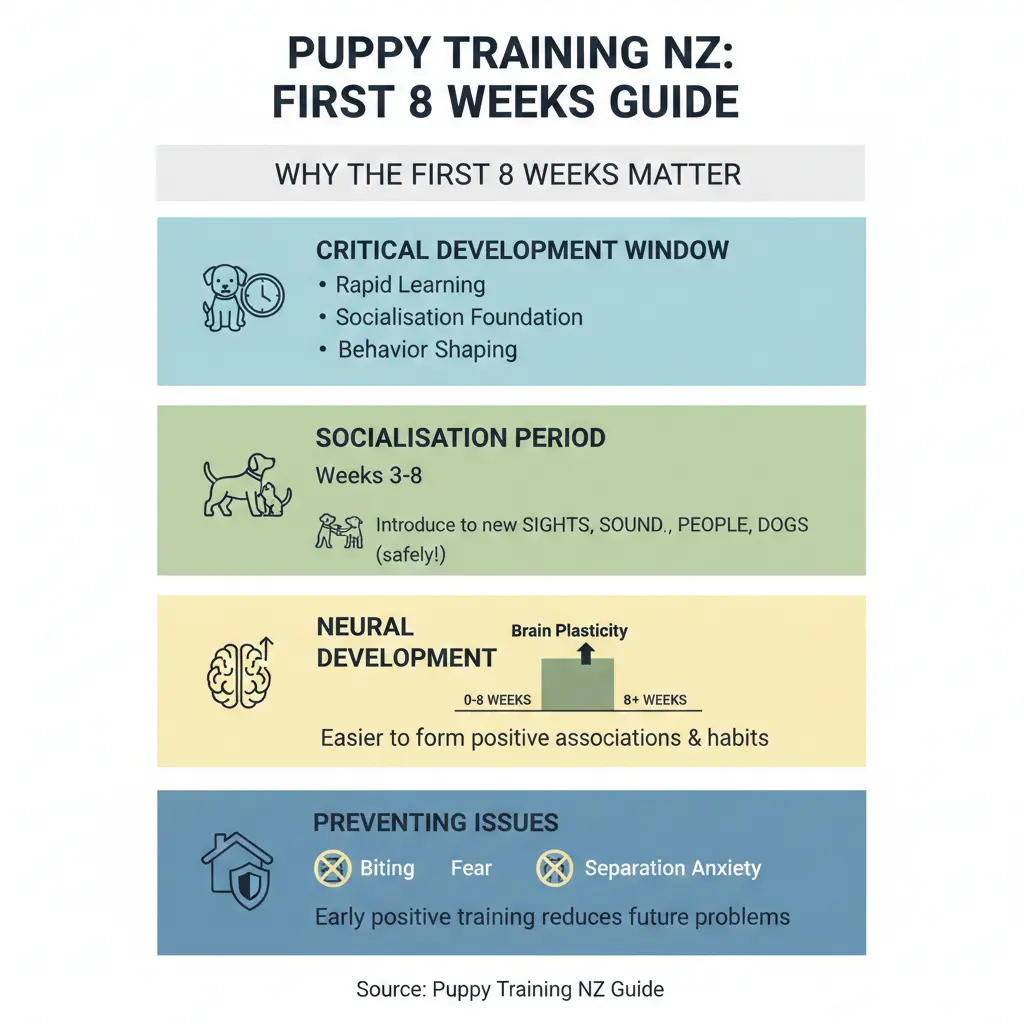
Why the First 8 Weeks Matter for Puppy Training in NZ
Puppies go through a critical socialisation window between 3-12 weeks, where they're like sponges soaking up the world. Miss it, and you risk fearfulness or reactivity later—especially in our diverse NZ environments, from city traffic to rural stock.
Dogs NZ emphasises starting with breeders who follow their Code of Conduct, ensuring healthy pups from ethical sources. Puppies should leave mum at 8 weeks plus, post-vaccinations, ready for training. Local laws like microchipping (mandatory for all dogs over 3 months) and registration with your council kick in early, so weave compliance into training.
Health Checks and Legal Must-Dos Before Training Starts
- Microchip and register: All NZ dogs must be microchipped by 12 weeks and registered with your local council. Scan the chip at pickup and note details for IRD if breeding.
- Vaccinations: First jab at 6-8 weeks; wait for second before parks. Vet-check for worms, fleas—common in our damp climate.
- Desexing chat: Discuss with your vet; many councils offer rebates via SPCA programmes.
- Breeder standards: Choose Dogs NZ affiliates for health-tested parents, reducing future behavioural issues.
Week-by-Week Puppy Training Plan: First 8 Weeks
Keep sessions short—5-10 minutes, 3-4 times daily—using positive reinforcement (treats, praise). Focus on one skill per week, building confidence. Stock up on NZ-made treats like those from The Warehouse or local pet shops.
Weeks 1-2: Settling In and House Training Basics
Your pup's adjusting to new smells, sounds, and you. Create a safe crate (kennel training prevents separation anxiety) in a quiet spot.
- Crate familiarisation: Feed meals inside, leave door open. Praise calm behaviour.
- Toilet training: Take outside every 2 hours, after meals/sleep/play. Use "outside" cue; reward immediately on grass. Pups can hold for 1 hour per month of age +1.
- Name response: Say name + treat when looking at you. Aim for 80% response by week 2.
- Handle gently: Touch paws, ears, mouth daily to prep for vet visits.
Kiwi tip: In rainy Wellington weather, use puppy pads indoors but transition quick to avoid habits.
Weeks 3-4: Building Recall and Lead Walking
Now introduce collar/harness (soft for tiny necks) and a 1-2m lead. Practice indoors first.
- Recall ("come"): Call name + "come" in exciting voice, reward with jackpot treats (two treats!). Never chase—make you the fun spot.
- Lead manners: Stop if pulling; reward loose lead. Walk around furniture.
- Sit command: Lure with treat above nose, say "sit" as bum drops. Fade lure over days.
- Social intro: Controlled meets with vaccinated adult dogs (neighbours' calm pets). Watch body language—no stiff tails.
Enrol in puppy pre-school if available—many NZ clubs like those affiliated with Dogs NZ start post-first vax.
Weeks 5-6: Socialisation Supercharge
This is peak socialisation—expose to NZ life safely: car rides, vacuum noise, kids, bikes, stock sounds (YouTube for farms).
- People variety: Friends in hats, glasses, umbrellas. Reward calm approaches.
- Sounds/textures: Baby gates, slippery floors, doorbells. Pair with treats.
- Leave it/stay: Drop toy, say "leave it," reward from hand. Build to 5-second stays.
- Grooming: Brush, nail clip—make positive.
Caution: Avoid dog parks until fully vaxxed (12 weeks). Use pet-safe sanitisers for parvo risk.
Weeks 7-8: Advanced Basics and Good Citizen Prep
Your pup's ready for public. Focus on manners for Canine Good Basics, Dogs NZ's puppy programme post-8 weeks.
- Down command: From sit, lure to floor.
- Wait at doors: Pause before meals/walks.
- Group classes: Enrol now—builds owner confidence too.
- Alone time: Crate for 30 mins, build to 2 hours.
By week 8, test: Reliable recall 90%, sits on cue, crate sleeps through night.
Tools and Supplies for Puppy Training NZ Success
Invest wisely—quality gear lasts.
| Item | Why It Helps | NZ Where to Buy |
|---|---|---|
| Crate (size for adult) | Den safety, toilet training | Bunnings, Pet.co.nz |
| Clicker + treats | Precise rewards | Petstock, Animates |
| Harness/lead | No neck strain | Hallmark Pets |
| Enzyme cleaner | Removes scent marks | Mitre 10 |
| Puppy toys | Mental stimulation | The Warehouse |
NZ-Specific Tips: Laws, Rentals, and Community Resources
Our lifestyle means beach walks, but also rules. From 1 December 2025, new tenancy laws let renters request pets—prep a "pet CV" with training proof for landlords. Landlords can require pet bonds (up to 2 weeks' rent) but must approve unless reasonable grounds like no fencing.
Dogs NZ pushes positive reinforcement—modern, force-free methods. SPCA offers free advice lines and low-cost desexing. Local clubs via dogtraining.org.nz or council sites run classes. For restricted breeds (per Dog Control Act), extra training proves good behaviour.
Finding Puppy Classes Near You
- Dogs NZ affiliates: Search dogsnz.org.nz for Canine Good Basics.
- SPCA branches: Behaviour workshops in Auckland, Christchurch, etc..
- Private trainers: Look for CPDT certification on petprofessionals.co.nz.
- Online NZ: GoodBoy or local Zoom for rural Kiwis.
Common Mistakes to Avoid in Puppy Training
- Too much freedom early—confine to kitchen/crate zone.
- Punishing accidents—stress worsens house training.
- Skipping socialisation—fearful adults bark at stock/mailies.
- Inconsistent rules—whole whānau must agree on cues.
- Over-exercise—pups' joints need care; short walks only.
FAQ: Puppy Training NZ First 8 Weeks
Q: When can my puppy start classes?
A: Post-second vaccination (around 10-12 weeks), but home training from day 1. Dogs NZ Canine Good Basics suits 8+ weeks.
Q: What if my puppy bites?
A: Normal teething—redirect to toys, yelp like littermate. Time-outs in crate if persistent. SPCA has mouthing guides.
Q: Renting with a pup under new laws?
A: Tenants request in writing; landlords respond in 21 days. Show training/vax proof. Pet bonds apply post-1 Dec 2025.
Q: Best treats for training?
A: Soft, smelly like liver or cheese bits. Avoid overfeeding—10% daily calories max.
Q: My pup whines in crate—what now?
A: Ignore after comforting setup; comfort = exercise + last toilet. Build gradually.
Q: Rural NZ training differences?
A: Desensitise to livestock noises, stock-proof recall. Check MPI rules for farms.
Next Steps: Keep the Momentum Going
Congrats—your 8-week pup is now a mini good citizen! Enrol in Dogs NZ Canine Good Basics or Good Citizen (12+ months). Track progress in a journal, join Kiwi Facebook groups like "Puppy Training NZ" for support. Vet check at 12 weeks, then adventure on—happy training!