Industry Training NZ: Apprenticeships and On-Job Learning

Imagine kicking off your career with a real paycheck, hands-on experience, and a qualification that employers across New Zealand can't ignore. That's the power of apprenticeships through Industry Trai...
Sarah covers personal finance, tax, and KiwiSaver topics for Lifetimes NZ. She focuses on making money management straightforward and practical for everyday Kiwis.
Imagine kicking off your career with a real paycheck, hands-on experience, and a qualification that employers across New Zealand can't ignore. That's the power of apprenticeships through Industry Training NZ organisations—your pathway to skilled trades without the burden of student debt. In 2026, with industry-led reforms shaking up vocational training, now's the perfect time for Kiwis to dive into on-the-job learning that builds real skills and financial stability.
What Are Apprenticeships and On-the-Job Learning in New Zealand?
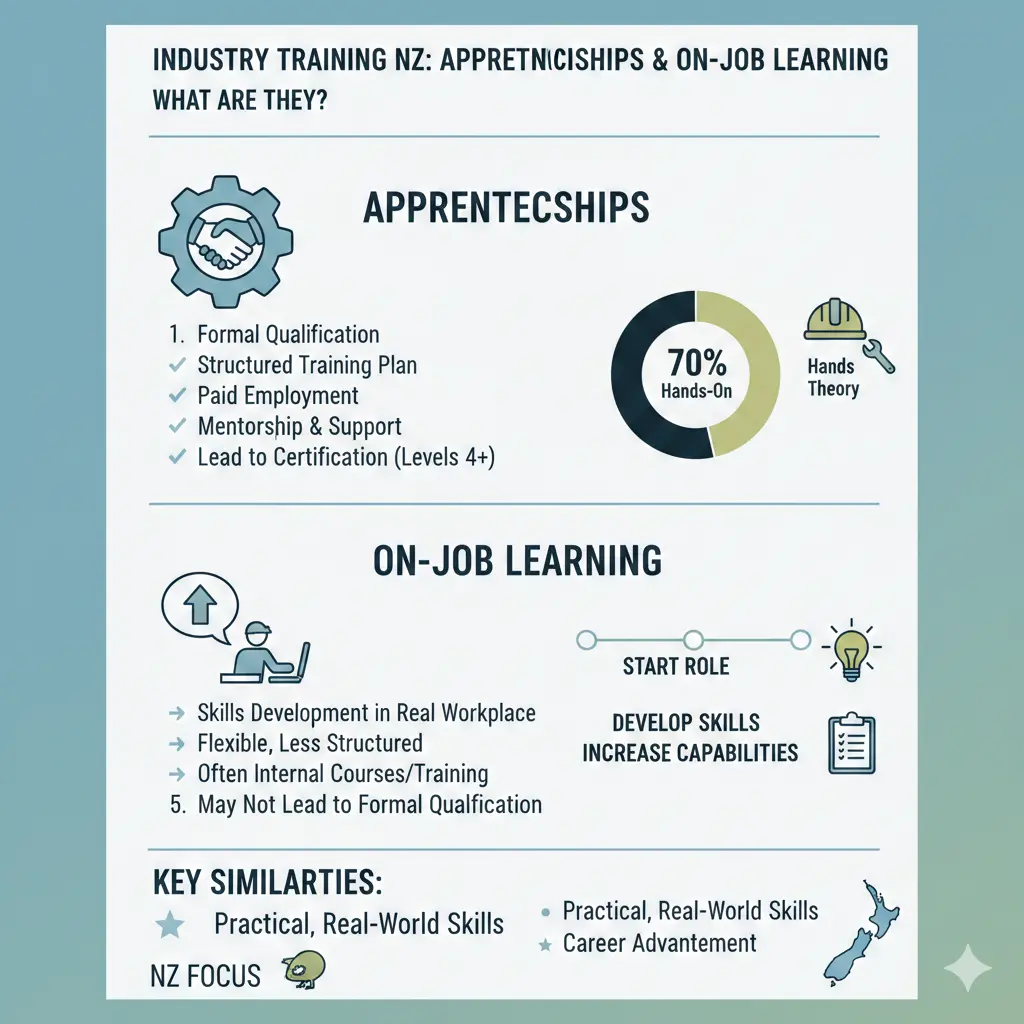
Apprenticeships combine paid work with structured training, letting you earn while you learn essential trade skills. On-the-job learning means most of your development happens in a real workplace, supported by off-job theory through online modules or block courses.Industry Training NZ refers to organisations like ATNZ, Competenz, and Connexis that facilitate these programmes across sectors such as engineering, construction, and infrastructure.
These pathways lead to nationally recognised qualifications, like Level 4 New Zealand Certificates, aligning with Aotearoa's careers system via tools like Tahatū Career Navigator.You're employed from day one, so it's not just training—it's a job with wages, mentoring, and career progression.
Key Benefits for Kiwis Starting Out
- Earn while you learn: Apprentices get paid wages, often starting above minimum wage depending on the trade and region.
- No fees for many: Fees Free eligibility covers first qualifications for eligible Kiwis—claim via myIR after completion.
- Mentorship and support: Account managers visit regularly, handling day-to-day issues and guiding online learning.
- Job security: Finish as a qualified tradesperson, ready to work anywhere or start your own business.
The 2026 Reforms: A New Era for Industry Training NZ
From 1 January 2026, New Zealand's vocational education system has transformed with eight new Industry Skills Boards (ISBs) taking charge of apprenticeships and traineeships. These industry-led bodies set training standards, endorse programmes, and moderate assessments, shifting from the centralised Te Pūkenga model to one that's responsive to local needs.
Existing apprentices with Te Pūkenga transition to ISBs for up to two years, while new enrolments go directly to private providers, polytechnics, or wānanga. This means more relevant skills for roles like carpenters building warm, dry homes or mechanics keeping roads safe. For instance, Connexis (infrastructure training) operates business as usual under its ISB in 2026, planning a shift to preferred providers later in the year.
How ISBs Work and What It Means for You
ISBs ensure training matches employer demands, boosting productivity and economic growth. They're independent, with regional polytechnics regaining agility to meet community needs. The Open Polytechnic anchors the federation for efficient programme delivery.
For apprentices, this translates to:
- Industry deciding training delivery—polytechnics, wānanga, or private training establishments (PTEs).
- Full pastoral care from providers, including mentoring.
- Temporary ISB oversight in 2026, with permanent models set after TEC consultations.
Minister Penny Simmonds calls it a "practical, future-focused reset" for real skills and jobs.
Popular Industries and Organisations Offering Apprenticeships
New Zealand's apprenticeships span over 30 industries, from engineering to beauty. Here's a snapshot:
| Industry | Organisation | Example Qualification |
|---|---|---|
| Engineering (Fabrication, Mechanical Building Services) | ATNZ | Qualified Tradesperson (NZQA-approved) |
| Infrastructure & Construction | Connexis (ISB in 2026) | Level 4 Certificates |
| Multiple Trades (30+ industries) | Competenz | On-the-job Qualifications |
| Building, Horticulture, Hairdressing | Various via Connected.govt.nz | Level 4 NZ Certificate |
ATNZ places apprentices into 250 engineering companies, matching you to a workplace where you fit and learn practically. Competenz connects jobseekers and employers for custom upskilling.
Real Kiwi Success Stories
"We place you with a company that is right for you—one where you fit in, work with people like you and learn practical things on the job." — ATNZ
Many complete apprenticeships and launch businesses, leveraging skills in high-demand sectors like infrastructure, where Connexis ensures employer-trusted qualifications.
Financial Perks: Wages, Incentives, and Fees Free
Apprenticeships are a smart financial move for Kiwis. You're paid from the start, with wages varying by trade—often $25-$30/hour after progression. Plus, government incentives sweeten the deal.
Fees Free Scheme (2026 Updates)
Eligible first-time learners get their qualification fees covered. Apply via myIR from 15 January 2026, post-completion. Criteria include residency, prior study limits, and no prior use. You've got 12 months to claim (or end of 2026 for 2025 completions). Check IRD for full eligibility—ATNZ can't assess it.
Incentives and Support
- Up to $3,000 in first-year payments for new apprentices via Connected.govt.nz, plus 12 months of free mentoring.
- KiwiSaver contributions from your wages build long-term savings.
- WINZ support if needed during transitions, though most earn steadily.
Pro tip: Track earnings via myIR for tax credits and ensure ACC coverage through your employer—standard for all apprenticeships.
How to Become an Apprentice in 2026: Step-by-Step Guide
Ready to start? Follow these actionable steps tailored for Kiwis:
- Assess your fit: Be 16+, a NZ citizen/resident, with the right attitude to learn. Use Tahatū Career Navigator for options.
- Find opportunities: Visit ATNZ.org.nz for engineering, Competenz.org.nz for trades, or Connected.govt.nz for listings.
- Apply: Submit to an Industry Training NZ org—they match you to employers and handle placement.
- Enrol under new system: New starts go to ISB-approved providers from January 2026.
- Claim Fees Free: After qualifying, log into myIR.
- Get support: Expect mentor visits (10+ yearly) and pastoral care.
Employers benefit too—organisations like Competenz help upskill teams, retaining talent.
Challenges and How to Overcome Them
Apprenticeships demand commitment, with physical work and study balance. Regional differences mean fewer spots in rural areas, but reforms boost local polytechnic responsiveness. Solution: Start with online tools like Tahatū and network via industry sites.
Financially, early wages build via progression—pair with KiwiSaver for growth. Always seek employer ACC compliance.
Next Steps: Launch Your Trade Career Today
Don't wait—head to Tahatū Career Navigator to explore apprenticeships aligning with your goals. Contact ATNZ, Competenz, or Connexis for placements, and check Fees Free eligibility on ird.govt.nz. With 2026's industry-led model, skilled Kiwis like you are in demand. Start earning, learning, and building your future now.
Disclaimer: This is general info—consult a financial advisor or IRD for personalised advice on taxes, KiwiSaver, or eligibility.
Frequently Asked Questions
Sources & References
-
1
Become an Apprentice - Apprentice Training NZ — atnz.org.nz
-
2
A better path for apprentices and trainees | Beehive.govt.nz — www.beehive.govt.nz
-
3
The Future of Industry Training » Connexis | Infrastructure Training — connexis.org.nz
-
4
Competenz | Trade apprenticeships New Zealand — www.competenz.org.nz
-
5
Apprenticeships - Connected.govt.nz — www.connected.govt.nz
-
6
Apprenticeships | New Zealand Government — www.govt.nz
-
7
Government announces new work-based learning model — principalstoday.co.nz
-
8
Work-based learning information for tertiary education providers — www.tec.govt.nz
Related Articles

Industry Bodies and Professional Associations NZ
Whether you're launching a business, advancing your career, or navigating financial regulations, industry bodies and professional associations in New Zealand offer invaluable support. These organisati...

Emergency Benefit NZ: When You Have No Other Options
When you're struggling financially and don't qualify for other benefits, the Emergency Benefit might be your lifeline. It's a discretionary payment designed for Kiwis in genuine hardship who've exhaus...

Unpaid Internships NZ: Are They Legal?
Unpaid internships are a common pathway for students and graduates to gain work experience in New Zealand, but there's often confusion about whether they're actually legal. The short answer is: unpaid...

Estate Administration NZ: Managing Someone's Affairs After Death
Losing a loved one is one of life's toughest challenges, and stepping in to manage their estate can feel overwhelming. In New Zealand, estate administration—the process of handling someone's affairs a...