Residential Tenancy Laws in NZ 2025: What Changed?

If you're renting in New Zealand, 2025 brought some significant changes to the Residential Tenancies Act that affect both landlords and tenants. Whether you're in a periodic or fixed-term tenancy, und...
James writes about the New Zealand property market, renting, home ownership, and housing costs. He breaks down complex property topics into practical advice for renters and buyers.
If you're renting in New Zealand, 2025 brought some significant changes to the Residential Tenancies Act that affect both landlords and tenants. Whether you're in a periodic or fixed-term tenancy, understanding these updates is crucial for protecting your rights and staying compliant. Let's walk through what changed and how it impacts you.
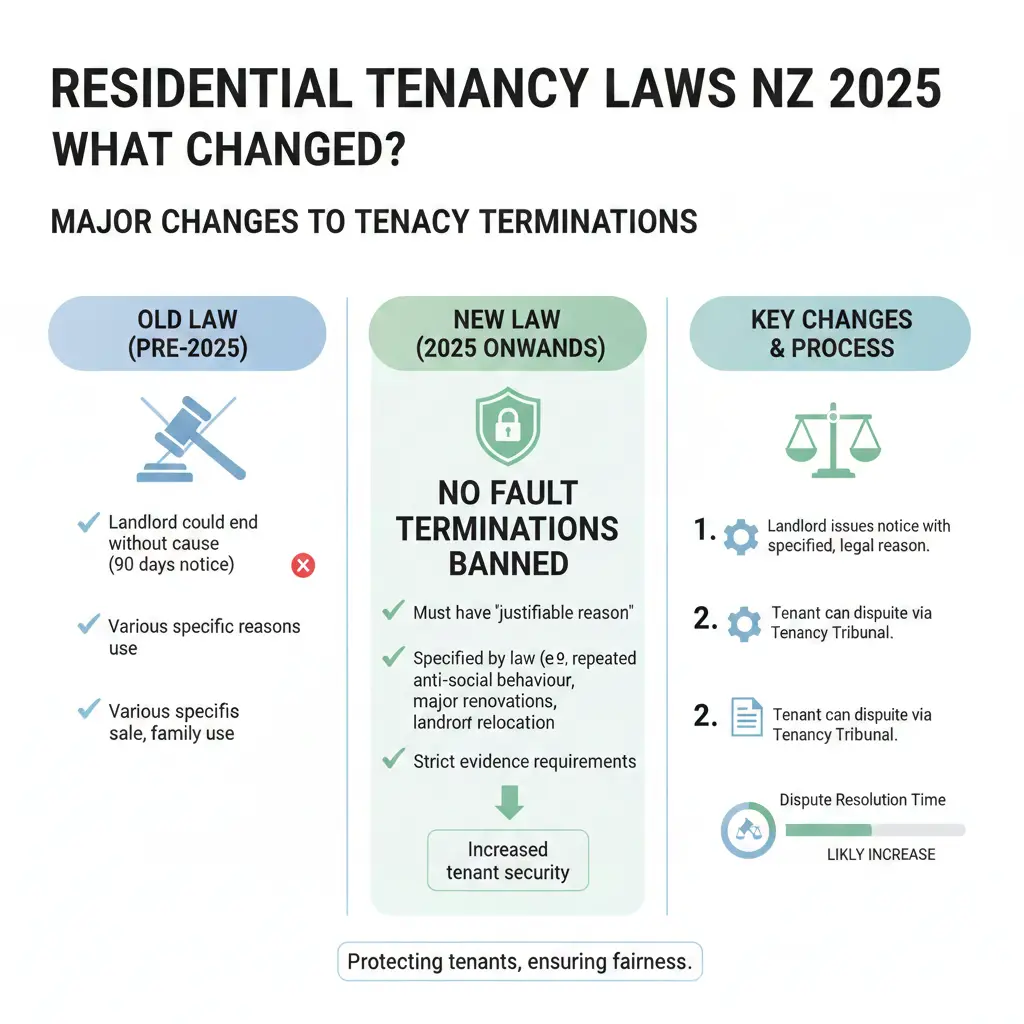
The Major Changes to Tenancy Terminations
The biggest shake-up in 2025 came on 30 January, when new rules around how tenancies can be ended came into force. These changes rolled back some protections introduced in 2020 and introduced new flexibility for both landlords and tenants.
Notice Periods: What's Different Now?
If you're a tenant wanting to leave a periodic tenancy, you'll now only need to give 21 days' notice, down from the previous 28 days. This gives you more flexibility to move on when your circumstances change.
For landlords, the changes are more substantial. They can now end a periodic tenancy with 90 days' notice without needing to provide a specific reason. This is the controversial 'no cause' termination that's been widely discussed in rental communities.
However, if a landlord needs the property for specific purposes, they can give shorter notice:
- 42 days' notice if the landlord or a family member needs to live in the property as their main residence for at least 90 days
- 42 days' notice if the property has been sold and vacant possession is required
- 42 days' notice if the property is needed for the landlord's employee or contractor
It's important to note that these new notice periods only apply to termination notices issued from 30 January 2025 onwards. If notice was already given before this date, the old rules still apply.
Fixed-Term Tenancies: Automatic Conversion to Periodic
From 30 January 2025, fixed-term tenancies will automatically convert to periodic tenancies when they expire, unless either party gives notice of termination between 90 and 21 days before the end of the fixed term. Alternatively, both parties can agree to renew the fixed term or end the tenancy.
There's a 90-day transition period for existing fixed-term tenancies, so these automatic conversion rules only apply to fixed-term tenancies expiring on or after 1 May 2025.
Enhanced Protections Against Retaliatory Termination
One of the strongest protections for tenants in the 2025 reforms is expanded safeguards against retaliatory termination. If your landlord tries to end your tenancy because you've exercised your legal rights—such as reporting a maintenance issue or requesting repairs—you can now challenge this at the Tenancy Tribunal.
The timeframe to challenge a retaliatory termination notice has been extended to 12 months, giving you much stronger grounds to fight an unfair eviction. This is a significant win for tenant protection.
Modernising Communication: Electronic Notices Now Allowed
From 20 March 2025, the way landlords and tenants communicate changed significantly. Tenancy-related documents and notices can now be exchanged electronically if both parties agree, including via email, fax, mobile telephone, or instant messaging.
However, a physical address for service still needs to be provided in your tenancy agreement as a backup. This modernisation should speed up communication and reduce delays in resolving issues.
New Rules Around Smoking and Pet Bonds
Indoor Smoking Bans
From 20 March 2025, landlords can now explicitly ban indoor smoking in tenancy agreements, and this clause is fully enforceable. Landlords can also restrict smoking in outbuildings, provided any additional outdoor restrictions align with tenants' right to quiet enjoyment of the property.
Pet Bonds and Consent
New provisions dealing with pet-related rights and responsibilities are coming, but the exact date hasn't been set yet. These rules will allow tenants to request consent to keep pets and will enable landlords to require a 'pet bond' from tenants. We'll update you once the specific implementation date is announced.
Changes to the Tenancy Tribunal
The Tenancy Tribunal is being modernised to operate more efficiently. From 20 March 2025, the Tribunal can make decisions based on submitted documents alone, without holding a hearing, as long as the case doesn't involve termination or landlord access.
Additionally, the jurisdictional limit for consolidated applications involving multiple properties owned by one landlord has changed to $100,000 per tenancy, instead of $100,000 for the entire application.
Online Bond Lodgement
Bond lodgement provisions requiring online lodgement came into effect on 17 December 2024. This means landlords must now lodge bonds electronically rather than through traditional methods, streamlining the process and providing better protection for tenants' money.
What These Changes Mean for You
For Tenants
The 2025 changes are mixed for tenants. On the positive side, you've got more flexibility to leave a tenancy (21 days' notice instead of 28), stronger protection against retaliatory evictions, and faster communication through electronic notices. However, the reintroduction of 'no cause' terminations with 90 days' notice does reduce your security in a periodic tenancy.
The key is understanding your rights. If your landlord tries to evict you for reporting maintenance issues or exercising your legal rights, you now have a 12-month window to challenge this at the Tenancy Tribunal.
For Landlords
Landlords have gained more flexibility with 'no cause' terminations and shorter notice periods for specific circumstances. However, you'll need to be careful not to terminate tenancies in a way that could be seen as retaliatory, as tenants have stronger grounds to challenge these actions.
Practical Tips for Staying Compliant
- Review your tenancy agreements to ensure they include electronic contact details if you want to serve notices electronically
- Document everything if you're considering ending a tenancy, to avoid any appearance of retaliation
- Use the new 21-day notice period if you're a tenant wanting to move—it gives you more flexibility than before
- Check your bond was lodged online by your landlord after 17 December 2024
- Clarify smoking policies in your tenancy agreement if you have specific rules about this
- Stay informed about pet bond rules, which are coming later in 2025
What You Should Do Now
If you're renting in New Zealand, take time to review your tenancy agreement and make sure it reflects these new rules. If you're a tenant, ensure your landlord has your current electronic contact details if you want to receive notices by email. If you're a landlord, update your tenancy agreements to include electronic contact information and clarify any smoking policies.
The 2025 tenancy law changes represent a significant shift in how rentals work in Aotearoa. While there are changes to benefit both landlords and tenants, the key is understanding your rights and responsibilities under the new rules. If you have specific concerns about your tenancy or believe your rights have been breached, contact the Tenancy Services for free advice.
Frequently Asked Questions
Sources & References
-
1
Tenancy law changes — Tenancy Services — www.tenancy.govt.nz
-
2
Changes to tenancy terminations now in force — Tenancy Services — www.tenancy.govt.nz
-
3
Key Changes to Residential Tenancies in 2025 — Duncan Cotterill — duncancotterill.com
-
4
Tenant Rights in 2025: Key Changes You Need to Understand — RW Silverdale — rwsilverdale.co.nz
-
5
What Changes to the Residential Tenancies Act will mean for landlords — 360 Property Management — 360propertymanagement.co.nz
-
6
What changes landlords and tenants can expect in 2025 — Wise Move — www.wisemove.co.nz
Related Articles

The Ultimate Rental Inspection Checklist for NZ Tenants
Moving into a rental in New Zealand can feel like a big step, but nothing prepares you quite like acing that first property inspection—or preparing for the regular ones that follow. As a tenant, knowi...

Healthy Homes Standards: A Guide for NZ Landlords & Renters
If you're renting or managing a property in Aotearoa, you've probably heard about the Healthy Homes Standards. These legal requirements aren't just bureaucratic boxes to tick—they're designed to ensur...

Renter's Rights in New Zealand: Know Your Protections
Imagine signing a lease only to face unexpected repairs, unfair rent hikes, or eviction threats—that's the reality too many Kiwis have faced. But with the Renters' Rights in New Zealand evolving throu...

Tenancy Law Changes 2025: What Renters Need to Know
If you're renting in New Zealand, the tenancy law changes kicking in from early 2025 could reshape your rights and responsibilities as a tenant. These updates to the Residential Tenancies Act (RTA) br...