New Zealand Stargazing: Best Dark Sky Spots and Astro‑Tours
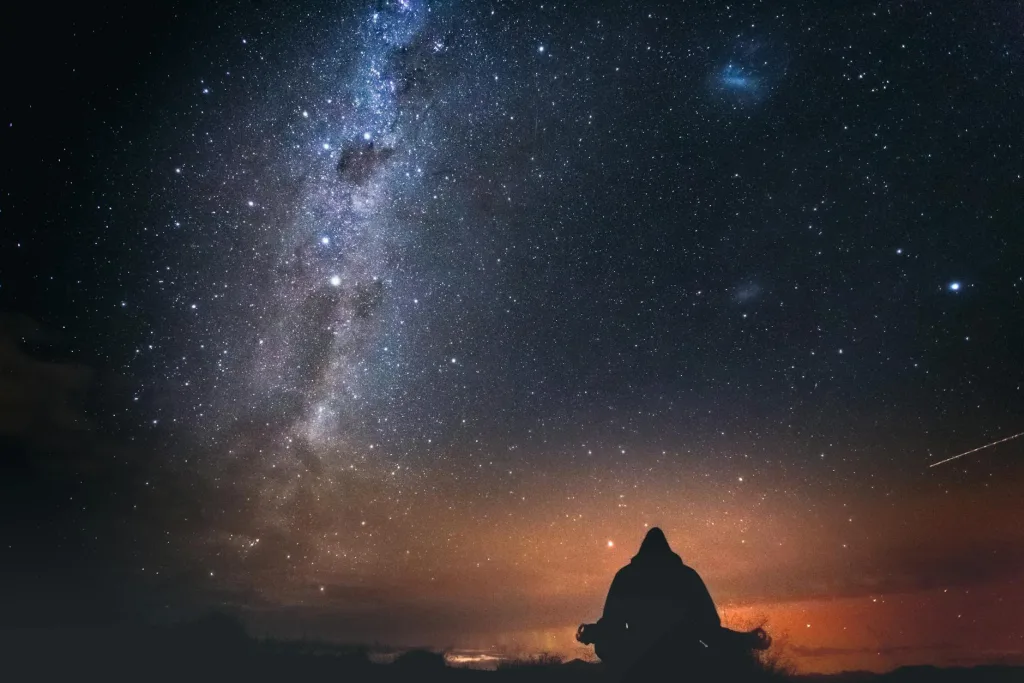
Imagine lying back under a blanket of stars so dense you can trace the Milky Way with your finger, far from city lights, with the Southern Lights dancing on the horizon. New Zealand's pristine night s...
Tom covers travel, lifestyle, and cost-of-living topics across New Zealand. He writes practical guides on transport, day trips, outdoor activities, and everyday life in Aotearoa.
Imagine lying back under a blanket of stars so dense you can trace the Milky Way with your finger, far from city lights, with the Southern Lights dancing on the horizon. New Zealand's pristine night skies make this a reality for Kiwis seeking unforgettable stargazing experiences, especially in 2026 as Solar Cycle 25 peaks for spectacular aurora displays.
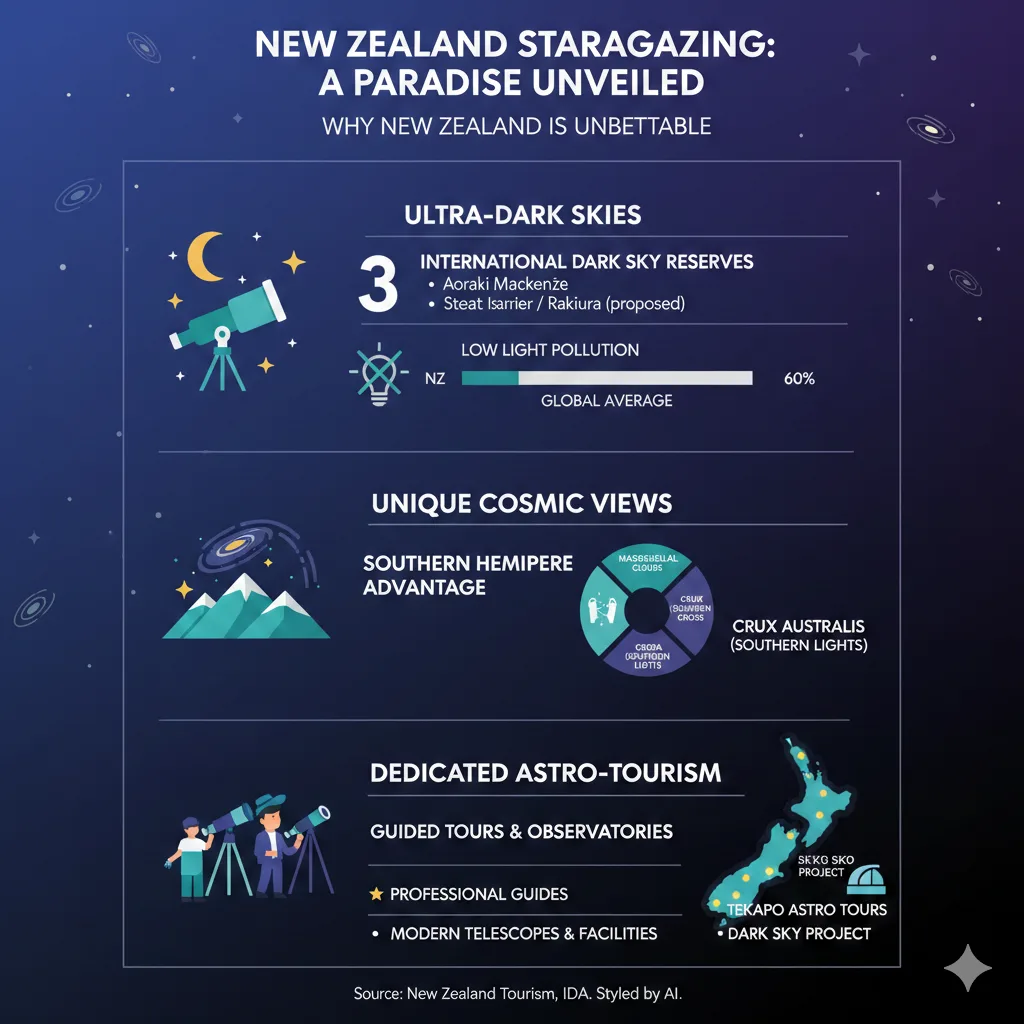
With ten International Dark Sky Places accredited by DarkSky International, Aotearoa offers world-class spots protected from light pollution through community-led efforts and strict guidelines like limiting rural illumination to under 10 lux. Whether you're in the Mackenzie Basin or a remote sanctuary, here's your guide to the best dark sky spots and astro-tours tailored for local adventurers.
Why New Zealand is a Stargazing Paradise
Our country's clear Southern Hemisphere skies reveal unique sights like the Southern Cross, Magellanic Clouds, and in 2026, heightened chances of Aurora Australis thanks to solar maximum. DarkSky International recognises places meeting rigorous standards: low light pollution, protected darkness, and community commitment. As of 2026, threats from proposed planning law changes could impact protections by removing councils' ability to consider visual amenity, so support local dark sky advocates to keep our skies pristine.
Practical tip: Check the Dark Sky Finder app or darksky.org for real-time Bortle Scale readings—aim for Class 1 or 2 skies for the clearest views. Pack layers, a red torch to preserve night vision, and a star app like SkySafari.
Top Dark Sky Reserves for Epic Stargazing
Reserves are expansive areas with long-term protection, perfect for immersive nights under the stars.
Aoraki Mackenzie International Dark Sky Reserve
The world's largest dark sky reserve spans the Mackenzie Basin and Aoraki/Mount Cook National Park, offering unparalleled clarity with wide-open vistas free from light pollution. Centred around Lake Tekapo, it's New Zealand's most famous spot and ideal for aurora hunting in 2026.
- Best spots: Mt John Observatory summit for 360-degree views; Lake Tekapo foreshore.
- Access: Free public stargazing; 2-hour drive from Christchurch.
- Stay: Tekapo motels or glamping—book early for peak season.
Wairarapa Dark Sky Reserve
Covering 3,665 square kilometres in the lower North Island, this reserve boasts rural night skies with minimal pollution. Drive from Wellington (1.5 hours) to spots like Martinborough for easy access.
Premier Dark Sky Sanctuaries: Remote and Pristine
Sanctuaries are even stricter, often uninhabited or minimally lit, delivering some of Earth's darkest skies.
Aotea / Great Barrier Island Dark Sky Sanctuary
New Zealand's first island sanctuary (285 sq km, accredited 2021), it's a boat ride from Auckland with over half the land protected. Beach stargazing feels otherworldly.
- Tours: Good Heavens small-group sessions in moon chairs.
- Tip: Ferry from Auckland; camp or stay in eco-lodges.
Stewart Island / Rakiura Dark Sky Sanctuary
One of the darkest inhabited places globally, this remote gem pairs stargazing with kiwi spotting. Ulva Island or beaches like Observation Rock shine brightest.
Kaikōura Dark Sky Sanctuary
Newly designated in 2024 (2,039 sq km), it blankets the entire district—perfect post-whale watching.
Tāhuna Glenorchy Dark Sky Sanctuary
Accredited February 2025 (2,150 sq km), this alpine wonder near Queenstown reflects stars in Lake Wakatipu. Hike Routeburn Track huts for measured dark skies, thanks to DOC partnerships. A total solar eclipse in 2028 adds extra allure.
Dark Sky Parks: Accessible Community Gems
These smaller parks blend conservation with public access.
- Oxford Forest Conservation Area (Canterbury): Managed trails for observation.
- Wai-iti (Tasman, 1.35 sq km, 2020): Community-driven near Nelson.
- Kawarau Gibbston (Queenstown-Lakes, 25 sq km, 2024): Valley views with Gibbston Character Zone.
Best Astro-Tours and Experiences in 2026
Join guided tours for telescopes, Māori astronomy, and expert insights—no prior knowledge needed.
| Spot | Tour Operator | Highlights | Price Guide (2026) |
|---|---|---|---|
| Mt John, Tekapo | Dark Sky Project | Telescope viewing, Māori star lore with Victoria Campbell, aurora potential | $200–$300/adult |
| Aoraki Mt Cook | Big Sky Stargazing (The Hermitage) | Cosmos talks in the Dark Sky Reserve | $150–$250 |
| Aotea/Great Barrier | Good Heavens | Beach chair stargazing | $100–$150 |
| Glenorchy | Local operators via glenorchydarkskies.org.nz | Alpine tours, eclipse prep | $180–$280 |
Book via official sites; many offer Kiwi discounts or group rates. For Southern Lights, target Mackenzie, Glenorchy, Kaikōura, Stewart Island—stay 2–3 nights for best odds.
Practical Tips for Kiwi Stargazers
- Timing: New moon phases (check timeanddate.com); summer for warmth, winter for darker skies.
- Gear: Wide-angle lens for astrophotography; tripods essential. Use red filters.
- Weather: MetService app for clear nights; southerlies clear South Island skies.
- Leave No Trace: DOC guidelines—stick to tracks in national parks.
- Accessibility: Many sites wheelchair-friendly; check with operators.
In 2026, watch planning law updates via govt.nz to advocate for sky protections.
FAQ
What’s the best time for stargazing in New Zealand?
Winter months (June–August) offer longest nights and clearest South Island skies, plus 2026 aurora peaks.
Do I need a tour, or can I stargaze alone?
Solo is fine in public reserves, but tours provide telescopes and expertise—essential for beginners.
Is stargazing free?
Public spots yes; tours $100–$300. Dark Sky Places entry often free, parking minimal.
Can I see the Milky Way year-round?
Best May–October when it's highest; avoid full moon.
How dark are these skies compared to cities?
Bortle 1–2 (black skies, 2,000+ stars visible) vs Auckland's Bortle 8 (50–100 stars).
Are there aurora forecasts for NZ?
Yes, spaceweatherlive.com or NIWA alerts for Kp index 5+ events.
Ready to Chase the Stars?
Grab your whānau, pick a Dark Sky Place like Aoraki Mackenzie or Tāhuna Glenorchy, and book a tour today. Download the DarkSky app, monitor aurora forecasts, and join the movement to protect our night skies—contact local councils or DarkSky NZ chapters. Your ultimate stargazing adventure awaits under Aotearoa's glittering canopy.
Related Articles
Geothermal Wonders of New Zealand: Wai‑O‑Tapu, Te Puia, Hell’s Gate and More
New Zealand's geothermal wonders are some of the most spectacular natural attractions in the Southern Hemisphere, and they're right here on our doorstep. From erupting geysers to vibrant hot springs a...
New Zealand for Wildlife Lovers: Penguins, Kiwis, Seals and Albatross
Imagine waddling alongside cheeky little blue penguins at dusk, hearing the haunting call of a kiwi in the night, watching seals bask on rocky shores, or witnessing the majestic glide of an albatross...
Top Day Hikes in the South Island (Roy’s Peak, Hooker Valley, Ben Lomond etc.)
Imagine standing atop a jagged peak with Aoraki/Mount Cook piercing the sky, or gazing across crystal-clear turquoise lakes framed by snow-capped mountains—all without needing a multi-day tramp. The S...
Guide to New Zealand’s Great Walks: What to Expect, Bookings and Packing
Imagine lacing up your tramping boots and stepping onto tracks that wind through ancient rainforests, along golden beaches, and up to alpine passes with views that stop you in your tracks. New Zealand...