Finding a Tradie NZ: How to Choose and What to Pay

Renovating your home or tackling that leaky roof? Finding the right tradie in New Zealand can make all the difference between a seamless project and a costly headache. With construction booming and sk...
James writes about the New Zealand property market, renting, home ownership, and housing costs. He breaks down complex property topics into practical advice for renters and buyers.
Renovating your home or tackling that leaky roof? Finding the right tradie in New Zealand can make all the difference between a seamless project and a costly headache. With construction booming and skilled workers in high demand, knowing how to choose a reliable tradie and what to budget for is essential for every Kiwi homeowner.
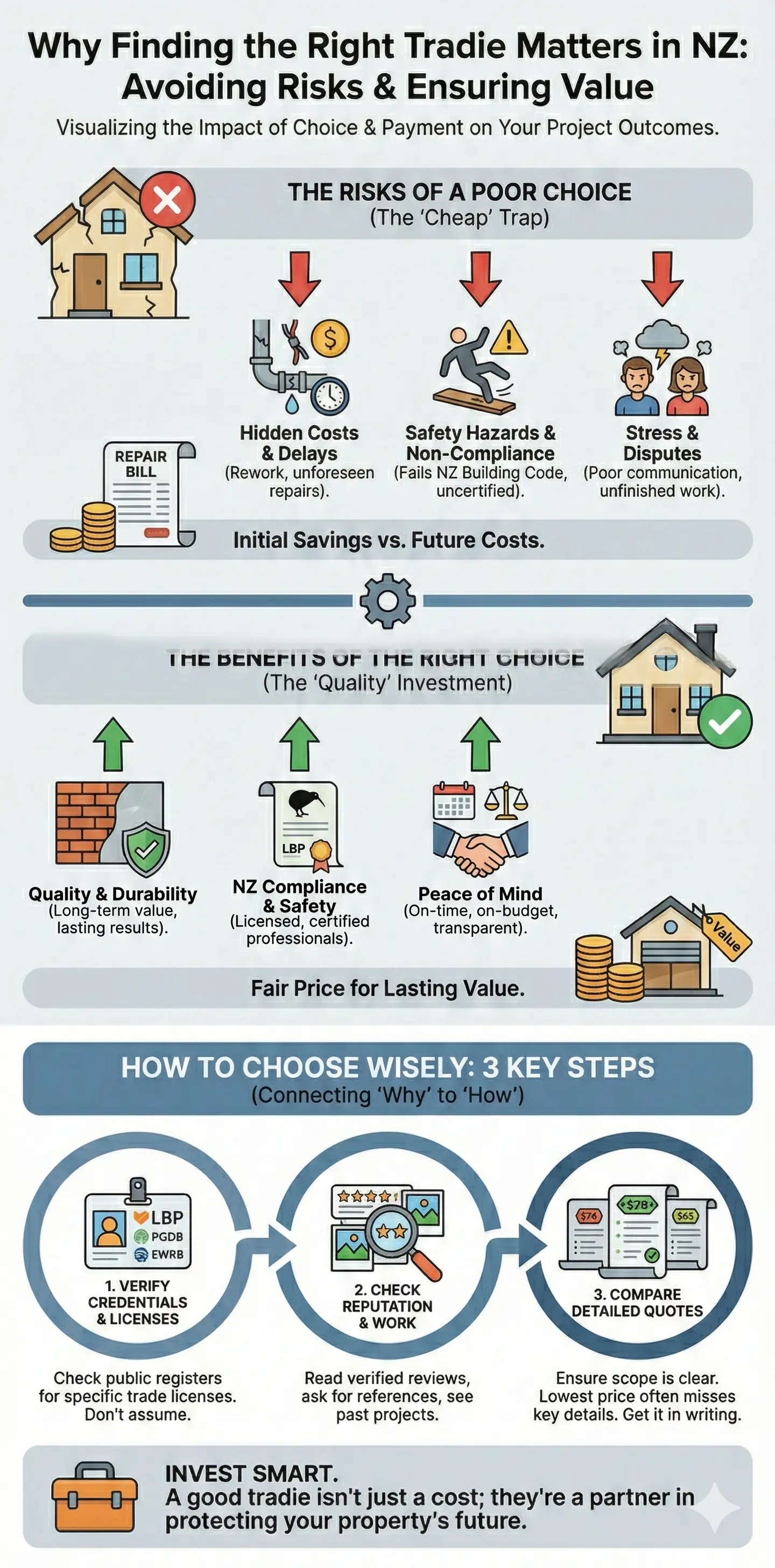
Why Finding the Right Tradie Matters in NZ
Our building sector is growing fast, driven by housing shortages and infrastructure projects, which means tradies are busier than ever. But with great demand comes the risk of rushed jobs or unqualified workers. In 2026, new licensing reforms are strengthening accountability for professionals like Licensed Building Practitioners (LBPs), electricians, and plumbers, giving you more confidence in their work. Choosing wisely protects your investment and ensures compliance with the Building Act.
Common Pitfalls to Avoid
- Hiring without checking licences – some trades require mandatory registration.
- Skipping references – word-of-mouth is gold in Kiwi communities.
- Ignoring quotes – unexpected costs can blow your budget.
How to Find a Tradie in New Zealand
Start your search locally. Platforms like Trade Me, Builderscrack, or local Facebook groups are packed with Kiwi tradies. For bigger jobs, check the Licensed Building Practitioners public register on lbp.govt.nz to verify credentials.
Step-by-Step Guide to Sourcing Your Tradie
- Identify the trade needed: Is it carpentry, plumbing, electrical, roofing, or foundations? Each has specific licensing classes under the LBP scheme, like Design 1-3 or Site 1-3 for builders.
- Use official directories: Visit pgdb.co.nz for plumbers and drainlayers, or ewr.govt.nz for electricians.
- Ask for recommendations: Neighbours, family, or your local council's building consent team often know who's reliable.
- Post a job online: Sites like NoCowboys or ServiceSeeking connect you with vetted pros.
- Shortlist 3-5: Get multiple quotes to compare.
In 2026, with self-certification rolling out for eligible plumbers and drainlayers, look for those meeting the Plumbers, Gasfitters and Drainlayers (PGD) Board's strict criteria – it means faster approvals for straightforward work.
Checking Qualifications and Licences
Not all tradies need a licence, but for restricted building work (RBW) like structural changes, only LBPs can sign off. Verify via the public registers: LBPs have classes for carpentry (four competencies), roofing (7 areas of practice), bricklaying, external plastering, and foundations. Electricians must be registered, and plumbers certified by the PGD Board.
Overseas-Trained Tradie? What to Know
If your tradie is from overseas, ensure their qualifications are recognised by NZQA. They might need Recognition of Prior Learning (RPL) or additional training. Level 4+ qualifications are now key for residency pathways, attracting skilled migrants to fill gaps.
Pro Tip: Always ask for their LBP number or registration ID upfront – a legit tradie won't hesitate.
What to Pay: 2026 Tradie Rates Across NZ
Rates vary by location, experience, and job size. In Auckland and Wellington, expect a 10-20% premium over regional areas like Christchurch or Dunedin. Hourly rates for 2026 average $80-$150, but many charge per job. Here's a breakdown based on current market data:
| Trade | Average Hourly Rate (ex GST) | Day Rate | Common Job Cost |
|---|---|---|---|
| Carpenter | $90-$130 | $700-$1,000 | Deck build: $5,000-$15,000 |
| Electrician | $100-$150 | $800-$1,200 | Full rewiring: $8,000-$20,000 |
| Plumber | $95-$140 | $750-$1,100 | Hot water cylinder: $1,500-$3,500 |
| Roofing | $100-$145 | $800-$1,200 | Re-roof: $10,000-$25,000 |
| Bricklayer | $85-$125 | $650-$950 | Feature wall: $4,000-$10,000 |
Factor in GST (15%), materials (20-40% of total), and travel. Minimum call-out fees start at $150. For big renos, negotiate a fixed-price contract to avoid overruns.
Regional Rate Differences
- Auckland: Highest at $110+ hourly due to demand.
- Christchurch: $85-$120, post-quake rebuild expertise.
- Rural NZ: $70-$100, but longer travel times.
Getting Quotes and Contracts
Always get at least three written quotes detailing scope, materials, timeline, and payment terms. Use a standard NZ contract from building.govt.nz to cover variations, warranties, and disputes.
Red Flags in Quotes
- Vague descriptions like "fix roof" without specifics.
- No mention of consents or LBPs.
- Upfront payments over 20%.
- No insurance proof – check for Public Liability (at least $1M).
In 2026, strengthened disciplinary powers mean dodgy tradies face quicker suspensions, so report issues to the LBP Registrar.
Tips for a Smooth Tradie Project
- Be clear on expectations: Provide plans, photos, and access details.
- Stage payments: 20% deposit, 30% mid-way, balance on completion.
- Site prep: Clear the area and have power/water ready.
- Communicate daily: Kiwi tradies appreciate straight talk.
- Get consents: For notifiable work, your council or BCA must approve.
FAQ: Finding a Tradie in NZ
How do I check if a tradie is licensed?
Use lbp.govt.nz for LBPs, pgdb.co.nz for plumbers, or ewr.govt.nz for sparks. It's free and instant.
What's the average cost for a kitchen reno?
Expect $20,000-$60,000 depending on size, including multiple tradies. Get itemised quotes.
Do I need a building consent for deck work?
Yes, if over 1.5m high or structural – check building.govt.nz to avoid fines up to $200,000.
What if the tradie does shoddy work?
Contact them first, then escalate to the LBP Registrar or PGDB. New 2026 rules speed up resolutions.
Can overseas tradies work here?
Yes, with NZQA-recognised quals and licences. Demand is high for skilled migrants.
How much should I pay upfront?
No more than 10-20% – protect yourself with a contract.
Next Steps for Your Project
Ready to get started? Shortlist tradies today, verify their licences, and lock in quotes. For complex jobs, consult your local council early. With the right prep, your reno will be done right, on time, and on budget. Head to lifetimes.co.nz for more home guides, or share your tradie wins in the comments below!
Related Articles
Bathroom Renovation Costs NZ 2025
Planning a bathroom spruce-up in 2026? With Kiwi homes getting older and our love for cosy, functional spaces growing, knowing the real bathroom renovation costs NZ 2025 (updated for current rates) ca...

Deck Building NZ: Costs and Consent Requirements
Imagine firing up the barbie on a sunny Kiwi afternoon, with mates gathered around and kids playing safely on a sturdy new deck. That's the dream for many homeowners across New Zealand, but before you...
Painting Your House NZ: DIY vs Professional Costs
Ever stared at your peeling weatherboards or faded interior walls and wondered if it's time for a fresh coat of paint? In New Zealand, where our homes battle salty coastal air, relentless UV rays, and...

Energy Efficient Home Upgrades NZ
Imagine slashing your power bills by hundreds of dollars a year while cosying up in a warmer, healthier home this winter. For Kiwis facing rising energy costs and chilly draughts, energy efficient hom...