Alcohol Delivery Laws NZ: What's Legal and What's Not
Ever ordered a cold six-pack online after a long day, only to wonder if it's actually legal to have it dropped at your door in New Zealand? With off-licences booming and delivery apps making booze as...
Sarah covers personal finance, tax, and KiwiSaver topics for Lifetimes NZ. She focuses on making money management straightforward and practical for everyday Kiwis.
Ever ordered a cold six-pack online after a long day, only to wonder if it's actually legal to have it dropped at your door in New Zealand? With off-licences booming and delivery apps making booze as easy as pizza, knowing the rules keeps you on the right side of the law—and avoids awkward porch pickups.
Alcohol delivery laws in New Zealand balance convenience with responsibility, governed by the Sale and Supply of Alcohol Act 2012 and local policies that vary by council. Whether you're a punter ordering for a home gathering or a business dispatching bottles, get it wrong and you risk fines, rejected parcels, or worse. This guide breaks down what's legal, what's not, and how to stay compliant in 2026.
National Framework: The Sale and Supply of Alcohol Act 2012
The cornerstone of booze rules is the Sale and Supply of Alcohol Act 2012, which requires all alcohol sellers to hold an off-licence for takeaway or delivery sales. Off-licences allow alcohol to be sold for consumption off the premises, but delivery adds layers of ID checks, timing, and packaging rules.
Key national requirements include:
- Buyers and receivers must be 18+; sellers must take "reasonable steps" to verify age, like ID scanning apps or signature confirmation.
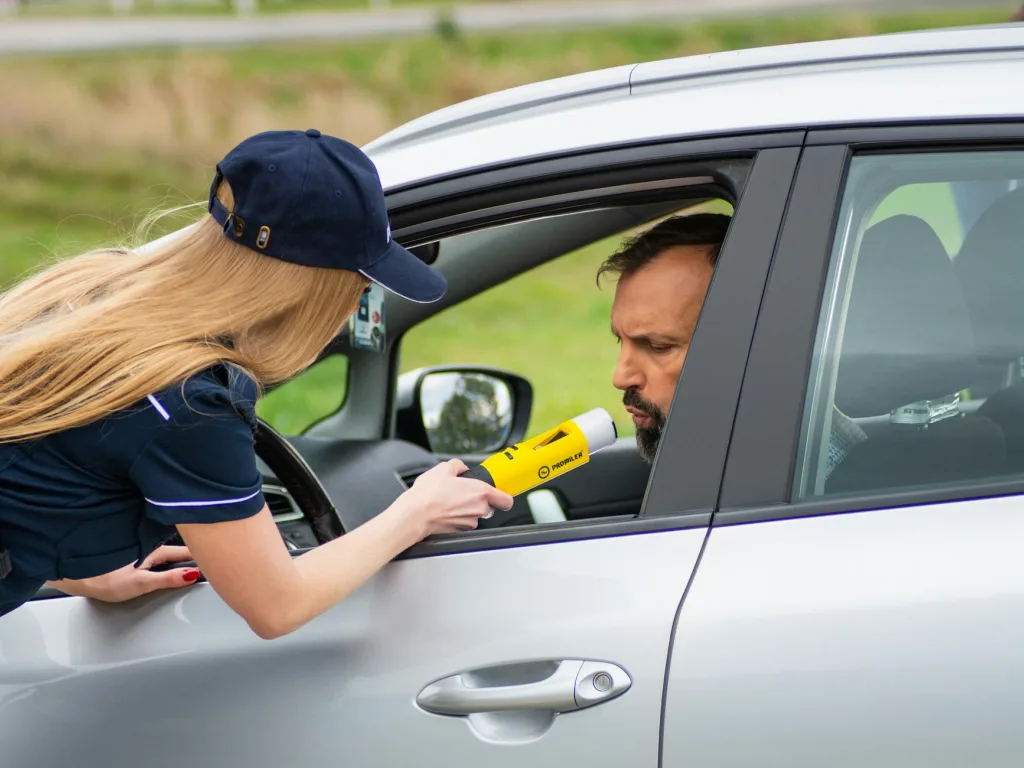
- No sales to intoxicated persons—proposed 2026 reforms will explicitly bar delivery services from supplying highly intoxicated buyers, putting the onus on drivers and platforms.
- Signature-required delivery: No authority-to-leave (ATL) exemptions unless pre-agreed; parcels go back if no one's home to sign.
Proposed 2026 Reforms: Loosening Up with Safeguards
In early 2026, Associate Justice Minister Nicole McKee announced reforms to ease restrictions while adding protections. Changes include simplifying licence objections (local community only) and allowing wineries or breweries dual on- and off-licences. Critically for deliveries, platforms like Uber Eats must refuse orders to intoxicated customers, with training mandated for drivers.
Zero- and low-alcohol products get a boost too, with wider stocking allowed. However, penalties for selling to minors remain firm at up to $10,000 for businesses—far lighter than vapes, but enforcement is ramping up.
Delivery Times: When You Can and Can't Get Your Booze
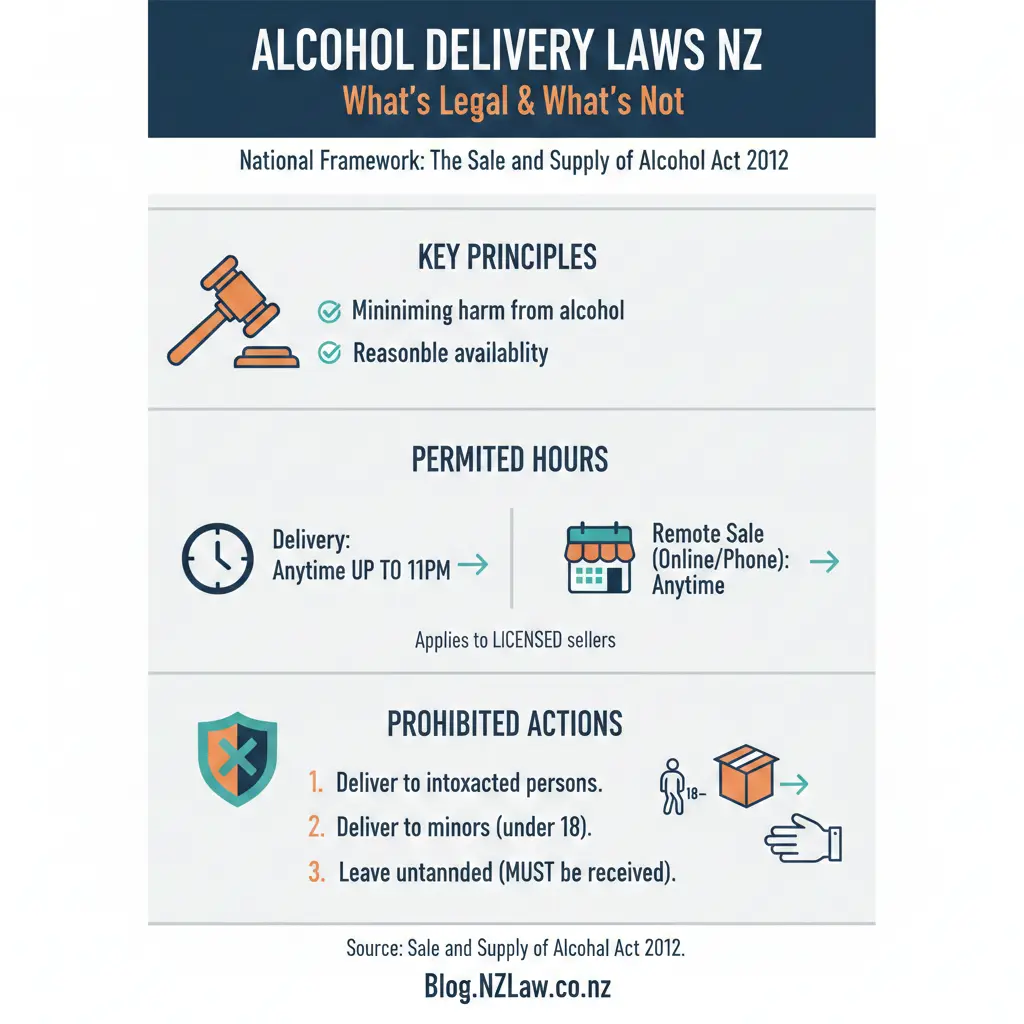
National defaults set boundaries, but local alcohol policies (LAPs) often tighten them. Alcohol can't be delivered 11pm to 6am daily, or on restricted holidays like Christmas Day, Good Friday, Easter Sunday, or before 1pm on ANZAC Day.
National Restrictions
- Daily curfew: No deliveries 11pm–6am.
- Holidays: Full bans on Christmas, Good Friday, Easter Sunday; ANZAC pre-1pm.
- Remote sales: Online orders can be placed anytime, but delivery sticks to these windows.
Local Variations: LAPs That Hit Your Suburb
Councils set LAPs every six years, often slashing off-licence hours to curb harm. In 2026:
- Auckland: Off-licences close by 9pm (from national 11pm); two-year freeze on new licences in high-harm areas like the City Centre and 23 suburbs. On-demand deliveries (under 2 hours) largely comply, but same-day options persist.
- Christchurch: Draft LAP proposes 9pm close for all off-licences, including supermarkets and bottle stores.
- Invercargill: Reviewing LAP with tighter proximity rules to schools/marae and potential hour cuts.
Check your council's LAP via their website or govt.nz—DLCs must follow them, but can add stricter conditions.
Packaging and Courier Rules: NZ Post and Beyond
Delivering alcohol isn't just about timing; packaging must prevent breakage and ensure safety. NZ Post, a go-to for many, mandates strict standards for domestic sends.
Minimum Packaging Requirements
- Age Restricted ticket (CPT18R/CPT18RA).
- Signature-required courier service only.
- B Flute-equivalent board cartons with arrow-up and fragile labels on all sides.
- Corrugated dividers between bottles.
- All labels on top of the carton.
Fail these, and your parcel gets rejected—no compensation, and you could be liable for damages. International deliveries face extra import hurdles; check destination rules yourself.
Private couriers like those for Uber Eats or Pack & Send follow similar rules but align with their off-licence conditions.
Age Verification and Intoxication Checks: Seller Responsibilities
Merchants hold the legal risk. You must verify buyer and receiver are 18+, often via app-based ID uploads or delivery ID checks. Proposed laws strengthen this: delivery drivers trained to spot intoxication and refuse drop-offs.
Practical tip: Use services with Challenge 25 policies—ID anyone looking under 25. Apps like Yooboo or Viberate integrate scans seamlessly.
Business Owners: Getting Licensed for Delivery
Want to sell via delivery? Apply for an off-licence via your District Licensing Committee (DLC). Costs start at $575 (new) or $268.50 (renewal) in 2026, plus LAP compliance.
Steps:
- Check LAP for your area.
- Submit via alcoholregulatory.govt.nz.
- Display licence and manager certificates.
- Train staff on sales-to-minors rules (free via Health NZ).
Reforms make renewals easier if LAPs toughen—committees adjust conditions rather than reject outright.
Penalties for Getting It Wrong
Selling outside hours or to minors? Fines up to $10,000 for businesses, $500 for individuals. Repeat offences or intoxication sales trigger licence suspension. LAP breaches in Auckland or Christchurch mean immediate DLC scrutiny.
Frequently Asked Questions
Related Articles

Industry Bodies and Professional Associations NZ
Whether you're launching a business, advancing your career, or navigating financial regulations, industry bodies and professional associations in New Zealand offer invaluable support. These organisati...

Emergency Benefit NZ: When You Have No Other Options
When you're struggling financially and don't qualify for other benefits, the Emergency Benefit might be your lifeline. It's a discretionary payment designed for Kiwis in genuine hardship who've exhaus...

Unpaid Internships NZ: Are They Legal?
Unpaid internships are a common pathway for students and graduates to gain work experience in New Zealand, but there's often confusion about whether they're actually legal. The short answer is: unpaid...

Estate Administration NZ: Managing Someone's Affairs After Death
Losing a loved one is one of life's toughest challenges, and stepping in to manage their estate can feel overwhelming. In New Zealand, estate administration—the process of handling someone's affairs a...