The Ultimate Checklist for Moving to New Zealand

Moving to New Zealand is an exciting step towards a fresh start in one of the world's most beautiful countries. Whether you're chasing job opportunities, a laid-back lifestyle, or our stunning landsca...
The Lifetimes NZ editorial team curates, fact-checks, and updates guides on personal finance, property, health, immigration, legal, business, and lifestyle topics relevant to Lifetimes NZ readers. Articles are produced with AI assistance and reviewed by the editorial team before publication.
Moving to New Zealand is an exciting step towards a fresh start in one of the world's most beautiful countries. Whether you're chasing job opportunities, a laid-back lifestyle, or our stunning landscapes, this ultimate checklist will guide you through every essential step—from visas to settling into Kiwi life—with the latest 2026 updates.
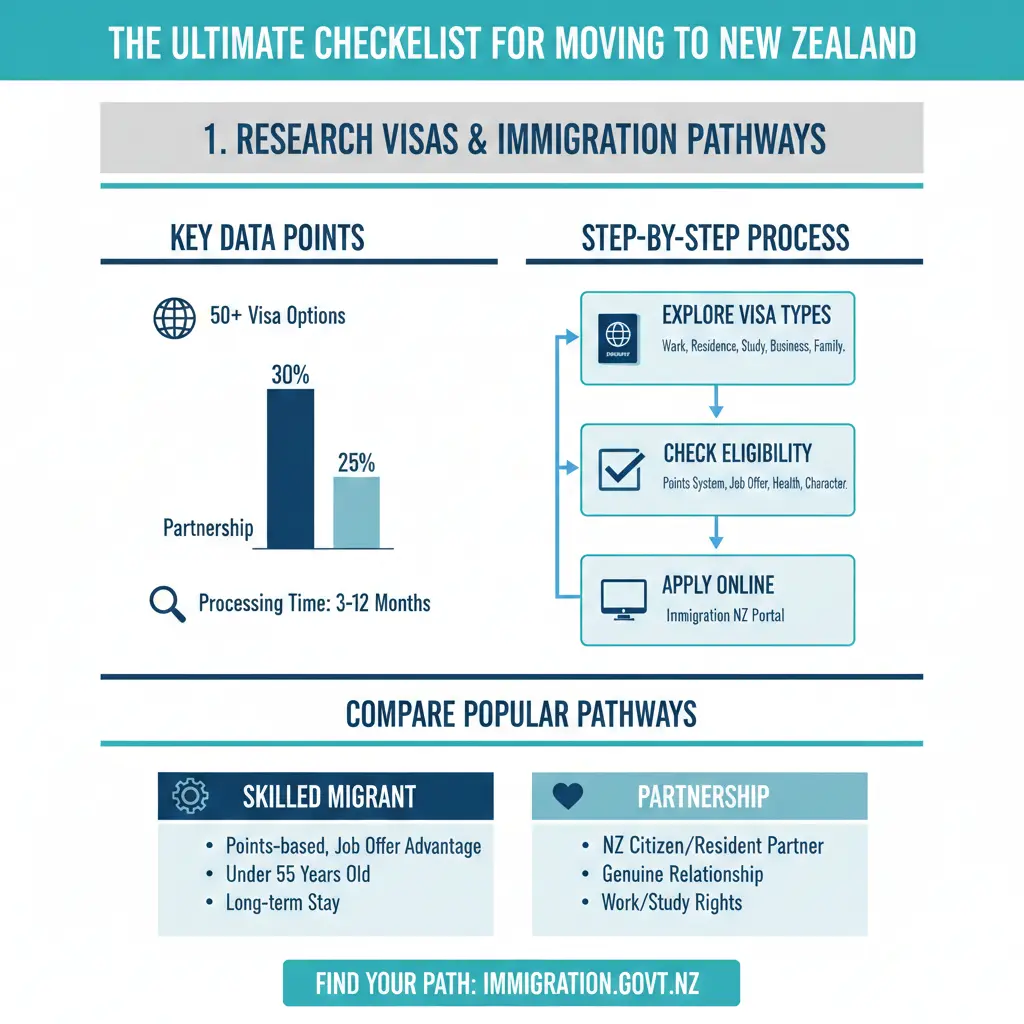
1. Research Visas and Immigration Pathways
Your journey starts with the right visa. New Zealand's immigration system prioritises skilled workers, with major changes in 2026 making it easier for those with local experience.The Ultimate Checklist for Moving to New Zealand begins here to ensure you're compliant from day one.
Key Visa Options for 2026
- Accredited Employer Work Visa (AEWV): Requires a job offer from an accredited employer. From March 9, 2026, the median wage rises to NZD $35.00 per hour, and 47 new occupations are added to the National Occupation List (NOL) for skill levels 1–3.
- Skilled Migrant Category Resident Visa: For long-term settlement. Submit an Expression of Interest (EOI) for NZD $590, then if invited, pay around NZD $4,890 for the main application. Must be 55 or younger and meet points for skills, experience, or job offer.
- New 2026 Pathways (from August 2026): Skilled Work Experience Pathway (5 years experience including 2 in NZ at 1.1x median wage, ANZSCO levels 1–3) and Trades/Technician Pathway (Level 4+ qualification, 4+ years experience including 18 months in NZ at median wage).
- Straight to Residence Visa: For those on the Green List with high-demand skills—live and work indefinitely, eligible for citizenship after 5 years.
- Working Holiday Visa: Ideal for under-30s from eligible countries; check 2026 opening dates as spots are capped.
Actionable Tips
- Visit Immigration New Zealand to use their visa finder tool.
- Check if your job is on the NOL or Green List—essential for AEWV and residency.
- Prepare for English requirements (IELTS 6.5 overall, no band below 6) unless waived (e.g., UK PhD).
2. Secure a Job Offer
A solid job offer is often the gateway to your visa. Employers must be accredited and prove they can't find a Kiwi for the role.
Job Hunting Strategies
- Target sectors like healthcare, IT, engineering, and trades—now with expanded NOL roles.
- Use sites like Seek.co.nz, Trade Me Jobs, and LinkedIn. Network via Kiwi expat groups on Facebook.
- Ensure the offer meets 2026 wages: minimum NZD $23.95/hour from April 1, or median $35/hour for most visas.
Documents Needed
| Document | Why It's Essential |
|---|---|
| Employment contract | Details salary (at least median wage), hours, and conditions. |
| Employer accreditation proof | Confirms legitimacy; INZ checks this rigorously in 2026. |
| Job description | Matches NOL/Green List for visa eligibility. |
Aim for roles paying 1.5x median ($52.50/hour) for longer stays or family support.
3. Gather Essential Documents
Start collecting these early—processing is faster in 2026, but incomplete apps delay everything.
Required Paperwork
- Passport: Valid for your stay duration.
- Police Clearance: From every country lived in for 5+ years, issued by passport office.
- Medical Certificates: INZ-approved panels check health standards.
- Qualifications: No assessments needed if exempted (e.g., UK study).
- Birth/ Marriage Certificates: For family applications.
- Bank Statements: Prove funds (e.g., for Working Holiday).
Pro Tip
Scan everything digitally and get certified copies. Budget NZD $500–$1,000 for fees and translations.
4. Handle Finances and Budgeting
Moving costs add up quickly. Plan for visas (NZD $590–$4,890), flights (NZD $1,500–$3,000 one-way), and initial setup.
Cost Breakdown (2026 Estimates)
| Item | Estimated Cost (NZD) |
|---|---|
| Visa Fees | 590–4,890 |
| Flights (family of 4) | 6,000–12,000 |
| Shipping Household Goods | 5,000–15,000 |
| First Month's Rent + Bond (Auckland 2-bed) | 5,000–7,000 |
| IRDs and Bank Setup | Free–200 |
Financial Steps
- Apply for an IRD number online via ird.govt.nz upon arrival.
- Open a KiwiBank or ANZ account—bring proof of address.
- Budget for KiwiSaver: Auto-enrol if employed; 3% minimum contribution.[Local knowledge]
- Check WINZ for settlement support if eligible.
5. Arrange Housing and Transport
Secure temporary housing first—Trade Me and Facebook Marketplace are Kiwi favourites.
Housing Tips
- Rent: Auckland averages NZD $600/week for a 2-bedroom; cheaper in Christchurch ($500).[Local stats]
- Expect 4 weeks' bond + 2 weeks' rent upfront.
- Tenancy Services (tenancy.govt.nz) protects your rights.
Getting Around
- Buy a used car via Trade Me (NZD $5,000–$10,000) or use AT buses in Auckland.
- Get NZ driver's licence within 12 months—convert overseas one first (nzta.govt.nz).
6. Health, Insurance, and Family Prep
Public health is free for residents, but cover gaps initially.
Key Actions
- Travel insurance until resident visa (ACC covers work injuries from day one).
- Enrol kids in school—free state schools, zones apply (education.govt.nz).
- GP signup: Find via health.govt.nz.
7. Settle In: Bank, Telecom, and Daily Life
Hit the ground running with these setups.
- Phone/Internet: Spark or Vodafone SIM (NZD $40/month unlimited).
- Utilities: Contact Orion (power), Christchurch City Council (rates).
- Superannuation: Join KiwiSaver for retirement.
Next Steps to Make Your Move Smooth
Tick off this checklist starting with your visa research today. Bookmark Immigration New Zealand, connect with Kiwi communities online, and track 2026 updates. You're not just moving—you're joining the whānau. Safe travels to Aotearoa!
Frequently Asked Questions
Sources & References
-
1
New Zealand Major Visa Changes 2026 - YouTube — www.youtube.com
-
2
Complete Guide to New Zealand Visa Process in 2026 — business.times-online.com
-
3
NZ Immigration Update 2026: 47 New NOL Roles & Median Wage — www.newzealandshores.com
- 4
-
5
Immigration New Zealand Outlines Major 2026 Policy Shifts — newlandchase.com
-
6
New Skilled Migrant Rules Take Effect August 2026 — www.nzimmigrationpartners.com
-
7
New occupations recognised under the National Occupation List — www.immigration.govt.nz
-
8
Skilled Migrant Category Resident Visa - Immigration New Zealand — immigration.govt.nz
-
9
Straight to Residence Visa - Immigration New Zealand — immigration.govt.nz
-
10
Complete Guide to the New Zealand Working Holiday Visa in 2026 — www.gooverseas.com
Related Articles

Best Cities to Live in NZ: A Honest Comparison for Newcomers
Choosing where to settle in New Zealand can feel overwhelming, especially if you're a newcomer eyeing the best cities to live in NZ. Whether you're moving for work, study, or a fresh start, this hones...

Shipping Your Life to NZ: Cost Comparisons of Major Moving Companies
Moving your entire life to New Zealand doesn't have to break the bank or your spirit. Whether you're a Kiwi returning home from overseas or someone chasing that fresh start in Aotearoa, comparing cost...

Setting Up Your NZ Life: Bank Accounts; IRD Numbers; and Utilities
Moving to a new place in New Zealand can feel overwhelming, but getting your bank account, IRD number, and utilities sorted early makes settling in smooth and stress-free. Whether you're a new migrant...

Budget for Relocating to NZ: Complete Cost Breakdown
Moving to New Zealand is an exciting opportunity, but it requires careful financial planning. Whether you're relocating from Australia, the UK, or further afield, understanding the true cost of settli...