Budget for Relocating to NZ: Complete Cost Breakdown

Moving to New Zealand is an exciting opportunity, but it requires careful financial planning. Whether you're relocating from Australia, the UK, or further afield, understanding the true cost of settli...
The Lifetimes NZ editorial team curates, fact-checks, and updates guides on personal finance, property, health, immigration, legal, business, and lifestyle topics relevant to Lifetimes NZ readers. Articles are produced with AI assistance and reviewed by the editorial team before publication.
Moving to New Zealand is an exciting opportunity, but it requires careful financial planning. Whether you're relocating from Australia, the UK, or further afield, understanding the true cost of settling here will help you prepare confidently and avoid financial stress in your first months. This guide breaks down every expense you'll face—from visa fees and flights to shipping your belongings and securing your first home.
Understanding the Total Cost of Moving to New Zealand
The total cost of relocating to New Zealand typically ranges from NZD $20,000 to $40,000+, depending on your household size, origin country, and lifestyle choices. This isn't just the price of a plane ticket—it includes visa processing, international shipping, temporary accommodation, bond deposits, and living expenses for your first few months while you settle in.
Most families aim to save between NZD $20,000 to $40,000+ before arriving, while singles or couples should target NZD $10,000 to $20,000. Your personal figure will depend on where you're moving from, which region of New Zealand you're targeting, and how much furniture and household goods you're bringing with you.
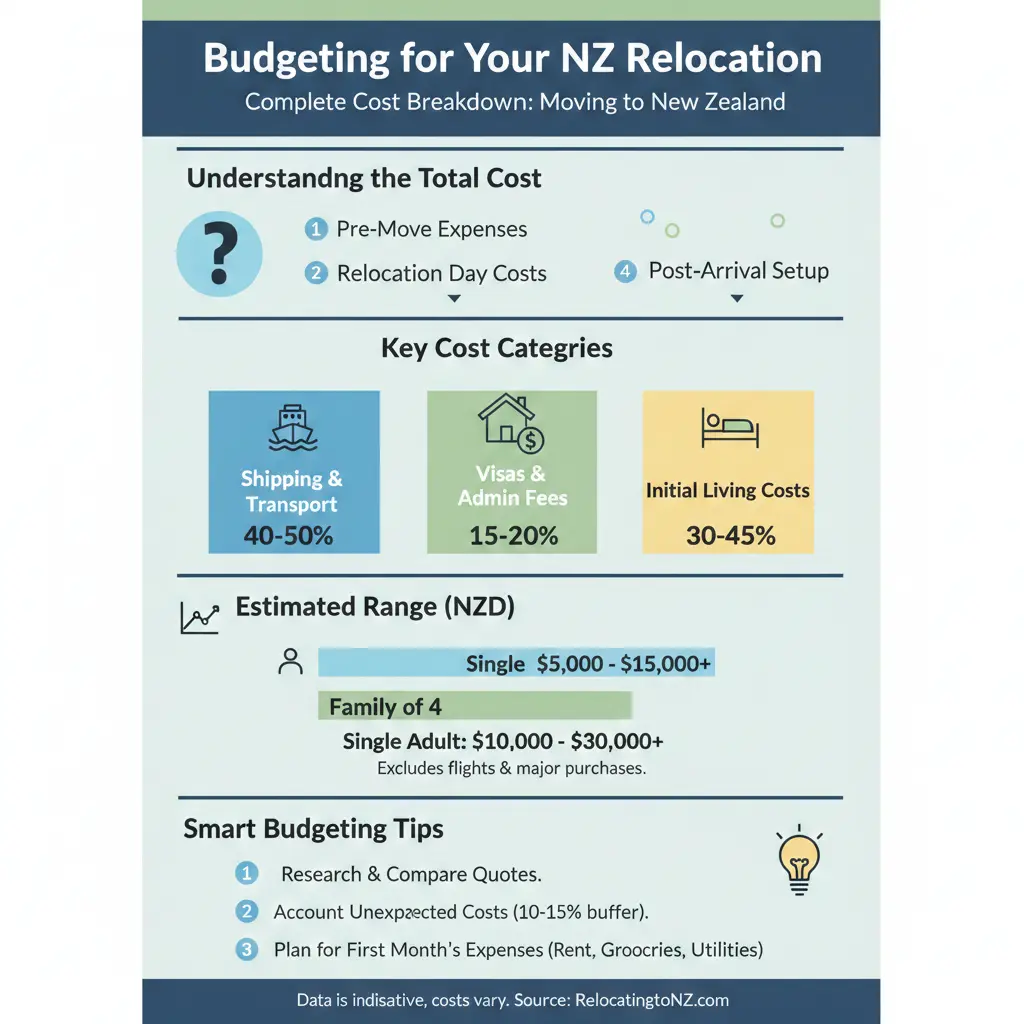
Breaking Down Your Moving Costs
Visa and Immigration Fees
Before you can move to New Zealand, you'll need the right visa. Visa costs vary significantly depending on your pathway—whether you're coming through the Green List for skilled workers, applying for a work visa, or pursuing a residence visa. These fees aren't small: visa processing can cost anywhere from a few hundred to several thousand dollars depending on your circumstances and whether you need to include dependants.
The IRD (Inland Revenue Department) will also require you to obtain an IRD number once you arrive, which is essential for tax purposes and opening a bank account. This is free but adds to your administrative costs in time and effort.
International Shipping Costs
Shipping your household goods is often one of the largest expenses. The cost depends entirely on the volume of items you're sending and your origin country.
From the United States:
- 1-bedroom apartment (10–15 m³): US$4,500–$5,000 by sea freight (6–8 weeks); US$9,000–$10,000 by air (1–2 weeks)
- 3-bedroom home (40–60 m³): US$8,000–$9,500 for a 20' container; US$11,000–$13,000 for a 40' container (6–8 weeks)
Shipping timelines and costs vary by origin:
- From Los Angeles to Auckland or Tauranga: approximately US$2,193 for a 20ft container (3–4 weeks)
- From New York to Auckland: approximately US$2,928 for a 20ft container (4–5 weeks)
If you're shipping from within New Zealand or Australia, costs will be significantly lower. Many migrants choose to sell most items before moving and purchase second-hand goods locally to reduce shipping costs.
Flights
International airfares to New Zealand vary widely depending on your origin. Budget between NZD $1,500 to $3,000+ per person for long-haul flights from the Northern Hemisphere. If you're bringing a family, multiply this by each member. Factor in additional baggage allowances if you're bringing essential items that didn't fit in your shipped container.
Initial Accommodation and Deposits
When you first arrive in New Zealand, you'll likely need temporary accommodation while you search for a permanent home. Many migrants book an Airbnb or hostel for their first 2–4 weeks.
Temporary accommodation costs:
- Room in a house share: NZD $700–$900 per month
- Private apartment: NZD $1,000–$1,700 per month
- Luxury residence: NZD $1,800–$2,000 per month
Once you've found permanent accommodation, you'll need to pay a bond equal to up to 4 weeks' rent, plus 1–2 weeks' rent in advance. In Auckland and Wellington, rental bonds can be substantial. For example, a three-bedroom apartment renting for NZD $2,450 per month would require a bond of approximately NZD $9,800.
Housing Costs by Region
New Zealand's housing costs vary dramatically by location. Auckland and Wellington have the highest prices, while regional towns offer significantly cheaper options.
Average rental prices:
- One-bedroom apartment: NZD $1,560 per month
- Three-bedroom apartment: NZD $2,450 per month
Average house purchase prices:
- Auckland: NZD $1,269,106 (significantly above the national average)
- National average: NZD $928,623
- Wellington and Christchurch: generally cheaper than Auckland
If you're planning to buy rather than rent, factor in deposit requirements (typically 10–20% of the property price), legal fees, and mortgage costs. Many migrants prefer renting initially to get a feel for different neighbourhoods before committing to a purchase.
Living Expenses in Your First 12 Months
Essential Monthly Costs
Beyond housing, you'll need to budget for utilities, food, transport, and other essentials. Here's what you can expect to spend monthly:
- Electricity: approximately NZD $140
- Water: approximately NZD $80
- Internet: NZD $45–$90
- Mobile phone: NZD $15–$35
- Groceries: NZD $140–$160 per week (NZD $560–$640 per month)
- Car (if you own one): approximately NZD $430 per month (including fuel, insurance, maintenance)
Total monthly expenses (excluding rent) typically range from NZD $1,810 and upwards, depending on your lifestyle.
Health Insurance
If you're arriving on a work visa, many employers require you to have private health insurance until you obtain permanent residency. Budget for this in your first year. Once you're a permanent resident, you'll have access to public healthcare through the New Zealand health system.
Cost of Living Comparison
New Zealand's cost of living is generally 30.8% cheaper than the United States overall. However, this varies by city and by expense category:
- Auckland vs. New York City: Auckland is 51.1% cheaper overall (including rent)
- Auckland vs. San Francisco: Auckland is 45% cheaper overall (including rent)
Outside Auckland and Wellington, your money stretches further. Regional towns like Christchurch, Hamilton, Tauranga, Dunedin, and Palmerston North offer more affordable lifestyles.
Recommended Savings Before You Move
To move to New Zealand comfortably without financial stress, aim to save:
- Singles/couples: NZD $10,000–$20,000
- Families: NZD $20,000–$40,000+
These figures cover moving costs, visa fees, flights, shipping, temporary accommodation, bond deposits, and living expenses for your first 3–6 months while you find permanent housing and settle into work.
Your personal target will depend on:
- Which region you're moving to (Auckland is more expensive than regional towns)
- How much furniture and household goods you're shipping
- Whether you have dependants
- Your job prospects and when you expect to start earning
- How much second-hand furniture you'll need to purchase locally
Money-Saving Tips for Your Move
- Sell before you ship: Many migrants find it cheaper to sell furniture and household goods in their home country and buy second-hand in New Zealand.
- Use shared shipping containers: If you're not filling a full container, shared container options cost NZD $150–$350 per cubic metre.
- Consider regional alternatives: Moving to Christchurch, Hamilton, or Tauranga instead of Auckland can save you thousands in housing costs.
- Book temporary accommodation in advance: Airbnb and hostels often offer discounted long-term rates if you book for a full month or longer.
- Plan your arrival timing: Moving during off-peak seasons (winter months) can mean cheaper flights and accommodation.
- Budget for a salary above NZD $60,000: To have a comfortable lifestyle in New Zealand, you'll need to earn at least this amount.
Setting Up Financially in New Zealand
Once you've arrived, you'll need to set up your financial life quickly:
- Open a bank account: You'll need an IRD number and proof of identity. Many banks allow you to open accounts online before you arrive.
- Register for tax: The IRD will assign you an IRD number, essential for employment and tax purposes.
- Arrange health insurance: If you're on a work visa, your employer may require private health insurance.
- Get a KiwiSaver account: If you're working in New Zealand, you'll be automatically enrolled in KiwiSaver (the national retirement savings scheme) unless you opt out.
Moving Forward: Your Next Steps
Moving to New Zealand is achievable with proper planning and realistic budgeting. Start by determining your visa pathway and associated costs, then calculate your shipping expenses based on what you're bringing. Set a savings target based on your household size and the region you're moving to—and remember that regional towns offer excellent value if you're flexible on location.
Give yourself at least 6–12 months to save and plan. Research visa requirements through immigration.govt.nz, get quotes from international moving companies, and connect with other migrants who've made the move. With solid financial preparation, your transition to life in Aotearoa can be smooth and stress-free.
Frequently Asked Questions
Sources & References
- 1
-
2
US Citizens Moving to New Zealand | American Investor Guide 2026 — nzgoldenvisa.com
-
3
How to Budget & Save for Your Move to New Zealand (2026 Guide) — themigratehub.com
-
4
Cost of Living in New Zealand - Moving To New Zealand in 2026 — www.thebrokebackpacker.com
-
5
How Much Does It Cost to Move to New Zealand from the US? — www.movehub.com
- 6
-
7
Immigration New Zealand — www.immigration.govt.nz
-
8
Green List Jobs, Work Visa & Costs Explained — www.youtube.com
Related Articles

Best Cities to Live in NZ: A Honest Comparison for Newcomers
Choosing where to settle in New Zealand can feel overwhelming, especially if you're a newcomer eyeing the best cities to live in NZ. Whether you're moving for work, study, or a fresh start, this hones...

Shipping Your Life to NZ: Cost Comparisons of Major Moving Companies
Moving your entire life to New Zealand doesn't have to break the bank or your spirit. Whether you're a Kiwi returning home from overseas or someone chasing that fresh start in Aotearoa, comparing cost...
The Ultimate Checklist for Moving to New Zealand
Moving to New Zealand is an exciting step towards a fresh start in one of the world's most beautiful countries. Whether you're chasing job opportunities, a laid-back lifestyle, or our stunning landsca...

Setting Up Your NZ Life: Bank Accounts; IRD Numbers; and Utilities
Moving to a new place in New Zealand can feel overwhelming, but getting your bank account, IRD number, and utilities sorted early makes settling in smooth and stress-free. Whether you're a new migrant...