Sustainable and Responsible Tourism in New Zealand: How to Travel Lightly
New Zealand is experiencing a tourism renaissance, with visitor numbers now reaching 90 percent of pre-pandemic levels[1]. But as our beloved country welcomes more travellers, the question becomes: ho...
Tom covers travel, lifestyle, and cost-of-living topics across New Zealand. He writes practical guides on transport, day trips, outdoor activities, and everyday life in Aotearoa.
New Zealand is experiencing a tourism renaissance, with visitor numbers now reaching 90 percent of pre-pandemic levels. But as our beloved country welcomes more travellers, the question becomes: how do we preserve what makes Aotearoa so special? Sustainable and responsible tourism isn't just a buzzword—it's a practical approach that lets you experience the best of New Zealand whilst protecting it for future generations. Whether you're a local showing visitors around or planning your own Kiwi adventure, understanding how to travel lightly is essential.
Why Sustainable Tourism Matters in Aotearoa
New Zealand's tourism industry is undergoing a significant transformation. The sustainable tourism market is projected to grow from NZD 20.7 million in 2025 to NZD 94.3 million by 2035, representing a compound annual growth rate of 16.3%. This growth reflects a fundamental shift in how both travellers and the tourism industry view their environmental and cultural responsibilities.
The Government recognises this shift. The Tourism 2050 Blueprint outlines a bold path for a thriving, sustainable tourism industry that enriches Aotearoa New Zealand—its people, places, and culture. It calls for concrete action to reduce carbon emissions, support biodiversity, strengthen tourism businesses, and embed Tiaki values across the sector. The Tiaki Promise—a commitment to care for New Zealand—has become central to how we approach tourism.
With international visitors now totalling 3.51 million in the December 2025 year, up 6 percent from the previous year, the pressure on our natural and cultural resources is real. But this growth also presents an opportunity to build a tourism industry that benefits both visitors and our communities.
Understanding Sustainable Tourism in New Zealand
What Does Sustainable Tourism Actually Mean?
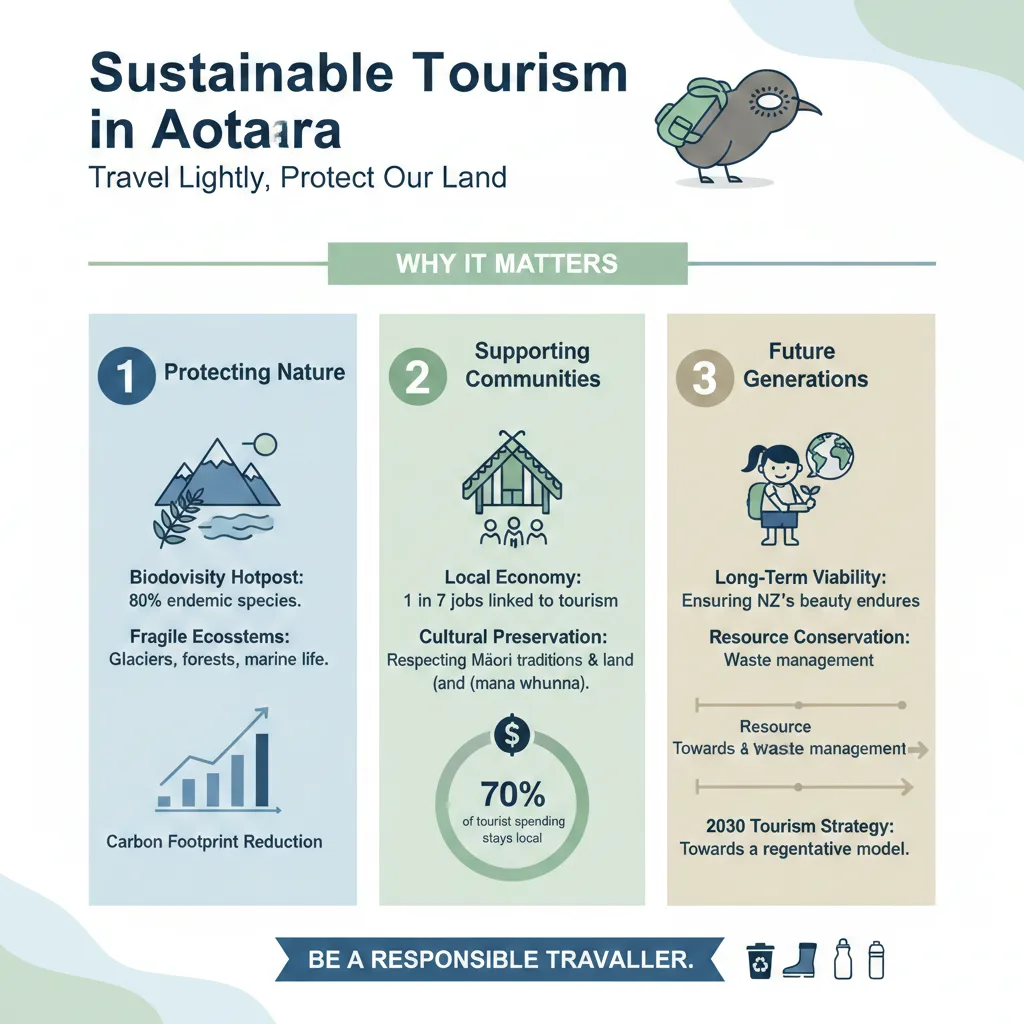
Sustainable tourism means travelling and operating tourism businesses in ways that respect the environment, support local communities, and preserve cultural heritage. It's about making choices that allow future generations to enjoy the same experiences we do today.
In New Zealand, this translates to several key principles:
- Reducing carbon footprints through low-impact mobility options
- Supporting local businesses and indigenous tourism partnerships
- Protecting native biodiversity and wildlife conservation
- Respecting Māori land-use practices and cultural sites
- Choosing eco-certified accommodations and experiences
The Government's Commitment to Sustainability
The New Zealand Government has launched numerous programs aimed at maintaining our reputation as a clean, green destination. The Tourism Growth Roadmap sets ambitious targets: doubling the value of tourism exports from NZD 9.9 billion in 2023 to NZD 19.8 billion by 2034. However, this growth is explicitly tied to sustainability objectives.
Tour operators are increasingly redesigning their offerings to reduce carbon footprints, promote local sourcing, and educate tourists on conservation. Investments in regenerative tourism infrastructure, eco-certifications, and low-impact mobility options are being prioritised across the industry.
Practical Ways to Travel Sustainably in New Zealand
Choose Low-Impact Accommodation
Look for lodges, hotels, and holiday rentals with eco-certifications. These establishments typically implement water conservation, renewable energy, waste reduction, and local sourcing practices. When booking, check for certifications like Qualmark Green or membership in sustainable tourism networks.
Support Local Communities
Stay in locally-owned accommodation, eat at restaurants sourcing local produce, and book experiences with local guides and operators. This ensures your tourism dollar directly benefits Kiwi communities rather than international corporations. Indigenous tourism partnerships are particularly valuable—they support Māori communities whilst providing authentic cultural experiences.
Respect Protected Areas and Wildlife
New Zealand's national parks and protected areas are treasures that require careful stewardship. Stick to marked tracks, take rubbish with you, and follow Department of Conservation guidelines. When engaging with wildlife, maintain appropriate distances and never feed animals. Guided activities that support wildlife conservation and native biodiversity are increasingly available—these directly contribute to conservation efforts.
Reduce Your Carbon Footprint
Consider your transport choices:
- Use public transport, hire a fuel-efficient vehicle, or explore car-sharing options
- Fly into fewer airports rather than hopping between regions
- Walk or cycle for local exploration
- Offset unavoidable emissions through verified carbon offset programmes
Embrace Off-Peak and Rural Experiences
Travellers are increasingly moving away from traditional tourist hotspots to explore off-the-beaten-path destinations. This shift helps distribute tourism benefits more evenly across the country and reduces pressure on popular sites. Consider visiting regions outside peak season or exploring lesser-known trails and experiences.
Connect with Nature Authentically
New Zealand offers unique opportunities for forest therapy, wilderness experiences, and carbon-positive activities. Rather than ticking off Instagram hotspots, invest time in deeper connections with our natural environment. This approach is more rewarding and less damaging than rushed, high-impact tourism.
The Tiaki Promise: Your Commitment to Aotearoa
The Tiaki Promise is more than a slogan—it's a practical commitment that guides sustainable tourism in New Zealand. The promise encourages visitors and locals alike to:
- Respect the land, culture, and traditions of Aotearoa
- Take responsibility for your actions
- Embrace experiences that benefit local communities
- Leave places as you'd like to find them
- Support businesses that operate sustainably
By embracing these principles, you're not just having a better experience—you're actively contributing to the preservation of what makes New Zealand extraordinary.
Emerging Trends in New Zealand Tourism
The tourism landscape is evolving rapidly. Consumer interest in forest therapy, carbon-positive activities, and wilderness lodges is contributing to sustained demand. The New Zealand Electronic Travel Authority (NZeTA) has made travel planning easier, with 85 percent of surveyed Chinese travellers and 82 percent of surveyed Pacific Island Forum travellers indicating it was a significant factor in choosing New Zealand.
Tour operators are shifting toward guided activities that support wildlife conservation and traditional Māori land-use practices. This represents a genuine commitment to sustainable tourism rather than superficial greenwashing.
Your Role in New Zealand's Tourism Future
As visitor numbers continue recovering toward pre-pandemic levels, every choice matters. Whether you're a Kiwi hosting international guests or planning your own domestic adventure, embracing sustainable and responsible tourism practices helps preserve the landscapes, cultures, and communities that define Aotearoa.
Start small: choose one sustainable practice for your next trip. Support a local operator, stay off-peak, or commit to leaving no trace. These individual choices, multiplied across thousands of visitors, create genuine positive impact.
The Tourism 2050 Blueprint and Government initiatives show institutional commitment to sustainable tourism. Now it's time for travellers to match that commitment. By travelling lightly, you're not sacrificing experiences—you're enhancing them, knowing you're contributing to a thriving, sustainable tourism industry that enriches Aotearoa for generations to come.
Frequently Asked Questions
Sources & References
-
1
New Zealand Sees Record December Visitor Arrivals with Strong Growth from China and Australia — www.travelandtourworld.com
-
2
New Zealand Sustainable Tourism Market — www.futuremarketinsights.com
-
3
Research and Reports | Sustainable Tourism — www.sustainabletourism.nz
-
4
Tourism - Stats NZ: New Zealand — www.stats.govt.nz
-
5
Tourism Growth Roadmap — www.mbie.govt.nz
-
6
Travel & Tourism - New Zealand | Statista Market Forecast — www.statista.com
Related Articles
New Zealand Culture 101 for Visitors: Maori Roots, Kiwi Slang and Modern Life
Whether you're showing a mate from overseas around or just keen to brush up on what makes our Kiwi culture tick, diving into New Zealand's unique blend of Māori roots, cheeky slang, and modern vibes i...

Maori Cultural Experiences in New Zealand: Hāngi, Haka, Marae Visits and Protocol
Imagine the rhythmic stomp of feet, the fierce gaze of warriors performing the haka, and the earthy aroma of a hāngi feast steaming from the ground—that's the heart of Māori cultural experiences right...

What to Eat in New Zealand: Iconic Dishes, Local Snacks and Coffee Culture
New Zealand's food culture is a delicious blend of indigenous Māori heritage, Pacific influences, and contemporary culinary innovation. Whether you're a Kiwi exploring your own backyard or planning yo...

How Tourism Supports Local Communities in New Zealand (and How Visitors Can Help)
Imagine strolling through a bustling Queenstown market, where local artisans sell handmade crafts and farmers offer fresh kai straight from their whenua. That's the magic of tourism in Aotearoa—it's n...