Bottom Freezer Fridges: Ergonomic Design for Modern NZ Homes
If you're shopping for a new fridge, you've probably noticed that bottom freezer models are becoming increasingly popular in Kiwi kitchens. There's a good reason for this trend—they're designed with e...
Daniel covers technology, cybersecurity, and small business topics for Lifetimes NZ. He breaks down tech news and digital trends for a general audience.
If you're shopping for a new fridge, you've probably noticed that bottom freezer models are becoming increasingly popular in Kiwi kitchens. There's a good reason for this trend—they're designed with ergonomics in mind, making everyday cooking and food storage more comfortable and convenient. Whether you're dealing with a small Auckland apartment or a sprawling Waikato home, a bottom freezer fridge could be the practical solution you've been looking for.
What Makes Bottom Freezer Fridges Different?
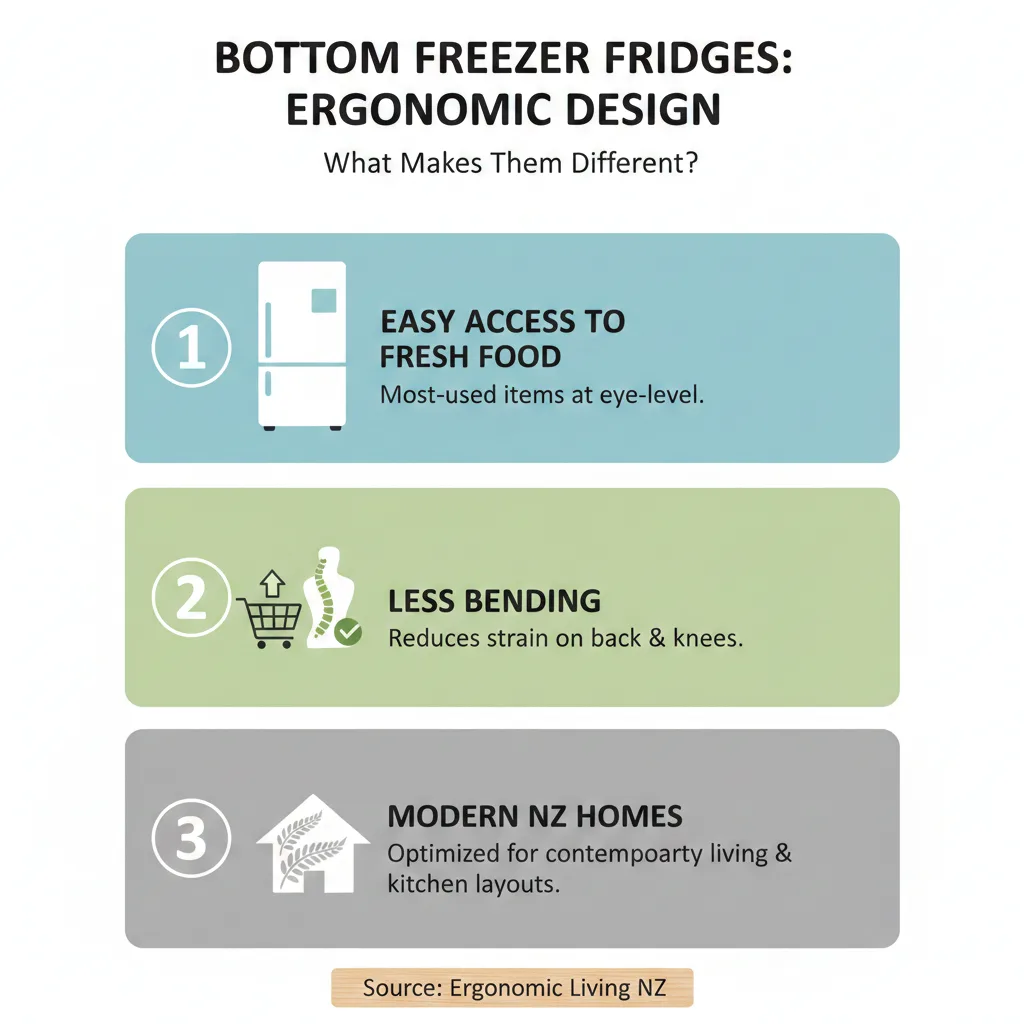
Unlike traditional top freezer models, bottom freezer refrigerators place the fresh food compartment at eye level and tuck the freezer drawer underneath. This simple design change has a surprisingly big impact on how you interact with your fridge every single day. The most frequently used items—your produce, dairy, drinks, and leftovers—are positioned right where you can easily see and reach them.
The freezer compartment typically features pull-out drawers or sliding baskets, making it much easier to organise and locate frozen goods without having to dig through a cluttered mess. This design approach prioritises accessibility and convenience, which is particularly valuable for busy families juggling work, kids, and meal planning.
The Ergonomic Advantages for Your Home
Reduced Bending and Back Strain
One of the most significant benefits of bottom freezer fridges is how they reduce physical strain. By positioning the fresh food section at eye level, you eliminate the need to constantly bend down or reach overhead. This ergonomic design is especially beneficial if you have mobility issues, back problems, or simply want to make your kitchen more comfortable as you age.
For Kiwi families with elderly relatives or members with accessibility needs, this design consideration can make a real difference in daily living. You'll spend less time searching for items and more time enjoying your meals.
Better Organisation and Visibility
The drawer-style freezer compartment makes it much easier to see and organise your frozen goods. Rather than stacking items haphazardly in a traditional top freezer, you can categorise your frozen foods—whether that's pizzas, vegetables, or prepared meals—in a way that makes sense for your household.
This improved organisation also helps reduce food waste. When everything is visible and accessible, you're less likely to forget about items lurking at the back of the freezer. For households trying to be more sustainable and reduce waste, this is a genuine advantage.
Energy Efficiency and Running Costs
There's a common misconception that bottom freezer fridges are less efficient than top freezer models. In reality, the physics works in their favour: since heat naturally rises, the compressor doesn't need to work as hard to keep a bottom-mounted freezer cold. This can lead to lower energy consumption and reduced electricity bills over time.
For Kiwi households watching their power costs, this is worth considering. Many modern bottom freezer models also feature energy-saving modes and inverter compressors, which further help reduce your electricity consumption. When you're looking at your power bill each quarter, these efficiency gains add up.
Storage Capacity and Kitchen Fit
Bottom freezer fridges come in a range of widths to suit different kitchen layouts. Many models start at around 24 inches wide and go up to 33 inches, making them suitable for both compact flats and larger family homes. This flexibility means you can find a model that fits your space without compromising on functionality.
If you use your fresh food compartment far more than your freezer—which is true for most people—a bottom freezer model gives you the advantage of maximising that easily accessible space. You'll have plenty of room for your weekly groceries without the wasted vertical space that comes with oversized top freezers.
Cost Considerations
Bottom freezer fridges typically cost more than traditional top freezer models, but many still fall under or around the $1,000 mark. While they're usually a bit pricier than basic top freezer options, they're often more budget-friendly than French-door refrigerators and can cost less to run.
When you factor in the energy savings and improved durability of many bottom freezer designs, the initial premium investment often pays for itself over time. Reliability scores for many bottom freezer models tend to be higher than more complex multi-door designs, which means fewer repair costs down the track.
Practical Features to Look For
When shopping for a bottom freezer fridge, consider these helpful features:
- Humidity-controlled crisper drawers: These help extend the life of fresh produce and reduce waste—especially useful if you're buying fresh from your local farmers market
- Adjustable shelves: Flexibility to accommodate different sized items and containers
- Pull-out freezer drawers: Make accessing frozen items much easier than traditional compartments
- Reversible doors: Where available, these provide flexibility when working around existing walls or cabinetry in your kitchen
- Reliable temperature controls: Clear, accurate controls—mechanical or digital—support food safety and help you verify that products stay within safe ranges
Is a Bottom Freezer Fridge Right for You?
A bottom freezer model is an excellent choice if:
- You access your fresh food compartment much more frequently than your freezer
- You want to reduce bending and reaching in your daily routine
- You're concerned about energy costs and want a more efficient option
- You value better organisation and reduced food waste
- You have limited kitchen space and need a compact, efficient design
- You're looking for a good balance between cost, functionality, and durability
FAQ: Bottom Freezer Fridges
Are bottom freezer fridges harder to service and repair?
Not necessarily. Modern bottom freezer designs are built for durability. While they have more moving parts than basic top freezer models, they're generally reliable. Top freezers benefit from simpler mechanics, but bottom freezers offer better overall value and reliability for their price point.
Do bottom freezer fridges work well for families with young children?
Bottom freezer models are excellent for families with older children and adults, as eye-level access makes finding ingredients easier. However, if you have very young children who need to access items independently, you might want to consider your specific family needs and kitchen setup.
How much space do bottom freezer fridges take up?
Bottom freezer fridges typically start at about 24 inches wide and go up to around 33 inches, making them viable in a wide range of home kitchen layouts. Before purchasing, measure your kitchen space and check the delivery path through doorways and hallways to ensure the unit will fit.
Will a bottom freezer fridge save me money on power bills?
Yes, potentially. Since the compressor doesn't need to work as hard to keep a bottom-mounted freezer cold, you can see lower energy consumption. Combined with energy-saving modes on many modern models, this can lead to noticeable savings on your quarterly power bill.
Can I find a bottom freezer fridge that fits my budget?
Many bottom freezer models fall under or around the $1,000 mark, making them accessible for most Kiwi households. While they're pricier than basic top freezer models, they offer better value than French-door alternatives and tend to have higher reliability scores.
What's the difference in storage between bottom and top freezer models?
Bottom freezer fridges often offer better frozen food organisation in sliding drawers, while top freezers maximise fridge space. Choose based on your storage habits—if you use fresh food more than frozen items, a bottom freezer model is ideal.
Making Your Decision
Choosing the right fridge is a significant decision for any Kiwi household. A bottom freezer model offers a smart balance of ergonomic design, energy efficiency, and practical organisation. Whether you're furnishing a new home, replacing an aging appliance, or simply upgrading to something more comfortable and efficient, a bottom freezer fridge is worth serious consideration.
Take time to measure your kitchen space, consider your family's needs, and compare models from reputable retailers. When you find the right fit, you'll enjoy years of easier, more comfortable food storage and preparation.
Related Articles

iPad Pro: Premium Tablet for Creative Professionals
If you're a creative professional in New Zealand looking for a tablet that can handle demanding work, the iPad Pro with the M5 chip might be exactly what you need. Whether you're editing videos, desig...
Handheld Vacuum Cleaners: Quick Cleanup Solutions
Handheld vacuum cleaners have become essential tools for Kiwi households, offering quick cleanup solutions without the hassle of dragging out a full-size vacuum. Whether you're dealing with crumbs on...

French Door Refrigerators in NZ: Luxury Cooling with Style
If you're looking to upgrade your kitchen with a stylish and spacious refrigerator, a French door fridge might be exactly what you need. These elegant appliances have become increasingly popular in Ne...
Chest Freezers in New Zealand: Bulk Storage for Rural Properties
If you're living on a rural property in New Zealand, a chest freezer isn't just a convenience—it's a practical investment for storing homekill, bulk meat purchases, garden produce, and fish. Whether y...