Meal Planning NZ: Saving Money on Weekly Food

With grocery prices jumping again from 15 February 2026, Kiwis are feeling the pinch like never before—pensioners alone face a 260 NZD monthly hit to their food budgets, pushing many to rethink every...
Sarah covers personal finance, tax, and KiwiSaver topics for Lifetimes NZ. She focuses on making money management straightforward and practical for everyday Kiwis.
With grocery prices jumping again from 15 February 2026, Kiwis are feeling the pinch like never before—pensioners alone face a 260 NZD monthly hit to their food budgets, pushing many to rethink every meal. Meal planning isn't just a nice-to-have anymore; it's a practical strategy to stretch your dollars, maintain nutrition, and dodge the rising costs that have seen weekly shops balloon from 160 NZD to 200 NZD for a single person. In this guide, we'll walk you through actionable meal planning tips tailored for New Zealand households, helping you save on weekly food while keeping things tasty and healthy.
Why Meal Planning Matters More Than Ever in 2026
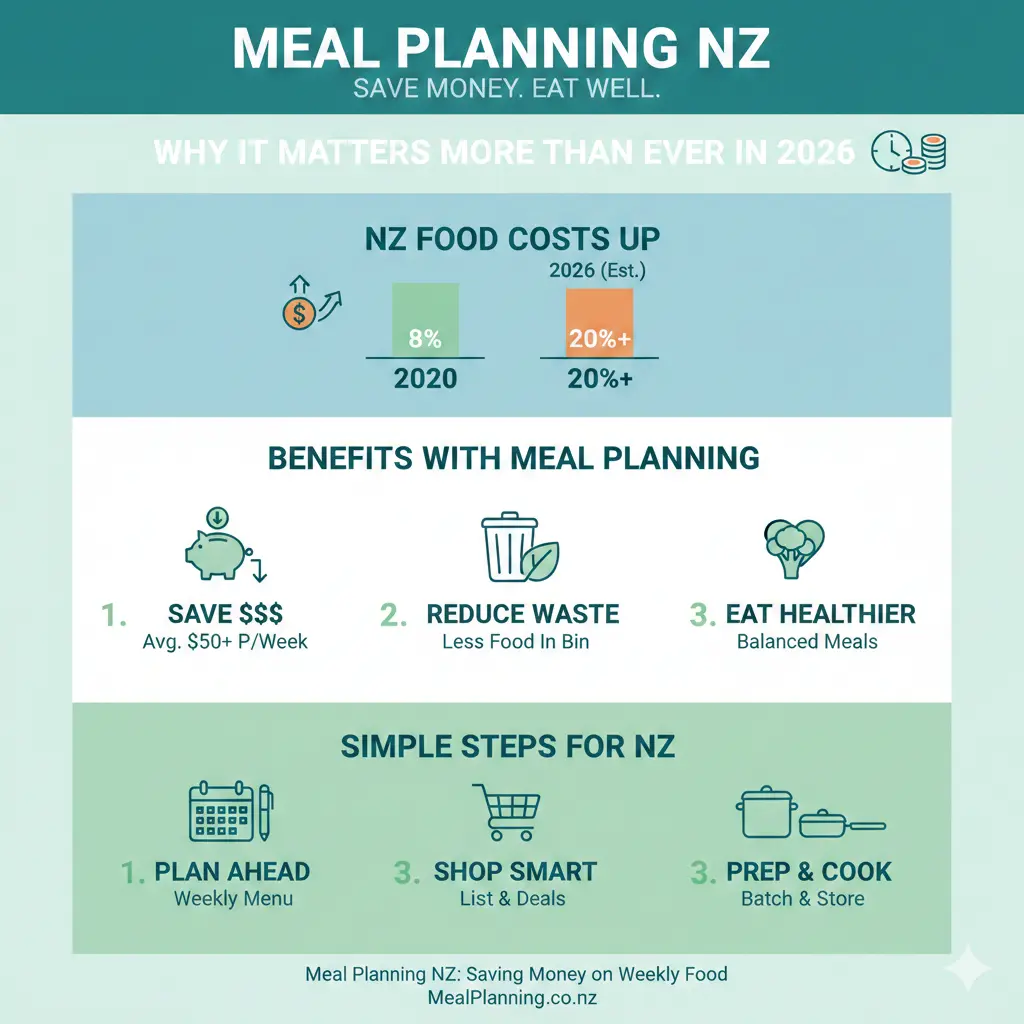
Food inflation has hit hard across Aotearoa. For singles on NZ Superannuation, weekly after-tax payments sit at around 538 NZD, but a 40 NZD weekly grocery hike eats up nearly eight percent of that income. Families aren't spared either—a household of four might now spend over 275 NZD weekly on groceries, up significantly from pre-2026 levels, with some reports noting annual food costs pushing 2,900 NZD beyond what Super covers for seniors. Meal planning counters this by minimising waste, curbing impulse buys, and focusing on affordable, seasonal Kiwi staples.
Budgeting services highlight how these rises compound: fresh produce up from 35 to 44 NZD weekly, meat from 40 to 52 NZD, and so on, totalling an extra 2,080 NZD annually for many. By planning ahead, you reclaim control, potentially saving hundreds monthly—vital when WINZ benefits or KiwiSaver contributions are already stretched thin.
The Real Cost of Not Planning
- Impulse purchases at Countdown or New World add 20-30% to bills.
- Food waste: Kiwis throw out enough to fill 50,000 tonnes yearly from supermarkets alone.
- Nutritional shortcuts: Skipping veggies or protein leads to health issues down the track, hitting ACC claims or doctor visits.
Getting Started with Meal Planning NZ-Style
Start simple: dedicate 30 minutes weekly to plan. Check your pantry, fridge, and freezer first to use what you have. Apps like Sorted.org.nz from the Ministry of Social Development offer free meal planners with Kiwi recipes under 5 NZD per serve. (Note: Sorted is a govt-backed tool for budget meals—perfect for WINZ clients.)
Step-by-Step Weekly Meal Plan Template
- Assess inventory: List leftovers, staples like rice, pasta, and tinned beans.
- Set your budget: Aim for 100-150 NZD weekly per person, adjusting for family size. Families of four: target 250-300 NZD max.
- Choose themes: Meat-free Mondays, batch-cook Wednesdays.
- Shop smart: Make a list, stick to it.
- Prep ahead: Chop veggies Sunday night.
This system cuts waste by 30% and saves 50-100 NZD weekly, per budgeting experts.
Seasonal Shopping: Kiwi Produce on a Budget
New Zealand's seasons dictate the best deals—buy feijoas in autumn, not mangoes at 10 NZD each. Summer strawberries or winter kale are cheaper and fresher from local markets like Auckland's La Cigale or Otago Farmers Market. Check Pak'nSave or Countdown specials apps for seasonal drops.
Monthly Seasonal Guide for 2026
| Season | Cheap Staples (NZD/kg est.) | Meal Ideas |
|---|---|---|
| Summer (Dec-Feb) | Tomatoes (3), Zucchini (2.50), Berries (5) | Caprese salad, veggie stir-fry |
| Autumn (Mar-May) | Apples (2), Kumara (2), Feijoas (free foraging!) | Roast kumara soup, apple crumble |
| Winter (Jun-Aug) | Cabbage (1.50), Carrots (1), Silverbeet (2) | Colcannon, carrot ginger soup |
| Spring (Sep-Nov) | Lettuce (2), Broccoli (3), Rhubarb (2.50) | Stir-fried greens, rhubarb muffins |
Pro tip: Grow your own herbs or spuds in a small garden—saves 20 NZD monthly and boosts mental health.
Budget-Friendly Recipes for Kiwi Families
Focus on versatile proteins like mince (under 10 NZD/500g on special), eggs (3 NZD/dozen), and lentils (2 NZD/tin). Here's a sample weekly plan for a family of four, clocking in at 250 NZD total.
Sample 7-Day Meal Plan (Under 250 NZD)
- Monday (Meat-free): Lentil curry with rice (ingredients: 5 NZD/serve) – batch for leftovers.
- Tuesday: Mince bolognese (pasta, tinned toms, mince: 6 NZD/serve).
- Wednesday: Egg fried rice with frozen veg (4 NZD/serve).
- Thursday: Kumara and black bean tacos (5 NZD/serve).
- Friday: Fish pie from frozen hoki (8 NZD/serve, sustainable NZ catch).
- Saturday: Homemade pizza on flatbread bases (6 NZD/serve).
- Sunday: Roast chicken (whole bird 15 NZD, stretches to 4 meals).
Snacks: Yoghurt parfaits, popcorn, fruit. Breakfasts: Porridge or toast. Total savings: 50 NZD vs average spend.
Smart Shopping Strategies in New Zealand Supermarkets
Compare via apps like FoodMe for lowest prices across stores, including delivery. Join loyalty programmes: Onecard (Countdown), Clubcard (New World), AA Smartfuel for petrol discounts too. Hunt "Reduce to Clear" sections for 70% off near-expiry items, or use Foodprint app for surplus food at fractions of cost—available in major cities.
Top Saving Hacks
- Shop evenings for markdowns.
- Avoid aisles with booze, snacks—online lists prevent impulse buys.
- Buy bulk dry goods (rice 20kg bags at Bin Inn).
- Switch to homebrand: Saves 25% on average.
- Community boards for bulk buys or swaps via Neighbourly app.
For low-income Kiwis, check WINZ for food grants or SuperGold Card discounts at supermarkets.
Batch Cooking and Freezer Meals: Stretch Your Dollars
Invest in reusable containers (20 NZD set from Kmart). Cook double portions: chilli con carne freezes for months, reheats perfectly. A 10kg chest freezer (under 300 NZD) pays for itself in a year via waste reduction. Families report halving weekly shops this way.
Freezer Staples List
- Minced meat sauces.
- Stews and curries.
- Bread dough (for fresh loaves).
- Chopped veggies.
- Soup portions.
Reducing Food Waste: A Kiwi Imperative
New Zealand discards 1.7 million tonnes of food yearly—don't contribute. Use apps like Too Good To Go for surplus bakery items. Plan portions accurately: weigh mince before cooking. Compost scraps for garden fertiliser.
Special Considerations for Pensioners and Families
Seniors on 538 NZD weekly: Prioritise nutrition to avoid health costs—stick to eggs, oats, seasonal veg despite rises. Families: Involve kids in planning for buy-in. Track via Excel or MoneyHub templates. If on benefits, Sorted's low-cost meals align with StudyLink or WINZ budgets.
Next Steps to Save on Your Weekly Shop
Grab a notebook, download Sorted.org.nz, and plan this week's meals today. Track spending for one month—you'll see savings stack up, freeing cash for KiwiSaver or emergencies. Remember, small changes like seasonal buys and batching add up to real financial breathing room in 2026's tough economy.
Disclaimer: This guide offers general advice. Consult a financial adviser or visit ird.govt.nz for personalised budgeting, especially re KiwiSaver or WINZ entitlements.
Frequently Asked Questions
Sources & References
-
1
Food Bills Jump Again as Pensioners Lose $260 a Month — dirtdevildetailing.co.nz
-
2
How to Save Money on Food - MoneyHub NZ — www.moneyhub.co.nz
-
3
Why Groceries Are Breaking Retirement Budgets in 2026 - ArtBeat NZ — www.artbeat.org.nz
- 4
-
5
Budget 2026 for NZ family of 4- what we spend in a year - YouTube — www.youtube.com
-
6
Why Groceries Are Breaking Retirement Budgets in 2026 — dirtdevildetailing.co.nz
-
7
NZ Families Say Monthly Costs Have Doubled Since Last Year in 2026 — www.diltakeaways.co.nz
-
8
NZ Families Say Monthly Costs Have Doubled Since Last Year — www.outdoorshadesolutions.co.nz
-
9
Sorted Meal Planner and Budget Tools — sorted.org.nz
Related Articles

Industry Bodies and Professional Associations NZ
Whether you're launching a business, advancing your career, or navigating financial regulations, industry bodies and professional associations in New Zealand offer invaluable support. These organisati...

Emergency Benefit NZ: When You Have No Other Options
When you're struggling financially and don't qualify for other benefits, the Emergency Benefit might be your lifeline. It's a discretionary payment designed for Kiwis in genuine hardship who've exhaus...

Unpaid Internships NZ: Are They Legal?
Unpaid internships are a common pathway for students and graduates to gain work experience in New Zealand, but there's often confusion about whether they're actually legal. The short answer is: unpaid...

Estate Administration NZ: Managing Someone's Affairs After Death
Losing a loved one is one of life's toughest challenges, and stepping in to manage their estate can feel overwhelming. In New Zealand, estate administration—the process of handling someone's affairs a...