Budget Smartphones Under $500: Best Value Options

Finding the right smartphone doesn't mean breaking the bank. Whether you're upgrading your current device or buying your first smartphone, there are excellent options available for under $500 NZD that...
Daniel covers technology, cybersecurity, and small business topics for Lifetimes NZ. He breaks down tech news and digital trends for a general audience.
Finding the right smartphone doesn't mean breaking the bank. Whether you're upgrading your current device or buying your first smartphone, there are excellent options available for under $500 NZD that deliver impressive features, solid performance, and reliable cameras. In 2026, the budget smartphone market has matured significantly, offering real value that rivals more expensive flagships in many areas.
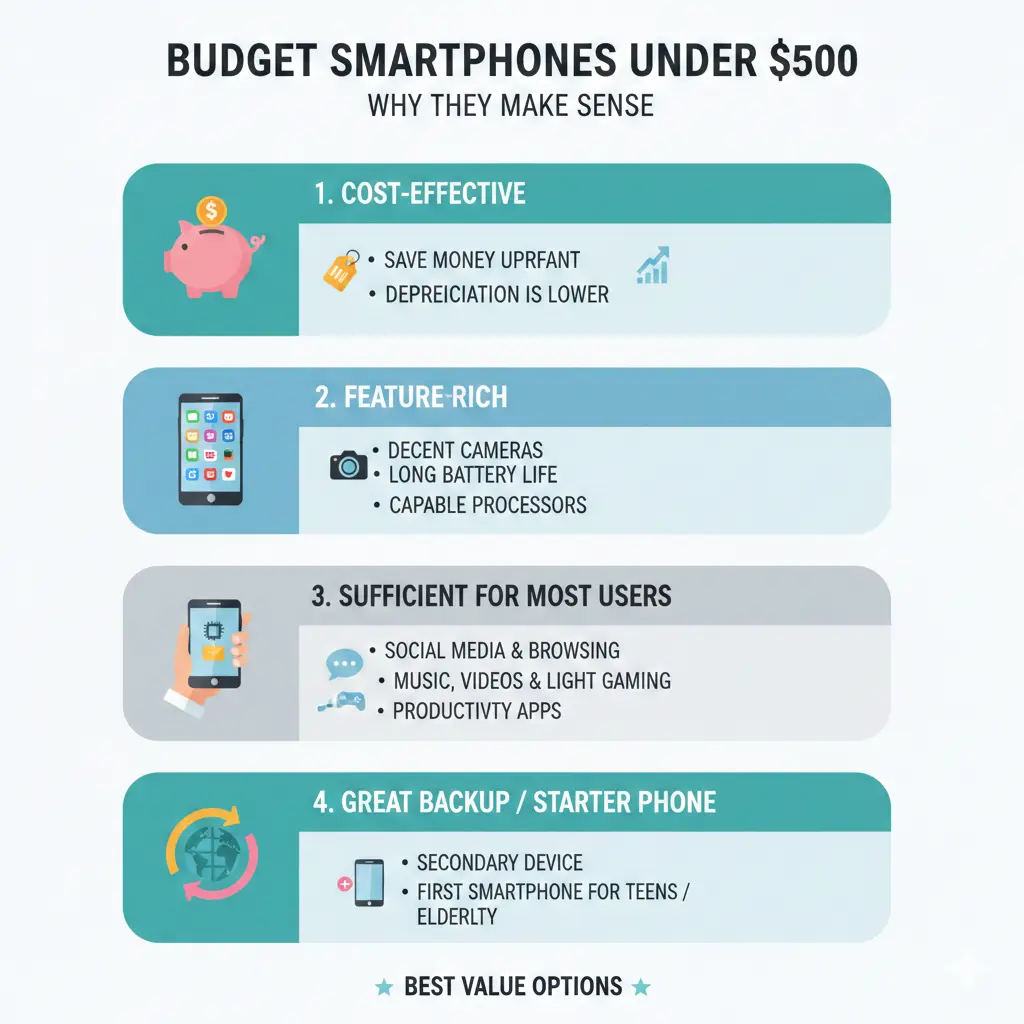
Why Budget Smartphones Under $500 Make Sense
The smartphone market has become incredibly competitive, and manufacturers are now packing flagship features into mid-range devices. You're no longer sacrificing essential functionality when you choose a budget option. Most phones under $500 now feature fast processors, quality AMOLED displays, capable camera systems, and all-day battery life.
For Kiwis, this means you can get a reliable device that handles everyday tasks—messaging, browsing, social media, and work emails—without the premium price tag. If you're looking to minimise your spending while still getting a capable smartphone, the budget segment is worth serious consideration.
Top Budget Smartphones Under $500 in 2026
Google Pixel 8a – Best for AI and Photography
The Google Pixel 8a stands out as the best cheap Android option available. It gives you access to Google's powerful Pixel AI features and exceptional computational photography, all for less than $500. The Pixel range has built a strong reputation for delivering outstanding camera performance, and the 8a doesn't disappoint. If photography is important to you, this is a standout choice that punches well above its price point.
Samsung Galaxy A55 – Best Display Quality
The Samsung Galaxy A55 focuses on display quality and offers a beautiful Super AMOLED screen. Samsung's A-series phones are consistently rated as excellent value in the budget segment, particularly if you want a large screen. The A55 delivers solid performance for everyday use and gaming, making it a versatile choice for most users.
OnePlus 13R – Best Battery Life and Value
The OnePlus 13R is an excellent option with incredible battery life and clean software. At a competitive price point, especially if you have a phone to trade in, it undercuts core flagship phones while delivering impressive performance and a premium design. The battery longevity makes it particularly appealing for users who want their phone to last all day and beyond.
Motorola Moto G Play 2026 – Best Entry-Level Option
For those seeking maximum value at the absolute lowest price, the Moto G Play 2026 is priced aggressively at just $180 NZD equivalent. It redefines what's possible in the entry-level segment, with a massive 5,200mAh battery that prioritises longevity and functional performance. While it's not the most powerful phone on this list, it's an excellent choice if budget is your primary concern.
Xiaomi Redmi Note 14 Pro – Best for Value Seekers
The Xiaomi Redmi Note 14 Pro offers impressive specs at an entry price of around $389 AUD (approximately $450 NZD). It features a 50MP main camera, 120Hz AMOLED display, and solid performance with the Snapdragon 8 Gen 1 processor. This phone delivers strong value for users who want more features without spending significantly more.
Key Features to Look for in Budget Smartphones
Display Technology
Look for AMOLED or Super AMOLED displays rather than LCD screens. AMOLED panels offer better contrast, deeper blacks, and more vibrant colours. A 120Hz refresh rate is increasingly common in the budget segment and makes scrolling feel smoother and more responsive.
Processor Performance
Modern mid-range processors like the Snapdragon 8 Gen 1, Google Tensor G3, and MediaTek Dimensity chips handle everyday tasks and gaming admirably. You don't need the absolute latest flagship processor for excellent real-world performance.
Battery Capacity
Aim for at least 4,500mAh, though 5,000mAh or higher is becoming standard. Larger batteries provide all-day usage even with heavy use, and some budget phones now offer multiple days of battery life with moderate usage.
Camera System
A 50MP main camera is now standard in the budget segment. However, megapixels aren't everything—software processing, sensor quality, and computational photography matter equally. Google Pixel phones, for example, deliver exceptional photos despite having lower megapixel counts, thanks to superior processing.
Software Support
Consider how long the manufacturer will provide software updates. Some brands like Samsung and Nokia offer three or more years of OS support on budget phones, extending the device's lifespan and security.
Where to Buy Budget Smartphones in New Zealand
Several retailers offer budget smartphones across New Zealand:
- JB Hi-Fi NZ – Wide range of Android phones with competitive pricing
- Noel Leeming – Local chain with good selection and warranty options
- The Warehouse – Often competitive pricing on popular models
- Online retailers – Amazon NZ and international sites may offer additional options
Always check warranty coverage when purchasing. In New Zealand, the Consumer Guarantees Act provides protections on goods purchased, typically covering 12 months for defects.
Budget Smartphone Tips for Kiwis
- Trade-in programmes – Many retailers offer trade-in value for your old phone, reducing the effective cost of your new device
- Carrier bundles – Telecom, Vodafone, and 2degrees often bundle phones with plans at competitive rates
- Timing your purchase – New models release throughout the year; waiting for older models to drop in price can yield better value
- Consider refurbished options – Certified refurbished phones from reputable sellers offer significant savings with warranty protection
- Check specs carefully – Ensure the phone supports the 4G/5G bands used by your preferred network provider in New Zealand
Making Your Choice
The best budget smartphone for you depends on your priorities. If photography matters, choose the Google Pixel 8a. If you want the best display, go with the Samsung Galaxy A55. If battery life is paramount, the OnePlus 13R excels. For absolute value, the Motorola Moto G Play 2026 is hard to beat.
Before purchasing, identify what matters most to you—camera quality, display, battery life, or performance—and choose accordingly. Test the phone in-store if possible, check return policies, and verify warranty coverage. With the right choice, you'll have a capable device that serves you well for years to come without the premium price tag.
Frequently Asked Questions
Sources & References
-
1
The best cheap phones 2025: bargain picks from Apple — TechRadar — www.techradar.com
- 2
-
3
9 Best Mobile Phones Under $500 AUD in 2026 — Phonebot — www.phonebot.com.au
-
4
Best Budget Phone 2026: Top 10 Cheap Phones Tested — TechAdvisor — www.techadvisor.com
-
5
Android Phones | Smartphones & Mobile Devices — JB Hi-Fi NZ — www.jbhifi.co.nz
Related Articles

iPad Pro: Premium Tablet for Creative Professionals
If you're a creative professional in New Zealand looking for a tablet that can handle demanding work, the iPad Pro with the M5 chip might be exactly what you need. Whether you're editing videos, desig...
Handheld Vacuum Cleaners: Quick Cleanup Solutions
Handheld vacuum cleaners have become essential tools for Kiwi households, offering quick cleanup solutions without the hassle of dragging out a full-size vacuum. Whether you're dealing with crumbs on...

French Door Refrigerators in NZ: Luxury Cooling with Style
If you're looking to upgrade your kitchen with a stylish and spacious refrigerator, a French door fridge might be exactly what you need. These elegant appliances have become increasingly popular in Ne...

Chest Freezers in New Zealand: Bulk Storage for Rural Properties
If you're living on a rural property in New Zealand, a chest freezer isn't just a convenience—it's a practical investment for storing homekill, bulk meat purchases, garden produce, and fish. Whether y...