10 Items You Should Always Buy Second-Hand in NZ
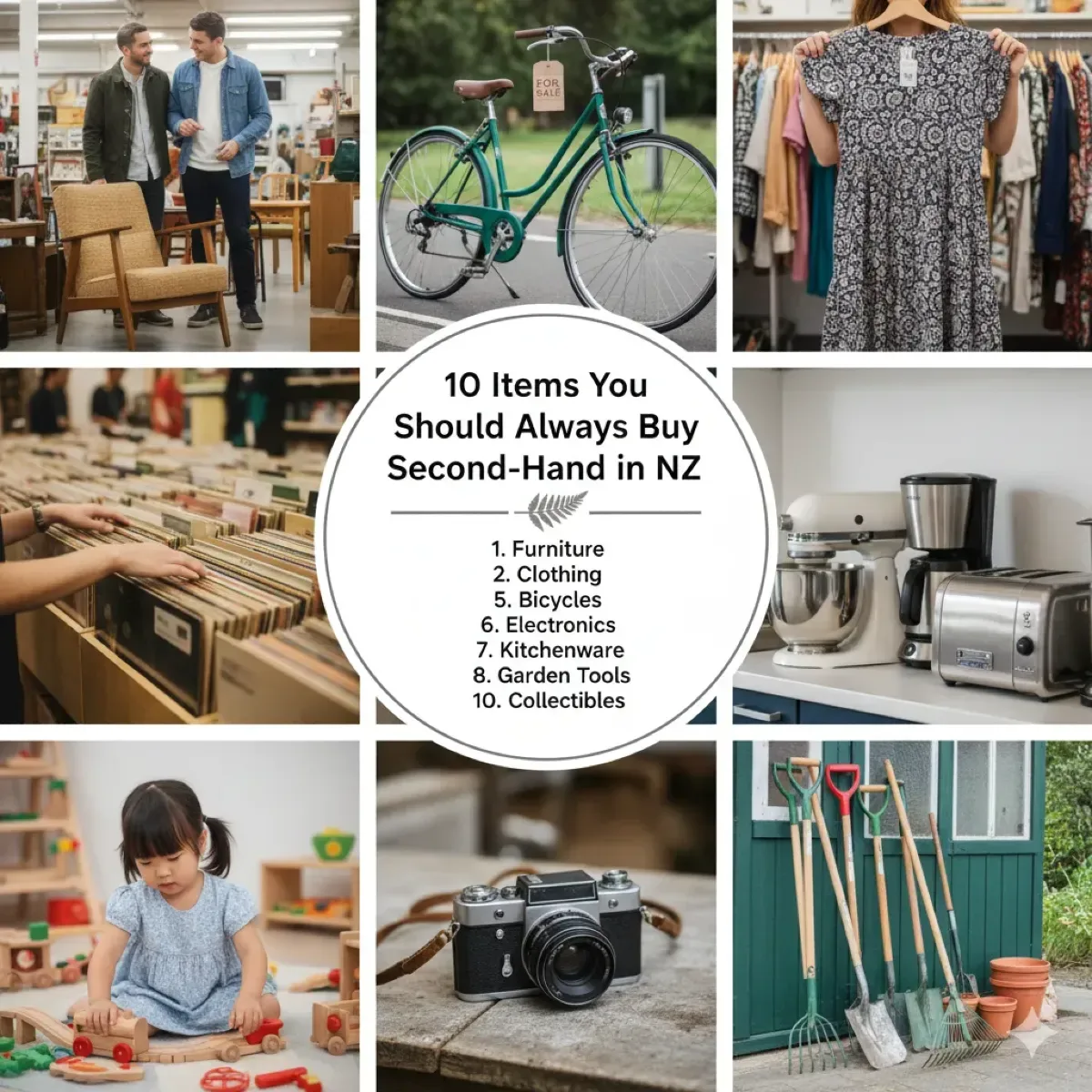
Buying second-hand isn't just a budget-friendly choice—it's becoming the smart default for savvy Kiwis. With the rising cost of living pushing 64 percent of New Zealanders to buy and sell pre-loved it...
Tom covers travel, lifestyle, and cost-of-living topics across New Zealand. He writes practical guides on transport, day trips, outdoor activities, and everyday life in Aotearoa.
Buying second-hand isn't just a budget-friendly choice—it's becoming the smart default for savvy Kiwis. With the rising cost of living pushing 64 percent of New Zealanders to buy and sell pre-loved items more often, there are certain categories where second-hand shopping makes genuine sense, both for your wallet and the planet. Whether you're looking to stretch your dollars further or reduce waste, knowing which items to prioritise in the second-hand market can save you serious money while helping you find quality goods.
Why Second-Hand Shopping Makes Sense in 2026
The shift towards second-hand buying has become mainstream in New Zealand. Younger generations are leading the charge, with 83 percent of those aged 24 to 39 having sold unwanted items in the last six months. The reasons are clear: financial pressure, environmental concerns, and the simple fact that many items lose value the moment they're purchased new.
On average, each New Zealand household has 19 items worth around $1,300 that could be sold. That same principle applies in reverse—you're likely to find incredible value when shopping second-hand, particularly in categories where depreciation is steep or where quality doesn't diminish with age.
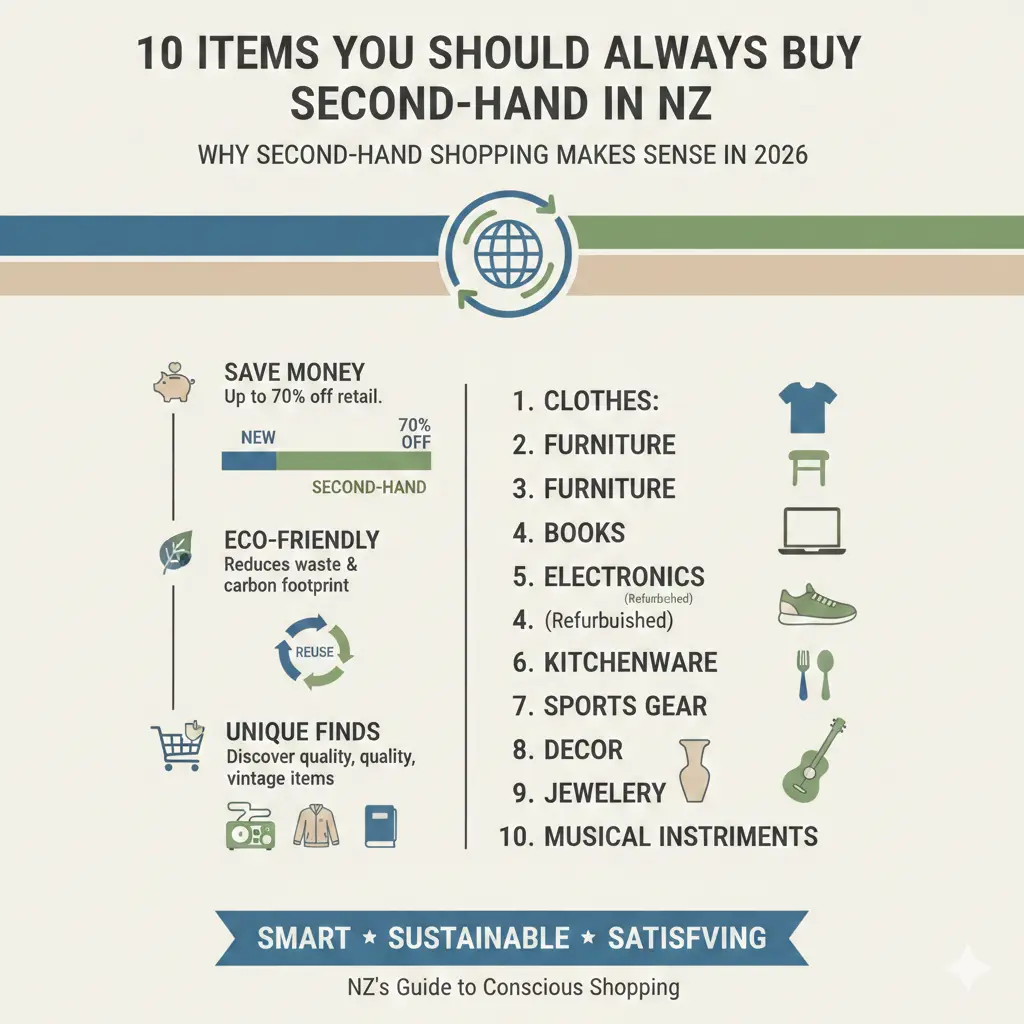
10 Items You Should Always Buy Second-Hand
1. Furniture
Furniture is perhaps the ultimate second-hand purchase. New pieces depreciate rapidly, while quality vintage and mid-century furniture often appreciates in value. New Zealand has excellent dedicated second-hand furniture stores worth exploring. ReStore in Dunedin has earned a reputation as the best second-hand furniture store in the region, offering everything from mattresses to lounge suites at quality prices without the premium markup. Shingle Creek Collectables near Nelson specialises in retro and mid-century pieces, including items sourced from the United States.
Outdoor furniture is particularly popular right now, with strong demand as we head into autumn and winter. You'll save 50-70 percent compared to buying new, and solid wood pieces will outlast cheaper contemporary alternatives.
2. Designer Clothing and Fashion Brands
This is where second-hand shopping truly shines financially. Designer pieces like Tibi Sid jeans retail for $925 NZD new, but you'll find them for a fraction of that price on platforms like Trade Me or specialist consignment stores. New Zealand has several excellent options: Recycle Boutique specialises in second-hand designer consignment for both men's and women's clothing, while Designer Wardrobe and Kate Sylvester Reloved offer curated pre-loved pieces from quality brands.
Popular Kiwi brands like Kowtow and Lululemon are flying off the digital shelves in the second-hand market. You'll find authentic pieces at 40-60 percent discounts, and many items are barely worn.
3. Books and Educational Materials
Books are perfect for second-hand buying—the content doesn't change, and physical condition is usually excellent. Whether you're studying for university or just love reading, you'll find extensive collections at op shops throughout New Zealand, particularly in wealthier suburbs where book donations are plentiful. The savings are substantial, especially for textbooks that cost $100+ new.
4. Kitchen Appliances and Gadgets
Quality kitchen appliances like KitchenAid mixers, Nespresso machines, and air fryers hold their value well and rarely fail prematurely. These items are frequently listed on Trade Me at 30-50 percent below retail price, often barely used. A $500 air fryer might cost $250-300 second-hand, and it'll perform identically to the new version.
5. Electronics and Tech
Phones, tablets, laptops, and gaming equipment depreciate rapidly but function perfectly in the second-hand market. Trade Me regularly lists refurbished phones, Apple AirPods, Apple watches, and Samsung watches at significant discounts. Many tech items come with warranties or seller protection through Trade Me's Buyer Protection scheme, making the purchase safer than you might expect.
6. Vintage and Retro Décor Items
Mirrors, art pieces, vintage collectables, and decorative furniture are ideal second-hand purchases because their value doesn't diminish with use. EcoShop on Blenheim Road is described as a treasure trove for second-hand art, trinkets, mirrors, and small tables. Three Creeks near Burkes Pass features antiques, memorabilia, sculptures, and art pieces that appreciate over time. These items often cost significantly less than contemporary alternatives and carry genuine character.
7. Clothing for Children
Kids grow out of clothes within months, making new purchases wasteful and expensive. Second-hand children's clothing is abundant at op shops and online platforms, typically costing 70-80 percent less than retail. Quality brands like Kathmandu and Macpac outdoor gear are frequently available second-hand, perfect for New Zealand families planning tramping trips or outdoor adventures.
8. Sports Equipment and Outdoor Gear
Tramping boots, camping equipment, skis, bikes, and sports gear are used sporadically and hold value well. You'll find excellent condition items on Trade Me and at specialist retailers. Unless you're a serious athlete requiring specific performance equipment, second-hand is the logical choice—you'll save hundreds on a quality trampoline or mountain bike.
9. Antiques and Collectables
Vintage soft drink cans, memorabilia, and antiques are popular purchases among New Zealand second-hand shoppers. These items often appreciate in value and carry historical interest. Specialist stores like Electric Antique Centre focus on quality wooden furniture, sideboards, and dining tables with genuine provenance.
10. Home and Living Items
Bedding, towels, crockery, cutlery, and general household goods are frequently available second-hand and rarely wear out. You can furnish an entire home for a fraction of the cost by shopping op shops and dedicated second-hand stores. The average person has 19 items worth $1,300 to sell, meaning quality household goods are constantly entering the second-hand market.
Where to Shop Second-Hand in New Zealand
Online Platforms
- Trade Me Marketplace — New Zealand's most trusted marketplace for new and used items, with free shipping on many purchases and covered by Buyer Protection.
- Secondhand Avenue — Based in Tauranga, offering antiques and household items with nationwide shipping.
- Recycle Boutique — Specialist designer consignment store with free shipping on orders over $150.
Physical Stores
- Op shops (Dove Hospice, Red Cross, Salvation Army) — Often less overwhelming than massive outlets and frequently carry homewares alongside clothing.
- Save Mart — Large outlet stores with extensive selections.
- Specialist second-hand furniture and antique stores across major centres.
Shopping Strategy
Wealthier suburbs often have the best-stocked op shops, so research your local area and map out a route. Start with smaller, less overwhelming stores before exploring massive outlets. Adopt a "second-hand first" mindset: when you need something, search preloved platforms before buying new. It takes patience, but the savings and satisfaction are unmatched.
The Environmental and Financial Impact
Beyond personal savings, second-hand shopping addresses genuine environmental concerns. Younger generations particularly cite environmental impact as a key factor in choosing pre-loved items. By purchasing second-hand, you're extending product lifecycles, reducing manufacturing demand, and keeping items out of landfills.
The financial impact is equally significant. For many households, the $1,300 average value of items they could sell represents a flight to see family, a buffer against rising bills, or a kickstart for savings goals. Shopping second-hand on the buying side delivers similar benefits—real money saved on genuine quality.
Next Steps: Start Your Second-Hand Journey
The second-hand market in New Zealand has never been more accessible or diverse. Whether you're motivated by financial pressure, environmental concerns, or simply finding better quality items, there's a second-hand option for almost everything you need. Start by identifying which categories matter most to you—furniture, fashion, tech, or home goods—then explore the platforms and stores that specialise in those areas. You'll be surprised at the quality, variety, and savings waiting in New Zealand's thriving circular economy.
Frequently Asked Questions
Sources & References
- 1
- 2
-
3
Trade Me Marketplace — New & Used Items for Sale in New Zealand — www.trademe.co.nz
-
4
Secondhand Avenue — Buying and Selling Quality Secondhand Items — secondhandavenue.co.nz
-
5
Recycle Boutique — Second Hand Designer Consignment — recycleboutique.co.nz
-
6
The Best Places to Buy Second Hand Furniture in New Zealand — Wise Move — www.wisemove.co.nz
Related Articles
Council Rates Hikes: Why Your Bill Just Went Up and How to Manage It
If you've opened your rates bill recently, you might've gotten a shock. Council rates across New Zealand have jumped significantly in 2025/2026, with some areas seeing increases well above inflation....
Selling Your Furniture? Best Photography Tips for Higher Prices
Ever snapped a quick photo of your old dining table on Trade Me only to watch it sit unsold for weeks? You're not alone—poor photos are the biggest reason Kiwi sellers miss out on top dollar for their...
How to Write a Classified Ad That Sells in 48 Hours
Ever listed a car boot full of treasures on Trade Me or Facebook Marketplace, only to watch it gather digital dust for weeks? You're not alone—many Kiwis struggle to shift gear on their ads. But what...
Local Amenities and Services: What Councils Provide
Ever wondered who keeps your neighbourhood parks pristine, ensures your rubbish gets collected on time, or opens the doors to free libraries and community pools? In New Zealand, your local council is...