Council Rates Hikes: Why Your Bill Just Went Up and How to Manage It

If you've opened your rates bill recently, you might've gotten a shock. Council rates across New Zealand have jumped significantly in 2025/2026, with some areas seeing increases well above inflation....
Tom covers travel, lifestyle, and cost-of-living topics across New Zealand. He writes practical guides on transport, day trips, outdoor activities, and everyday life in Aotearoa.
If you've opened your rates bill recently, you might've gotten a shock. Council rates across New Zealand have jumped significantly in 2025/2026, with some areas seeing increases well above inflation. For the average Auckland residential property, that's an extra $223 a year—or about $4.29 a week. While that might not sound like much, it's part of a larger trend that's putting pressure on household budgets nationwide. Understanding why your rates have gone up and what you can do about it is crucial for managing your finances as a Kiwi homeowner or renter.
Why Are Council Rates Rising So Sharply?
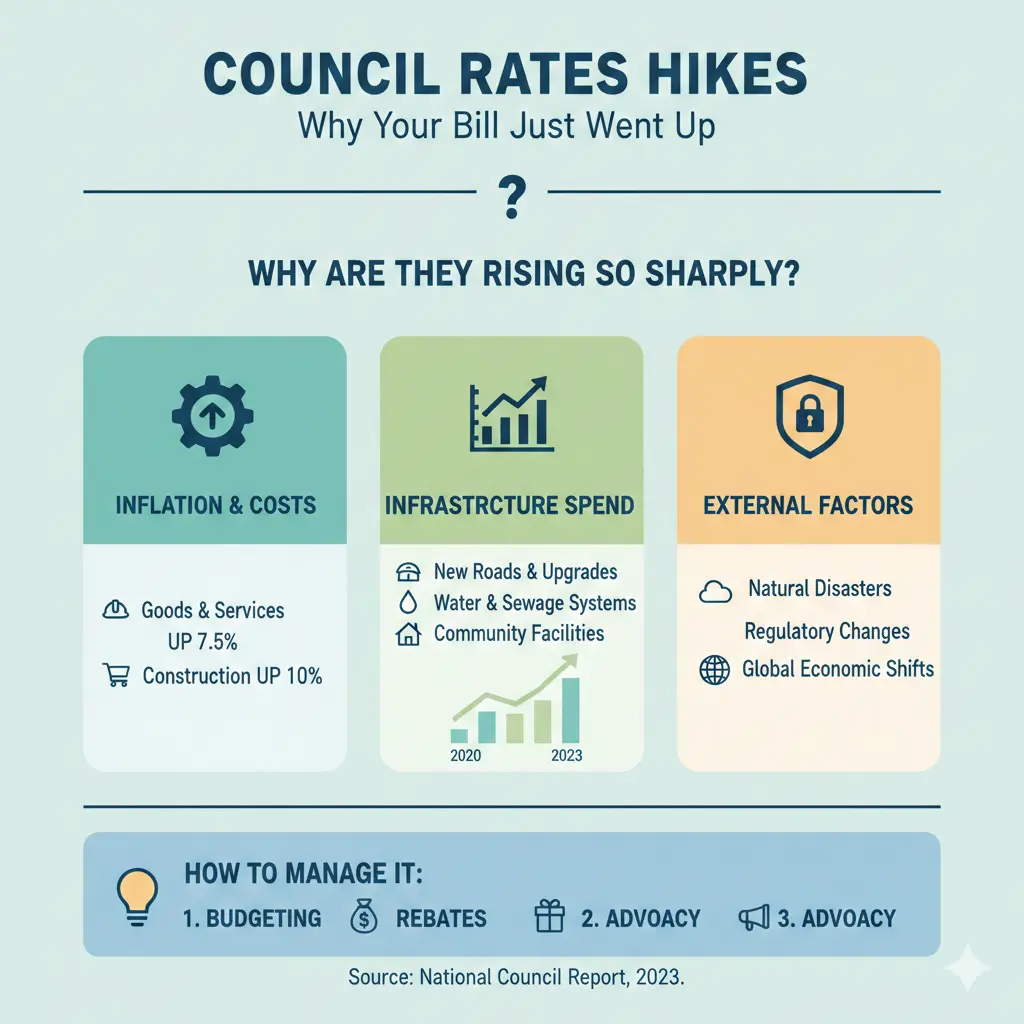
Council rates have become one of the fastest-growing costs for New Zealand households, and there are several reasons behind the steep increases we're seeing in 2026.
Infrastructure and Climate Investment
Local councils are investing heavily in infrastructure upgrades and climate resilience projects . These include water treatment facilities, stormwater management systems, and roading improvements that are essential for growing communities. However, these projects come with significant costs that councils pass on to ratepayers.
Inflation and Operating Costs
Beyond capital projects, councils face rising operational costs. Labour, materials, and energy expenses have all increased, forcing councils to raise rates to maintain essential services like waste collection, library services, and community facilities.
Population Growth and Demand
In areas like Auckland, rapid population growth means councils need to expand services and infrastructure. More people require more resources, and those costs are distributed across the ratepayer base.
What Are the 2025/2026 Rates Increases?
The increases vary by council and property type, but here's what we're seeing across New Zealand:
Auckland Council
Auckland has set an overall rates increase of 5.8 per cent for the average-value residential property in 2025/2026 . This translates to:
- $223 per year for an average residential property (valued at around $1,416,000)
- $4.29 per week
- A total rates bill of $4,068.06 for average-value residential properties
Business properties are facing steeper increases, with a 6.8 per cent rise expected, amounting to $1,408 per year or $27.08 per week .
Christchurch City Council
Christchurch residents are experiencing a 6.60 per cent average rates increase for existing ratepayers in 2025/2026 . The council is collecting $825.7 million in rates (excluding GST) to fund services across the city .
National Picture
Across New Zealand, council rates rose 8.8 per cent in recent years , significantly outpacing inflation and putting pressure on household budgets. This trend has prompted calls from groups like the Taxpayers' Union for the Government to implement rate caps .
How Rates Are Calculated
Understanding how your rates bill is worked out can help you anticipate changes and plan ahead. Your council rates are made up of several components:
- General rates – A broad-based charge that funds general council services
- Targeted rates – Specific charges for services that benefit particular areas or properties (like water supply or stormwater management)
- Property valuation – Your rates are partly based on your property's capital value, which is reassessed periodically
When property values increase, your rates often increase too, even if the council hasn't raised the rates percentage. This is why some homeowners see bigger increases than others, depending on how their property was revalued .
Who Can Get Help With Rates?
If you're struggling with rising rates, there are support options available to eligible New Zealand households.
Rates Rebate Scheme
The Government's Rates Rebate Scheme helps eligible low-income homeowners and tenants. In 2026, the scheme is expanding, with new rules that could help up to 60,000 more New Zealand households . If your household income is below certain thresholds, you may qualify for a rebate of up to $725 per year.
To apply for a Rates Rebate, you'll need to contact your local council or visit the govt.nz website for eligibility criteria and application details.
Council Hardship Policies
Many councils have hardship policies that can help ratepayers who are struggling to pay. These might include payment plans, temporary relief, or other assistance. Contact your local council directly to discuss your situation.
Other Financial Support
If you're on a low income, you may also be eligible for support through:
- Work and Income (WINZ) – for general financial assistance
- Community organisations and charities – many offer emergency financial support
- Your bank – some banks offer financial hardship support programmes
Practical Tips for Managing Rising Rates
Review Your Rates Assessment
Check that your property valuation is accurate. If you believe your property has been overvalued, you can object to the valuation. Contact your council's rates department for information on how to lodge an objection.
Understand Your Rates Bill
Break down your rates bill to see what you're paying for. This helps you understand where your money is going and whether you're eligible for any rebates or exemptions.
Set Up a Payment Plan
If paying your rates in one lump sum is difficult, arrange a payment plan with your council. Most councils allow you to pay rates in instalments throughout the year.
Look Into Exemptions
Some properties may be eligible for rates exemptions (such as charitable organisations or sports facilities). Check with your council to see if you qualify.
Budget for Future Increases
Rates typically increase each year. Factor this into your long-term financial planning and budget accordingly.
What's Being Done About Rising Rates?
The rapid increase in council rates has become a political issue. The Taxpayers' Union and other groups have called on the Government to cap council rates to help control inflation . However, as of February 2026, no formal rate cap has been implemented, and councils continue to set their own rates within existing legislation.
The Government's expansion of the Rates Rebate Scheme in 2026 is one response to help households struggling with rising costs .
Moving Forward
Rising council rates are a reality for New Zealand homeowners and renters, driven by necessary infrastructure investment, climate resilience projects, and increasing operational costs. While the increases can feel significant, understanding what you're paying for and knowing what support is available can help you manage the impact on your household budget.
If your rates bill has jumped, take time to review it carefully. Check that your property valuation is correct, explore whether you're eligible for the Rates Rebate Scheme (especially with the 2026 expansion), and contact your council if you need help with payment arrangements. By taking these steps, you can take control of this growing household expense and plan for future increases.
Frequently Asked Questions
Sources & References
-
1
Auckland Council – Changes to rates, fees and charges – Annual Plan 2025/2026 — akhaveyoursay.aucklandcouncil.govt.nz
-
2
Taxpayers' Union – RBNZ comments show why the Government must cap council rates now — www.taxpayers.org.nz
- 3
-
4
Christchurch City Council – 2025/2026 rates — ccc.govt.nz
Related Articles

10 Items You Should Always Buy Second-Hand in NZ
Buying second-hand isn't just a budget-friendly choice—it's becoming the smart default for savvy Kiwis. With the rising cost of living pushing 64 percent of New Zealanders to buy and sell pre-loved it...

Selling Your Furniture? Best Photography Tips for Higher Prices
Ever snapped a quick photo of your old dining table on Trade Me only to watch it sit unsold for weeks? You're not alone—poor photos are the biggest reason Kiwi sellers miss out on top dollar for their...

How to Write a Classified Ad That Sells in 48 Hours
Ever listed a car boot full of treasures on Trade Me or Facebook Marketplace, only to watch it gather digital dust for weeks? You're not alone—many Kiwis struggle to shift gear on their ads. But what...
Local Amenities and Services: What Councils Provide
Ever wondered who keeps your neighbourhood parks pristine, ensures your rubbish gets collected on time, or opens the doors to free libraries and community pools? In New Zealand, your local council is...