Community Involvement: Getting Connected in NZ

Ever felt like a stranger in your own neighbourhood? You're not alone—many Kiwis, especially newcomers, crave that sense of belonging that comes from genuine community ties. Getting connected through...
Tom covers travel, lifestyle, and cost-of-living topics across New Zealand. He writes practical guides on transport, day trips, outdoor activities, and everyday life in Aotearoa.
Ever felt like a stranger in your own neighbourhood? You're not alone—many Kiwis, especially newcomers, crave that sense of belonging that comes from genuine community ties. Getting connected through community involvement in NZ isn't just about attending events; it's about weaving yourself into the fabric of local life, whether through volunteering, sports, or clubs that reflect our unique Kiwi spirit.
In Aotearoa, community involvement fosters wellbeing, builds resilience, and even boosts your social cohesion—vital in a country where over half of us are already pitching in as volunteers. This guide unpacks practical ways to dive in, from volunteer ops to sports leagues, tailored for everyone from fresh migrants to long-time locals eyeing a fresh start. Let's explore how you can get involved today.
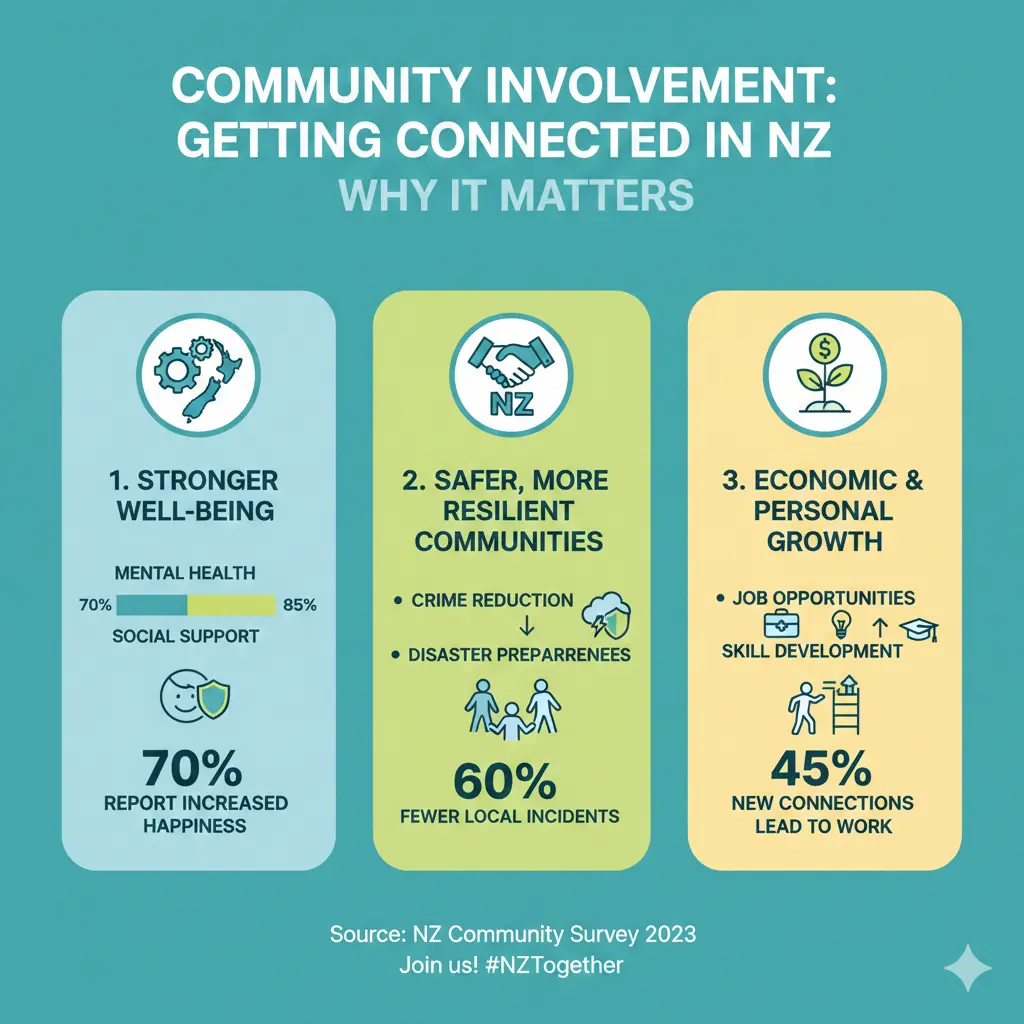
Why Community Involvement Matters in New Zealand
Communities across NZ—from bustling Auckland suburbs to quiet Southland towns—thrive on participation. Recent Stats NZ data shows 53.0% of New Zealanders volunteered in 2023, up from 50.7% in 2021, with folks giving an average of 18.1 hours over four weeks. That's a clear sign Kiwis value direct, person-to-person help over formal setups, with direct volunteering rising to 40.8%.
The economic punch? Formal volunteering alone is worth $4 billion annually. Beyond dollars, it enhances wellbeing and social bonds, especially post-COVID when volunteer numbers dipped but rebounded strongly. For newcomers, it's a shortcut to integration—learning the lingo of barbecues, marae visits, and that classic Kiwi "she'll be right" attitude.
Government recognises this too. The Department of Internal Affairs (DIA) highlights NZ's high 49.8% volunteering rate and pushes for better support, including a new Community and Volunteering Capability Fund prioritising youth, Māori, Pacific, and ethnic communities. In 2026, with social cohesion in focus, now's the perfect time to connect.
Benefits for Your Wallet, Health, and Whānau
- Wellbeing boost: Volunteers report higher life satisfaction, per Volunteering New Zealand's research.
- Job networks: Many roles lead to KiwiSaver chats or even paid gigs via WINZ referrals.
- Family ties: Kids thrive in involved families—think school galas or junior netball.
- Cultural immersion: Essential for migrants navigating IRD tax quirks or ACC claims alongside locals.
Volunteering Opportunities: Lend a Hand, Gain a Mateship
Volunteering NZ leads the charge, with 17 regional centres helping match your skills to needs. In 2023, organisational volunteering dipped to 27.6%, but direct help soared—perfect for casual starters. Women, 45-64-year-olds, Europeans, Māori, homeowners, and those earning over $70k volunteer most.
Finding Your Fit
Start at Volunteering New Zealand's portal or local centres like Volunteer Auckland or Wellington City Mission. Options abound:
- Environment: Beach clean-ups with DOC or tree planting via Forest & Bird.
- Community services: Foodbanks, PlunketLine, or refugee support through Red Cross.
- Māori-led: Koha-based roles at marae or iwi events—check Te Puni Kōkiri resources.
- Youth-focused: Mentoring via Big Brothers Big Sisters or coaching with local trusts.
Practical Tips for Newcomers
- Check eligibility: Most roles are open to residents; some need work visas. No police check? Many skip it for low-risk gigs.
- Time commitment: 32.5% do under 5 hours/4 weeks—ideal for busy parents.
- Reimbursements: Expenses like travel often covered; push for consistent policies per DIA advice.
- 2026 updates: National Volunteer Week (May) features events—sign up early via VNZ.
Pro tip: Pair with KiwiSaver volunteering incentives if your employer offers them, or link to WINZ community work experience for jobseekers.
Sports and Active Recreation: Get Moving with Kiwis
Nothing screams Kiwi like a Saturday footy match or netball court hustle. While adult participation fell 7.7% from 1998-2014 (73.3% to 65.6%), grassroots clubs keep it alive via Sport NZ. In 2026, expect post-pandemic surges in casual play.
Popular Sports to Join
| Sport | Where to Start | Best For Newcomers |
|---|---|---|
| Rugby/League | NZ Rugby Union clubs; apps like TeamSnap | Mixed social teams; no pro skills needed |
| Netball | Netball NZ centres; local leagues | Women's and mixed; family-friendly |
| Football (Soccer) | Football Ferns/ All Whites hubs; NZ Football | Year-round indoor/outdoor options |
| Touch Rugby/Cricket | Community boards; summer leagues | Low-contact, social vibes |
| Hiking/Tramping | Tramping clubs via FMC; DOC events | Solo to group; nature immersion |
Join via Sport NZ's finder or council rec centres. Many offer free trials—great for building fitness alongside mates.
Overcoming Barriers
- Cost: Community Sport Fund covers fees for low-income; check local councils.
- Location: Rural? Federated Mountain Clubs link remote groups.
- Fitness level: Social walking netball or touch footy welcomes all.
Clubs and Social Groups: Beyond the Pitch
Clubs are NZ's social glue—think Probus for retirees, Rotary for pros, or hobby groups like gardening via NZ Gardens Trust.
Key Categories
- Cultural: Language exchanges through Alliance Française or Korean NZ Association; Māori cultural clubs via iwi sites.
- Hobbies: Book clubs at libraries, quilting via NZ Quilters, or model railways.
- Professional: Networking via BNI or industry bodies like NZ Institute of Chartered Accountants.
- Neighbourhood: Community boards host BBQs—find via Stats NZ community data.
For migrants, Immigration NZ settlement services connect you to ethnic groups. Apps like Meetup or Facebook Groups list 1000s of local events.
Building Lasting Connections
Host a bring-a-plate BBQ or join neighbourhood watches. In 2026, multicultural initiatives eye stronger cohesion. Women and over-45s lead here, per volunteering stats.
Overcoming Challenges for New Kiwis
Newcomers face hurdles like language or transport, but resources abound:
- Support: Community centres offer free English classes with socials.
- Legal: Volunteering won't affect visas; declare income to IRD if reimbursed.
- Family: ACC covers sports injuries; kids' clubs via schools.
- Diversity: DIA's CVC Fund boosts Pacific/Māori/ethnic volunteering.
Next Steps: Your Community Journey Starts Now
Pick one action today: Browse Volunteering NZ, join a local footy club, or attend a council event. Track your hours for that feel-good hit, and watch your circle grow. In Aotearoa, community isn't found—it's built, one connection at a time. Kia kaha!
Frequently Asked Questions
Sources & References
- 1
-
2
Strengthening our Approach to Volunteering: Executive Summary — communitymatters.govt.nz — www.communitymatters.govt.nz
-
3
New Zealanders participate positively in society — msd.govt.nz — www.msd.govt.nz
-
4
State of Volunteering in Aotearoa New Zealand Report 2024 — communityresearch.org.nz — communityresearch.org.nz
-
5
Participant trends report — Sport NZ — sportnz.org.nz
-
6
Volunteering Statistics — Volunteering New Zealand — www.volunteeringnz.org.nz
-
7
Community Board 2026 Dataset — data.govt.nz — catalogue.data.govt.nz
-
8
Statistics — Volunteering New Zealand — www.volunteeringnz.org.nz
-
9
Stats NZ Home — stats.govt.nz — www.stats.govt.nz
-
10
Looking to 2026 — Multicultural NZ — multiculturalnz.org.nz
Related Articles

10 Items You Should Always Buy Second-Hand in NZ
Buying second-hand isn't just a budget-friendly choice—it's becoming the smart default for savvy Kiwis. With the rising cost of living pushing 64 percent of New Zealanders to buy and sell pre-loved it...

Council Rates Hikes: Why Your Bill Just Went Up and How to Manage It
If you've opened your rates bill recently, you might've gotten a shock. Council rates across New Zealand have jumped significantly in 2025/2026, with some areas seeing increases well above inflation....

Selling Your Furniture? Best Photography Tips for Higher Prices
Ever snapped a quick photo of your old dining table on Trade Me only to watch it sit unsold for weeks? You're not alone—poor photos are the biggest reason Kiwi sellers miss out on top dollar for their...

How to Write a Classified Ad That Sells in 48 Hours
Ever listed a car boot full of treasures on Trade Me or Facebook Marketplace, only to watch it gather digital dust for weeks? You're not alone—many Kiwis struggle to shift gear on their ads. But what...