Dog Registration and Rules by Council

Owning a dog in New Zealand brings joy, companionship, and responsibility—especially when it comes to council registration and rules. Whether you're welcoming a new puppy or ensuring your furry mate s...
Sarah covers personal finance, tax, and KiwiSaver topics for Lifetimes NZ. She focuses on making money management straightforward and practical for everyday Kiwis.
Owning a dog in New Zealand brings joy, companionship, and responsibility—especially when it comes to council registration and rules. Whether you're welcoming a new puppy or ensuring your furry mate stays compliant, understanding dog registration and rules by council keeps you on the right side of the law while protecting your pet and community.
In Aotearoa, dog ownership is governed by the Dog Control Act 1996, requiring all dogs over three months old to be registered annually with their local council. This isn't just red tape; it's about safety, lost pet reunions, and fair contributions to community services. With fees varying by council and discounts available, getting it right saves money and hassle. Let's break down everything you need to know for 2026.
Why Dog Registration Matters in New Zealand
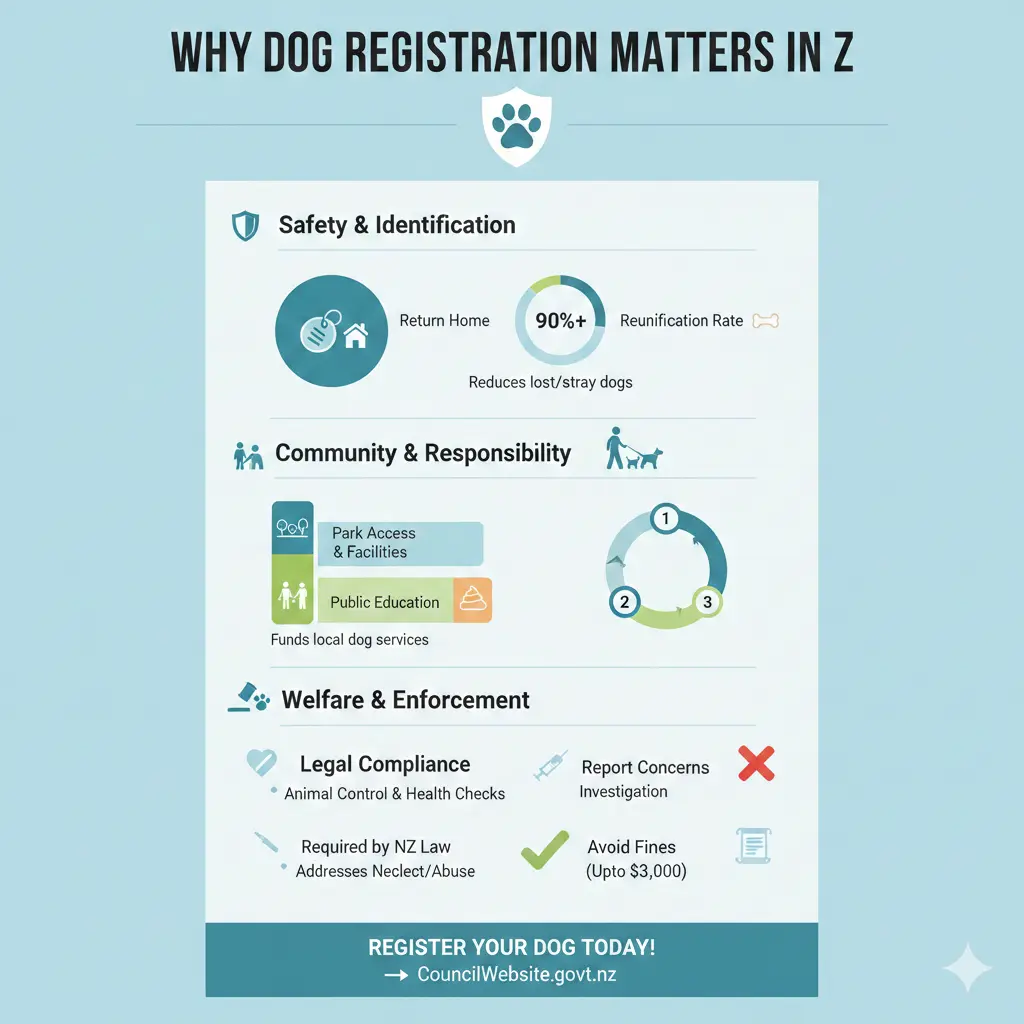
Registration ensures your dog's details are in the National Dog Database, making it easier to reunite lost or stolen pets with owners. It also funds essential dog control services like ranger patrols and pounds, helping manage populations and reduce risks from aggressive dogs. Non-compliance carries a $300 fine, so it's a legal must-do.
Beyond the basics, registration links to microchipping—a permanent ID method implanted under the skin. Since 1 July 2006, all newly registered dogs (except working farm dogs) must be microchipped. This combo boosts traceability, especially if your dog ends up in a pound.
Key Benefits for Kiwi Dog Owners
- Pet Safety: Quick reunions for lost dogs via microchip scans and council records.
- Community Protection: Helps control roaming and dangerous dogs.
- Financial Perks: Discounts for desexed, compliant, or rural owners.
- Legal Peace of Mind: Avoid fines and impoundment fees.
The Dog Registration Process Step by Step
Registering your dog is straightforward, but processes vary slightly by council. Start early—puppies must be registered by three months old, and renewals are due around July each year. For 2025/2026, many councils like Buller District send forms by late June, with payments due by 31 July.
Step 1: Microchip Your Dog
Your dog needs a microchip before registration (unless it's a working farm dog). Vets or council pounds (like Waikato's in Ngaruawahia or Pukekohe) offer this service for a small fee. Register the chip with the New Zealand Companion Animal Register (NZCAR). If registering an imported dog, do this after arrival and quarantine.
Step 2: Gather Required Information
Have ready:
- Dog's microchip number.
- Your details: name, address, contact info.
- Proof of desexing (for discounts).
- Previous registration tag or owner number if renewing.
Update changes like address, desexing, new ownership, or if your dog has passed away.
Step 3: Register with Your Local Council
Most councils offer online forms, phone, mail, or in-person options. For example:
- Auckland Council: Annual renewal from 1 July to 30 June; licences needed for 2+ dogs on residential properties.
- Waikato District: Online portal for edits and payments; no cheques accepted.
- Buller District: Pay in Westport/Reefton for red 2025/26 tags or online with owner number as reference.
Pay the fee upon approval, and receive a tag for your dog's collar. Late payments incur penalties.
Dog Registration Fees and Discounts for 2026
Councils set fees to cover services, varying by location, dog type, and owner status. Expect $100–$300+ annually, with penalties post-31 July.
Common Discounts
Reduce costs by qualifying for lower categories:
| Owner Type | Criteria | Benefits |
|---|---|---|
| Approved Owner | Offence-free for 2 years; desexed dog | Base discount on standard fee |
| Selected Owner | <20ha property; max 2 dogs; secure enclosure; compliant | Further discount; $20 inspection fee |
| Farm Owner | ≥20ha farm; heading dogs only; rural address | Largest discount |
| SuperGold Card | Seniors present card at payment | 20% off |
Check your council's site—Auckland requires multi-dog licences, Waikato offers online classification applications. Desexing often halves fees.
Dog Control Rules by Council
Beyond registration, councils enforce bylaws under the Dog Control Act 1996. Rules promote responsible ownership.
Everyday Rules for Kiwi Dogs
- Leashing: Dogs off-lead only in designated areas; prohibited in playgrounds, cemeteries.
- Numbers Limits: Max 2 dogs per residential property without permit.
- Dangerous/Menacing Dogs: Special muzzles, leashes; microchipping mandatory.
- Roaming: No wandering unattended; fines for attacks or fouling.
Special Classifications and Permits
For rural owners, farm dogs (stock work) have exemptions but must register if impounded. Apply for permits to exceed dog limits—neighbour approval often required. Breaches downgrade your classification, hiking fees.
New residents: Swap tags upon moving districts. Imported pets: Register post-quarantine.
Practical Tips for Compliant Dog Ownership
- Mark Your Calendar: Renew by 31 July to avoid penalties.
- Update Annually: Log desexing or moves immediately.
- Choose Quality Gear: Secure collars for tags; consider GPS trackers.
- Train Early: Obedient dogs avoid ranger visits.
- Know Your Council: Use online portals like Waikato's for easy management.
- Budget Smart: Factor fees into pet costs; claim SuperGold if eligible.
Pro tip: View/edit details online where available—saves trips and keeps records current.
Next Steps for Responsible Dog Ownership
Grab your dog's microchip details and head to your council's website today—secure that tag before July 2026 deadlines hit. Responsible registration not only complies with the Dog Control Act but fosters safer Kiwi neighbourhoods. For personalised advice, contact your local council ranger or vet. Remember, while this guide uses current info, fees and bylaws can change—verify with official sources and consult professionals for your situation.
This is general information only. Dog ownership involves financial commitments; seek advice from your council or a qualified advisor for your circumstances.
Frequently Asked Questions
Can I register online?
Sources & References
-
1
How to Register Your Dog in New Zealand - Petdirect — petdirect.co.nz
-
2
Register your dog with us for the first time - Auckland Council — www.aucklandcouncil.govt.nz
-
3
Time for Buller dog owners to prepare for registration 2025-2026 — bullerdc.govt.nz
-
4
Dog registration and microchipping - Waikato District Council — www.waikatodistrict.govt.nz
-
5
Bringing pets into New Zealand — www.govt.nz
-
6
Dog Registration in NZ: Everything You Need to Know — www.littlegreendog.co.nz
Related Articles

Industry Bodies and Professional Associations NZ
Whether you're launching a business, advancing your career, or navigating financial regulations, industry bodies and professional associations in New Zealand offer invaluable support. These organisati...

Emergency Benefit NZ: When You Have No Other Options
When you're struggling financially and don't qualify for other benefits, the Emergency Benefit might be your lifeline. It's a discretionary payment designed for Kiwis in genuine hardship who've exhaus...

Unpaid Internships NZ: Are They Legal?
Unpaid internships are a common pathway for students and graduates to gain work experience in New Zealand, but there's often confusion about whether they're actually legal. The short answer is: unpaid...

Estate Administration NZ: Managing Someone's Affairs After Death
Losing a loved one is one of life's toughest challenges, and stepping in to manage their estate can feel overwhelming. In New Zealand, estate administration—the process of handling someone's affairs a...