Medical Misadventure: ACC Treatment Injury Claims

Imagine undergoing routine surgery only to wake up with a severe infection that derails your life, leaving you unable to work and facing mounting medical bills. For Kiwis, this scenario falls under me...
The Lifetimes NZ editorial team curates, fact-checks, and updates guides on personal finance, property, health, immigration, legal, business, and lifestyle topics relevant to Lifetimes NZ readers. Articles are produced with AI assistance and reviewed by the editorial team before publication.
Imagine undergoing routine surgery only to wake up with a severe infection that derails your life, leaving you unable to work and facing mounting medical bills. For Kiwis, this scenario falls under medical misadventure—now known as treatment injury claims through ACC. Understanding how to navigate these claims can make all the difference in securing the support you deserve.
ACC's no-fault system covers personal injuries caused by medical treatment, replacing the old medical misadventure rules since 1 July 2005. In 2026, with rising claim volumes and costs straining the scheme, knowing your rights is more crucial than ever. This guide breaks down everything you need to know about ACC treatment injury claims, from eligibility to payouts and appeals.
What is a Treatment Injury Claim?
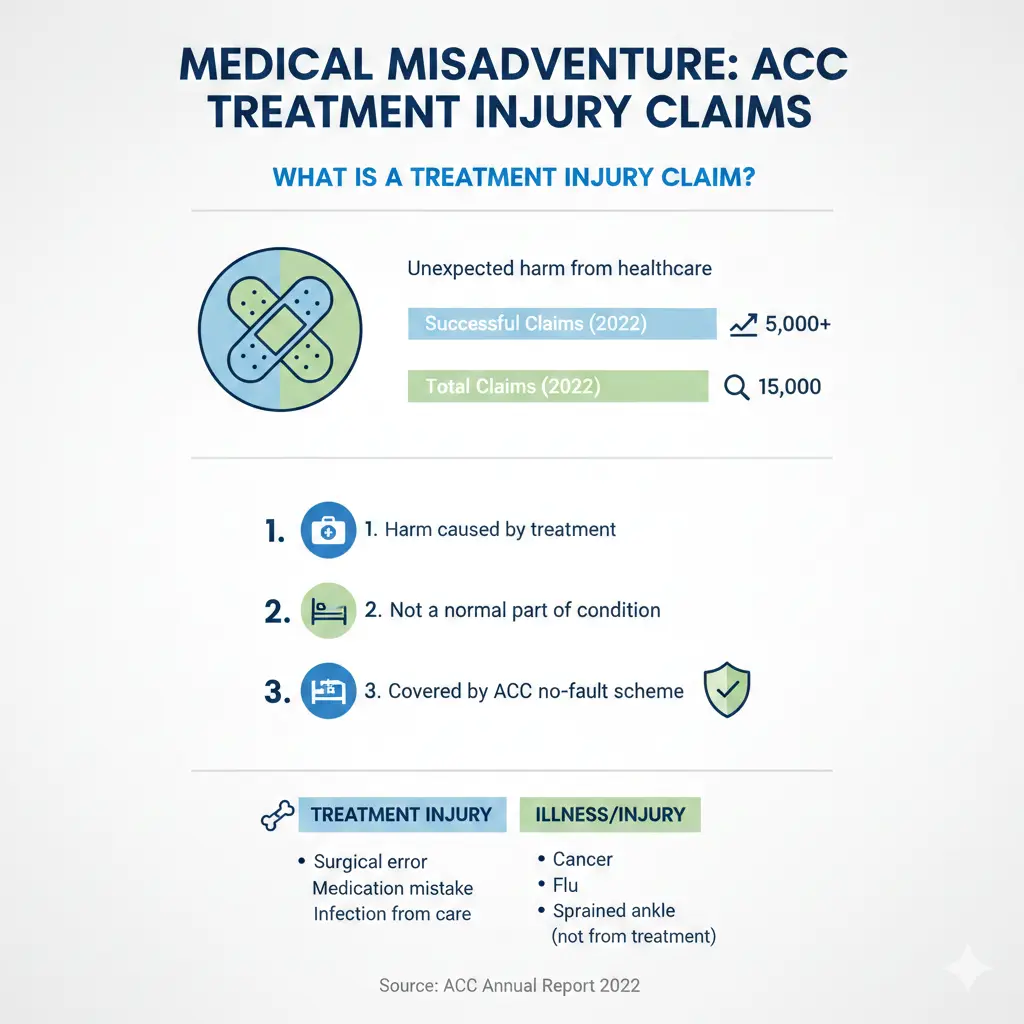
A treatment injury is a personal injury caused by treatment from, or at the direction of, a registered health professional. This includes diagnosis, advice, interventions, or failures like not providing treatment in a timely manner. Importantly, the injury must result directly from the treatment but cannot be a necessary part or ordinary consequence of it—for example, a surgical incision itself isn't covered, but an unexpected complication might be.
Key Differences from Medical Misadventure
The term "medical misadventure" was phased out in 2005 to align with ACC's no-fault ethos. Previously, claims required proof of negligence or rarity; now, it's about causation without blame. This shift has broadened access, but exclusions remain strict: underlying diseases, resource allocation delays (like waiting lists), or patient refusals aren't covered.
For context, ACC paid out $92.7 million over roughly five years to claimants affected by treatment delays, highlighting how timing can qualify as a treatment injury.
Eligibility Criteria for ACC Treatment Injury Claims
To qualify in 2026, your claim must meet these core tests:
- Causation: A clear link between the treatment (or lack thereof) and the injury.
- Not ordinary: The injury isn't a standard risk of the treatment, like hair loss from chemotherapy.
- Personal injury: Must be physical (or mental in sensitive claims post-TN ruling), not just disease progression.
- Registered provider: Treatment by a NZ-registered health professional.
Common Exclusions
ACC explicitly excludes:
- Necessary treatment parts (e.g., skin punctures).
- Ordinary consequences (e.g., radiotherapy burns).
- Pre-existing diseases or significant worsening solely from disease.
- Delays due to health system resource decisions.
Cases dismissed by District Court often fail on causation or lack of physical injury evidence, as seen in recent appeals.
Common Types of Treatment Injuries
ACC data reveals patterns in claims. From 2005-2018 (latest detailed figures, subject to revisions), key categories include:
- Infections: Post-surgical (e.g., hip/knee ops), line infections, or other (e.g., gastrointestinal).
- Pressure injuries: From failure to assess risk or intervene.
- Treatment omissions: Failures to diagnose, follow-up, refer, or monitor.
- Surgical mesh complications: Infections or organ damage from hernia repairs or pelvic procedures.
COVID-19 vaccine-related claims, extracted January 2026, show 1,779 accepted out of lodged, with common issues like inflammation (46 claims) and nerve damage (43). Total payouts reached $16.9 million, including 6 fatal cases. While numbers indicate occurrence, ACC notes lodgements don't reflect care quality.
| Injury Type | Example | Potential Cover |
|---|---|---|
| Infection post-surgery | Hip replacement leading to wound infection | Yes, if not ordinary risk |
| Treatment delay | Untimely cancer diagnosis | Possible, $92.7m paid historically |
| Surgical mesh | Pelvic prolapse repair complications | Yes for injury caused by device |
| Pressure sore | Hospital bed neglect | Yes if risk not assessed |
How to File an ACC Treatment Injury Claim
Start promptly—claims use the decision date, which can take up to 9 months due to complexity. Here's the step-by-step:
- Lodge via ACC45: Fill the Injury Claim Form, often with your treatment provider's help.
- Provider submits ACC2152: Clinical details to support causation.
- ACC assesses: Reviews for eligibility; active claims get payments if open.
- Decision: Expect wait; appeals go to District Court if declined.
Online lodgement via acc.co.nz is fastest. For sensitive mental injury claims (post-29 September 2025 TN ruling), specialist assessments determine injury date for entitlements.
What Evidence Do You Need?
- Medical records showing treatment and outcome.
- Expert opinion linking treatment to injury.
- Timeline of events, especially for omissions.
Tip: Keep a diary of symptoms and impacts on daily life, work, and finances—crucial for weekly compensation claims.
What Can You Claim? Entitlements and Payouts
Accepted claims cover three areas (GST-exclusive):
- Compensation: Weekly earnings loss (80% of pre-injury income, caps apply), lump sums for impairment, death benefits.
- Treatment: Hospital, GP, specialist care.
- Rehab/support: Physio, home help, transport.
COVID claims illustrate: By Jan 2026, yearly breakdowns showed 2022 peaking at $3.9m total, with compensation dominant. Overall ACC costs hit $8.2 billion in 2025 amid 2.3 million claims.
Long-term support varies by injury severity; minor ones may need little ongoing aid. ACC's 2025/26 turnaround plan focuses on timely recovery to independence, partnering with health providers.
2026 Updates and Challenges
Inflation, health pressures, and court expansions strain the scheme. ACC urges Kiwis to actively recover, with employers aiding return-to-work.
Appeals and Reviews
If declined, request an internal review first, then appeal to District Court within specified timelines. Common dismissals: no causation or physical injury proof. Legal aid may cover costs; consult a lawyer via ACC's legal resources.
"Corporation correctly declined appellant's treatment injury. Insufficient evidence to show causation between injury and treatment." — District Court decision
Practical Tips for Kiwis Filing Claims
- Act fast: Delays hurt evidence and entitlements.
- Document everything: Photos, receipts, witness statements.
- Seek advice: Free ACC case managers help navigate.
- Track finances: Link to IRD for tax-free weekly comp; integrate with KiwiSaver if long-term.
- Prevent issues: Ask providers about risks pre-treatment.
For mental injuries, use updated Specialist Cover Assessments from 29 Sep 2025.
Next Steps: Secure Your entitlements Today
If you've suffered a treatment injury, don't delay—lodge via ACC's treatment injury page. Track your claim online, engage your case manager, and consider free advocacy from Citizens Advice Bureau. For complex cases, consult an ACC-accredited lawyer. Remember, ACC's scheme protects all Kiwis, but proactive steps ensure you get fair cover.
Disclaimer: This is general information, not personalised advice. Consult a professional advisor or ACC directly for your situation. Rates and rules current as of 2026; check acc.co.nz for updates.
Frequently Asked Questions
Sources & References
-
1
ACC Treatment Injury Data — figure.nz — figure.nz
- 2
-
3
ACC Turnaround Plan 2025/26 — acc.co.nz — www.acc.co.nz
-
4
ACC Update on TN Ruling — ranzcp.org — www.ranzcp.org
-
5
ACC Appeal Decisions — justice.govt.nz — www.justice.govt.nz
-
6
ACC Claims Statistics 2025 — moneyhub.co.nz — www.moneyhub.co.nz
-
7
Rethink Injury Prevention — howdengroup.com — www.howdengroup.com
-
8
ACC Overview — treasury.govt.nz — www.treasury.govt.nz
-
9
ACC $92m Payouts for Delays — nzherald.co.nz — www.nzherald.co.nz
Related Articles

Working Multiple Jobs NZ: Tax and Legal Considerations
Juggling multiple jobs can boost your income, but it's crucial to understand the tax implications and legal requirements that come with working more than one role in Aotearoa. Whether you're a contrac...

Name Changes NZ: Legal Process and Costs
Considering a fresh start with a new name? Whether it's after marriage, divorce, or simply embracing a personal transformation, changing your name in New Zealand is straightforward but requires follow...

Holiday Home Tax Rules NZ: Private Use and Rental
Own a bach in Coromandel or a holiday home in Queenstown? You're not alone—many Kiwis cherish these escapes, but renting them out while enjoying personal use can trip you up on tax rules. Getting the...

Industry Bodies and Professional Associations NZ
Whether you're launching a business, advancing your career, or navigating financial regulations, industry bodies and professional associations in New Zealand offer invaluable support. These organisati...