Noise Complaints NZ: Your Rights and Options

Nothing disrupts Kiwi life like a neighbour's late-night bass thumping through your walls or a backyard rev-up session at dawn. If you're dealing with noise complaints in New Zealand, knowing your rig...
Sarah covers personal finance, tax, and KiwiSaver topics for Lifetimes NZ. She focuses on making money management straightforward and practical for everyday Kiwis.
Nothing disrupts Kiwi life like a neighbour's late-night bass thumping through your walls or a backyard rev-up session at dawn. If you're dealing with noise complaints in New Zealand, knowing your rights under the law can turn frustration into resolution—without escalating to full-on neighbourly warfare.
In Aotearoa, excessive noise isn't just annoying; it's regulated under the Resource Management Act 1991 (RMA), empowering local councils to step in when racket unreasonably interferes with your peace, comfort, and convenience. Whether it's parties, power tools, or persistent barking, this guide breaks down your options, from polite chats to council enforcement and court action. We'll cover practical steps tailored for Kiwis, with real-world examples and 2026 updates like the extended Excessive Noise Directions (ENDs).
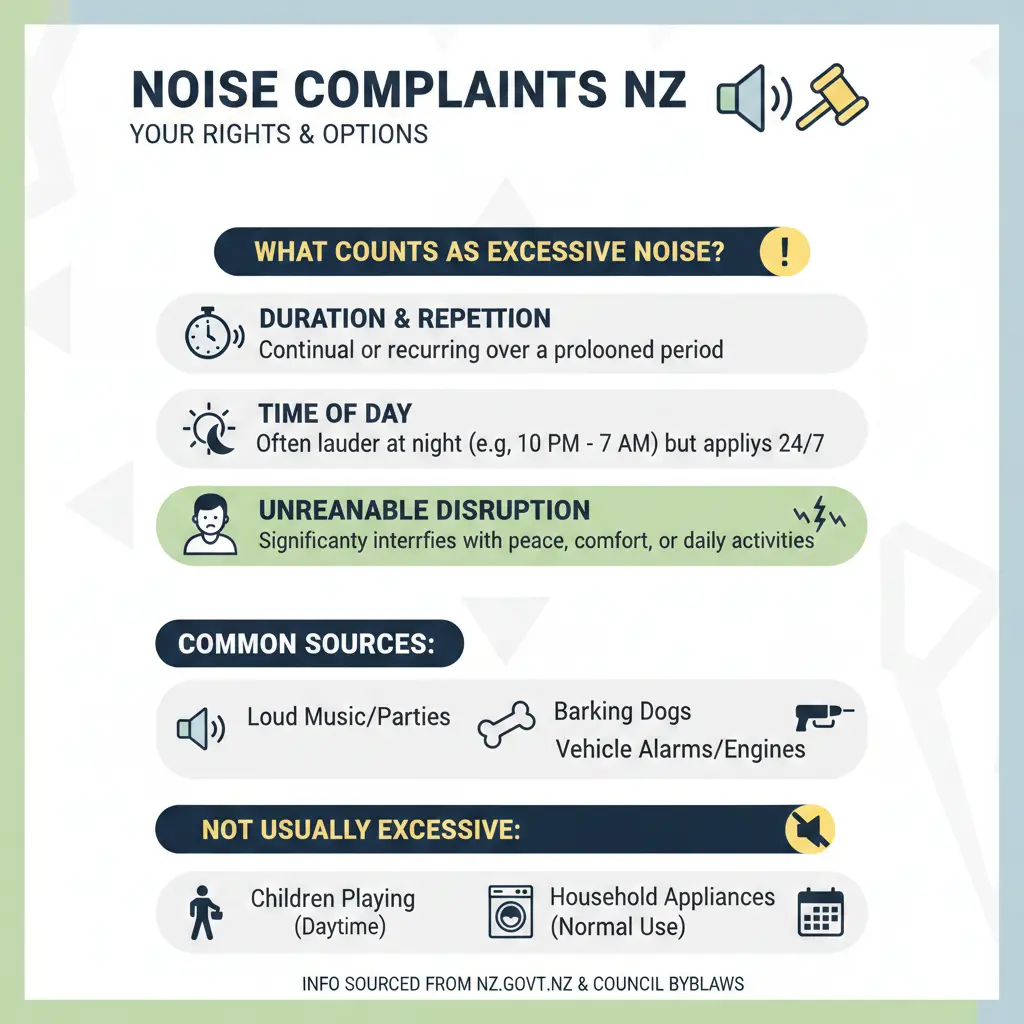
What Counts as Excessive Noise in New Zealand?
There's no universal decibel limit for "too loud"—it depends on time, location, zone, and type of noise. A daytime drill in an industrial area might fly, but midnight music in a suburban cul-de-sac won't. Councils assess based on whether the noise unreasonably disrupts normal living, guided by district plans like Auckland's Unitary Plan or local standards.
Common Types of Noise Complaints
- Residential parties and music: Stereos, shouting, or gatherings that carry beyond property lines, especially after 10pm.
- Construction and DIY: Power tools, hammering—limited hours apply, often 7:30am-6pm weekdays under NZ standards.
- Animals: Constant barking dogs disrupting sleep.
- Alarms and machinery: Faulty security systems or lawnmowers at odd hours.
- Commercial noise: Bars, factories—measured with calibrated meters against plan rules.
Note: Noise from trains, planes, or boats falls outside RMA excessive noise provisions, handled differently.
Step-by-Step: How to Handle Noise Complaints NZ
Start small to keep things neighbourly—escalation should be a last resort. Here's your actionable roadmap.
Step 1: Talk to Your Neighbour First
Most issues resolve with a friendly yarn. Approach calmly: "Kia ora, the music's carrying a bit—could you turn it down after 10?" If they're tenants, contact the landlord; under the Residential Tenancies Act, they can issue a 14-day disturbance notice. In Queenstown Lakes, councils urge this first step before calling.
Step 2: Document the Noise
Log dates, times, duration, and descriptions (e.g., "bass audible indoors at 1am"). Record audio/video if safe—evidence strengthens council cases. Note weather or barriers affecting sound travel, like noise from a screened backyard.
Step 3: Report to Your Local Council
Call 24/7 when noise happens—officers must hear it live. Provide details: source, location, your address. Councils like Auckland (09 301 0101), Horowhenua (06 366 0999), Palmerston North (06 356 8199), or Queenstown (03 441 0499) dispatch noise control officers.
Officers assess on-site: if excessive, they issue an Excessive Noise Direction (END) requiring noise reduction. As of August 2025, ENDs last 8 days (up from 72 hours). Breaches within this period trigger:
- Seizure of equipment (with police help).
- Fines: $1,000 individuals, $2,000 companies (Auckland); up to $10,000 elsewhere.
For ongoing issues post-8 days, re-report—new END needed. Your details stay confidential.
Step 4: Abatement Notices for Persistent Problems
Ongoing noise (e.g., factory hum) prompts measured assessments with sound meters against district plan rules. Councils issue abatement notices under RMA ss 322–325B, demanding reduction within a timeframe. These last indefinitely until complied with or appealed. Non-compliance risks prosecution.
Your Rights as a Complainant
You have the right to quiet enjoyment of your home. Councils must act reasonably but can't guarantee instant fixes—response times vary by location and workload. Anonymity is protected; noise-makers aren't told who complained.
If tenanted, landlords must address tenant noise. For body corporates, committees enforce bylaws under the Unitary Plan or equivalent.
Noise-Maker's Perspective: Know the Rules to Avoid Fines
If you're on the receiving end, normal home activities like parties are fine—until excessive. Check your district plan for zone rules (e.g., higher tolerances in city centres). Construction? Stick to 7:30am-6pm weekdays, quieter gear post-2025 standards. Fines sting, but compliance avoids escalation.
When Councils Fall Short: Escalate to Courts
Unsatisfied? Apply to the Environment Court for an enforcement order under RMA ss 314–321. You'll need evidence, often from acoustic experts—costly but effective for chronic issues like neighbouring renovations. Community Law offers free advice.
Regional Variations Across NZ
Councils tailor enforcement:
| Region/Council | END Duration | Contact | Notes |
|---|---|---|---|
| Auckland | 8 days | 09 301 0101 | $1k/$2k fines; equipment seizure. |
| Horowhenua | Up to 72 hours | 06 366 0999 | Up to $10k fines. |
| Palmerston North | 8 days | 06 356 8199 | Zone-specific guidelines. |
| Queenstown Lakes | 8 days (192 hours) | 03 441 0499 | Construction noise standards. |
Check your council's site for exact rules—e.g., Auckland's Unitary Plan PDF.
Practical Tips to Prevent and Resolve Noise Disputes
- Soundproof proactively: Rugs, curtains, or white noise machines help you cope short-term.
- Mediation: Free community services like neighbourhood disputes committees.
- Body corporate: For apartments, report via strata managers.
- Construction events: Get consents for noisy work exceeding hours.
- Record-keeping: Builds a case for WINZ or ACC stress claims if health-affected (consult professionals).
Next Steps: Take Control Today
Grab your phone, note the details, and act—start with a chat, then dial your council. For complex cases, consult Community Law or an acoustic expert. Peaceful suburbs are worth it; knowing your rights under the RMA keeps NZ harmonious. If health impacts arise, link with your GP for ACC support.
Disclaimer: This isn't legal or financial advice. Consult professionals or authorities for your situation.
Frequently Asked Questions
Sources & References
-
1
Ongoing problems with noise - Auckland Council — www.aucklandcouncil.govt.nz
-
2
Noise Control - Horowhenua District Council — www.horowhenua.govt.nz
-
3
Noise control | Palmerston North City Council — www.pncc.govt.nz
-
4
Noise - Community Law — communitylaw.org.nz
-
5
Noise Control - Queenstown Lakes District Council — www.qldc.govt.nz
Related Articles

Industry Bodies and Professional Associations NZ
Whether you're launching a business, advancing your career, or navigating financial regulations, industry bodies and professional associations in New Zealand offer invaluable support. These organisati...

Emergency Benefit NZ: When You Have No Other Options
When you're struggling financially and don't qualify for other benefits, the Emergency Benefit might be your lifeline. It's a discretionary payment designed for Kiwis in genuine hardship who've exhaus...

Unpaid Internships NZ: Are They Legal?
Unpaid internships are a common pathway for students and graduates to gain work experience in New Zealand, but there's often confusion about whether they're actually legal. The short answer is: unpaid...

Estate Administration NZ: Managing Someone's Affairs After Death
Losing a loved one is one of life's toughest challenges, and stepping in to manage their estate can feel overwhelming. In New Zealand, estate administration—the process of handling someone's affairs a...