Shipping Your Belongings to NZ: Costs and Customs

Whether you're a Kiwi returning home from overseas, helping whānau relocate, or simply shipping precious belongings to Aotearoa, understanding the costs and customs rules can save you time, money, and...
Sarah covers personal finance, tax, and KiwiSaver topics for Lifetimes NZ. She focuses on making money management straightforward and practical for everyday Kiwis.
Whether you're a Kiwi returning home from overseas, helping whānau relocate, or simply shipping precious belongings to Aotearoa, understanding the costs and customs rules can save you time, money, and headaches. With shipping rates fluctuating and new 2026 customs levies on the horizon, getting it right means smoother arrivals at your door—or the nearest Customs clearance depot.
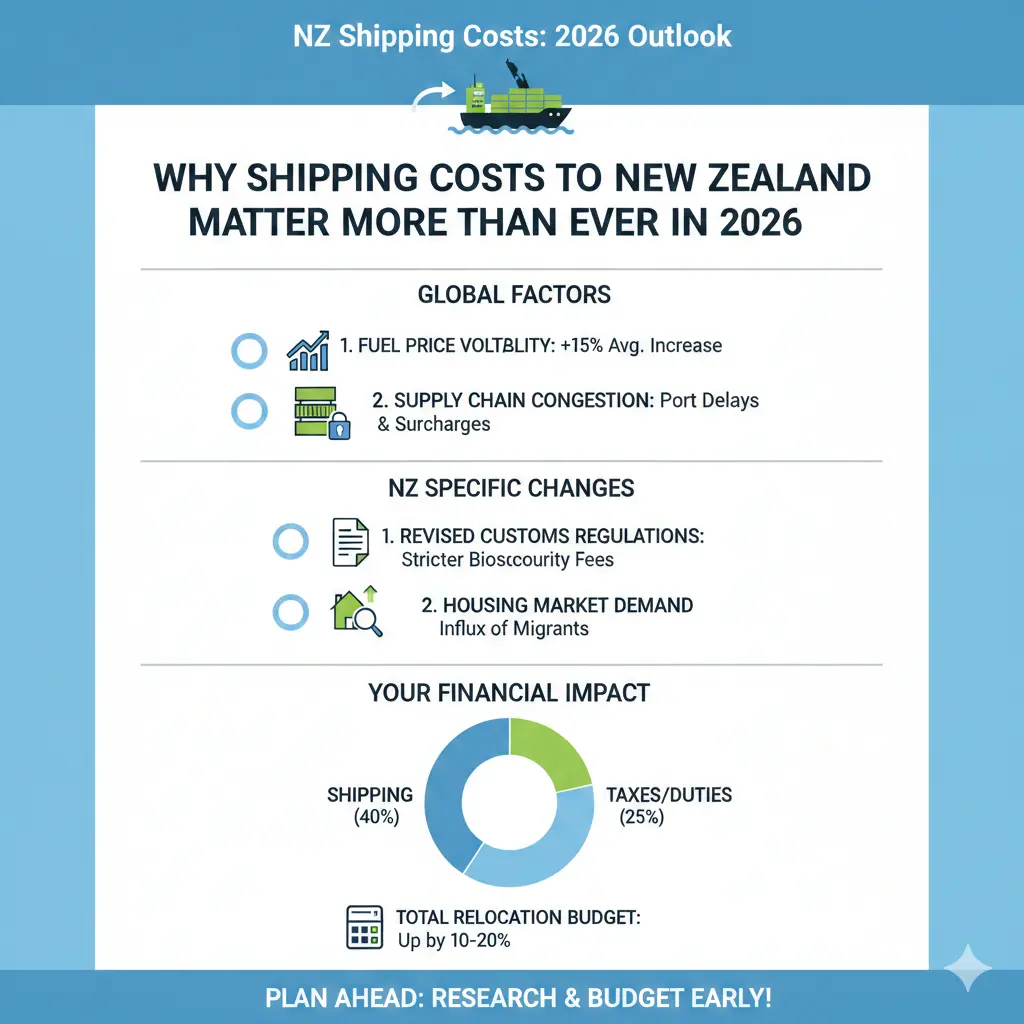
Why Shipping Costs to New Zealand Matter More Than Ever in 2026
Shipping your belongings to NZ involves more than just postage stamps and boxes. Fuel surcharges, dimensional weight calculations, and border fees add up quickly, especially with global logistics still recovering from recent disruptions. For Kiwis, this often means budgeting for imports from popular spots like the US, UK, or Australia. Expect to pay anywhere from NZ$30–$50 per kg for small parcels from the US, scaling up for larger household shipments. Larger moves, like sea freight containers, can run into thousands but offer better value per cubic metre.
In 2026, New Zealand Customs Service is overhauling goods fees from 1 April, replacing them with targeted levies to better recover border management costs. This includes new charges for low-value goods, empty containers, and high-value cargo—changes you'll want to factor in if shipping before or after the deadline.
Factors Driving Shipping Costs
- Weight and Dimensions: Couriers like UPS and FedEx use volumetric weight (length x width x height / 5000 for air freight) or actual weight, whichever is greater. A bulky item might cost more than its scale weight suggests.
- Origin and Distance: US shipments often start at NZ$31.53/kg via ePacket, but expect NZ$41–$50/kg with services like comGateway or MyUS.
- Service Speed: Express options (2–5 days) cost 2–3x more than economy sea freight (4–8 weeks).
- Fuel and Security Surcharges: UPS adds NZ$3.20 for exports and NZ$11.50 for imports per shipment, plus fuel fees.
Breaking Down 2026 Shipping Rates and Fees
Costs vary by carrier, but here's a snapshot for common scenarios. Always use online calculators for precise quotes, as rates adjust monthly—FedEx updated theirs effective January 5, 2026.
Air Freight vs Sea Freight: Which is Right for You?
| Shipment Type | Example Cost (1kg from US) | Transit Time | Best For |
|---|---|---|---|
| Air Express (UPS/FedEx/DHL) | NZ$31–$50/kg | 2–7 days | Urgent items, valuables |
| Economy Air (ePacket/USPS) | NZ$10–$32/kg | 10–20 days | Small parcels, clothing |
| Sea Freight (20ft Container) | NZ$3,000–$6,000 total[estimates based on industry norms] | 4–8 weeks | Household goods, vehicles |
For a full household shipment, sea freight shines: a 20-foot container from the US West Coast might cost NZ$4,500 including port fees, versus NZ$20,000+ by air. Add NZ$160+ for UPS Worldwide Express Freight per shipment.
Hidden Fees to Watch For
Beyond base rates, these can inflate your bill by 20–50%:
- Extended Area Surcharge: NZ$49.10 or NZ$1.10/kg (whichever greater) for rural NZ deliveries like those in the South Island backcountry.
- Over Maximum Limits: NZ$288 per package over 70kg or 274cm length.
- Disbursement Fee: 3.2% of duties/taxes or NZ$17.90 minimum if your courier advances payments.
- Delivery Reattempt: NZ$56.60 each after the first try.
- 2026 Customs Levies: New low-value goods levy (consignment-based), high-value differential rates for sea/air cargo, and empty container charges from April 1.
Pro tip: Consolidate packages via services like MyUS or Qwintry to minimise per-shipment fees and snag discounts up to 30%.
Navigating New Zealand Customs: Rules and Duties
Customs.govt.nz enforces strict biosecurity to protect Aotearoa's unique environment—no muddy boots, food scraps, or wood items without treatment. Declare everything accurately to avoid fines up to NZ$400 for low-value goods or seizure for prohibited items.
GST and Duties: What You'll Pay
All imports over NZ$1,100 (de minimis threshold) attract 15% GST on the total value (goods + shipping + insurance). Couriers like MyUS collect this upfront; otherwise, pay on arrival. Example: US$600 guitar + US$50 shipping = US$97.50 GST (NZ$154).
- Duties: Most household goods are duty-free under personal effects rules if you're relocating, but commercial items face 0–10% tariffs. Check the Working Tariff Document on customs.govt.nz.
- Biosecurity Clearance: MPI inspections add NZ$50–$200+ if required.
- 2026 Changes: From April 1, high-value sea/air imports get differential levies; UPU mail (postal) faces new air/sea charges.
Prohibited and Restricted Items
Avoid delays by knowing the no-go list:
- Prohibited: Drugs, weapons, ivory, certain plants/seeds.
- Restricted: Food (declare dairy/meat), wood (must be treated), electronics (check GSR compliance).
- Personal Effects: Duty/GST-free if owned 12+ months and you're present in NZ.
For full lists, visit Customs.govt.nz and use their declaration app.
Practical Tips for Cost-Effective Shipping
- Compare Quotes: Use tools from UPS, FedEx, Qwintry, or EasyShip for side-by-side rates.
- Pack Smart: Disassemble furniture, vacuum-seal clothes to cut volume/weight. Use original boxes for electronics.
- Choose Consolidators: Services like Planet Express or MyUS bundle US purchases into one shipment, saving 20–50%.
- Time It Right: Ship mid-week, avoid peak seasons (Nov–Feb). Book sea freight 6–8 weeks ahead.
- Insurance: Opt-in for 1–3% of value; MyUS example adds ~NZ$2 for small parcels.
- Freight Forwarders: For big moves, use NZ specialists like Mainfreight for door-to-door, including Customs handling.
Kiwis moving back from Oz? The Tasman ferry or budget air freight via Air NZ Cargo often beats international rates.
Real Kiwi Examples: Shipping Costs in Action
Jane, a Kiwi from Auckland repatriating from LA, shipped 200kg of household goods via sea freight: NZ$4,200 base + NZ$450 GST/duties = NZ$4,650 total. Her mate Mike sent a 5kg box of tools air express: NZ$180 shipping + NZ$45 GST = NZ$225 landed.[estimates derived from ]
For expats, KiwiSaver withdrawals can fund relocations—check IRD.govt.nz for rules. WINZ may assist low-income families with moving costs via relocation grants.
"International shipping rates are typically more expensive than domestic, but US deals plus shipping often beat local prices—and some items just aren't available here."
FAQ
How much does it cost to ship a 10kg box from the US to NZ?
Expect NZ$300–$500 via air express, including surcharges but excluding GST/duties. Use volumetric weight for accuracy.
Do I pay GST on all shipments?
Yes, 15% on total value (goods + freight) for imports over NZ$1,100 CIF. Low-value parcels under this may dodge it, but 2026 levies change this from April.
What's changing with Customs fees in 2026?
From 1 April, goods management levies replace fees: low-value consignment-based, new empty container and transhipment charges, differential high-value rates.
Can I ship food or wood to NZ?
Restricted—declare and treat. Biosecurity fines start at NZ$400; better to buy local.[customs.govt.nz guidelines]
How do I avoid rural delivery surcharges?
Use a NZ post office box or urban pickup depot. Surcharges hit NZ$49+ for remote areas.
Is sea freight cheaper for furniture?
Absolutely—NZ$150–$300/m³ vs air's NZ$10+/kg. Ideal for bulky items.
Next Steps: Ship Smart and Save
Start by inventorying your belongings, banning prohibites, and getting 3–5 quotes. Use Customs' online tools for declarations, and consult a freight forwarder for complex moves. Track everything via apps, and budget 20% extra for surprises. For personalised advice, chat with IRD or a licensed customs broker—this isn't financial advice, so seek pros for your situation. Your gear will be here before you know it, ready for Kiwi life.
Sources & References
- 1
-
2
2026 UPS® Rate and Service Guide (PDF) — assets.ups.com
-
3
Goods Fees – 2026 changes - New Zealand Customs Service — www.customs.govt.nz
-
4
Ship From US to New Zealand - Best Shipping Rates - comGateway — www.comgateway.com
-
5
Shipping from the US to New Zealand - MyUS — www.myus.com
-
6
Tariffs, Delivery & Shipping Fees, Freight Charges - FedEx NZ — www.fedex.com
-
7
Shipping Cost Calculator from New Zealand to United States - EasyShip — www.easyship.com
-
8
International Mail Services & Shipping Rates - USPS — www.usps.com
-
9
Shipping From The USA To New Zealand (GUIDE) - Planet Express — planetexpress.com
Related Articles

Industry Bodies and Professional Associations NZ
Whether you're launching a business, advancing your career, or navigating financial regulations, industry bodies and professional associations in New Zealand offer invaluable support. These organisati...

Emergency Benefit NZ: When You Have No Other Options
When you're struggling financially and don't qualify for other benefits, the Emergency Benefit might be your lifeline. It's a discretionary payment designed for Kiwis in genuine hardship who've exhaus...

Unpaid Internships NZ: Are They Legal?
Unpaid internships are a common pathway for students and graduates to gain work experience in New Zealand, but there's often confusion about whether they're actually legal. The short answer is: unpaid...

Estate Administration NZ: Managing Someone's Affairs After Death
Losing a loved one is one of life's toughest challenges, and stepping in to manage their estate can feel overwhelming. In New Zealand, estate administration—the process of handling someone's affairs a...