Workplace Bullying NZ: Your Rights and Options

Imagine arriving at work each day with a knot in your stomach, dreading the constant criticism, exclusion, or intimidation from a colleague or manager. For many Kiwis, this isn't just a bad day—it's w...
The Lifetimes NZ editorial team curates, fact-checks, and updates guides on personal finance, property, health, immigration, legal, business, and lifestyle topics relevant to Lifetimes NZ readers. Articles are produced with AI assistance and reviewed by the editorial team before publication.
Imagine arriving at work each day with a knot in your stomach, dreading the constant criticism, exclusion, or intimidation from a colleague or manager. For many Kiwis, this isn't just a bad day—it's workplace bullying, a pervasive issue affecting mental health, productivity, and careers across New Zealand. If you're facing this, know your rights under NZ law and the steps you can take to reclaim your dignity and security at work.
In this guide, we'll break down what constitutes workplace bullying in New Zealand, outline your legal protections, and provide practical options for resolution—all tailored for Kiwis navigating our unique employment landscape in 2026. Whether you're an employee enduring targeted ridicule or an employer aiming to foster a respectful culture, this resource equips you with actionable advice grounded in current legislation and best practices.
What is Workplace Bullying in New Zealand?
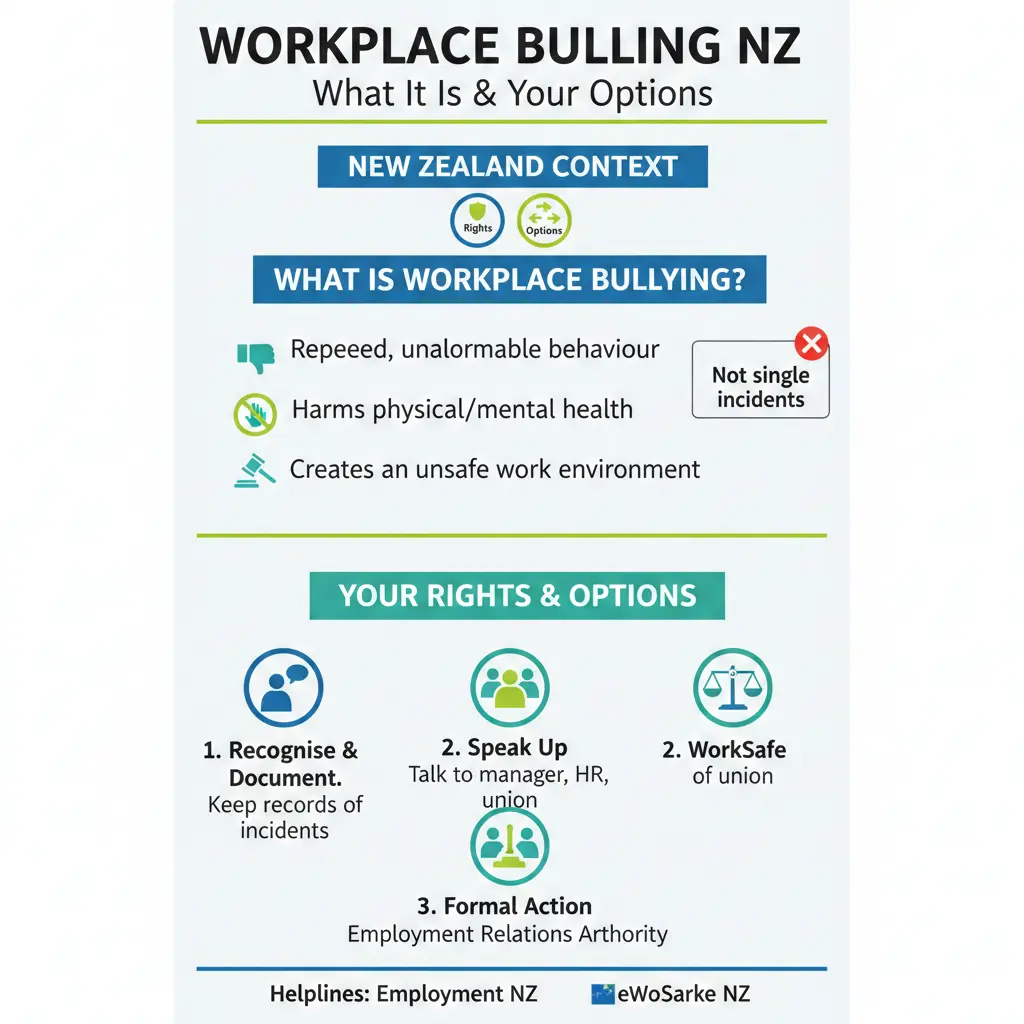
Workplace bullying involves repeated, unreasonable behaviour directed at an individual or group that creates a risk to health and safety. It's not a one-off argument or fair performance feedback—it's persistent actions like humiliation, intimidation, or sabotage that undermine your wellbeing.
Common examples include:
- Excessive criticism or belittling in front of others
- Social exclusion or isolation from team activities
- Unrealistic deadlines or constant overload to set you up for failure
- Spreading rumours or personal attacks
- Threatening gestures or verbal abuse
Not every harsh interaction qualifies as bullying. Isolated incidents might not meet the threshold unless linked to protected characteristics like race, age, or disability under the Human Rights Act 1993. However, even single acts breaching discrimination laws can trigger disciplinary action.
Psychosocial Hazards and WorkSafe NZ's Role
WorkSafe NZ emphasises psychosocial hazards like bullying, stress, and fatigue as key risks under the Health and Safety at Work Act 2015. Employers must eliminate or minimise these "so far as is reasonably practicable," treating bullying as a workplace safety issue rather than just a personality clash.
In 2026, with ongoing updates to dispute procedures, businesses face heightened scrutiny. For instance, proposed amendments to the Employment Relations Act 2000 aim to refine personal grievance processes for serious misconduct, ensuring remedies are fair and practical.
Your Legal Rights Against Workplace Bullying
New Zealand's framework protects you through multiple laws, placing duties on employers to maintain safe, fair workplaces. Here's a breakdown:
Key Legislation Protecting Kiwis
- Employment Relations Act 2000: Requires good faith dealings—honest, open interactions. Bullying can breach this, allowing personal grievances for unjustified actions or unsafe conditions.
- Health and Safety at Work Act 2015: Mandates risk minimisation for bullying's psychological harm, applying to employees and contractors.
- Human Rights Act 1993: Covers bullying tied to discrimination (e.g., race, sex, disability). Lodge complaints with the Human Rights Commission.
- Harassment Act 1997: Applies if bullying causes fear for safety.
- Harmful Digital Communications Act 2015 (HDCA): Targets cyberbullying via texts, emails, or social media.
- Crimes Act 1961: For physical or sexual harm from bullying.
Note: Employees earning over $180,000 annually lose unjustified dismissal claims but retain anti-bullying and discrimination protections.
Personal Grievance Process
If bullying persists, raise a personal grievance within 90 days. Employers must investigate impartially, especially if they're accused—use an independent party. Outcomes can include mediation, disciplinary action against the bully, or compensation.
Escalate to Mediation Services (free via Employment NZ), then the Employment Relations Authority (ERA), and Employment Court if needed.
Steps to Take if You're Experiencing Workplace Bullying
Don't suffer in silence—systematic action protects you and holds bullies accountable. Follow these Kiwi-specific steps:
- Document Everything: Record dates, times, witnesses, and impacts (e.g., anxiety affecting sleep). Screenshots for digital bullying are gold.
- Check Policies: Review your employment agreement and company bullying policy for procedures.
- Raise Informally: Talk to your manager, HR, or the bully directly if safe. Use Employment NZ's resources for guidance.
- Formal Complaint: Submit in writing. Employers must investigate seriously, offer support like counselling, and ensure safety (e.g., temporary separation or suspension with pay).
- Seek External Help: Contact Employment NZ, WorkSafe, or a union. For immediate danger, call Police.
- Personal Grievance or Police: If unresolved, proceed formally. Serious cases may be criminal.
Pro Tip: Access free Employee Assistance Programmes (EAP) for counselling—many Kiwi employers offer them.
Employers: Preventing and Responding to Bullying
As PCBU under the Health and Safety at Work Act, you're legally bound to prevent bullying. Zero-tolerance policies are best practice, especially in public sectors.
Build a Strong Policy
Your bullying policy should define behaviours, outline reporting, ensure confidentiality, and detail disciplinary steps up to dismissal. Train staff regularly.
Investigation Best Practices
- Treat complaints seriously; investigate impartially.
- Support all parties (counselling, cultural aid).
- Suspend if safety risks; maintain pay.
- Take action: warnings, training, or termination if justified.
- Review culture and policies post-incident.
Update procedures for 2026 changes, like refined personal grievances.
Financial Implications of Workplace Bullying
Bullying hits wallets too. Victims face lost wages from stress leave, therapy costs, or job changes. Employers risk fines, compensation via ERA, or lawsuits—vicarious liability looms if prevention fails.
ACC covers mental injury from work if sudden-onset and work-related. KiwiSaver or WINZ may help during transitions, but check entitlements. Always seek professional financial advice for personalised guidance—this isn't it.
FAQ: Workplace Bullying NZ
1. How long do I have to raise a personal grievance?
90 days from the incident or when you became aware of it. Act fast—extensions are rare.
2. Can I be fired for complaining about bullying?
No—it's protected. Retaliation could be an unjustified disadvantage, grounds for grievance.
3. What if the bully is my boss?
Report to HR or higher-up; demand independent investigation. Employment NZ assists.
4. Does cyberbullying count as workplace bullying?
Yes, under HDCA if digital. Employment NZ covers work-related instances.
5. Can I get compensation for bullying?
Possibly via personal grievance—covers humiliation, lost income. Amounts vary by case.
6. Where do I report bullying anonymously?
Start with WorkSafe or Netsafe for cyber issues; Employment NZ for mediation.
Next Steps: Take Control Today
Workplace bullying thrives in silence—break the cycle by documenting, reporting, and seeking support. Contact Employment New Zealand (0800 20 90 20) or visit their site for free advice. If finances are strained, explore WINZ or ACC options, and consult a financial advisor for tailored strategies.
For employers, audit your policies now ahead of 2026 reforms. A bully-free workplace boosts retention, morale, and bottom lines. You're not alone—Kiwis have robust protections. Act today for a safer tomorrow.
Disclaimer: This guide provides general information, not legal or financial advice. Consult professionals for your situation.
Related Articles

Industry Bodies and Professional Associations NZ
Whether you're launching a business, advancing your career, or navigating financial regulations, industry bodies and professional associations in New Zealand offer invaluable support. These organisati...

Emergency Benefit NZ: When You Have No Other Options
When you're struggling financially and don't qualify for other benefits, the Emergency Benefit might be your lifeline. It's a discretionary payment designed for Kiwis in genuine hardship who've exhaus...

Unpaid Internships NZ: Are They Legal?
Unpaid internships are a common pathway for students and graduates to gain work experience in New Zealand, but there's often confusion about whether they're actually legal. The short answer is: unpaid...

Estate Administration NZ: Managing Someone's Affairs After Death
Losing a loved one is one of life's toughest challenges, and stepping in to manage their estate can feel overwhelming. In New Zealand, estate administration—the process of handling someone's affairs a...