Back-to-School Budgeting: Saving Money on Uniforms and Tech

Every year, as the summer holidays wind down, Kiwi parents face the same daunting reality: back-to-school costs that can hit the wallet hard. With uniforms, stationery, and tech devices topping the li...
Aroha writes about parenting, education, and family life in Aotearoa. She covers school choices, childcare, family benefits, and practical advice for raising a family in New Zealand.
Every year, as the summer holidays wind down, Kiwi parents face the same daunting reality: back-to-school costs that can hit the wallet hard. With uniforms, stationery, and tech devices topping the list, it's easy to feel overwhelmed—but smart back-to-school budgeting can turn the tide, helping you save hundreds while keeping your kids equipped and ready to learn.
In 2026, families are navigating rising living costs alongside essential school expenses. From second-hand uniforms to savvy tech deals, this guide shares practical tips tailored for New Zealand households, drawing on advice from financial mentors and local resources. Let's dive into how you can stretch your budget without compromising quality.
Why Back-to-School Budgeting Matters for Kiwi Families
The transition back to school isn't just about new pencils and notebooks—it's a financial sprint that catches many off guard. Westpac research highlights how holiday spending leaves families stressed, compounded by uniforms, devices, and camps. Financial coach Shula Newland notes the "hangover" from Christmas debt often collides with these costs, making planning essential.
For many, it's not just about affording basics; it's teaching tamariki financial literacy along the way. Experts like Zena Burgess emphasise involving kids in budgeting to build their confidence and reduce peer pressure for brand-name gear. In New Zealand, where school donations and camps add up, proactive saving through the year is key—aim to set aside $10-20 weekly in your KiwiSaver or a dedicated savings account.
Average Costs in 2026: What to Expect
While exact figures vary by region and school, typical back-to-school outlays include:
- Uniforms: $150-400 per child for full sets (jacket, trousers/skirt, shirts, PE gear).
- Stationery: $50-100, often listed on school portals.
- Tech devices: $300-1,200 for laptops or tablets, especially in BYOD schools.
- Other: Shoes ($80+), camps ($200-500), donations ($100-300 voluntary).
These can total $800-2,000 per child, but with the right strategies, you can slash that by 30-50%.
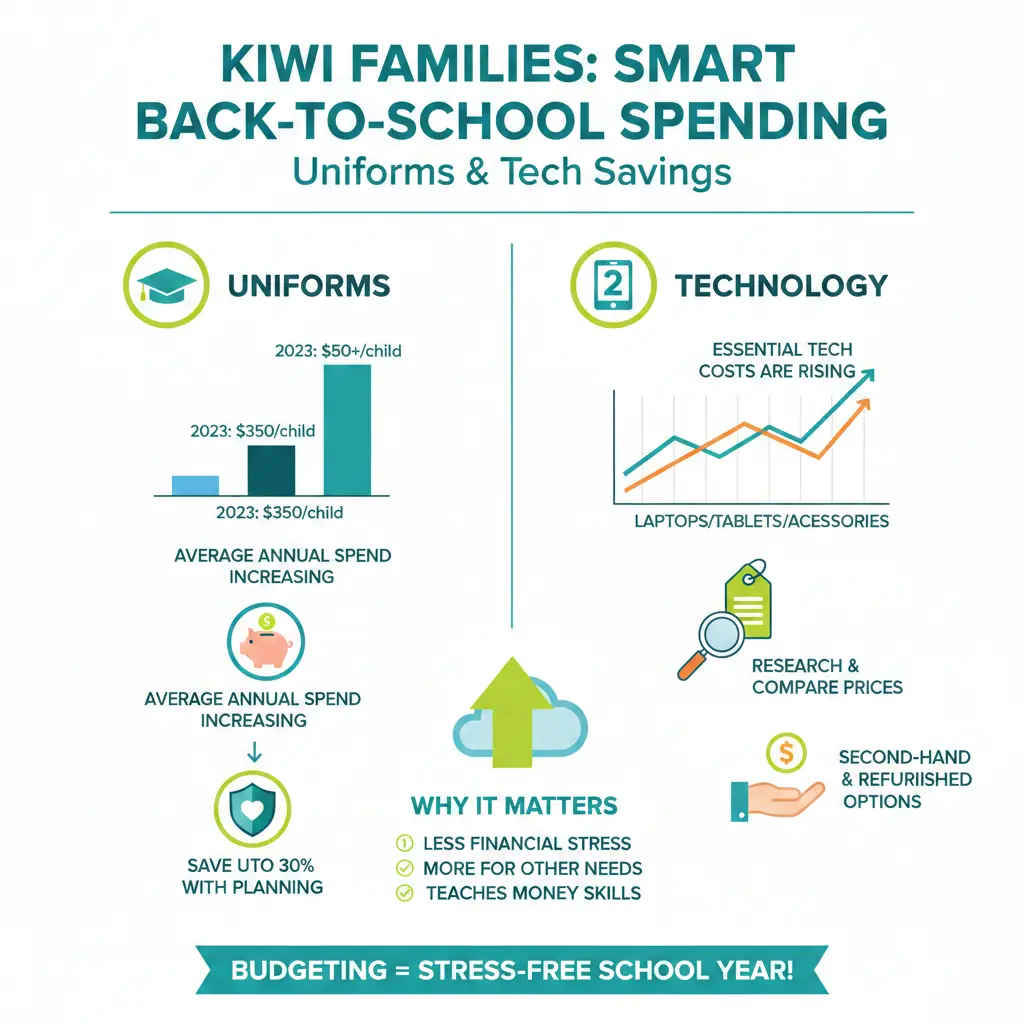
Smart Strategies for Saving on School Uniforms
Uniforms are often the biggest ticket item, but New Zealand's thriving second-hand market makes them a prime saving opportunity. David Verry from North Harbour Budgeting Services recommends starting with preloved options, which can cost 50-70% less than new.
Where to Shop Second-Hand in NZ
- School uniform exchanges: Most decile 1-5 schools run Facebook groups or uniform banks—join your local one via the school office. Items are cleaned and checked.
- Online marketplaces: Trade Me, Facebook Marketplace, and apps like Whatizit offer bundles for under $50.
- Retail seconds: The Warehouse and Postie+ sell generic black trousers or polos that match many uniforms.
- Charity support: If on a benefit, contact WINZ for grants or the McKenzie Trust for uniform vouchers—up to $200 available for low-income families.
Uniform Buying Tips
- Check school lists early: Download from your school's website or app in November.
- Buy bigger: Opt for one size up to last longer—alterations at local seamstresses cost $10-20.
- Name and maintain: Use iron-on labels and wash in cold water to extend life.
- Swap networks: Organise a uniform swap day with other whānau at the PTA meeting.
Pro tip: In Auckland and Wellington, pop-up uniform sales in January offer new items at 20-30% off RRP.
Tech on a Budget: Devices Without the Debt
With many schools now BYOD (Bring Your Own Device), laptops and tablets are non-negotiable. But second-hand tech from reputable sellers can save $500+ per device.
Affordable Tech Sources for 2026
- Refurbished from PB Tech or JB Hi-Fi: Certified pre-loved Chromebooks start at $250, with 1-year warranties.
- Trade Me and Facebook: Search "school laptop Chromebook" for deals under $300—check specs match school requirements (e.g., 4GB RAM minimum).
- Government programs: Crown Devices Entitlement offers subsidised laptops for low-decile schools; check eligibility via your board.
- WINZ and StudyLink: Beneficiaries can apply for device grants through Equipment and Extraordinary Expenses.
Tech-Saving Checklist
Before buying:
- Confirm device specs on the school portal (e.g., Windows 11 compatible).
- Test battery life and ports.
- Use price comparison sites like PriceSpy.co.nz.
- Set up parental controls and Kiwi-owned antivirus like Emsisoft.
Avoid Afterpay traps—financial mentors warn it piles on debt amid rising interest rates.
Broader Back-to-School Budgeting Tips
Beyond uniforms and tech, stationery and extras add up. Create a shared list with your kids: needs (textbooks) vs wants (trendy backpacks).
Mastering the Family Budget
- Plan yearly: Divide costs over 12 months—$50/month per child covers most.
- Stationery hacks: Buy bulk from OfficeMax bulk packs or repurpose last year's leftovers.
- Donations and camps: Voluntary donations can be paid in instalments; query WINZ for camp grants if needed.
- Financial literacy lesson: Compare two shoe options online with kids to teach value.
For struggling whānau, North Harbour Budgeting Services offers free mentoring—book via their site or call 0800 345 123.
Assistance for Low-Income Families
KidsCan supports 58+ schools on waitlists in 2026, providing basics amid budget strains—many divert operational funds for breakfast clubs. Contact your school or WINZ for referrals. Budget 2026 documents (due May) may outline further education supports.
Your Next Steps for a Stress-Free Start
Grab a coffee, pull up your school's list, and start your back-to-school spreadsheet today. Shop second-hand first, involve the kids, and tap local support—you've got this. Track savings to motivate next year, and remember: smart budgeting teaches tamariki resilience for life. For personalised advice, reach out to a financial mentor via MoneyTalks (0800 345 123).
Frequently Asked Questions
Sources & References
-
1
5 Year Agreement funding - Ministry of Education — www.education.govt.nz
-
2
Back-to-school budgeting a chance for kids to learn financial literacy — home.nzcity.co.nz
-
3
Money: How to tackle new year financial stress | RNZ News — www.rnz.co.nz
- 4
-
5
Back to school costs: The real price of your child's education — www.nzherald.co.nz
-
6
Why are kids still going to school hungry in 2026? | The Front Page — www.youtube.com
-
7
Why are kids still going to school hungry in 2026 - Spotify — open.spotify.com
-
8
Budget 2026 | The Treasury New Zealand — www.treasury.govt.nz
Related Articles

Screen Time Guidelines for Kiwi Kids
Ever caught your little one glued to a tablet, eyes wide and fingers flying? In Aotearoa, where Kiwi kids spend more screen time than most—up to 42 hours a week for teens—it's time to hit pause and re...

School Zones NZ: How They Work and Why They Matter
Choosing the right school for your tamariki can feel like navigating a map of coloured zones—literally. In Aotearoa, **school zones NZ** dictate where your child is guaranteed a spot, helping prevent...

Best Playgrounds in Christchurch: Family Guide
Christchurch has some of the best family playgrounds in Aotearoa, offering everything from award-winning attractions to hidden gems perfect for a weekend adventure. Whether you're looking for thrillin...

Kids Sports NZ: Costs and Options by Age
Getting your kids active in sports is one of the best gifts you can give them as a Kiwi parent—building fitness, teamwork, and lifelong habits. But with rising costs biting into household budgets, und...